 November 2024
 It's no secret Minnesota wildlife needs their native habitat for food, shelter, and nesting areas. Much of that habitat is provided by native plants, but these plants have disappeared from many of our landscapes.
Carver County offers three different programs that provide financial and technical assistance to residents for projects with native plants. These projects help wildlife and also protect our lakes and rivers from pollution.
Learn about one resident's experience with the program and how she was able to turn her silent yard into a busy one by bringing the wildlife back.
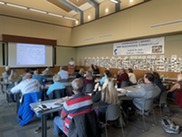
Carver County is hosting a "Carver County Septic Systems and Property Sales" workshop on November 19, 2024, from 10:00 AM to 12:00 PM. It will be held in the Wilder Room at the Chanhassen Library, located at 7711 Kerber Blvd. in Chanhassen, MN 55317.
This is an approved course from the Minnesota Department of Commerce and participants will receive 2 credits for real estate continuing education.
Registration is available through the link below, but spaces are limited and will be filled on a first-come, first-served basis. Contact Jacob McLain for questions via e-mail or phone (952-361-1801).
|

America Recycles Day, observed on November 15, is a national initiative dedicated to promoting recycling and waste reduction across the United States. Organized by Keep America Beautiful, the day encourages individuals and communities to improve recycling habits, reduce waste, and consider sustainable practices. On this day, people are invited to pledge to recycle more items correctly, purchase recycled goods, and spread awareness about environmental conservation. Local events, from community clean-ups to recycling drives, provide opportunities for hands-on participation.
|

Carver County residents are encouraged to celebrate America Recycles Day by trying out Betterbin – Carver County’s recycling sorting app.
|
About one-third of our trash is organic materials, including food, food-soiled paper, and certified compostable products. Organics recycling is the best opportunity we have to reduce the amount of material ending up in area landfills.
Collect organics
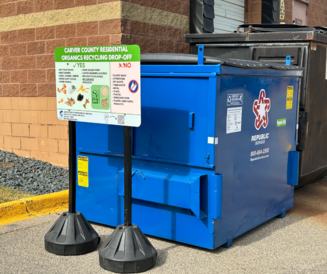
Carver County Environmental Services provides residents with convenient drop-off opportunities. To participate, collect food scraps like fruits, vegetables, meat, dairy, and coffee grounds, as well as food-soiled paper such as napkins, pizza boxes, and paper cartons. Use an ice cream bucket or kitchen scrap container to collect these items, which you can line with a BPI-certified compostable or paper bag for easy cleanup. Kitchen scrap buckets and compostable bags are available at grocery stores, hardware stores, or the Environmental Center.
Drop off organics
Visit residential organics recycling for a list of accepted materials and drop off opportunities. The newest drop off bin is in Chanhassen at Feed My Starving Children
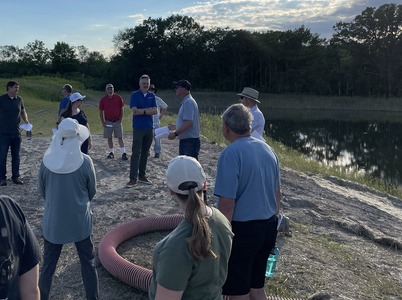
Citizen advisory committee members on the summer 2024 project tour.
If you are looking to volunteer time for water resources, there are two openings on our citizens advisory committee.
Carver County Water Management Organization's citizen advisory committee provides input to staff and makes recommendations to the County Board on water resource policies, projects and programs.
Openings are for citizen representatives from East/West Chaska Creek watershed and Bevens Creek watershed. Check if you live in these watersheds.
Interested candidates can apply online or contact mseveland@carvercountymn.gov or 952-361-1026 to request a paper application. Appointments are made in early January. Submit your application by the end of the year.
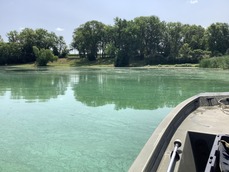
Eagle Lake has consistently had poor water quality with high levels of phosphorus and chlorophyll-a (algae) and low water clarity. The lake has severe algae problems, and recreation is often limited for most of the season. The source of the poor water quality is
largely nutrients, phosphorus and nitrogen, both external (outside the lake) and internal (within the lake) sources.
This fall, Carver County Water Management Organization begins a study to understand the source of nutrients reaching Eagle Lake, methods to reduce nutrients, and improve the water quality. The study will look at aluminum sulfate and curly-leaf pondweed treatments, and structural practices to reduce nutrients flowing in.
|
|