 October 2024
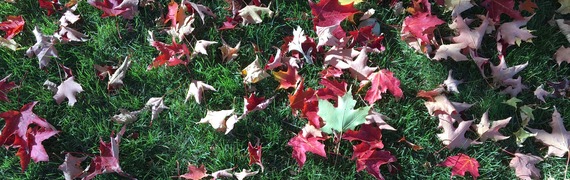 It’s finally fall!
That beautiful time of year when tree colors pop, the air is crisp, and things start settling down for the winter. After those pretty leaves fall, it’s time to get to work.
Leaves and algae
Leaves fallen on forest floors decompose and restock the soil with nutrients and organic matter. In more developed landscapes, leaves may fall on streets or sidewalks. When it rains, these leaves can wash into storm drains and then into lakes and rivers where they give a pop of green color as next summer’s algae blooms. That is because leaves contain phosphorus, a nutrient that in high amounts causes algae blooms in freshwaters. Just one yard-waste bag of leaves has enough phosphorus in it to create 200 lbs. of algae.
|
Manage leaves for healthy lawns and waters
-
Rake leaves along curbs and sidewalks. Help keep leaves out of lakes and rivers by sweeping or raking accumulated leaves along curbs and sidewalks. Never rake or blow leaves into the street.
-
Compost your leaves. Learn how to compost in your backyard. Or take them to city of commercial compost heap. Depending on where you live, these may be called “yard waste” or "brush” drop sites. Learn about city and private yard waste collection sites around Carver County.
-
Don’t trash or burn leaves. It’s illegal to add leaves to regular trash and burning them releases lots of air pollution and can cause breathing problems for sensitive groups.
-
Use leaves as mulch in your garden and lawn. Use a lawn mower to breakdown the leaves on the lawn so they fall between blades of grass. In garden beds, bagged or loose leaves add a protective layer of insulation for garden plants and shrubs. Mulched leaves are free fertilizer and add to your soil's health. Find more tips for mulching from Minnesota Extension.
-
Schedule a curbside pick-up. Check with your garbage hauler or other companies in the area to see if they’ll haul yard waste. Yard waste haulers typically bring yard waste to a commercial compost site. You will be required to put yard waste in compostable bags, either paper or compostable plastic.
-
Be mindful of pollinators. Leaves provide winter cover for pollinators. According to the Xerces Society, bumble bees and the vast majority of butterflies spend the winter with us and use leaf cover as protection. A thin layer of leaves can benefit your lawn and can be layered on garden beds to provide a protective habitat. Read more on why to leave the leaves.
 |
International E-waste Day aims to raise awareness about the issues caused by electronic waste globally. In 2019, the World Health Organization estimated that over 53 billion tons of e-waste was produced globally, but only about 17.4% of that was documented as being formally collected and recycled. Electronics can contain many different toxic substances. When these items are functional, the risk to health is low. Once electronics become waste, these substances can be released into the environment if not managed properly.
The Environmental Center in Chaska has been accepting and recycling electronics for over 20 years. Celebrate international e-waste today by recycling your unwanted electronics responsibly.
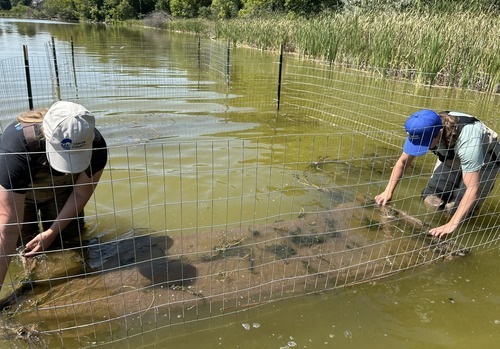
In August and September, staff transplanted over 3000 aquatic plants in Benton Lake. This project is part of the ongoing effort to restore Benton Lake's water quality.
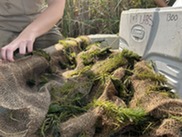
The lake has low numbers of aquatic plants which are necessary to filter nutrients, release oxygen, and provide habitat for wildlife. Staff transplanted coontail, northern milfoil, sago pondweed, leafy pondweed and chara. Since these plants propagate through fragments, they were either weaved through burlap and sunk to the lakebed with rocks or tossed into treatment pens as free floating. Staff will be monitoring their survival and success through bi-weekly visits. They are optimistic that the plants installed can survive to expand the plant community in Benton Lake.
Thank you to the Benton Lake Conservancy who are partnering with the WMO on this project and funded the study plots including the fencing materials and burlap.
|
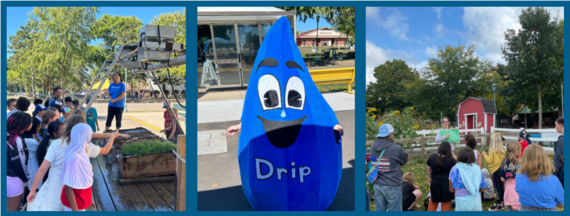 This past September, around 1900 students gathered at the Minnesota State Fair grounds for a 1-day event to learn about water. The Metro Children's Water Festival teaches students about water resources and how they can help ensure a future where both the quantity and quality of water resources are protected and managed wisely. This year's festival featured the following.
- 73 classrooms
- 23 schools (2 from Carver County)
- 98 presenters
- Over 100 volunteers
The festival provides interactive opportunities for students to learn about a variety of water topics including groundwater, where wastewater goes, aquatic bugs, fish, mercury pollution, how native plants clean water and more. It is hosted by the Metro Conservation Districts and put on by the staff from the 7-county metro area.
GreenCorps members
Two GreenCorps members are serving with Carver County Environmental Services and Carver County Water Management Organization for the next 11 months. The Minnesota GreenCorps program is an AmeriCorps service program, coordinated by the Minnesota Pollution Control Agency with the goal of preserving and protecting Minnesota’s environment while training a new generation of environmental professionals.

Meet Tom
Hello everyone, my name is Tom, and I will be serving as a GreenCorps member with the Carver County Water Management Organization for the next 11 months. I will be working with the Water Management Organization on native plant and chloride pollution education along with stormwater practice inventory and assessment.
I studied environmental sciences, communications, and political psychology at the University of Minnesota - Twin Cities. My passions include storytelling, community engagement/education, and a love of our outdoor spaces. I am always curious and love the opportunity to learn something new, and love to explore the outdoors with that same curiosity. I am grateful for the opportunity to serve close to home and am excited for the opportunities and lessons this next year will bring.
|
Meet Zaria
Hello everyone! My name is Zaria, and I am so excited to be joining Carver County as a GreenCorps member! I recently graduated from UW-Madison where I majored in Conservation Biology and Psychology. Though I grew up not too far from here in Rochester, MN. My main focus will be on waste reduction efforts including the Lending Library, the MN Composting Council, and Emerald ash borer treatment education. My passion for environmental sustainability stems from my love of the outdoors and wanting to protect and preserve these spaces both for the creatures that live there and all of us. In the future I’m hoping to continue creating sustainable change in my community through behavior change and local initiatives!
|
|
 |

Meet Matthew
Environmental Services Intern
Hello everyone! I'll be joining the crew at the Environmental Center as an Environmental Intern. I am a recent graduate from Minnesota State University, Mankato, where I earned my bachelor's degree in environmental science.
Growing up, my grandparents instilled in me a passion for all things nature and conservation. I often found myself exploring the woods around Chaska or searching for worms and toads in my backyard. These experiences left a lasting impression and helped cultivate my desire to preserve the environment so that others may experience the joy I have found in nature.
This fall, I am excited to apply what I learned in a classroom to real-world problems. You might see me at the Environmental Center collecting hard to dispose of materials in a safe and responsible manner. I will also be at various educational workshops put on by the county and assisting on a variety of projects throughout the community.
|
|