|
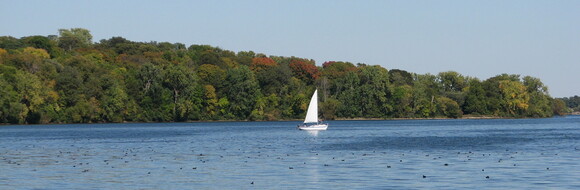
The Carver County Water Management Organization sends an annual bulletin with updates on the health and water quality of lakes and streams. This bulletin is sent out every summer. If you would also like to receive our monthly newsletter for more frequent updates on our projects and programs, or, if you would like to unsubscribe from our newsletters visit: www.carvercountymn.gov/government/e-notifications. We appreciate your interest and dedication to keeping our local lakes healthy!
|
|
Our many lakes and streams in Carver County rely on you to help keep them clean and healthy. Learn more about water quality in the Carver County Water Management Organization, our ongoing projects and programs, and ways for you to get involved |
|
Lake water quality standards
Minnesota has water quality standards to protect lakes, identify pollution, and guide regulation. Lakes are monitored for phosphorus, chlorophyll-a, and transparency measurements. Lakes are listed as impaired when the average summer value for a measurement is higher than the state standard. Additionally, the water quality standards are different for different classifications of lakes: deep, shallow, or trout lakes.
|
|
Lake water quality updates
Staff members monitor 21 lakes in Carver County: Bavaria, Benton, Big Woods, Brickyard, Clayhole, Burandt, Courthouse, Eagle, Fireman's, Goose, Grace, Barnes, Myers, Hazeltine, Hydes, Jonathan, McKnight, Meuwissen, Miller, Reitz, Swede, and Waconia.
Lake grades
Each year we grade our lakes on an A - F scale based on our water quality data. Here is the report card for our lakes in 2023.
|
|
A: Courthouse, Brickyard, and Fireman's
Lakes with A grades are beautiful and clean and can be enjoyed recreationally throughout the season.
All three of our grade A lakes are in downtown Chaska. These lakes were originally clay mines that were later filled with water. Courthouse Lake is a designated trout lake, which means it is stocked for trout each year and must maintain very high water quality.
|
|
B: Waconia and Bavaria
Lakes with B grades have good water quality, but algae may limit swimming, particularly towards the end of the summer. The drought last year reduced stormwater runoff entering the lake which improved water clarity on Lake Bavaria.
|
|
C: Myers, Burandt, and Reitz
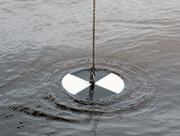
Lakes with C grades have average water quality. Algae may limit recreation earlier in the summer with some algae blooms. Myers Lake would have received a higher grade if it was deeper. The lake's shallow depth affected the measurements for water clarity, which is measured by lowering a tool (secchi disk) into the lake until it is no longer seen. The disk continually hit the bottom of the lake.
|
|
D: Eagle, Grace, Hydes, McKnight, and Meuwissen
Lakes with D grades have poor water quality and algae blooms that limit recreation throughout the year. The Baylor Park beach on Eagle Lake is often closed to swimming early in the summer because of poor water quality on the lake.
|
|
F: Barnes, Benton, Goose, Swede, Big Woods, Hazeltine, McKnight, and Jonathon
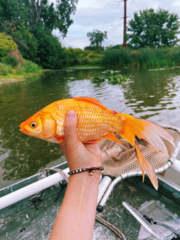
Lakes with F grades have very poor water quality and are not enjoyable for recreation. Big Woods Lake, Lake Hazeltine, and Lake Jonathan are all part of the Grace Chain of Lakes, which are infested with goldfish that muddy the water and kill native life.
|
|
 Phosphorus
This nutrient is necessary for lake health, but in high concentrations it can cause algae blooms. In 2023, 6 lakes were not impaired by phosphorus: Lake Bavaria, Brickyard Lake, Burandt Lake, Myers Lake, Fireman's Lake, and Lake Waconia.
|
 Chlorophyll-a
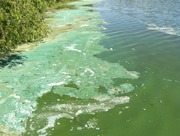
This compound is produced in algae and is a measurement of how much algae is in the lake. In 2023, 5 lakes were not impaired by
chlorophyll-a: Brickyard Lake, Courthouse Lake, Fireman's Lake, Myers Lake, and Lake Waconia.
|
 Transparency
Staff measure transparency (clarity) using secchi disks. The disk is lowered into the water and the depth measured when the disk disappears. The deeper the reading, the better the water clarity. In 2023, 6 lakes were not impaired for transparency: Lake Bavaria, Brickyard Lake, Burandt Lake, Courthouse Lake, Fireman's Lake, and Lake Waconia
|
|
Freshwater mussels
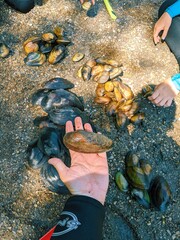
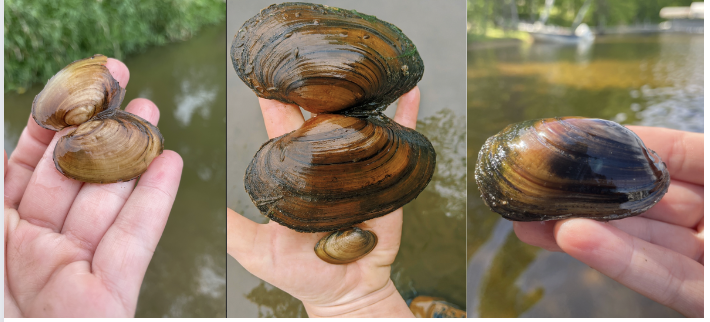 Native freshwater mussels, what many call clams, often go unnoticed buried at the bottoms of lakes and rivers. Most times we only find a shell washed up on a beach. Though hidden, freshwater mussels are fascinating, help clean our lakes and rivers, and are one of the most endangered animals in the United States. In Minnesota, 28 of our 51 native mussel species are listed as endangered.
Freshwater mussels live buried at the bottom of a lake or stream filtering the water for oxygen and food such as bacteria, protozoans, and algae. This filtering action helps clean water and makes the mussels sensitive to water pollution.
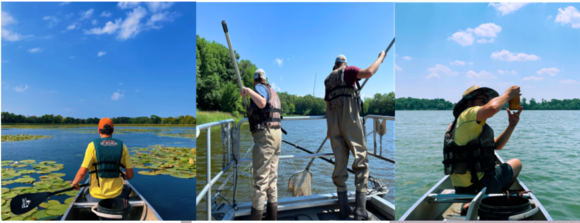
The Carver County Water Management Organization began native mussel monitoring in 2017 to understand what species are found in the County and their distribution.
|
|
Monitoring surveys
Check out the links below to see all of the data we collect in Carver County.
|
|
|
The Carver County Water Management Organization completed 31 projects in 2023 to improve water quality in our boundaries. These projects included Bevans Creek dam removal, well sealing, stormwater pond, reuse installations, and native plantings, which will allow us to keep our lakes and streams clean and healthy for generations to come. Learn more about some of our projects below.
|
|
Completed projects highlights
West Chaska Creek re-meander
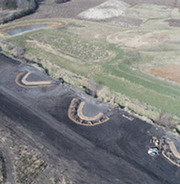
West Chaska Creek originally curved and meandered throughout Chaska. These meanders help slow down water speed and prevent erosion of the streambanks. Decades ago, a portion of West Chaska Creek near Engler Blvd and Hwy 212 was straightened to create a drainage ditch. This allowed water to flow faster, which increased the amount of sediment deposited into the stream by erosion.
In 2019, five new meanders were constructed near the stream that added 1,100 feet to the stream. This year, the drainage ditch was plugged, and the meanders were connected to the creek to force water to flow through them. This project prevents erosion and reduces the amount of sediment in West Chaska Creek, which ultimately drains to the Minnesota River.
|
|
Goldfish feasibility study
While doing routine monitoring in April 2019, Carver County Water Management Organization staff discovered thousands of goldfish in an inlet to Big Woods Lake in Chaska. It was the most densely populated discovery of goldfish staff had seen. Like many aquarium pets, goldfish are not native to Minnesota. When found in lakes and ponds, goldfish pose a threat to water quality and overall ecological health. In the spring of 2021, Carver County Water Management Organization received a grant from the Board of Water & Soil Resources for a three-year work plan to study and remove goldfish from Big Woods Lake and Lake Hazeltine where the largest populations of goldfish are found. The study looked at how, where, and when the goldfish move in the lakes and what removal techniques work best. The study was completed this spring of 2024 and staff are working with a consultant on drafting the report.
New information will be posted on our Goldfish removal study website as the report is developed.
|
|
Carver Creek Streambank Project
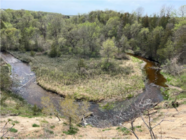
A feasibility study was completed last year identifying ways to stabilize and partially restore a streambank that failed during large rain events in 2012. The phase of the project will be to move Carver Creek 50 feet from the foot of the 60-foot-high streambank to reduce the chance of future bank failures. Planning will start this year for the project with a goal of completion by the end of next year.
|
|
 |
Upcoming projects
Eagle Lake feasibility study
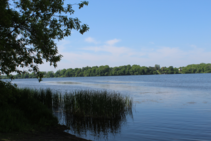
Eagle Lake has high concentrations of nutrients that cause algae blooms and poor water quality in the lake. This feasibility study will research two methods for improving water quality. The first will look at the potential of using ALUM to reduce the amount of nutrients in the lake’s water and benefits of removing curly leaf pondweed. Curly leaf pondweed is an invasive plants species known to cause ecological damage in a lake. The second part of the study will identify options to reduce nutrients (soluble phosphorus) from entering the lake from the nearby wetland complex.
|
Lyman bridge stream naturalization
This project will restore a 130-foot section of East Chaska Creek that is piped underground. The project will “daylight” the water creating restored natural stream section. This project is part of the City of Chaska’s 82nd street road construction project. Along with creating fish passage in the new stream section, the project will reduce nutrient pollution loads into Big Woods Lake.
|
|
 |
Big Woods ravine stabilization
A feasibility study was completed last year on a design to stabilize a ravine located on the east side of Big Woods Lake in the City of Chaska. The project would hard armor the head into the ravine, reshape the channel bottom with three grade checks, and grade slopes.
|
|
 |
|
|
Landscape with native plants
|
|
 |
|
What are native plants?
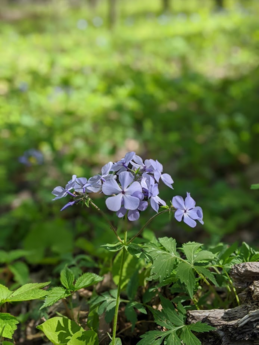
Native plants are those local to Minnesota, that have been here since before European immigrants arrived, and are adapted to our soil and climate.
Native plants and water protection"
|
Adopt a drain
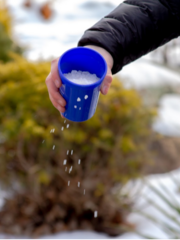
 Cities sweep their streets once or twice a year but cannot keep streets clean all the time. The Adopt a Drain program asks residents to “adopt” a storm drain in their neighborhood and keep it clear of leaves, trash, and other debris to reduce pollution in our waters. Rain washes everything on streets and paved surfaces into storm drains, which flow directly to local lakes, rivers, and wetlands. Many pollutants, such as fertilizer, pesticides, and road salt, can kill aquatic life. These natural pollutants break down into nutrients that feed algae, creating algae blooms that suffocate other aquatic life. Keeping storm drains in your neighborhood clean helps prevent pollution from entering our waterways.
Volunteer August 10 at Starry Trek
Volunteers are needed on Saturday, August 10, 2024, to search for starry stonewort, an aquatic invasive algae that can spread easily and form dense mats in lakes.
Starry Trek is an annual, one-day event across Minnesota where volunteers meet at local training sites to learn how to identify starry stonewort and other aquatic invasive species. After the training, participants head out to local water access points to look for signs of these aquatic invasive species.
|
|
Water quality cost-share program
The Carver County Water Management Organization wants to help you protect our water. If you have a project you would like to implement that will improve water quality, we can match 75% (up to $5,000) of the cost of your project. Projects include raingardens, shoreline restoration, water reuse projects, and more!
|
|
Pollinator conservation program
The Carver County Soil and Water Conservation District has funding to help you install new pollinator gardens! These gardens provide food and shelter to native pollinators and keep our water clean by preventing soil erosion and stopping runoff from reaching lakes and streams. You may receive up to $2,000 to create this beautiful habitat!
|
|
Shoreline habitat program
Shorelines with native plants keep runoff out of our lakes and streams better than turf grass. The Carver County Soil and Water Conservation District has funding to convert your turf grass shoreline into native habitat. You may receive 75% (up to $2,500) to establish native shorelines that keep our lakes clean!
|
|
Rachio smart sprinkler discount
The County and cities have partnered with Rachio to provide discounts to residents for smart sprinkler controllers. These controllers use local weather data to know the best times to water your lawn and garden, saving you money and conserving water. The program is available in the following cities: Chaska, Victoria, Carver, Mayer, Watertown, and Waconia.
|
|
|
You can make a big difference in the quality of lakes and rivers. Please do not hesitate to reach out to us with any questions, comments, or concerns about lake and stream health in Carver County.
|
|
|
|
|


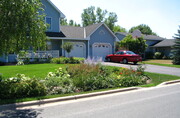
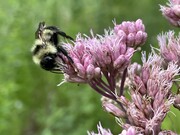
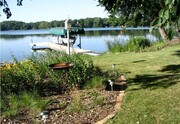



Native plants protect our lakes and rivers. Their deep roots absorb extra rain water and allow it to seep into the ground. This prevents stormwater runoff and its pollution, and recharges groundwater supplies. Additionally, native plants provide habitat for pollinators, birds, and other wildlife. Plus, if you have a troublesome, soggy spot in your yard, native plants and their deep roots are a great solution for getting some drainage.