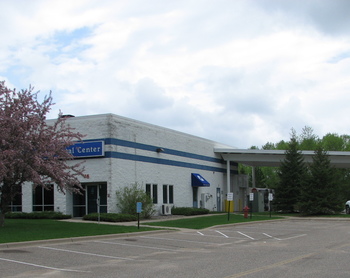
Environmental Center tours available
Group tours are available at the Carver County Environmental Center.
What you will learn
How waste is created. How to reduce waste. What is collected at the center and why.
Details
Ages 5 and older. Group sizes of 3 to 30. Tours take 45-60 minutes.
What you will see
Inside and outside operations. Recyclables, special wastes, and hazardous wastes.
Call 952-361-1800.
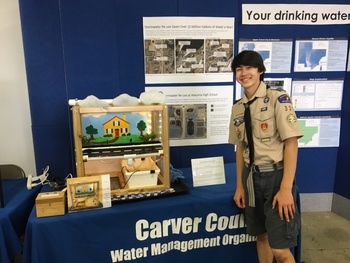 Thank you to Jacob who built a fantastic stormwater reuse display for our Carver County Fair as his Eagle Scout project. The stormwater reuse model was used everyday at the fair to show how stormwater reuse works and highlight the work CCWMO and cities are doing to preserve groundwater and prevent surface water pollution.
Recently, staff from Carver County Water Management Organization found goldfish in two
lakes in Chaska, Big Woods Lake and Lake Hazeltine.
Pets such as
fish, turtles or snakes, and even aquatic plants, that typically live in an
aquarium cause destruction if released into the wild. Goldfish, for
example, are related to carp, sharing many of their destructive habits such as
uprooting plants and stirring up sediment and nutrients in the water. Their
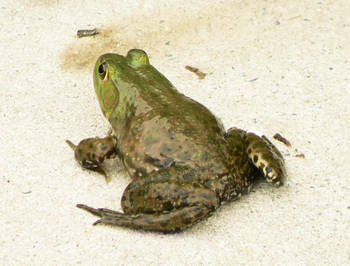
introduction to a lake or river causes poorer water quality. Bullfrogs, another example, are only native to
the southeastern corner of Minnesota. Sold as pets, and released, these frogs
not only destroy the habitat but also eat anything they can fit in their mouth
including native frogs and small mammals.
Many aquarium pets are not native to Minnesota. They often have no natural predators and can
reproduce rapidly. Often, they compete for resources with our native Minnesota
animals, taking food and shelter. They
can also carry diseases, killing native fish and animals that are not used to
the new germs.
Releasing aquarium pets may feel like giving it a chance or
a new home, but in reality, it causes harm to native plants and animals and
also the pet itself and is often illegal.
Finding a new home
The appropriate thing to do when an aquarium pet is no
longer wanted is to donate it or take it to a surrender event. Surrender events are usually free and open to
the public. You can bring aquatic animals and plants and the hosting
organization will help to find them new homes.
Visit the MN Aquarium Society webpage, MN Sea Grant, or MN
Herpetological Society webpages to view surrender events and adoption
information.
Another option is to check with local veterinarians and pet
stores for surrender and new home opportunities. Visit Habitattitude site for
more tips and information. Protect native plants and animals. Don’t release
pets.
We are including a new section in our newsletter called "Notes from the field" to help readers connect with what our monitoring staff is out and about doing, or experiencing.
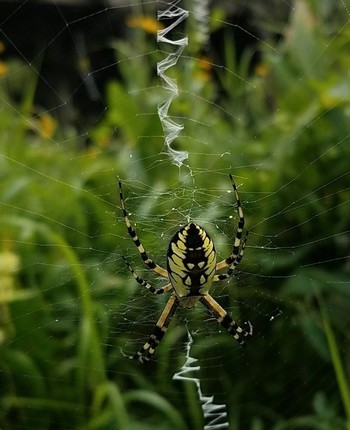
While monitoring, we've encountered an abundance of garden spiders (Argiope aurantia) near many of our
stream sites in Carver County. Even though these distinct black and yellow
spiders look threatening, they are quite harmless to humans. They do not attack
larger animals or humans. If they are bothered too much they may bite which yields
similar redness and swelling to a bee sting. They prefer to spin their webs in
wind-protected areas at the edges of sunny fields, so they are relatively
common in rural areas. A distinctive aspect to the garden spider’s web is the
zig zag pattern, called a stabilimentum,
down the middle (see picture). Be on the look-out for these beautiful creatures, but it may be best to admire them from a distance!
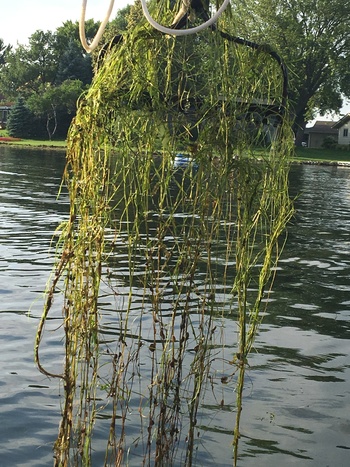
Recently we completed an aquatic vegetation survey of Lake
Waconia to better understand the different types, distribution and health of native
and invasive aquatic plants.
Aquatic plants can tell us a lot about the health of a lake. They also help purify water, stabilize lake sediments, are a
source of oxygen, and provide habitat for fish and other wildlife.
In Waconia,
we found over 20 different aquatic plant species. However, two common invasive plants, Eurasian Watermilfoil and Curly-leaf pondweed were also found frequently. We observed an abundance of Zebra mussels along stems and leaves of plants. These little guys look relatively
harmless but can wreak havoc on lake communities by filter feeding the water
too efficiently, removing beneficial algae that young fish and other aquatic
species need to survive. They also reproduce in high numbers and attach to any
hard surface such as rocks, plant stems, native mussels, and lake structures such
as docks, which can cause harm to boaters and swimmers because their shells are extremely
sharp.
Zebra mussels were first found in Lake Waconia in 2014 and have established fully in the lake. Future generations may
experience a different lake as the ecosystem is altered by the presence of the
zebra mussels. We hope you continue to enjoy our natural resources and help prevent new invasive species to our lakes practicing "clean in- clean out" techniques.
- your friendly water resource technicians, Andy & Jess
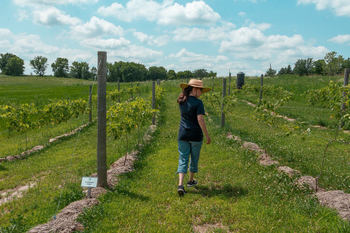 It’s hard to believe Roots Return owner and operator Lori Cox has only been in the farm business for a few years. Since purchasing the Roots Return property in 2014, she has built environmentally-friendly practices into every aspect of her operation, earning recognition from the Carver County Soil and Water Conservation District.
Lori works hard to conserve water and soil on every inch of her 16 acre property. The sandy soil is prone to erosion in heavy rains, which has been a big challenge this year. Pollinator-friendly cover crops like clover keep the soil in place and return nutrients to the earth, while rain barrels capture runoff from her barn’s roof that might otherwise wash away delicate seedlings planted nearby.
Read more
|