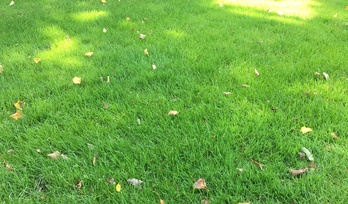
 June 25th & 27th
Are
you tired of mowing your lawn? Looking for a more sustainable option
that requires less water? Join us for an evening workshop and learn how
to convert your traditional grass into a no-mow lawn. The terms “no-mow”
and “low-grow” refer to a type of grass called fine fescues. These
species are one of the most shade tolerant turfs, require less water,
and little to no mowing.
In
this practical workshop you’ll learn everything from how to assess your
current lawn, to selecting the right seed and planting and maintaining a
no-mow lawn. Come with your curiosity and leave ready to take on a
project in your own yard!
Register for June 25th workshop
Chanhassen Library, Wilder Room, in Chanhassen
Register for the June 27th workshop
Southdale Library, Helen Young Room, in Edina
The Carver County Aquatic Invasive Species Program
will be in full swing beginning Saturday, May 12th, right in time
for fishing opener. Watercraft inspectors will be inspecting boats and
educating boaters at many public accesses throughout the County.
A decontamination station will also be conveniently
available on the east shore of Lake Waconia off Co. Rd. 92 from 6am to 8pm
every Friday through Sunday and holidays continuing into October.
Pierson and Wasserman lakes will share an inspector on
weekdays. Signs will be placed at both accesses directing water crafters to
contact the inspector on call for any inspection needs when entering or exiting
the two water bodies.
Boaters should be on
the lookout for a new invader called Brittle Naiad. It is currently located in
Lake Ann and Lotus Lake in Carver County. It grows early in the season and
forms dense mats at the water’s surface, overtakes habitat by out competing
native aquatic plants, and provides unsuitable shelter, food, and nesting
habitat for native animals. Like most aquatic invasive plant species, it is primarily
spread through the movement of water-related equipment. Plant fragments can get
tangled in trailers, motors and inside all watercraft including boats, canoes
and kayaks. Tiny Brittle Naiad seeds, which often are hidden in mud and debris,
can stick to anchors, ropes, boots, and waders, as well as scuba, fishing, and
hunting gear. It is important to CLEAN, DRAIN, and DRY all water related
equipment in order to avoid spreading aquatic invasive species.
Contact Andrew Dickhart for more information or with questions 952-361-1871 adickhart@co.carver.mn.us.
Pet Surrender Event May 12th
A local girl scout has partnered with Habitattitude to host a pet surrender and adoption event for reptiles, amphibians or aquatic pets. See below for flyer and visit here to register to surrender a pet.

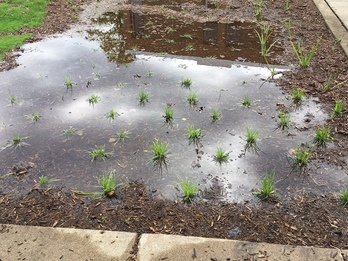 Water flows downhill. We observe this frequently in nature, but
sometimes forget that it happens in our own backyards. Your yard is its
own micro-watershed where water flows down the path of least
resistance. Rain coming off your roof, driveway, gutter, etc. should
soak in when it reaches the ground, but if the ground is already full of
water (saturated) the extra water will runoff to the lowest nearby
area.
Read more
The next step in the Coney Island Project is to do a little bit of cleaning up.
Carver County Parks is coordinating 4 clean up events, with the groundbreaking event on Saturday June 2nd. They are looking for volunteers to help out. Call 952-466-5250 to sign up or learn more.
Park Event Calendar

As children we love color. We mismatch socks, draw rainbows,
wear tie-dye, and are drawn to bright and chaotic color. As we grow up, many of
us begin to prefer more structure and organization in our color. Few places is that
more apparent than in our home lawns.
The trend of only grass in our lawns has led to increases in herbicide use
and decreases in the ability of our yards to support wildlife. Not to mention a
loss to children; no more popping dandelion heads or making a crown of flowers.
It’s time to let a little color back into our lawns and our
lives.
The color makers
Many lawn weeds produce colorful flowers. I’m going to focus
on one, dandelions. Dandelions are common perennial lawn weeds. They are found
globally, on every continent except Antarctica.
It’s not a finicky plant. It can bloom in full sun, part sun, or shade
and is frequently found in disturbed soils.
The mark of survival
Dandelions are an early food source. If an insect makes it through a Minnesota
winter, yellow blooms signal survival until more flowers bloom later on. There
isn’t a ton food available in early spring. Dandelions are some of the first
plants to flower and offer nutritious food to our buzzing friends. Many insects including honey bees, bumble
bees and native solitary bees, use and depend on dandelions.
It’s about the soil
You can allow for pops of yellow and control the population. To do this you must have a healthy soil and
be willing to do some hand pulling.
Controlling for weeds is about the soil. Soil is the livelihood
for both grass and weeds. Grasses struggle and weeds prevail in soils that are
not pH balanced, compacted, poorly fertilized and don’t receive adequate water.
Start with a soil test. You can mail soil samples to the University
of Minnesota’s Soils Lab who will test it and provide a report to you of soil
needs. Secondly, rent a machine or hire
a contractor to aerate during growing season in early spring or fall to reduce
compaction. Third, fertilize – but not without a soil test. Know your soil’s needs before selecting a
fertilizer.
If the number of dandelion is getting too high for your
liking, go out and dig a few up.
It’s fleeting
Remember the major bloom of dandelions is short lived. They
last about 3-4 weeks and then blend themselves back in with the green
grass. Give your grass some color and
help bees and other wildlife.
|