| |
|
July 2026
We publish our Constellations newsletter to share ways that Assistive Technology can be life-changing for people with disabilities and raise awareness of the services offered through the STAR Program and our partners.
|
|
From the Director
Minnesota STAR Program’s mission is to help Minnesotans with disabilities and older adults access the assistive technology and services they need to live, learn, work, and participate fully in their communities. One of the most important ways we fulfill that mission is through collaboration with our STAR Partners across the state. In this issue’s STAR Contract Partners feature, you’ll learn how interested organizations can apply to be a STAR Partner and hear firsthand what it’s like to participate in this important work. The upcoming Request for Proposal for the next Professional Technical Contract will be released this fall, replacing the current Master Contract that will be expiring in May of 2027. We are grateful for the dedicated partners who help make our services possible and look forward to welcoming even more organizations into our statewide network.
In STAR Services Spotlight, we highlight Technical Assistance, one of the unique services Minnesota STAR provides. Through technical assistance, we support organizations by helping ensure assistive technology is included in policies, programs and planning efforts, also serving as a resource and consultant on assistive technology issues.
We also enjoy recognizing the individuals who help guide our work. In this issue, we are featuring STAR Advisory Council Member Alma Silver.
In STARS Across the State, read an interview with Caitlin Netzer, Communications Officer for Minnesota Council on Disability (MCD). MCD is an independent state agency that advocates and represents Minnesotans with disabilities.
In Technology and Apps, we introduce a new device available through our Device Loan Program: the LyriQ Assistive Reader for individuals who are blind or vision impaired. Another reader device is the subject of our STAR Success Story from STAR Partner LiveLife Therapy Solutions.
Be sure to check the STAR Highlights/What’s New section for upcoming events and webinars, including MN STAR Program’s new educational series: Tech for Transition: Assistive Technology Across the Lifespan. The free three-part educational series explores how assistive technology can support people through major life transitions. It’s designed for professionals, caregivers, families, advocates, and individuals with lived experience. Sessions are held virtually, June through August.
Also, refer to Helpful Links for resources about assistive technology.
We hope you enjoy this issue of Constellations and be sure to subscribe for next time!
Amy Perron, Program Director
|
|
|
Do you like the Constellations Newsletter? Don’t miss an issue!
|
|
|
Assistive technology (AT) is something that can help you do things that might otherwise be difficult or impossible to do on your own. It is an item or device that can help you speak, walk, talk, remember, see, hear, learn and more.
Take a look at the video on channel.
|
|
|
Did you know? There is no cost to borrow equipment from the STAR Program or our partners! You can schedule a time to pick up the equipment or we can ship the device at no cost to the borrower. The borrower is responsible for returning the item back to the program they borrowed it from at the end of the six-week period by scheduling an appointment to return the device or by paying to ship the equipment back to the program.
|
|
Technical Assistance: Ensuring Accessibility Through Collaboration
Minnesota STAR Program. Through Technical Assistance, STAR partners with agencies, organizations, and programs across Minnesota to ensure accessibility and Assistive Technology (AT) are considered in planning, policies, and services.
STAR serves as a trusted subject matter expert and collaborative partner, helping organizations identify barriers and develop practical solutions that improve access for people with disabilities. Unlike a single training or consultation, Technical Assistance often involves ongoing communication and collaboration over an extended period.
Recently, STAR participated in a cross-agency effort to help professionals better understand the process of addressing Assistive Technology needs for youth in transition with Individualized Education Programs (IEPs). Historically, this process has been confusing for IEP teams. The goal of the project was to create an easy-to-understand process map that guides professionals, encourages collaboration, and keeps Assistive Technology consideration at the center of transition planning.
If you represent an agency, nonprofit organization, educational program, or other entity interested in improving accessibility or learning more about Assistive Technology, the Minnesota STAR Program is available to help. Contact STAR to learn more about Technical Assistance services.
|
|
|
Check out our online lending library at MN AT4ALL where you can see many of the devices hosted by STAR and our partners. You can check out a loan online and a staff member will reach out regarding next steps.
For more information, contact STAR. We look forward to hearing from you!
|
|
Our Partners Help Broaden Our Reach State-wide
The federal 21st Century Assistive Technology Act, requires programs like STAR to provide the following services: assistive technology demonstrations, loans, and reutilization services. In order to support the entire state with a small team, STAR has broadened their ability to meet people where they are, closer to their communities where possible.
|
|
Is your Organization Interested in Becoming a STAR Partner? Application Process Begins
The STAR Program is federally funded to provide Minnesotans with access to assistive technology (AT) devices through device loans and device demonstrations. With a team of four staff members serving all 87 counties, collaboration is essential to meeting statewide needs and federal requirements. To expand access to services, the STAR Program partners with existing lending libraries and organizations. The current Master Contract remains in effect through May of 2027. A new Request for Proposal (RFP) will open in the Fall of 2026 for organizations interested in becoming a STAR Partner and supporting assistive technology access across Minnesota.
About STAR Partners
STAR Partners play a critical role in the success of the STAR Program. Partner organizations are reimbursed for the activities completed on STAR’s behalf, including assistive technology (AT) demonstrations and AT loans. These demonstrations and loans help ensure that more Minnesotans can explore and learn about AT devices and services in their local communities.
“The demonstrations and loans our STAR Partners provide are incredibly important,” said STAR Program Director Amy Perron. “They allow us to reach and serve far more Minnesotans than we could on our own. We simply would not be able to meet the same level of need without our partners.”
The STAR Program is always interested in connecting with organizations that may be a good fit for partnership opportunities. Interested groups are encouraged to reach out to learn more about the program and ask questions about the application process. Perron noted that some areas of greater Minnesota have fewer AT services available, particularly in the southwest region of the state, where additional partners are especially needed.
“Our hope is that organizations in underserved regions will consider applying,” Perron said. “There is a real opportunity to expand access to assistive technology services for Minnesotans in those communities”.
STAR Partners bring valuable expertise to the network and work closely with the STAR team throughout the contract period. Partners and STAR staff meet quarterly to discuss challenges, share ideas, and collaborate on ways to improve services statewide.
Most STAR partners also list their assistive technology devices on the MNAT4ALL website, making it easier for Minnesotans across the state to locate and access available equipment.
How to Apply
The Request for Proposals (RFP) for the next Professional Technical Contract will be published in the Fall of 2026.
Organizations interested in becoming a STAR Partner should:
- Watch for the Professional Technical Contract RFP in the Fall of 2026.
- Complete and submit the application materials.
As part of the application review process, STAR evaluates each organization’s programs, services, assistive technology inventory, and staff capacity. Organizations that meet the requirements and are selected will enter into a Professional Technical Contract agreement with the STAR Program to become an official STAR Partner.
Perron added that, “Our partnerships have been in place for more than 10 years, and we’re excited to continue building those relationships and expanding access to assistive technology across Minnesota in the years ahead.”
|
|
|
STAR Partners are listed on our Device Loan page. Individuals can search for a device by product type and location by accessing the MN AT4ALL online lending library. If there are questions, we encourage people to check with STAR first.
|
|
|
Note: The Minnesota STAR Program is federally funded by the Department of Health and Human Services, Administration for Community Living in accordance with P.L. 117-263 Division E: 21st Century Assistive Technology Act. This law requires that the STAR Program have an Advisory Council. The purpose of the Minnesota Technology Advisory Council is to provide consumer-responsive, consumer-driven advice to STAR.
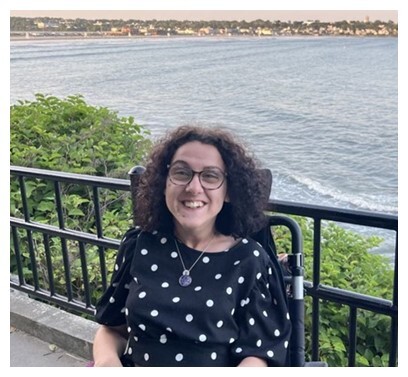
Alma Silver, Advisory Council Member
Alma Silver applied for and became a member of the Advisory Council in July of 2025 after seeing a post on Facebook highlighting the important work that the STAR Program and the Advisory Council undertake to make assistive technology (AT) accessible for all Minnesotans. Alma shared, “I’m excited to see how our work on the Council continues to evolve.”
Alma identifies herself as a physically disabled woman. She is a lifelong augmentative and alternative communication (AAC) device user who is passionate about promoting disability representation and empowerment within communities and institutions. Alma is an Accessibility Consultant, Inclusion Specialist and Workshop Facilitator who has been working in program development and adult education since 2018. Her experience brings an important perspective to the Council. She shared, “I’ve delivered dozens of workshops focused on disability inclusion and justice. My workshops equip people serving in education, healthcare, and social services with strategies to effectively practice ‘allyship’ as they serve people with disabilities.” Alma explained that she views allyship as a continuous commitment to acknowledge your own privilege and intentionally use it to elevate the diverse and multifaceted perspectives of the disability community in spaces where decisions are made.
Through her experiences, Alma discovered a calling: to advocate for greater communication access and equity for people with speech disabilities. Her long-term career goal is to further her education and pursue a master’s degree or PhD in Psychology and conduct research focused on mental health needs and experiences within the AAC community. She said, “Although I have some experience with AAC, there is still a multifaceted world of communication through AT that I am only just beginning to learn about. The Advisory Council is helping me to expand my perspective, learn, and grow so that I can more effectively serve people in my future vocation.”
Alma noted that there are so many facets of AT that she had little or no exposure to prior to joining the Council, including different forms of AT and adaptive tools designed specifically to help seniors continue to live at home with dignity and autonomy. She has also gained awareness of adaptive equipment that helps disabled parents care for their children at home. She added, “As a disabled woman who’s always dreamed about having a family of my own, it has felt incredibly affirming and empowering to learn more about technology that could turn this dream into reality.”
Alma has enjoyed getting to know people who she now calls colleagues through her work on the Council. “Specifically, I enjoyed seeing STAR Program staff at last fall’s Closing the Gap conference in Minneapolis. I was able to get to know them one-on-one and watch demonstrations of new AT featured at the STAR Program booth,” shared Alma.
The Council hosts quarterly virtual meetings. Alma added, “The meeting format makes meetings accessible for many members, including people like me who are balancing professional and family obligations.” Alma appreciates how the Council approaches AT through a “collaborative lens,” focusing on the lived experience of people who use AT on a daily basis. She added, “I appreciate the Council’s view that there is always something that can be learned about, modified, or improved upon to make AT even more impactful and I am grateful that the STAR Council creates a welcoming and open space for members to raise their voices and bring new ideas forward.
She is excited to continue to contribute her perspective and ideas to the Council as an AAC communicator and strives to bring ideas to the table that focus on creating greater visibility and representation of AAC users within professional spaces. “People with speech disabilities disproportionately get talked over or omitted entirely from decision-making spaces, owing to the layers of bias and prejudice towards people who cannot communicate through spoken words alone. This is a reality that I am driven to play a part in changing through raising awareness of the many ways that AAC users can share their thoughts with the world around them.”
Outreach is also important and Council members are a key resource for raising awareness to what the STAR Program offers. Alma works to promote the STAR Program, adding, “As I pursue my future vocation as a mental health professional and researcher, I am excited to introduce the people to the many ways that the STAR Program can elevate help them further their personal and professional goals. Specifically, I will introduce people to the AT4All lending library as a means of sparking interest in AT that they may not have considered before but now would like to try.”
Alma related, “It is a privilege to gain such comprehensive AT knowledge. I look forward to future opportunities to learn about even more about AT and the life-changing potential AT has, both for me and the people I will work with and support in the years to come. I look forward to connecting with more advocates and leaders through the Council, and to welcoming new members as they join in the future.”
In her spare time, you might find Alma Silver out on her next accessible hiking or travel adventure, made possible by many different forms of AT, including her lightweight, portable travel wheelchair.
To learn more about the STAR Program Advisory Council and the work they do, email STAR: star.program@state.mn.us.
|
|
 |
|
Note to readers: in each issue, we feature a device from our lending library or a useful AT app we have found. There are many devices that can be demonstrated or trialed through our loan program at no charge to you. Check out our inventory of devices at the MN AT4ALL website. We also feature promising apps that help improve the lives of people with disabilities.
|
LyriQ Assistive Reader
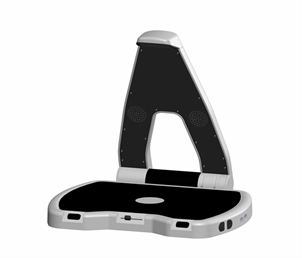
The LyriQ Assistive Reader was recently added to the lending library. This scan-and-read device is designed to assist people living with blindness or vision impairments.
LyriQ quickly scans printed documents and reads them out loud. We are impressed with its speed, accuracy, and ease of use. With LyriQ, a person can read books, letters, envelopes, prescription labels, and many other printed labels.
To use it, simply place the document on the device’s base surface. LyriQ automatically scans the page and begins reading the contents aloud within seconds. There are no buttons to press, making it highly responsive and easy to use.
For more information about the LyriQ Assistive Reader, visit the manufacturers website or you can borrow the device from our lending library at MN AT4ALL.
|
|
|
Minnesota Council on Disability (MCD)
Caitlin Netzer, Communications Officer for MCD
The Minnesota Council on Disability (MCD) is an independent state agency that represents and advocates for Minnesotans with disabilities. Its vision is a barrier-free Minnesota—one where people with disabilities have full access to all aspects of life through accessibility, equity, and independence. MCD’s work includes:
-
Advising state leaders on how policies and legislation affect Minnesotans with disabilities, including reviewing proposals, shaping accessibility standards, and coordinating disability policy across agencies.
-
Providing nonpartisan analysis and testimony at the Capitol, recommending changes that strengthen accessibility, civil rights protections, and compliance with disability rights laws and the Minnesota Human Rights Act.
-
Educating and engaging community members, businesses, nonprofits, and government organizations about disability issues and inclusive practices.
-
Amplifying disability voices by connecting people with disabilities to decision-makers and supporting civic participation.
-
Monitoring and advising on accessibility and civil rights across the public and private sectors, including ADA compliance, building code considerations, and physical and digital accessibility.
We recently spoke with Caitlin Netzer, MCD’s Communications Officer. She manages MCD’s social media, produces their newsletters, writes blog posts, and collaborates with the team on web content—especially featured news and updates related to the state legislature. As Caitlin explained, “Being relevant, transparent and timely in our communications is important to us, and we want involvement from the disability community to ensure that their voices are heard.”
Events, outreach, and disability pride
MCD maintains a strong presence at events across the state. Summer is especially busy, starting with the Twin Cities Pride and Disability Pride festivals and continuing through county fairs, where MCD may be less well known.
Caitlin shared why this outreach matters to her: “I’m from a smaller community. I know what it’s like to rarely see the people who provide services that can help. It can feel stressful and overwhelming. My life experiences help me relate to others who face similar challenges, and I want to make sure our support reaches everyone who needs it.”
An important part of MCD’s mission is bringing disability into all spaces: schools, government buildings, public programming, healthcare settings, libraries, playgrounds, courthouses, housing, and retail spaces. Essentially anywhere people gather, MCD works to advance disability inclusion and independence. One especially effective way to build disability awareness is through artwork created by, for, and with people with disabilities. Representation matters.
MCD is proud to commission fine art from artists with disabilities whose work reflects lived experience through deeply meaningful pieces. Because a picture is worth a thousand words, MCD prints posters featuring this artwork and distributes them throughout the state and nation. This representational artwork has become one of MCD’s most effective disability awareness tools.
One especially popular use for MCD poster art is in classrooms. Disability remains underrepresented in many educational settings, and MCD’s artwork helps connect students to both the lived disability experience and the broader civil rights story of people with disabilities. For students with disabilities, seeing themselves reflected in the artwork can be profound. For teachers, the posters are powerful tools for introducing disability rights and inclusion into classroom curriculum. Art invites participation, conversation, and connection.
“We love having artwork to distribute,” Caitlin said. “We contract with artists to create commissioned pieces for us, then turn that art into posters and similar materials that can be used in classrooms and distributed free of charge.”
Connecting people to information and resources
Disabilities can happen at any age. When someone can no longer do what they are used to doing independently, MCD can help by sharing information and answering questions about services and support such as the Disability Hub or the STAR Program for accessibility. As Caitlin noted, “We can provide new information and education; many people are just grateful to know that we’re here. That human connection is so needed.”
MCD works alongside many organizations with whom they work and who often join MCD at community events. Caitlin said, “I am happy to get the word out through our social media about activities organizations want to promote. We’re all trying to better the lives of Minnesotans with disabilities.” While MCD primarily serves people with disabilities, it also connects with case workers, educators, and others who support them.
MCD helps raise awareness about accessibility because it is so important to the disability community. The STAR Program has joined MCD at events such as the State Fair and has their own section in the booth for some shifts. Many stop in with accessibility questions, and STAR helps people with their needs. Added Caitlin, “We really want accessibility readily available to anyone, and we make sure to promote STAR.” Caitlin posts STAR’s State Fair schedule on social media so people know when STAR staff will be available.
The STAR Program is highlighted on MCD’s website and Resources page and is periodically included in the MCD newsletter. When someone contacts MCD with accessibility needs, staff refer them to the STAR Program.
Caitlin appreciates being involved in any way she can be, adding, “I want to give back and help this community thrive.” The agency embraces a simple guiding value that flows through the work: “Treat people like people.” Caitlin noted, “We continue expanding outreach so they can reach more people across Minnesota.” Ultimately, the work is grounded in people—the community, their stories, and what they want and need. As Caitlin sees it: “We’re just really focused on the people. That’s really what drives us… It’s all about that.”
|
|
Try Assistive Technology: Seeing is Believing!
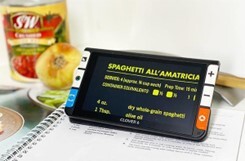
Clover 6 HD Magnifier
Our partners at Live Life Therapy Solutions shared a recent success story about the Clover 6 HD magnifier.
A woman had been relying on her personal care assistants to read her mail and recipes due to her vision loss. She had tried regular magnifying glasses before, but they caused terrible headaches and made her feel dizzy. She assumed there wasn't anything out there that would work for her.
When she had the chance to try the Clover 6 HD magnifier herself, everything changed. She liked that she could pause the screen, so the words didn’t move around with her hands, which resulted in vertigo. This device also had different color settings, making it much easier on her eyes. Being able to try it in person made a big difference; she said she likely would have ruled it out otherwise. Now she can read her own mail and recipes again, something she didn’t think would be possible. As she shared, “Being able to see this piece of technology firsthand allowed me to discover a solution that I didn’t think was possible.”
|
|
There are several events and learning opportunities that may be of interest about assistive technology. More information about upcoming events is available from the links. All events are in Central Time unless otherwise indicated. If you want to hear more about future events, subscribe to our Upcoming Events list!
|
|
|
Tech for Transition
Online Events
|
|
Tech for Transition: Assistive Technology Across the Lifespan
NEW! The MN STAR Program is launching Tech for Transitions: Assistive Technology Across the Lifespan, a free three-part educational series exploring how assistive technology can support people through major life transitions.
Sessions cover topics including transitioning into adulthood, parenting and independent living, aging, caregiving, and adapting to changing health or support needs.
Participants learn about practical technology solutions, person-centered planning, and real-world strategies that promote independence, safety, communication, and quality of life across all stages of life.
The series is designed for professionals, caregivers, families, advocates, and individuals with lived experience. Sessions held virtually June through August:
Session 1: Building Independence: Transitioning into Adult Life Thursday, June 25th, 10-11am CST – Register Today!
Session 2: Technology Through Life Changes: Parenting, Home, and Community Transitions Thursday, July 23rd, 10-11am CST – Register Today!
Session 3: Adapting Supports Over Time: Aging, Health Changes, and Higher Support Needs Thursday, August 20th, 10-11am CST – Register Today!
|
|
|
June 20 – 26
Minneapolis, MN
Blaine, MN
|
|
2026 Special Olympics USA Games
The 2026 Special Olympics USA Games will unite 3,000 athletes, 1,500 coaches, 10,000 volunteers, and 75,000 fans from all 50 states. Through the power of sports and inclusion, the USA Games will spark a change that transforms lives, communities, and the world. Events include an Opening Ceremony, Fan Zones (Mall of America, University of Minnesota and Blaine, MN) and a Closing Ceremony.
|
|
|
June 27 – 28
Loring Park
Minneapolis, MN
|
|
Twin Cities Pride Festival
The 2026 Twin Cities Pride Festival is a joyful celebration of LGBTQIA2S+ community, identity, and belonging. This year’s theme, “Our Voices, Our Future,” highlights the power of community and shared experience. The Minnesota Council on Disability will be at booths 226 and 227. Find out more about accessibility at Pride here.
|
|
|
July 16
10am – 2pm
75 Rev Dr Martin Luther King Jr Boulevard
Saint Paul, MN
|
|
ACT’s 4th Annual Disability Pride Festival
Join us to celebrate disability culture, community, and pride. This free, family-friendly event hosted by Advocating Change Together (ACT) honors the rich diversity and contributions of people with disabilities.
|
|
We have many device and educational videos. STAR posts videos often, so consider subscribing to our channel! Here are also two playlists on the channel:
|
|
|
|
|