| |
|
April 2026
We publish our Constellations newsletter to share ways that Assistive Technology can be life-changing for people with disabilities and raise awareness of the services offered through the STAR Program and our partners.
|
|
From the Director
April marks an important highlight: National AT Awareness Day and Minnesota AT Awareness Day is April 22. We’ve included an article about the impact that assistive technology (AT) has for everyone and encourage you to think about assistive technology you use.
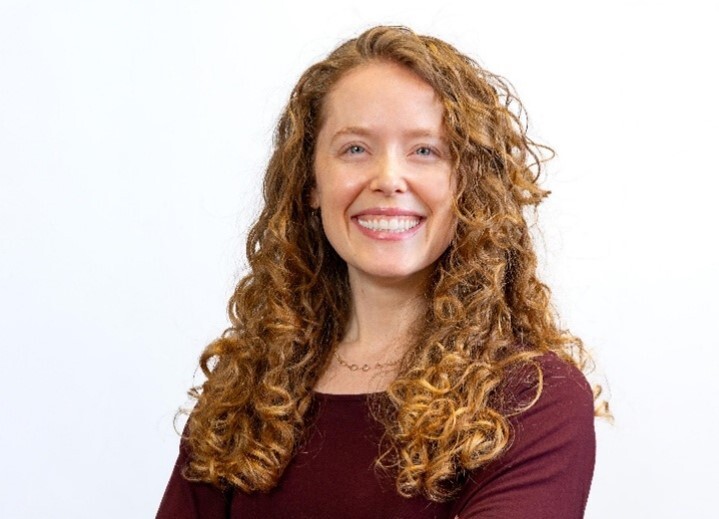
In this issue, we feature Alaina Gallagher in our STAR Services spotlight, who has contracted with us to expand the presentations and training offered through 2026.
In STAR Contract Partners, we introduce you to Community Based Services and share how our two agencies are working together to help people with disabilities achieve their employment goals.
We are featuring STAR Advisory Council Member Lauren Ireland in this issue and she highlights her experiences so far as a newly appointed member.
In Technology and Apps, we share how STAR came to house durable medical equipment that is difficult for caregivers to see or trial, courtesy of a partnership with LiveLife Therapy Solutions. It’s a great story of collaboration and extending the life of service beyond a grant that began with the PediaLift® Crib. Learn about the crib and other durable medical equipment now available for demonstration purposes and trials.
We share a success story from one of our partners about why “Try Before You Buy” is a low-risk way to check out AT ahead of making a purchase decision.
Finally, be sure to check to the STAR Highlights/What’s New section for upcoming events and webinars. Also, refer to Helpful Links for resources about assistive technology.
We hope you enjoy this issue of Constellations and be sure to subscribe for next time!
Amy Perron, Program Director
|
|
|
Do you like the Constellations Newsletter? Don’t miss an issue!
|
|
|
Assistive technology (AT) is something that can help you do things that might otherwise be difficult or impossible to do on your own. It is an item or device that can help you speak, walk, talk, remember, see, hear, learn and more.
Take a look at the video on channel.
|
|
|
Did you know? There is no cost to borrow equipment from the STAR Program or our partners! You can schedule a time to pick up the equipment or we can ship the device at no cost to the borrower. The borrower is responsible for returning the item back to the program they borrowed it from at the end of the six-week period by scheduling an appointment to return the device or by paying to ship the equipment back to the program.
|
|
April 22 is National AT Awareness Day and Minnesota AT Awareness Day
April 22 marks National Assistive Technology (AT) Awareness Day and Minnesota AT Awareness Day, a time to recognize the vital role assistive technology plays in the lives of people with disabilities and older adults—and to reaffirm our commitment to ensuring access for all.
Assistive technology is woven into everyday life in ways both visible and unseen. From communication devices and screen readers to mobility aids and smart home tools, AT empowers people to learn, work, communicate, and live independently in their communities. These tools are not conveniences—they are essential supports that open doors to education, employment, and meaningful participation in community life. A professional recently shared the following with us:
"Honestly, some of my deepest appreciation for assistive technology comes from what I've witnessed in my professional role. Working alongside clients — setting them up with a piece of technology, training them on how to use it, troubleshooting when they need help — it's just absolutely apparent how impactful AT is on people's lives, from a simple bump-dot to an iPad. I've seen people light up, about as close to a lightbulb moment as I've ever seen, when they're given something new to try and realize the newfound level of independence that technology will provide them."
This year is especially significant in Minnesota, as the Governor’s Office has officially proclaimed April 22 as Assistive Technology Awareness Day across the state. This proclamation highlights Minnesota’s ongoing commitment to accessibility, inclusion, and the well-being of people who rely on AT every day.
AT Awareness Day also shines a light on the importance of continued federal support and funding. State and national AT programs play a critical role in helping individuals find, try, and acquire the tools that best meet their needs. Sustained investment ensures that assistive technology remains within reach for everyone who can benefit from it—regardless of age, income, or location.
Equally important, today is an opportunity to recognize the people behind the work. Across the country and here in Minnesota, assistive technology specialists, program coordinators, researchers, and partner organizations dedicate their expertise and energy to connecting individuals with the right tools. Their efforts make it possible for people with disabilities and older adults to live with greater independence, dignity, and opportunity.
As we celebrate AT Awareness Day, we invite you to:
- Share stories of how assistive technology has made a difference.
- Learn more about available tools and services.
- Advocate for policies that expand access to AT.
- Thank the professionals and partners who make this work possible.
Together, we can continue building communities where assistive technology is recognized not as a luxury—but as a fundamental part of equitable access and full participation for all.
|
|
|
“It’s just a Great Space to Be!”
Alaina Gallagher—CEO and Owner of Technology for Independence Consulting
Alaina Gallagher is CEO and Owner of Technology for Independence Consulting, an organization dedicated to expanding awareness, access, and use of Assistive Technology (AT) and Remote Support (RS). She is committed to helping everyone gain access to the tools and support needed to live with greater autonomy and control.
The STAR Program has contracted with Alaina to expand the presentations and training offered through the end of 2026. She is also available as an additional resource to help people navigate technology authorizations through Home and Community-Based Services (HCBS) waivers. Her enthusiasm for AT and how it can meet the needs of people with disabilities is contagious, and she encourages care teams to view an individual’s support plan through a broader lens of what’s possible.
She credits her interest and growth in the field of AT to her experiences, including: developing training on a smart medication dispenser for case managers and others; becoming a member of Minnesota Networking and Education for Assistive Technology (MN NEAT) which expands the understanding of AT and RS throughout MN; joining the ARRM Technology Work Group which advances the use of technology for the greater promotion of independence and to help address workforce shortages, and through ARRM partnering with DHS to develop a state-wide training for case managers, providers, caregivers, and individuals to help guide them on technology policy interpretation and give them the tools to properly request and authorize AT and RS when it appropriately meets an assessed need; and lastly collaborating with the STAR Program and other technology experts statewide to expand training from policy interpretation to practical applications of AT, aimed at empowering individuals before they need additional assistance.
Alaina is very happy to be contracting with the STAR Program to provide caregivers with expanded training and education options. She believes increased caregiver understanding leads to greater opportunities for individuals with disabilities. She encourages individuals and their care teams to regularly explore technology and underscores that anyone can recommend AT if it meets a disability related need.
Being educated on AT can encourage a mindset shift around care delivery by empowering people to trust themselves, as the rules around qualifying were written to give people the flexibility to make recommendations about options and the confidence to authorize AT requests.
Alaina addresses situations in training from the standpoint of the person with disabilities, observing, “Our independence is so important to us when we have it, and it’s difficult to reflect on what that must be when a person doesn't have it. It’s important to work with people to find the most appropriate options for their support needs, while maintaining as much opportunity for them to remain in control and in charge of their lives as possible.” Her training directly addresses raising awareness of this challenge and offering practical tips for addressing them:
- When thinking about if a request is a “want” or a “need” it’s important to be mindful of how bias can influence decisions. She shared, “A bias may be in assuming that an individual doesn't need to have a trampoline they just want one because trampolines are for fun, when for someone with identified sensory needs jumping on a trampoline has been shown to meet their sensory needs and help them regulate internally. It’s AT. They need that. It will make a difference in their lives.”
- Sharing the perspective introduced by Dr. Tom Pomeranz, encouraging caregivers and support planners to consider whether the solution they are proposing would be “good enough for me”. This approach tells the people who are informing and making decisions about other people’s lives to think about if they were the ones the care plan was being developed for, would it be good enough for them. By casting this perspective, it helps people reflect more closely on how care and support is being set up. This helps bring AT into the conversation, because AT & RS provides more opportunity for people to continue doing things for themselves and remaining independent as long as possible, which is what many of us want in our lives.
- When thinking about someone who is indicated to “have behaviors” it’s important to remember that “behaviors” are almost always a form of communication. Instead of treating the “behavior”, Alaina encourages asking questions, such as: have we figured out what that communication means? Is there an opportunity to change the way care is being delivered because it isn’t aligning with the needs of the individual and is causing them discomfort? Could the cause of the “behavior” be due to something that happened upstream that resulted in them becoming dysregulated?
An organization can reach out to Alaina to schedule training for:
- The STAR Program or topics under the Assistive Technology or Remote Support umbrella.
- How to approach technology with caregivers who are unsure about the benefits.
- Big ideas for training and education for your organization.
Alaina finds fulfillment in helping people find the right tools to gain or maintain independence, hoping for support and an open-minded, person-centered approach for everyone who needs support. She concludes, “Working in this field to help people find the things they need is just a great space to be!”
To schedule training or for questions about training, email Alaina: alaina.gallagher@state.mn.us
|
|
|
Check out our online lending library at MN AT4ALL where you can see many of the devices hosted by STAR and our partners. You can check out a loan online and a staff member will reach out regarding next steps.
For more information, contact STAR. We look forward to hearing from you!
|
|
Our Partners Help Broaden Our Reach State-wide
The federal 21st Century Assistive Technology Act, requires programs like STAR to provide the following services: assistive technology demonstrations, loans, and reutilization services. In order to support the entire state with a small team, STAR has broadened their ability to meet people where they are, closer to their communities where possible.
|
|
Featured STAR Partner: Bridging the Gap between Ability and Opportunity in Employment with Assistive Technology
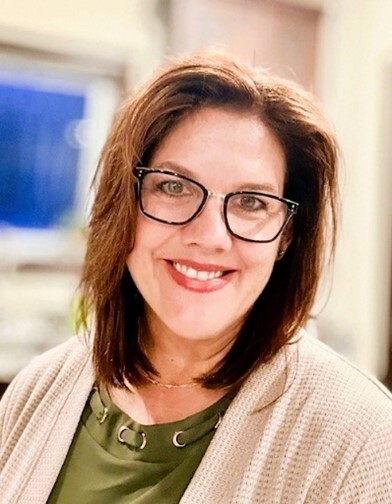
Jolene Juhl—Employment Services Manager, Sr. at Community Based Services - Vocational
Community Based Services (CBS), a service line of Minnesota’s Direct Care and Treatment Agency and the STAR Program have come together to help people with disabilities achieve their employment goals. CBS vocational programs help people with disabilities prepare for, find, and keep jobs in their communities.
Jolene Juhl, Employment Services Manager for CBS, shared how the two agencies came together to promote the STAR Program and to provide access to the STAR Program’s AT4ALL lending libraries.
“We primarily support adults with disabilities after they transition out of High School and are pursuing meaningful, life enrichment activities such as volunteering and those looking for their own jobs”, Juhl explained. “These individuals have some of the most complex challenges in community life and need more support than what’s typically available.” The organization is person-centered and built around a ‘customized employment’ approach, focusing on each person’s strengths, interests and needs to find the right fit for the job. They look for common themes, partner with employers to create or match job opportunities, and measure success by how the work or role improves the person’s life.”
There are 20 CBS vocational programs across Minnesota, staffed by job coaches. Regionally based employment counselor specialists are also available to provide qualitative guidance for the programs. The specialists provide subject matter expertise to several programs in their areas and work together across the state to bring ideas from one region to the next. One area they focus on is providing a shared platform to generate lists of software and applications to promote independence in the individual’s community. This includes providing demonstrations of devices obtained through the AT4ALL library. CBS also provides training nationally: Minnesota’s Customized Employment (MN CE). This training is approved by the Association of Community Rehabilitation Educators (ACRE), a national organization that certifies employment specialists and other vocational rehabilitation staff to deliver high-quality customized employment services for people with disabilities.
“We first became acquainted with the STAR Program when two of our regionally based Employment Counselors met with STAR Program Director Amy Perron, to learn about how Assistive Technology (AT) enhances a person’s quality of life and supports independence,” Juhl recalled “Then through the University of California, the two became certified AT practitioners.” This equipped the service line with knowledge of practical tools and techniques of AT accommodations and applications that could meet the needs of individuals with various disabilities in many settings. Juhl emphasized that it’s been impactful and helpful to bring their knowledge and the resources in the AT world out to all regions of the state.
Next was a meeting between regional rehabilitation supervisor Lindsay Alexander and Juhl with the STAR Program Director Amy Perron to determine how the organizations could work together and further the goals of each. CBS wanted to borrow AT from the STAR lending libraries, and the STAR Program wanted to reach more people about their services, which CBS could do. “We all recognized how important collaborating could be,” Juhl said. Now CBS can borrow AT devices from the STAR Program’s AT4All lending library to do demonstrations or to conduct a trial run in a program. Together, CBS and the STAR Program provide services that enhance a person’s life, allowing a person to be as independent and successful as they can be at their job, which is a shared goal.
“We emphasize working with the person who is looking for the job. Our focus is on getting to know the person first, so that we can try to find a job that's going to fit their skills, interests, and abilities and work in the community to find those employers,” Juhl said. “The most successful employment matches come from a customized approach.”
CBS has many support options, such as preparing people for interviews, arranging job shadowing or internships, or providing a job coach for one-on-one support. The priority is to connect people with options that allow them to be more independent and successful at their jobs and enhance their quality of life so they can participate fully in their communities. They also want to ‘fade’ or diminish those supports over time.
One of the challenges that AT helps address is when an individual doesn’t want a job coach because it could be portrayed as a negative. “Our staff tries to blend into the environment and not be front and center and known they are present to support the person with a disability in their job,” Juhl explained “We’ve used AT to move us further into the background, to allow the person to demonstrate more independence. For example, an app might help guide the person in completing the next steps to perform in their job.”
As to the value that the collaboration brings, Juhl summed it up: “AT bridges the gap between ability and opportunity in the employment setting for us and truly enables people to perform their jobs and job tasks efficiently and independently.”
For more information about Community Based Services, contact Jolene Juhl: 218-380-0554 or email: jolene.j.juhl@state.mn.us.
|
|
|
STAR Partners are listed on our Device Loan page. Individuals can search for a device by product type and location by accessing the MN AT4ALL online lending library. If there are questions, we encourage people to check with STAR first.
|
|
|
Note: The Minnesota STAR Program is federally funded by the Department of Health and Human Services, Administration for Community Living in accordance with This law requires that the STAR Program have an Advisory Council. The purpose of the Minnesota Technology Advisory Council is to provide consumer-responsive, consumer-driven advice to STAR.
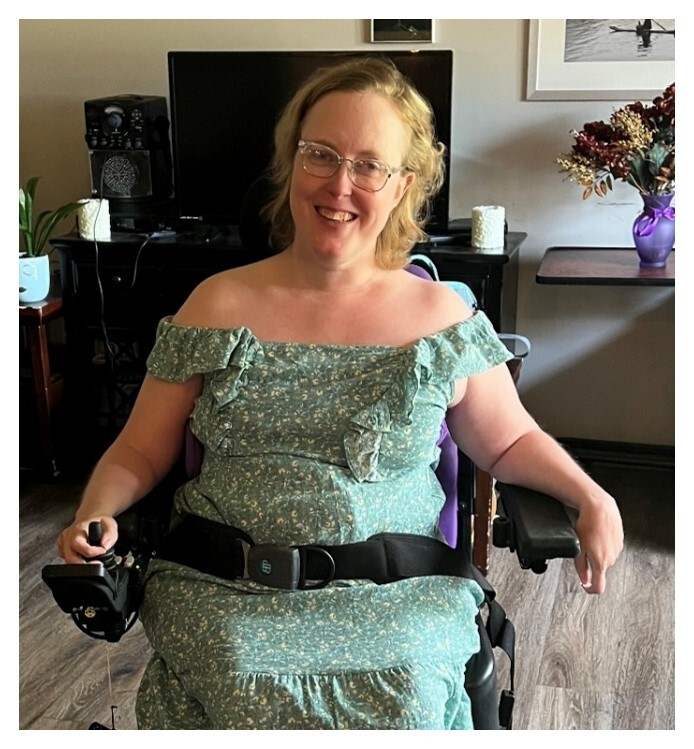
Lauren Ireland, Advisory Council Member
Lauren Ireland recently joined the Advisory Council as a member-at-large. Reflecting on her path to joining, Lauren recounted, “At an event at my group home, the STAR team asked me if I would be interested in joining the Advisory Council. I told them I would love to do so.” Lauren applied and said, “I was happy and honored when the Governor’s Office appointed me to the Council.”
Ireland has attended several virtual Council meetings so far, and she noted, “I’ve met a lot of nice people there. Virtual meetings make it easy to participate. I simply log in. I was told that we will keep meeting on Zoom because transportation can be difficult for some.”
Lauren believes the varied perspectives a person with disabilities brings to the Council are important as it is a forum for learning about different situations a person experiences. She explained, “I’m interested in how the Council is working to get people better transportation, and all the organizations they partner with. I also like learning more about the AT4All loan library so I can encourage others to check it out.”
Lauren emphasized, “The STAR Advisory Council facilitator makes sure each person is heard when they are ready to speak.” Lauren notes that many good ideas are shared and it’s good to simply listen. Having grown up in a small town in Minnesota, Lauren has found it very interesting to learn about all the organizations that STAR works with across the state and the events that are going on virtually, stating, “The Council is good at letting us know what's happening.”
Lauren lives life with a ‘do what I can to help’ approach and a willingness to take on new things. “If I have a good opinion that I think will help somebody, then I do it. I’ve been told I'm a good speaker. The upper management of my group home has encouraged me to do whatever I can to get my voice heard,” Ireland said. Her experiences make her a great fit for the Advisory Council. She is open to sharing more from her experience.
Her days are full, whether she is working at her jobs, attending Advisory Council meetings, or taking classes at a day program. She sees how people are living their lives. Lauren reflected, “It gives me ideas about things that could work in my group home, be discussed at a Council meeting, and how to stick up for myself.”
Lauren has observed that some Council members are parents of children with disabilities. She offered, “If a parent has a child with disabilities, I can be a role model. It’s good for families to see me now, as an adult, being active in the community. If parents see me contributing, I like to think that they appreciate how I’m trying to get good services for everybody.”
When it comes to the Advisory Council, Lauren sums it up: “The best part for me is working with people and learning about their situations.” This challenges Lauren to continue to broaden her world and take on new roles, sharing “STAR is definitely one of the things that I pride myself on.”
To learn more about the STAR Program Advisory Council and the work they do, email STAR: star.program@state.mn.us.
|
|
 |
|
Note to readers: in each issue, we feature a device from our lending library or a useful AT app we have found. There are many devices that can be demonstrated or trialed through our loan program at no charge to you. Check out our inventory of devices at the MN AT4ALL website. We also feature promising apps that help improve the lives of people with disabilities.
|
Life Beyond a Grant: How the Pedialift® Crib, other Durable Medical Equipment Found a Home for Demonstrations
Pedialift® Crib
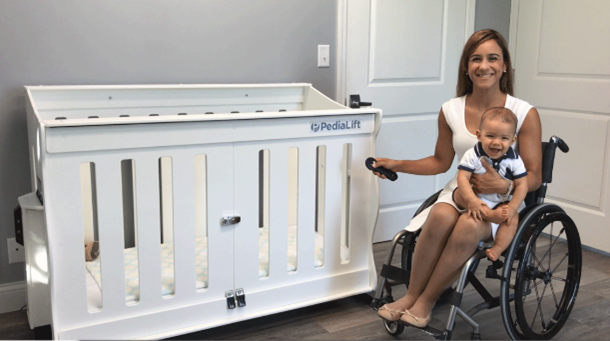
Thanks to LiveLife Therapy Solutions, Inc., we are pleased to house the Pedialift® Crib and other durable medical equipment in our library for demonstration purposes.
The hospital-grade, wheelchair accessible crib is specifically designed for parents with disabilities and is made to order. The crib was originally purchased through a grant received by LiveLife Therapy Solutions from the Minnesota Department of Human Services for a client who was parenting with a disability. “She had her baby prior to ever seeing us. She struggled and needed a lot of help to care for her baby. With the crib, it was an amazing and positive change for her,” said Sue Redepenning, President of LiveLife Therapy Solutions Inc.
Operating the crib can all be done one-handed. Its low-to-the-ground design looks like a regular crib, and when elevated by a wireless remote has an open-air undercarriage free of obstructions for wheelchair accessibility. The elevated crib allows disabled parents to slide their lap underneath the structure to safely transfer the baby because of the proximity to and height of the mattress.
When the crib is in the raised position, parents can unlock the sliding doors by waving the wireless remote in front of the door latch. The smart latch system senses the proximity of the remote and unlocks the doors, opening on quiet roller glides. The crib safety features include Collision Reversal Technology that continuously monitors lifting columns that raise or lower the crib, looking for evidence of an obstruction. If found, the lifting columns stop and immediately reverse their direction. There is easy access to reach in and hold the baby. Baby transfers to and from the crib are safe because the parent can always keep both hands on the baby; there’s no need to reach over a high sidewall and risk becoming unstable or be forced to transfer their baby with one hand.
When durable medical equipment like the crib is purchased, ownership usually goes to the individual or program. But once the person no longer requires the equipment, Redepenning shared, “We try to have equipment live on beyond the grant when the person no longer needs it and continue to help people with disabilities,” Minnesota DHS also encourages extending benefits beyond the original grant recipient for therapists to learn about it and to use in trials. Housing the crib in the STAR Program library met an important need: to provide a place for the crib that is available for others to try. It’s essential that parents demonstrate they can use the crib successfully under the supervision of an Occupational Therapist (OT) or Physical Therapist (PT) for insurance consideration and to access Medical Assistance. A person must also try the crib after trying all less costly alternatives first. “We could access the least expensive options, but we didn't have anywhere for a person to try this crib, the most expensive option,” Redepenning explained. During a trial, parents can bring their baby or use a weighted doll or sack to simulate the baby’s size and weight. They need to prove they can manage the crib and lift a 10-pound baby in and out.
Now, parents with disabilities in Minnesota can trial the crib with support from their OT or PT. “It’s the only way insurance starts paying for things like the crib,” Redepenning stated. She notes that Minnesota families should explore all potential funding sources. “A doctor would need to write up the order if we are to try to obtain insurance to pay for it, which I really feel like we should in our state.”
The STAR Program library also houses other durable medical equipment for LiveLife Therapy that can be difficult for therapists to access or borrow to check whether the equipment is a fit for the person, some of which can be used for either children or adults.
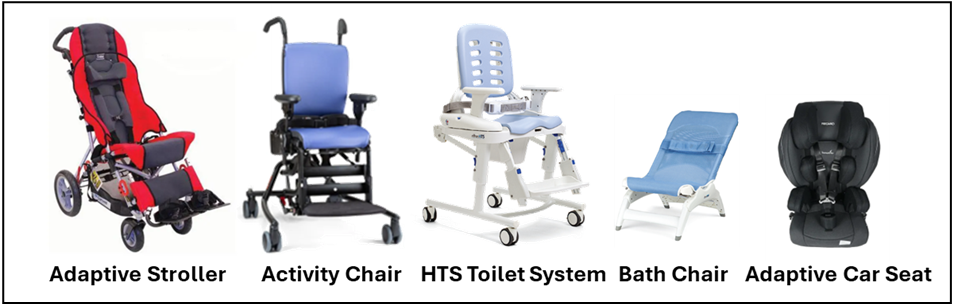
More Durable Medical Equipment housed in the STAR Program Library
- The Adaptive Stroller is compact and lightweight with quick release rear wheels and is a great choice for people on the go. The optional transit ready model can be used as seating on a bus or a van, making this model ideal for short and long trips alike.
- The Small Hi-Lo Activity Chair is a durable and mobile seating solution for a child or young adult. The Small Hi-Lo chair is for users 32"- 48" and with the optional mini kit can fit 28"- 38". The mini kit helps extend the useful range of this chair so one chair can fit the child as they grow.
- The HTS Toilet System is hygienic, simple, affordable and adaptable to most toilets.
- The Bath Chair “Wave system” has been thoughtfully designed to improve bathing and showering for the client and for the caregiver.
- The Adaptive Car Seat has many positioning features for comfortable and safe transport for the child.
The grant Live Life Therapy received continues to live on, and the equipment being housed at the STAR library opens more possibilities for people to learn about, try and make purchase decisions.
You can find more information in the STAR Program lending library.
|
|
Try Before You Buy
Our partners at Saint Cloud State University recently shared this success story about the importance of testing and trying out an AT solution before making the decision to purchase.
The RedCat Access system was needed to ensure accessibility in our Communication Sciences and Disorders classes for a student with a significant hearing loss. As a department of Speech-Language Pathologists and an Audiologist, we were surprised to find that our primary classroom did not have built-in amplification.
Since budgets are tight, the instructors felt it best to loan the assistive technology rather than purchase it outright to determine whether it would be beneficial to our students. The service of loaning the equipment was great, as the instructors received the assistive technology in a timely manner.
After using the Red Cat device, we found on occasion that the equipment would cut out as the instructors were speaking, which bothered the students. When the equipment worked, the instructors found that the students were engaged and better able to access the lectures and class discussion.
Ultimately, we decided that the device did not meet our department's needs, but it did help us to avoid purchasing something that did not work consistently. The department will continue to research and seek an amplification system to meet students' needs, knowing full well that it will benefit all students in the classroom.
|
|
There are several events and learning opportunities that may be of interest about assistive technology. More information about upcoming events is available from the links. All events are in Central Time unless otherwise indicated. If you want to hear more about future events, subscribe to our Upcoming Events list!
|
|
|
April 8
Minnesota Department of Education (MDE)
400 NE Stinson Blvd
Minneapolis
Also, Virtual option
|
|
Autism Resource Symposium The Department of Education’s fifth annual Autism Symposium and Resource Fair is a hybrid event dedicated to supporting people with autism, their families and professionals through education, connection and empowerment.
The STAR Program will be an exhibitor at the event.
Registration Link: Autism Resource Symposium and Fair Registration
Time: 8:30am – 4pm
|
|
|
ARRM: Next Tech: AI and Innovation for Providers is designed to help disability service providers better understand how artificial intelligence, assistive technology, and emerging tools are showing up in our work and what they can realistically support today.
Webinar, register online.
|
|
|
April 19-22
Madden’s on Gull Lake
Brainerd
|
|
Charting the Cs 2026: “From Worries to Wonder: Supporting Every Child’s Emotional Journey”
The STAR Program is presenting and exhibiting.
Main Conference: April 19 – 22
Student Family Summit: April 19, 8:00am – 1:00pm
|
|
|
June 1-3
Park Event Center
500 Division Street
Waite Park
|
|
We have many device and educational videos. STAR posts videos often, so consider subscribing to our channel! Here are also two playlists on the channel:
|
|
|
|
|