|
|
|
|
|
“Injustice anywhere is a threat to justice everywhere. We are caught in an inescapable network of mutuality, tied in a single garment of destiny. Whatever affects one directly, affects all indirectly.”- Dr. Reverend Martin Luther King, Jr. in Letter From Birmingham Jail
Restorative practices (RP) and restorative justice (RJ) are ways of resolving differences, repairing harm, creating accountability, and deepening human relationships. These approaches are increasingly used across a wide range of fields including social work, organizational development, and juvenile justice. Their use has especially grown in K-12 education. A National Education Association article on Chicago Public Schools suggests that a restorative approach can drive school culture change and lead to positive outcomes for individuals. Minnesota will soon have an Office of Restorative Practices, so this work is being elevated here in our state.
OCDR worked with Roslyn Harmon, Executive Director of Dispute Resolution Center in Saint Paul and mayor-elect of Golden Valley, to create content for this quarter’s newsletter. We hope that the information provided here inspires you to learn more about the restorative field and restorative work happening in Minnesota.
|
|
Restorative practices and restorative justice

Restorative practices refers to everyday behaviors and facilitated processes that demonstrate and inspire meaningful, compassionate, and inclusive connections with others, both at an individual and a community level. The foundation of restorative practices is a restorative mindset, which means seeing others as whole and worthy individuals, capable of good and deserving of positive relationships. A major focus in restorative practices is on community-building and repairing harm. Restorative practices can take different forms – for example, restorative conferencing, restorative chats, talking circles, and other practices. In restorative practices, the key is that individual voices are being heard. People speak their truth in a space without judgment or bias, without titles or hierarchies. Many restorative practices draw from dispute resolution traditions that have been used historically in cultures and communities across the globe.
Restorative justice, part of the broader restorative practices field, describes an approach used specifically when someone has committed an offense. Implementing restorative justice means validating the experiences of people harmed while creating accountability for individuals who caused harm. Like restorative practices more broadly, restorative justice processes are used as alternatives to court-based processes and other disciplinary procedures (see interview below). Among restorative justice practitioners, there is often a focus on restoring relationships at a systemic level – e.g., combatting racism and other kinds of marginalization - and on advocacy for systems change.
|
Expert Interview: Dr. Sabrina Edwards
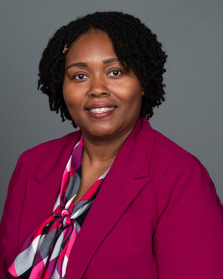
To understand how restorative work is implemented on the ground, OCDR recently interviewed Dr. Sabrina Edwards, who is the Senior Student Services Officer at Hiawatha Academies, a network of charter schools in Minnesota. Dr. Edwards’ portfolio includes restorative practices. She is also the board chair at the Dispute Resolution Center in Saint Paul.
How did you come to do restorative practices and restorative justice work?
I am always on a journey of both learning and unlearning. I always practiced this growing up in the communities I was with, interacting with family, doing community work. We followed restorative practice principles.
What is your experience working with restorative practices and restorative justice?
In one of my academic roles, the stated mission was to dismantle systemic inequities. But [the schools] were disciplining students using old systems and parameters, like pulling kids from classrooms and expelling them from school for infractions. My colleagues and I decided we wanted to make changes. I engaged the school psychologist, social worker, teaching staff, and campus leadership so we could incorporate different lenses. We looked at policies and practices and district-level change and tried to align with [restorative] values. One of the key goals of this work was to shift the adult mindset from punishment to reflective learning. In return, this created frequent opportunities for students to reflect on their mistakes, be accountable, and apologize for their actions/make things right. [After implementing a school-wide restorative approach], we saw a 59% reduction in suspensions in one of our buildings and a 72% reduction in another.
What changes have you seen in the restorative landscape over the past five years?
In past five years, RP has exploded. Especially in post-George Floyd Minnesota, there were a lot of schoolwide healing circles dealing with the harms to the community. Recently, the discussion has been elevated. Now there’s new legislation passed about a statewide Office of Restorative Practices. I have never seen the conversation happening on this scale.
What else would you like to share?
A restorative approach is a journey and takes time. To do this well in schools, you need to improve relationships between staff and staff, between students and students, between students and staff, and between schools and families. It has to be a whole district endeavor. There will be mistakes. There will be authentic conversations. Sometimes there will be tears. But no matter who you are, you can come on this journey and be in community with others.
|

In Minnesota, a new Office of Restorative Practices was created during the 2023 legislative session, which will ultimately be housed in a new Department of Children, Youth and Families. This office will have responsibility for a grants program that will support restorative practices initiatives in Minnesota, promote the use of restorative work across Minnesota counties, and create a statewide network to share effective methods and practices. Stay tuned for a job posting for the Director of the Office of Restorative Practices on the Minnesota State Careers portal in early 2024.
|
Practice
-
Training: The Dispute Resolution Center offers trainings in Foundations of Restorative Practices (includes certification), Restorative Communications and Restorative Chats. Contact Dr. Roslyn Harmon at roslyn@drc-mn.org for training details.
-
Training: Community Mediation and Restorative Services (CMRS) is launching a new training called Building Restorative Communities. Organizations can contact davon@CMRSmn.org to learn more about customizing this workshop for your organization.
-
Guides: The Minnesota Department of Education (MDE) provides a number of guides describing restorative principles and practices.
Learn
|
|
|
|
|
|