Problem-Solving in Action
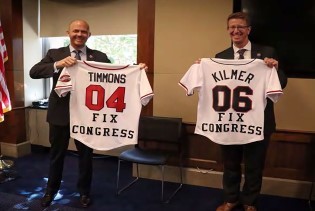
You may have heard of the Select Committee on the Modernization of Congress. In four years, this bipartisan Committee made 202 recommendations. This sounds like a lot of work for any team but it’s even more surprising when you know the team consisted of six Republicans and six Democrats. Where was the gridlock? Not so much.
The team did things differently than other committees in Congress. They:
- used a round table and Republican-Democrat-Republican-Democrat seating rather than sitting separately by party
- used rotating committee chairs
- empowered junior members as much as senior members to make decisions
- used an open Q & A period to hash out ideas at the end of every meeting
The goal was to modernize Congress, but an ancillary outcome was creating a new model for committee work. U. S. Rep. Dean Phillips (D-Minn.) said, “We learned by conversation — not confrontation. It was the most profoundly meaningful and gratifying time I’ve spent in Congress.” (see Amanda Ripley’s Washington Post op-ed, 2/9/23).
You can read all of the Select Committee’s recommendations, including how to make Congress a more civil place to work, in this report.
|
National Week of Conversation
And to flex your own civic-mindedness and connect with people from across the country, the National Week of Conversation (NWOC), April 17-23, offers dozens of interactive online events where people discuss hot topics in a civil way.
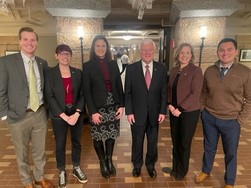
The Minnesota Legislative Civility Caucus works to promote better governing in the Minnesota Legislature. The fix? Start with relationship-building.
In January, the Civility caucus hosted a group of 40 legislators to hear veteran Minnesota politicians Roger Moe and Joyce Peppin describe ways they’ve connected with colleagues across the aisle.
Roger Moe cited how an overhaul of the “three strikes and you’re out” rule and passage of Minnesota Care were only possible through problem-solving discussions and bipartisan collaborations.
Joyce Peppin recalled how she, a Republican, bonded with specific Democratic legislators over shared interests and experiences, which strengthened their ability to find common ground in the Legislature.
Through a round of personal sharing, legislators even learned a few new things about each other – in the group were several EMTs, a skydiver, and a jazz singer!
Events planned for the 2023 session model how a group of committed legislators can make change, one story and one conversation at a time.
|
Practice
-
Tool: The Tamarack Institute’s Collaboration Spectrum Tool helps you assess your group’s level of trust before or as you start a multi-party collaboration.
-
Tool: Peter Coleman and the organization Starts With Us have created a daily toolkit to help people detox from political name-calling and social media doom scrolling.
-
Online course: This free, self-paced Braver Angels Skills for Social Media course helps people learn how to “depolarize themselves” and engage more productively on social media.
-
Training: Learn how to facilitate parties through conflict in the Mediation Center’s 30-hour Civil Mediation trainings running in March, May, September, and November.
Learn
-
Article: Mediator and consultant Tammy Lenski describes three important ways we can include others in problem-solving through a funny story about her Scottish grandmother.
-
Article: This Harvard Business Review article describes what you need to consider when communicating and problem-solving across cultures.
-
Website: The State of Minnesota Leadership Learning Hub features knowledge articles, practical suggestions, and training for leaders on conflict management, participatory leadership, servant leadership and other topics.
-
Website: The AllSides website features news headlines from a variety of political perspectives side-by-side so you can better understand the framing in the news you consume.
Since the last newsletter edition in December, we (Katie and Jessica) have been busy delivering conflict resolution trainings for over 100 State and local government leaders. Attendees said the skills they gained are immediately usable and highly recommend the trainings to others.
We have also met with legislators, local government representatives, bridge-builders and others to better understand Minnesotans’ conflict resolution needs. Based on these insights, OCDR is in the process of reviewing our service areas and priorities. We’ll provide more information about our strategic plan in a future newsletter!
Do you have feedback on this newsletter, or articles, tools or resources you'd like to share? Click the "Give Feedback" link and let us know. If you share an idea or tool with us, we may feature it in an upcoming newsletter!
|