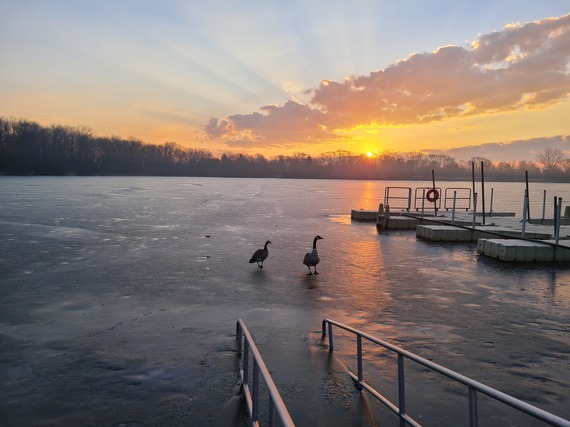
As Michigan's lakes and rivers freeze over, it's easy to assume that life beneath the ice comes to a standstill. However, fish and other aquatic animals have developed remarkable adaptations to endure the harsh winter conditions.
Much like us, fish change their behavior in response to the dropping temperatures. However, as cold-blooded creatures, their body temperature is regulated by their environment. To survive, they slow down their metabolism and enter a state of reduced activity, similar to how hibernation works. This conserves energy and allows them to survive on fewer resources. With limited food availability in winter, fish have adapted to survive on fewer calories. Their slowed metabolism and reduced activity help conserve energy. While feeding does occur, it's less frequent, and fish rely on available resources like insect larvae and smaller fish.
Water stratification also plays a role. The water near the ice is colder and less dense than the water at the bottom. Many fish species take advantage of this by congregating in the deeper, slightly warmer areas. Some even burrow into the lake bed or seek shelter in rocky crevices, submerged logs, or vegetation. These strategies provide refuge from the cold and unpredictable conditions.
Oxygen availability is crucial for fish survival. In summer, plants produce oxygen through photosynthesis, and wind and waves help mix it into the water. However, ice cover creates a barrier, and heavy snowfall can further reduce light penetration, limiting oxygen production. Fortunately, fish need less oxygen in winter due to their reduced metabolism. While oxygen depletion can sometimes lead to "winterkill" in lakes with high plant and algae growth, it's generally not a major concern.
Interestingly, some Antarctic fish have evolved a unique adaptation to survive extreme cold. They produce a special protein in their blood that acts like antifreeze, preventing ice crystals from forming and ensuring their survival in sub-zero temperatures.
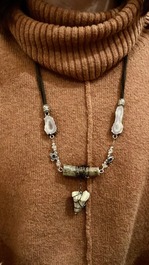
Antler & Bone Jewelry Making
This unique jewelry class on Thursday, Feb. 6 from 6-8pm will give you the opportunity to make a variety of earrings, pendants and bracelets using an eclectic combination of bones and antlers. All materials will be provided and each crafter will have the opportunity to make three pieces. Recommended for ages 12+. Cost is $30 per person.
Click here to register!
|
|
 |
 |
|
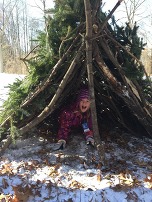
Snow Fort & Campfire
Build an igloo-style snow fort (or natural fort if there is no snow) and warm up by a campfire at this hands-on program on Monday, Feb. 17 from 1-2:30pm. This is a family program so bring the kids and enjoy the day off school. Cost is $7 per person.
Click here to register!
|
Natural Crafting: Build Your Own Birdhouse
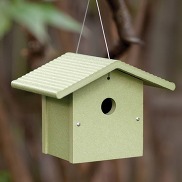
Explore your crafty side while learning about all the interesting birds that nest in cavities at this hands-on program at 3pm on Sunday, Feb. 23. As more and more habitat is lost to development, providing nest cavities is a much needed requirement for our feathered friends! You will have the choice to make either a Bluebird or Wren house, both of which are cavity nesting birds. Recommended for ages 8+. Cost is $10 per person.
Click here to register!
|
|
 |
 |
|
Making Maple Syrup
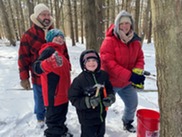
Make your own maple syrup with us at 11am or 1 pm on Saturday, March 1, at Bloomer Park. From identifying various species of maple trees, to the tree tapping process and sap boiling setup, you'll gain the knowledge you need to make your own syrup. In addition, you can add on a starter kit with a spile, tubing, bucket, and filter to tap your own tree! Recommended for ages 12+. Cost is $10 per person.
Click here to register!
|
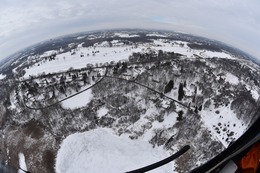
Winter provides a great opportunity for City staff to get up in the air and take a look at the status of our deer population.
Every year, during January and February, we go up in a helicopter to spot and count white-tailed deer in the City. As you can imagine, their thick brown winter coats stand out against the white snow allowing us to easily identify them from the sky.
This work is guided by recommendations from the Deer Management Advisory Committee. We monitor 11 different locations in the community made up of parks, commons areas, and some subdivisions. These same survey plots have been observed for over a decade, giving us insight into deer population trends. This, in addition to deer-vehicle crashes, are monitored annually by staff and the committee to help guide discussions and recommendations.
We spotted 182 deer this year, a number that is has trended up over the last two years. There was a significant decrease when the viral disease EHD infected deer populations in 2021. Prior to EHD, aerial deer survey numbers at these locations were in the 300’s, even soaring above 400 in 2019.
|
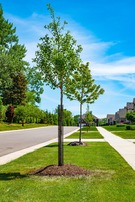
We are taking orders for our Free Street Tree Planting program for planting within the public right-of-way.
Quantities of some varieties are limited so interested homeowners should order early. The deadline for ordering spring trees is March 7.
Reserve your tree online at rochesterhills.org/trees. You can view what trees are available for planting here.
|
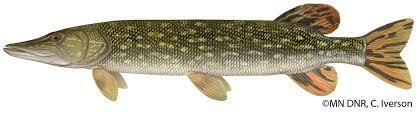
We realize this is the second month in a row where we have highlighted a fish. But this fish is one found here at Spencer Park in Carter Lake. The northern pike is favorite among ice fishers and is a native fish to Michigan.
The northern pike is associated with the weedy shallows of the Great Lakes and inland waters. In rivers, they are often found around log jams or fallen timber. It prefers 60-65 degree water that tends to be clear water but they can tolerate some turbidity. The northern pike is stream-lined - long, slender but muscular, and torpedo-shaped with greenish body coloration on the top and sides, and very light or white coloration on the underside. It has a characteristic duck-billed shaped snout with a large mouth and tongue and palate lined with hundreds of backward-slanting teeth to grip, while long teeth in the lower jaw pierce.
Pike consume large numbers of smaller fish - about 90% of their diet - but seem willing to supplement their diet with any living creature their huge jaws can surround, including frogs, crayfish, waterfowl, rodents and other small mammals. Pike in the Great Lakes region spawn in the shallows in April or May, right after the ice melts. As a result of their eating habits, young pike grow rapidly in both length and weight. Northern pike have an average life span of six to eight years, with some living as long as 15 years.
|
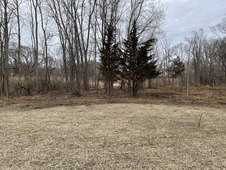
One of our newest Green Spaces, purchased a couple years back through our Green Space Fund, is the 11-acre Auburn Green Space. It is located off of Auburn Road just down the street from Avondale Park.
With its proximity to the park, the City worked with Consumers Energy and the Oakland County Water Resources Commissioner's office to secure easements and maintain a path where residents can hike from Avondale Park to the green space. On the green space property, our staff has been working to remove woody invasives, species such as buckthorn, and also have been treating phragmites in the existing marsh habitat. The first step in removing the woody invasives was mechanically cutting them, followed by treatment of resprouts for multiple years.
Eventually, a trail through the property will be explored to connect to pathways along Auburn Road. In addition to the stewardship of the invasives on the property, the City also worked to cleanup a small pocket of contaminated soils on the north portion of the property. The soils at this location were removed and new clean fill was brought in and seeded. With these efforts in place and continued stewardship of the property, this soon will be a high-quality natural area and wetland habitat for the community!
|
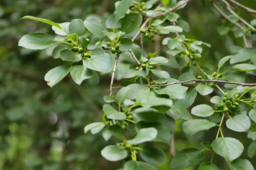
Common and glossy buckthorn are invasive shrubs/trees that pose a significant threat to Michigan's native ecosystems. Both species were introduced from Europe and Asia and have since spread aggressively throughout the state.
Common buckthorn (Rhamnus Cathartica) is characterized by its dark green, oval leaves with small teeth, while glossy buckthorn (Frangula alnus) has shiny, untoothed leaves. Both produce abundant berries that are spread by birds, leading to the formation of dense thickets that outcompete native plants for resources. These thickets can disrupt natural habitats, reduce biodiversity, and negatively impact wildlife.
Here's a fun fact: Buckthorn berries act as a strong laxative, causing birds to quickly disperse the seeds over a wide area. This contributes to their rapid spread and makes them particularly difficult to control. Effective control of buckthorn often involves a combination of methods. For smaller infestations, hand-pulling or digging up plants can be effective, especially when the soil is moist. Larger infestations may require cutting the stems and then treating the stumps with herbicides to prevent resprouting. In some cases, prescribed burns may be used to control seedlings in fire-adapted ecosystems. Consistent monitoring and follow-up treatments are essential to prevent buckthorn from reestablishing.
Learn more about buckthorn and other invasive species by contacting us or checking out the Oakland County CISMA at oaklandinvasivespecies.org.
|

Rochester Hills Parks and Natural Resources is now on Instagram! Follow us @rochesterhillsparks and tag us in your photos on your visits to our parks and green spaces. We will be using this page to share program information, wildlife, staff spotlights and so much more.
Follow us on Instagram here.
|
|