
ACIP Flu, Vital Signs, Influenza Vaccination Coverage, Flu kickoff
Oakland County, Michigan sent this bulletin at 10/26/2022 10:19 AM EDTThis email is being sent to VFC, Non-VFC and Covid-19 Providers in Oakland County, Michigan by the Oakland County Health Division (OCHD) Immunization Action Plan (IAP)

Please share with colleagues and staff |
|
Hello Immunization Partners, This email contains multiple flu updates to kick off the 2022-2023 flu vaccination season. There is a lot of information in this email so please review thoroughly or bookmark for later. Please distribute this information broadly to immunization providers within your communities. Each update has a short summary of the event or presentation, but links are provided to direct you to the full update.
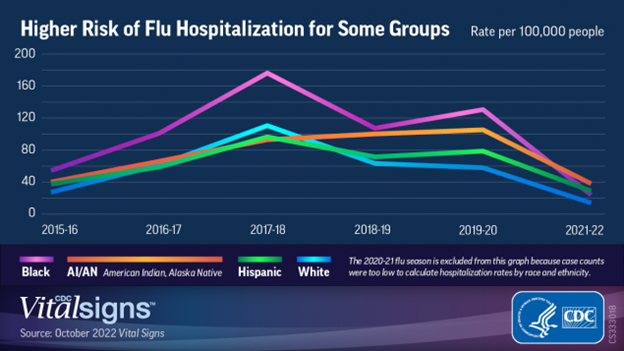
Finally, at the bottom of this email you will find a variety of resources for the current flu season. Please view these pages and bookmark these pages to utilize in your communities. On Tuesday October 4, 2022, the Centers for Disease Control and Prevention (CDC) and the National Foundation for Infectious Diseases (NFID) kicked off the 2022-2023 flu vaccination season with a press conference which was held in person for the first time since the beginning of the COVID-19 pandemic. The conference included a panel of infectious disease experts and a presentation from CDC Director Dr. Rochelle P. Walensky emphasizing the importance of flu vaccination and getting up to date on other routine immunizations. While throughout the COVID-19 pandemic, COVID-19 vaccines have been the primary focus, the experts at the press conference urged the public to remember the ongoing importance of flu and pneumococcal vaccination. CDC launched multiple campaigns with the press conference including a digital campaign called “Help Them Fight Flu” encouraging parents of young children to protect their families by getting them vaccination against flu. CDC is also continuing its collaboration with the American Medical Association and the Ad Council to raise awareness among the general population with a focus on Black and Hispanic audiences about the importance of flu. While disparities in flu vaccination coverage among Black and Hispanic individuals in the United States exist, focused messaging is one way to address these disparities. Visit the links in the message above to read the full vaccination kick off summary and to watch the full press conference. Introduction: Annually between 2010-2020, CDC estimates that influenza resulted in 9-41 million illnesses, up to 710,000 hospitalizations, and between 12,000-52,000 deaths. Persons from some racial and ethnic minority groups have historically experienced higher rates of severe influenza and had lower vaccination coverage compared with non-Hispanic White persons. This report examines influenza hospitalization and vaccination rates by race and ethnicity between the 2009-2022 influenza seasons. Results: From 2009-2022, age-adjusted influenza hospitalization rates were higher among non-Hispanic Black, American Indian or Alaska Native (AI/AN), and Hispanic adults, compared to the rate among White adults. During the previous influenza season (2021-22), flu vaccination coverage was lower among Hispanic, AI/AN, Black, and other multiple/race adults compared with White and non-Hispanic Asian adults. Flu vaccination coverage has been consistently higher among White and Asian adults compared with Black and Hispanic adults since the 2010-11 flu season. The graph below illustrates the disparity of flu hospitalizations for some groups over multiple previous flu seasons.
Conclusions and Implications for Public Health Practice: Racial and ethnic disparities in influenza disease severity and influenza vaccination coverage persist. Health care providers should assess patient vaccination status at all medical visits and offer all recommended vaccines. Tailored efforts to increase access to flu vaccination and improve vaccine confidence among racial and ethnic minority communities, including creating culturally relevant communication campaigns and offering vaccination in nontraditional settings, are critical and might decrease disparities in influenza vaccination coverage and disease severity. The data below can all be found on the CDC FluVaxView interactive flu website and were published recently on October 18, 2022. National Flu Vaccination Coverage 2021-2022 Flu Season
Michigan Flu Vaccination Coverage 2021-2022 Flu Season (using national surveys)
A few notes about these data. For the 2021-2022 flu season, according to national survey data, Michigan coverage for everyone aged 6 months of age and older increased compared to the previous 2020-2021 flu season. However, the MDHHS Flu Vaccination Dashboard, illustrating data from the Michigan Care Improvement Registry (MCIR), shows flu vaccination coverage in Michigan for the 2021-2022 flu season decreased compared to the previous flu season. One reason for this discrepancy could be that adult vaccination data is not required to be entered into MCIR, however it is highly recommended. Its essential that all doses of flu vaccine administered in Michigan get entered into MCIR. Additionally, while flu vaccination coverage data for everyone aged 6 months and older in Michigan is higher than national coverage rates for everyone aged 6 months and older, disparities among various racial and ethnic groups in Michigan still exist. As described in the previous Vital Signs article above, tailored messages to racial and ethnic minority communities and clinics offered in nontraditional settings are just some of the opportunities to decrease disparities in flu illnesses by increasing flu vaccination coverage in our communities. Annual flu vaccination is recommended for everyone aged 6 months and older, without contraindications, including for pregnant persons at any time during their pregnancy. Recently data has also been published on flu vaccination coverage among pregnant persons for the 2021-22 flu season, find these data here. Clinical Trial to Compare Safety of RIV4 versus IIV4 in Pregnancy Currently, ACIP recommends that pregnant persons receive an age-appropriate quadrivalent inactivated influenza vaccine (IIV4) or quadrivalent recombinant influenza vaccine (RIV4 or Flublok® Quadrivalent), and while it is unexpected for RIV4 to be unsafe during pregnancy, data on the safety of RIV4 are limited. This study intended to implement a rigorous randomized controlled trial of RIV4 vs. IIV4 in pregnant people to provide specific data on the safety of RIV4 during pregnancy, including infant health outcomes. Using a prospective, double-blinded, randomized study design, 382 pregnant persons aged 18 years and older at less than 34 weeks gestation were enrolled and received either RIV4 or IIV4. Participants were solicited for local and systemic reactions at vaccination day and through day eight. Serious adverse events and other health outcomes were assessed throughout pregnancy and 90 days post-delivery for mothers and infants. This was the first randomized clinical trial to compare the safety of RIVC4 and IIV4 in pregnant persons. The study found that RIV4 was non-inferior to IIV4 for adverse birth outcomes, which was consistent with the study’s hypothesis. Additionally, the study team indicates that the safety profile of RIV4 and IIV4 were similar for moderate/severe immune reactions and maternal and infant health outcomes were assess in this study. Overall, this study supports the current ACIP recommendation to include RIV4 as a safe option for pregnant persons. Throughout the country influenza surveillance programs have started collecting data for the current 2022-2023 flu season. Data has indicated that flu activity remains low in the United States overall but is increasing, particularly in the southeast region of the country and the central south region as well. While the numbers are still small, so far influenza A(H3N2) viruses are predominant in the US, but it is still too early to tell what viruses will be predominant for the season. Additionally, while 1 of the 4 components for the Southern Hemisphere vaccines were updated for the next season, the components for the 2022-2023 Northern Hemisphere vaccine, at this time, look appropriate for our season. Influenza Vaccine Effectiveness Updates 2021-2022 Flu Season Influenza vaccine effectiveness (VE) is evaluated in the United States using 3 networks that assess laboratory confirmed influenza-associated outpatient visits, emergency department visits, and hospitalization. Overall, for the 2021-2022 flu season the three flu VE networks indicated that flu vaccination provided low to non-significant protection against the predominant influenza A(H3N2) infections contributing to illness of varying severity. Influenza VE estimates for the 2021-2022 flu season:
These data illustrate that protection in the 2021-2022 flu season was similar to pre-pandemic influenza A(H3N2) predominant flu seasons. The trends suggested that there was higher VE in outpatient settings compared to pediatric hospitalization and emergency department visits, but not compared to adult inpatient influenza infections. Data will continue to be analyzed and assessed for upcoming influenza seasons and vaccine virus components. Recent Resources and Webinars:
Thank you for taking the time to review these important updates and thank you for everything you do to protect our communities from influenza! Oakland County Health Division, Immunization Action Plan |
Any questions should be directed to Letha Martin, preferably by email at martinl@oakgov.com

 |
Questions? Contact Us |
| STAY CONNECTED: | |||||
 |
 |
 |
 |
||
SUBSCRIBER SERVICES:
Manage Preferences | Unsubscribe | Help
This service is provided to you by Oakland County, Michigan.