|
The Year in Review
Michigan State Police Office of School Safety
The Michigan State Police (MSP) Office of School Safety (OSS) continues to lead the way in creating safer learning environments across Michigan. The past year proved dynamic and productive for the OSS, marked by substantial growth in professional development opportunities. The OSS hosted seven Basic Behavioral Threat Assessment and Management (BTAM) courses and seven Advanced BTAM courses statewide, training over 1,000 people. In addition, a Train-the-Trainer session in the Fall equipped 26 professionals from across Michigan to lead BTAM efforts in their regions. Visit the OSS website to find a BTAM trainer near you.
The Michigan School Safety Academy returned for its second year, featuring expanded content and expert presenters. This year, three sessions each of the basic and advanced academies were offered.
- The basic academy introduced an extended session on childhood trauma and brain development, along with new modules on mental health, resiliency, suicide prevention, rapid response, and sexual exploitation.
- The advanced academy provided deeper insights into behavioral and digital threat assessment, strengthening BTAM practices, emergency operations planning, and post-crisis recovery strategies.
Both academies received overwhelmingly positive feedback and requests for sessions in 2026 are already being received. Stay tuned for upcoming dates and details!
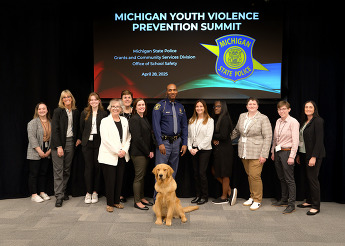
In 2020, firearm-related injuries became the leading cause of death among children and teens – a sobering reality that demands action. To change this narrative, at the recommendation of Michigan State Police Director Col. James F. Grady II, the OSS launched a series of statewide Youth Violence Prevention Summits.
These summits brought the OSS team to communities across Michigan, where we not only had great speakers present but we also listened to nearly 1,000 students share their ideas and solutions for addressing mental health, building resilience, and preventing violence. Each event was a powerful day dedicated to student safety, empowerment, and collaboration.
Watch the highlights from the statewide youth summits and see how these inspiring young leaders are driving meaningful change across Michigan.
|

In addition to in-person training opportunities, OSS introduced the Detect & Connect video training series along with a comprehensive Facilitator’s Guide. This five-part series is designed to empower every adult within the school community by providing practical tools to help staff recognize when a student may be struggling and connect them with the support they need. From the bus ride to the cafeteria to the practice field, these videos equip all adults who interact with students to identify early signs of distress and respond effectively.
Three School Safety Toolkits specifically developed to help K–12 schools build robust, well-rounded safety plans were released by the OSS. Each toolkit offers step-by-step planning resources, clearly defined roles and responsibilities, and proven strategies to ensure educators and administrators can respond confidently in a variety of situations. Together, these toolkits create an integrated foundation for keeping school communities informed, prepared, and resilient.
New staff in your district? Please share this newsletter webpage so they can sign-up and stay connected for upcoming training opportunities, new resources, and continued progress toward safer schools across Michigan.
|
|
|
School Safety and Mental Health Commission Update
Public Act 263 of 2024 and Executive Order 2025-1 established the School Safety and Mental Health Commission. The first meeting of the commission was December 3, 2025. Details regarding the commission, its meeting schedule, and current members are available on the OSS website. During the December meeting, a subcommittee was established to develop recommendations for standardized terminology, which will be presented to the full commission for a final decision.
Legislative Compliance Reminders
Public Act 271 of 2024, effective April 2, 2025, tasks MSP with establishing standardized terminology in collaboration with the School Safety and Mental Health Commission, and providing the terminology to public schools, nonpublic schools, and local law enforcement agencies, with a deadline of July 1, 2026.
Public Act 272 of 2024, effective April 2, 2025, amends the Revised School Code to require public and nonpublic schools to ensure each school has a behavior threat assessment and management team. These teams are tasked with, among other things, defining prohibited and concerning behavior; monitoring, assessing, and performing inquiries into concerning behavior; and developing a written plan to assist a student who is engaging in concerning behavior. Schools are required to have these teams operational by October 1, 2026.
Public Act 436 of 2018 requires that every school district, intermediate school, or public-school academy — and at least one local law enforcement agency with jurisdiction — conduct a biennial review of its emergency operations plan (EOP), including a vulnerability assessment. Schools and districts must notify the Michigan Department of Education (MDE) within 30 days after completing the review or adopting a new or updated EOP.
Public Act 401 of 2020 requires every Michigan public and nonpublic school to provide MSP with at least one school official's emergency contact information biannually. This after-hours contact information allows OK2SAY technicians to efficiently communicate with school personnel about potential harm or criminal activities directed at students, employees, and schools. The contact information is kept strictly confidential and is only accessed by technicians in the event of an after-hours emergency involving imminent danger to the safety or well-being of a student. If your school has not yet done so, please provide this critical emergency contact information immediately by visiting the OK2SAY website and navigating to the Register School Contacts section.
|
|
BTAM and Autism Spectrum Disorder (ASD)
Safe and Sound Schools has introduced an important new resource: BTAM & ASD – An e-Guide for Assessing Students on the Autism Spectrum. This free, self-paced guide equips community stakeholders, including first responders and school officials, with practical strategies to conduct behavioral threat assessments for students with ASD. The goal is to to foster greater understanding, confidence, and safety in our schools.
U.S. Secret Service National Threat Assessment Center Updates
Targeted Violence Prevention Presentations
The State of Behavioral Threat Assessment and Management in K-12 Schools
The U.S. Secret Service National Threat Assessment Center (NTAC) has released a report based on a study conducted by the Homeland Security Operational Analysis Center (HSOAC). Using data from the 2025 American School Leader Panel Survey, NTAC and HSOAC examined how BTAM programs are implemented and operationalized in K-12 schools nationwide. Rather than focusing on a single threat assessment model, the study analyzed responses from a nationally representative sample of school administrators. Key findings include:
- “Adoption of BTAM as part of school safety efforts is becoming a nearly ubiquitous practice across U.S. schools.”
- “Even though most schools have adopted BTAM practices, there is still considerable variability in the models they use.”
Review the report for additional findings from the research study.
|
|
 Empowering Michigan Students to Speak Up
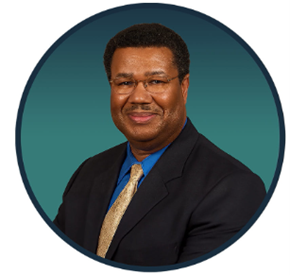
Mr. Donald Ferguson has been a familiar and trusted voice in schools across Michigan as a presenter for the OK2SAY student safety program. During his tenure, he has spoken to tens of thousands of students, helping them understand the power of speaking up and looking out for one another.
His path to OK2SAY was a natural one. With a long history of mentoring youth and a deep love for teaching, the opportunity to present for OK2SAY aligned seamlessly with both his personal values and professional passions. “I love what I do,” Mr. Ferguson said simply.
Depending on the time of year, Mr. Ferguson speaks to anywhere from 700 to more than 10,000 students in a single month, averaging about 3,500 students monthly. While the schedule can be demanding, maintaining energy has never been a struggle. “I believe the program works,” he said. “And I know that I’m making a difference.”
That belief carries through his presentations at every grade level. Whether addressing elementary, middle, or high school students, he emphasizes the importance of preparation and understanding each school’s unique culture. “Sixth graders in one school may be very different from sixth graders in another,” he noted. Taking the time to get a pulse on each community and continuing to mentor young people outside the classroom allows him to adapt his approach to meeting students where they are.
During question-and-answer sessions, one concern consistently rises to the surface: Can anyone use OK2SAY and is it always available? Students are reassured that while parents, teachers, and counselors should be their first point of contact whenever possible, OK2SAY is available 24 hours a day, seven days a week, whenever they need it.
Some moments leave a lasting imprint. Mr. Ferguson recalled one presentation that extended nearly two hours – far beyond its scheduled 45 minutes – after students began opening up about bullying, loneliness, and thoughts of suicide. In that moment, something powerful happened. “I did very little,” he reflected. “The students helped each other.” It was a clear reminder that when given space and support, young people can become one another’s strongest allies.
A significant barrier he addresses is the fear of being labeled a "snitch." For generations, students have been taught that speaking up brings consequences. Mr. Ferguson reframes reporting as an act of courage and compassion. “Instead of teaching silence, let’s teach that your actions can make someone’s day better,” he tells students. Then he asks them to consider a simple question: What if you were the one being hurt?
Presenting on topics like suicide, peer mistreatment, and threats to safety can take an emotional toll. When asked what he does to decompress, Mr. Ferguson returns to a lesson his parents taught him long ago, that no matter how hard life gets, there is always a place to come home to. After a difficult day, he reflects on one question – Did I help someone? And then he goes home to his loving wife, refueled by family and purpose.
The true measure of Ferguson’s impact often appears in the quietest moments, like being recognized by a young girl in a dentist’s office who excitedly whispered, “That’s Mr. Ferguson from OK2SAY.” For him, this recognition signified more than a familiar face – it meant the message had resonated." OK2SAY empowers students," he said. "It gives them a means to make a difference."
Help your students find their voice. To schedule a free student safety presentation, visit the OK2SAY website.
|

|
|
|
|
|