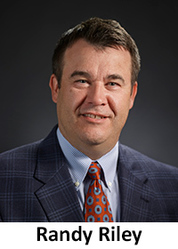
 by Randy Riley, State Librarian
On
May 1-2, hundreds of
librarians, trustees, library supporters, and patrons from around the country gathered in Washington, DC to express
the importance of continued funding of the Institute of Museum and Library
Services (IMLS) and Library Services and Technology Act (LSTA).
National Library Legislative Day (NLLD) is a two-day advocacy event that brings library
supporters to the Capitol to meet with members of Congress and their staff.
Key topics included:
- Funding LSTA and IMLS;
- Funding the Innovative Approaches to Literacy (IAL) program that enables schools and non-profits to obtain essential materials;
- Supporting public access to government data and taxpayer-funded information research;
- Supporting strong net neutrality protections;
- Expediting the modernization of the copyright office; and
- Ratification of the Marrakesh Treaty and supporting "real" privacy and surveillance law reform.
Prior to the meetings, participants
received advocacy tips and training from the American Library Association’s (ALA)
Washington Office, along with important issues briefings. More information can be found at: http://www.ala.org/advocacy/advleg/nlld.
Being part of the 37-member Michigan
delegation was humbling. Honestly, no other state exceeds the commitment and
dedication demonstrated by our delegation. Its commitment to libraries, of all types, was inspiring. This year we
were also blessed to have representatives from Gale Cengage and ProQuest as
part of the delegation.
Visiting congressmen in DC is a
tremendous opportunity, but it is not the only, or even best way to advocate
for Michigan libraries. All library supporters should talk about the
importance of libraries at the local level whenever possible. City, township
and county officials need to hear how crucial library services are in your
communities while school superintendents, principals and teachers all should be
part of the discussion. Don’t overlook the time spent in the grocery check-out
lane or conversations with parents in the stands at your child’s soccer game as
an opportunity to talk about libraries. Recently a friend started a conversation
by pleading “can we talk about something besides libraries tonight?” But I
know that he is informed… By collaborating
and building partnerships we can ensure that Michigan libraries remain strong
for years to come.
Did you know?
- There are 16,559 public
libraries in the United States and 9,767 are in small towns or rural areas.
- 1.4 billion library visits
take place per year.
- An average of 2,663
library visits take place per minute nationally.
- 94% of parents think
libraries are important for their children.
- 92% of public libraries
helped people apply/interview for jobs in 2014.
- It is estimated that K-12 students visited a library 1.5 billion times in
2015.
Start the conversation.
|
 by Richard Adler, University of Michigan
One of the best ways
to learn about Michigan's rich heritage is to explore the historical collections
of archives, libraries, and museums. Today many of these collections can
be found online, where photographs, diaries, letters, and audio recordings are available even to patrons who are many miles away. Finding collections
online is not always easy, though, especially if one is not exactly sure where
to look. Fortunately, the Digital Public Library of America (DPLA) (https://dp.la/) makes
it much easier to find collections from hundreds of cultural institutions
nationwide.
Michigan officially
joined the DPLA by creating a "service hub" under the leadership of the Library
of Michigan (LM) and with support from the Midwest Collaborative for Library
Services (MCLS), the University of Michigan, Wayne State University, Western Michigan
University, and Michigan State University. Together the four universities
selected several collections to share, and in January the first of them became
searchable on the DPLA's website. View some of the items from these
collections.
The Michigan Service
Hub (http://michiganservicehub.org/)
will act as an intermediary, working with cultural institutions throughout the
state and serving as a point of contact for the DPLA's small staff in the Boston Public Library.
Sharing collections
benefits both the DPLA and a contributing institution. Only the metadata used
to find a collection are shared, not the collections themselves, which remain
on the institution's website. If a patron wishes to look at a particular item
in a collection, clicking on the link takes the patron from the DPLA to the
institution's website, which benefits from the additional traffic. At the
same time, the institution will benefit by making its collections more easily
available to students, teachers, genealogists and history buffs everywhere.
To learn more about
the Michigan Service Hub please contact coordinator Richard
Adler at rcadler@umich.edu.
|
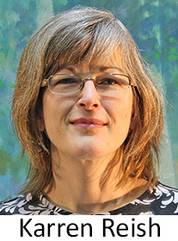 by Karren Reish, Grants Coordinator, LM
This first year of our new subgrant program has been
exciting and we have four grantees. Congratulations to all who participated.
All the applicants invested time and creativity, which made for a great first
year. The LM received 21 applications from public libraries,
cooperatives and academic libraries. The applications were peer reviewed by the
LSTA Advisory Council, made up of librarians from a range of libraries around
the state and LM staff. The grantees include four large grants
and four small sponsorship grants. We are looking forward to great outcomes
from these grants.
Dearborn Public Library – “Dearborn Public
Library and Smartlocker™ -a Community-Based Initiative” - 3-year grant for $110,000.
The Dearborn Public
Library is partnering with Salina Elementary and Intermediate Schools to
improve access to library material in an underserved, largely immigrant, community. A Smartlocker™ will be installed at the
Salina School Community Center that students and community members will be able
to use to get public library materials. The goal is to provide community access
to library material for education and entertainment, opening the doors of
knowledge and lifelong learning.
Jackson District Library (JDL) – “Project BRIDGE
(Building Relationships in Diverse Generational Experiences)” – 2-year grant
for $150,000.
Project BRIDGE is
supplementing the traditional elder outreach programs with innovative services
for citizens living independently or in residential facilities. It will develop a range of offerings,
including: Connections (a special
collection for memory impaired individuals), JDL on the Road (a series of
programs tailored for older adults), Music and Memory (a personalized music
program for memory impaired participants), Reminiscence Kits (program kits
designed to stimulate conversations and memories), and TimeSlips (a program
using group storytelling for people with dementia).
Wayne State University (WSU) Libraries – “Discovering
Michigan History” – 2-year grant for $161,747.
Discovering Michigan
History will establish pathways to share cultural content from Michigan
libraries, archives, and museums via digital platforms to the public,
educators, and the DPLA. The project aims to
advance Michigan’s digital collections in three areas: digital collection
creation and hosting, digital discovery, and curricular development. WSU will
work with LGBT Detroit, The Arab American National Museum, and the Burton
Collection at the Detroit Public Library to share their content.
Ypsilanti District Library – “Texting and
Learning for Kindergarten (TALK)” – 3-year grant for $175,000
Many parents are unaware
that their daily interactions can prepare children for success. To meet parents
where they are, libraries in Washtenaw County are developing a text messaging
service for families with children age 5 and under. New partnerships with
libraries, preschools, service agencies, and the Sheriff's Office will ensure
that the service reaches low-income residents, parents with limited literacy
skills, and other underserved groups.
Sponsorships
- Friends of Michigan Libraries – Workshop support
– 1 year grant for $2,500
- Michigan Academic Library Association – Workshop
support – 1 year grant for $2,980
- Michigan Library Association – Workshop support –
1 year grant for $5,000
- The Library Network – Michigan Activity Pass
program – 1 year grant for $5,000
Funding availability for
the 2018 grant program will be announced this fall. The Library of Michigan
Collaborative Library Services grant program is made possible in part by the IMLS. For more information, contact Karren Reish at reishk@michigan.gov or 517-241-0021.
|
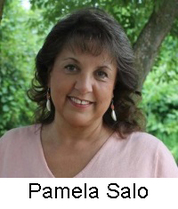 by Pamela Salo, Director, Buchanan District Library
Have you heard of littleBits? The perfect word to describe littleBits is
inventing. The littleBits website says
“electronic building blocks that empower you to invent anything, from your own
remote controlled car, to a smart home device. The Bits snap together with
magnets, no soldering, no wiring, no programming needed.” Go to “how it works” and you will be
drawn into all the possibilities. At
the Buchanan District Library we designed a “certification” program that
enables the participants to get a basic knowledge of over 60 Bits. Once certified they become a Geeky Bit Tech
and move on to projects. We started with
$350 of Bits. Popularity soared and the community provided funding to bring our
Bit collection to over $5000.
In the beginning, boys outnumbered girls 6 to 1 in the
program. We hosted a Gizmo Girls event to turn that around.
One of our classes this week has six girls and four boys. On our website you will
find videos that link to our YouTube channel. For programming ideas we scoured the
littleBits site and designed projects of our own. Take a look at our Facebook
page to see pictures of “aha” moments on our children’s faces.
Not all children in our community would have access to this
type of STEAM technology. The Geeky Bits
Tech Club has changed that. To build on
this opportunity we offer kits for check out. The Gizmo & Gadgets Kit
was the 5th most checked out item in the last six months. We are fostering creative confidence. Thomas Edison said “to invent you need a good
imagination and a pile of junk.” We have
boxes of junk, containers of bits and no shortage of imagination.
The Buchanan District Library is a Global Chapter for the
littleBits community. Are you thinking
of venturing into Science, Technology, Engineering, Art and Math (STEAM) programming? We
are willing to share what we have learned to help you in your endeavor. You will find lots of support in the
littleBits community also. For questions or comments email Pamela Salo at
p.salo@buchananlibrary.com.
|
 by Cathy Lancaster, Youth Services Librarian, LM
The
2017 Annual Meeting for the Collaborative Summer Library Program (CSLP) was held in
Charleston, South Carolina on April 10-12. Attending
as State Representative was Cathy Lancaster, Youth Services Coordinator at the
LM, and Gillian Streeter, Youth
Services Librarian from Muskegon Area District Library. Participants discussed and approved upcoming CSLP themes, slogans, art,
incentives and more. Cathy shared
feedback from various Michigan survey respondents throughout the meeting.
A
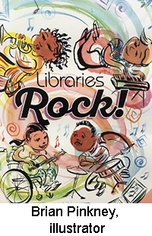
sneak-peek at art by Brian Pinkney for the 2018 youth program and by Larry
Jones for the teen and adult programs was shared, along with announcements that
the 2019 artist will be Leeza Hernandez. Members should also look for work by
LeUyen Pham in 2020. As previously
announced, the 2018 musical themed-slogan for all-ages is “Libraries Rock!” Slogans for the 2019 space theme were discussed
and voted on, with the decision to carry forward “A Universe of Stories” for all-ages. Themes for the 2020 summer program also were debated; the winning theme is fairy tale/mythology/fantasy.
The 2017 Teen Video contest winners for the “Build A Better
World” theme were announced at the meeting. Novi Public Library’s entry was the Michigan winner; all winning state videos are available at
the CSLP website for viewing.
CSLP
is a grassroots consortium that relies on volunteers for various committees and
their board. Michigan’s own Cathy
Lancaster was elected in April to serve a 3-year term as Board
Member-At-Large. A call for committee
volunteers will go out soon; please consider volunteering. Committees to serve include manual editing,
artists, vendors, inclusion, and more. For more information on CSLP, please go to www.cslpreads.org
or to our site at www.michigan.gov/summerreading.
|
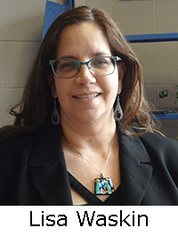 by Lisa Waskin, Director, Superior District Library
UPRLC is the Upper Peninsula Region of Library
Cooperation and was established in 1984. It is a group of people working
together to improve library services in the Upper Peninsula and Northern
Michigan.
UPRLC provides these libraries opportunities to improve their services and expand their resources.
UPRLC believes in libraries working together.
I feel that the members are excellent at
collaboration. In fact, the main purpose
of the organization is to:
- Facilitate the sharing of information
resources among Upper Peninsula and Northern Michigan libraries.
- Encourage sharing of resources with
cost-effective practices and procedures made possible through interlibrary
cooperation among these libraries.
- Enable these libraries to link up and interact with other regional and national
electronic bibliographical communication systems.
- Assist libraries in providing information and
educational services to the residents of Michigan's Upper Peninsula and
Northern Michigan.
Each year the UPRLC members hold an Annual Meeting
Day. At this all day workshop, we bring
in speakers on relevant topics to improve library service for our membership.
For example, last year we brought in LM staff members Sonya
Schryer Norris and Joe Hamlin to discuss ways to use social media to promote
library services. We also held a “Before Hours” networking opportunity the night before the Annual
Meeting. At this event, we enjoyed a
Jeopardy-style trivia game and a live band, along with pizza and other
goodies. Because of the positive
feedback from this event, and the fact that we actually made money, this year,
we are planning to make this a two day event and bring in vendors, hold
committee meetings and provide another fun networking event in the
evening.
Because many of the UPRLC
libraries are small and rural, it is not always possible for staff to
get away for an all day workshop. By
expanding the event, we hope to provide members with many opportunities to
participate and network with their colleagues in a variety of settings and at
various times in the hopes of providing the widest opportunity possible for
some kind of participation.
In short, the collaboration between members of the UPRLC
ensures that more can be accomplished by working together and that there is a greater
benefit to the user community by pooling resources in a formal structure. But these benefits are not only economic; they
are also related to the informational, educational, cultural and social needs of the members and
their library community. Together we are
more.
|
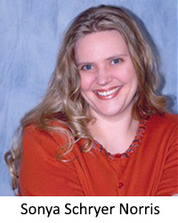 by Sonya Schryer Norris, LM
Does your library need new computers for staff or for your public areas? Check out the 2017 Technology Readiness Infrastructure Grant (TRIG) device purchasing program. Public libraries are welcome to participate.
This year there are 43 mobile and desktop devices
along with related accessories and options available for purchase, most at
substantial discounts from retail cost. Brands include
Lenovo, HP, Dell, Google and Apple. You can choose options such how much memory you want, which size Solid
State Drive (SSD), and a range of accessories such as optical drives and touch
displays. There are also a variety of Notebooks, Chromebooks and even iPads. You
can view the full list of included products on the Device Purchasing Planning Spreadsheet (http://www.remcbids.org/customer/download/id/1250).
Purchasing takes place on the Statewide Purchasing Online Tool (SPOT). SPOT was developed to
lower schools’ and libraries’ purchasing costs by aggregating sales volume
statewide during a defined purchasing window. That purchasing window opened
April 19 and remains open for about another five months.
For more information on setting up a SPOT account or making a
purchase on SPOT, see the SPOT FAQs (http://www.remcbids.org/customer/download/id/1242).
Word to the wise: when libraries set up their SPOT accounts they should select “Nonpublic”
for district and ISD.
Any questions should be sent to REMC
representative Karen Hairston at spot@remc.org.
|
 by Evette Atkin, Continuing Education Coordinator, LM
The LM is pleased to announce the addition
of two new, free webinars. On May 24 at 3 p.m. EST, join us for a 1-hour
webinar covering information and updates on the Quality Services Audit
Checklist (QSAC). QSAC is a voluntary management standards program that assists
public libraries by setting benchmarks for Governance & Administration, Human
Resources, Services, Collection Development, Technology, Facilities &
Equipment and Public Relations. LM recognizes public libraries as they achieve
each level. Libraries can be certified at the Essential, Enhanced and Excellent
levels. For more information on QSAC, visit the Library of Michigan’s QSAC page at http://michigan.gov/qsac.
On May 26 at 2 p.m. EST, join us for a 1-hour webinar covering
information and updates on the Continuing Education Stipend program. Did
you know that library staff may apply for a Continuing Education Stipend for up
to $1500 per person, per fiscal year for most continuing education
opportunities? Michigan public, academic and school library staff are eligible
to apply. Applications may be submitted quarterly, up to the last
business day of March, June, September, or December for a continuing education
event that is at least 30 days after the quarterly submission deadline. For
more information on the CE Stipend program, visit the CE Stipend page.
To register for these, or any other LM program, go to the
LM's registration system.
|
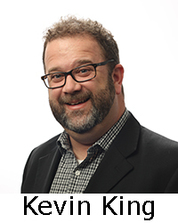 by Kevin King, Branch and Circulation
Services, Kalamazoo Public Library
A patron frantically approaches the
reference desk needing to submit a resume to a potential employer. You can
sense their anxiety and can almost predict the first question, “Can you help me
email my resume?” The patron then points to the computer, “I cannot use one of
those things.” Most library employees would escort them to a computer and walk
them through the process. What if there was another way? What if you could show
patrons a tool that would grant them free access to multiple self-directed
tutorials to increase their digital literacy? What if patrons could track their
progress? In 2013, the Public Library Association launched an online hub for
digital literacy support and training, DigitalLearn.org, and it is the answer to these questions and more.
In the fall of 2016, the Kalamazoo Public Library (KPL) was honored to be selected
as one of the pilot sites for the DigitalLearn.org initiative. KPL was one of
four new libraries selected to add the resource after the Chicago Public
Library launched their DigitalLearn site in early 2016. The goal was to offer patrons of Kalamazoo access
to resources that would equip them with the knowledge to improve their digital
literacy skills. Staff had been experiencing increasing numbers of questions
about everything from basic computer skills to navigating the web to getting an
email account. The opportunity to add DigitalLearn.org to the library website
gave staff another tool to assist low-level tech skill patrons with many of the
digital skills needed today.
The implementation process could not have been easier! Over just a few
months of working with PLA’s contractors, our site debuted in January of this
year (kpl.digitallearn.org/). Within days staff were sharing
stories of patrons using the site to create resumes, learn how to use Skype,
search for jobs and buy a plane ticket. The courses are well produced and very
easy to follow. The IT staff was excited to learn that not only can we create
our own courses, but we will also have access to courses created by other
libraries using DigitalLearn.org! This will allow KPL to respond to specific
community needs and help patrons learn the digital skills they seek out the
most.
DigitalLearn.org has enormous potential. KPL hopes to not only create our
own content, but also work with other partners to build a tool that is useful
for all libraries. In addition to Chicago Public Library and KPL, you can check
out the other great public libraries with sites. If you are interested, check out DigitalLearn.org or call Scott Allen at (312) 280-5858.
|
by Sonya Schryer Norris, Ploud Coordinator, LM
Ploud (Public Libraries in the Cloud) is a website template and hosting solution. It is designed for small and rural libraries, provided by vendor Enfold Systems and
subsidized with Library Services and Technology Act (LSTA) dollars through the
LM. Over 100 Michigan libraries utilize Ploud for their websites. Are you thinking about changing website services?
Consider Ploud.
Michigan Ploud libraries will pay $200 this year. For that
low cost libraries are able to take advantage of one of four templates, each of
which comes with between four and a dozen color schemes that can be
changed at any time; hosting; a vendor-provided help desk; and on-going
development. A subdomain of “michlibrary.org” such as “MYLIBRARY.michlibrary.org”
is available to new libraries or you are free to use your own domain name.
And there’s no uploading HTML files with Ploud. In fact, you
don’t need to know any HTML at all. You simply log onto your site and from
there you can edit text, images and links from an easy-to-use interface that requires no
coding. Ploud is great for libraries without specialized technology staff.
Ploud comes with carousels, or rotating images, which you
can use on any page; optional drag and drop page layouts; a selection of MeL
databases which can easily be extended for your patron base; an intuitive calendar for library events; a News section; a Kids & Teens area; and a Contact
Us form. From there you can develop any new content that you’d like. Your Ploud
website can be as small or as large as you care to build it.
To get an idea of what the product looks like and how Michigan libraries are using it check out these sites:
The LM provides an in-person workshop
series every fall at locations around the state to train on site operations and
any updates that occurred during the course of the year.
Questions? Contact Sonya Schryer Norris at norriss2@michigan.gov or 517-373-4457. You
can also check out the program website. This
summer is a perfect time to consider Ploud.
|
|
|