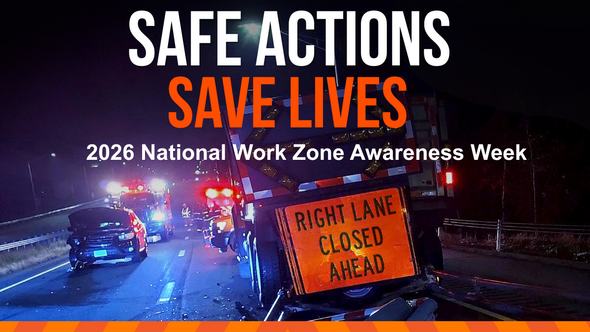
 MIOSHA is joining transportation safety partners across Michigan in support of National Work Zone Awareness Week (NWZAW), April 20–24, 2026, to promote safe driving in and around work zones.
Held each spring at the start of construction season, National Work Zone Awareness Week highlights the importance of work zone safety for both workers and motorists. This year’s theme, Safe Actions Save Lives, emphasizes the critical role drivers play in protecting roadway workers and fellow motorists.
As construction activity increases across Michigan, drivers should expect lane closures, reduced speeds and changing traffic patterns. Staying alert, slowing down and eliminating distractions can help prevent serious incidents.
Work zone safety is a shared responsibility. By using extra caution in and around work zones, drivers can help protect workers, prevent injuries and save lives.
Learn more about National Work Zone Awareness Week and how to support safe work zones at nwzaw.org.
 There’s still time to register for the 2026 Michigan Safety Conference, taking place April 14–15, 2026, at the Lansing Center. This annual event brings together safety and health professionals from across Michigan for two days of education, networking and collaboration.
The conference features approximately 120 educational sessions, 200 exhibitors and continuing education opportunities designed to help employers strengthen workplace safety and health programs. Exhibit space for vendors is fully booked, reflecting strong interest in this year’s conference.
MIOSHA will also participate in the conference, with staff leading 11 sessions covering topics such as enforcement updates, hazard communication, fall prevention, lockout/tagout, workplace fatalities and proposed heat stress regulations.
Registration Options
Tuesday Only – April 14
$335 per person
Wednesday Only – April 15
$335 per person
Both Days – April 14–15
$375 per person
All registration options include:
- Access to approximately 60 educational sessions per day (120 total for both days)
- Access to 200 exhibitors
- Up to 6 hours of CEU-eligible training per day
- Networking opportunities with safety and health professionals
The Michigan Safety Conference provides an opportunity to learn from safety and health experts, discover new tools and strategies, and connect with professionals dedicated to improving workplace safety and health.
MIOSHA will also participate in the conference, offering sessions and engaging with attendees throughout the event.
Register today to secure your spot at michsafetyconference.org.
 Register for the Upper Michigan Safety Conference in March 24 in Escanaba
Join safety and health professionals from across the region for the 25th Annual Upper Michigan Safety Conference on Friday, April 24, 2026, at Bay College’s Escanaba Campus. This one-day event is designed for individuals committed to building safer workplaces and strengthening safety and health programs.
Attendees will hear from industry leaders, participate in engaging sessions and gain practical strategies to improve workplace safety and health. MIOSHA representatives will also participate in this year’s conference, sharing insights and resources to help employers and workers strengthen workplace safety and health programs.
Conference Details
Date: Friday, April 24, 2026
Time: 7:30 a.m. to 3:30 p.m. (ET)
Location: Bay College – Escanaba Campus
2001 North Lincoln Road
Escanaba, MI 49829
 |
|
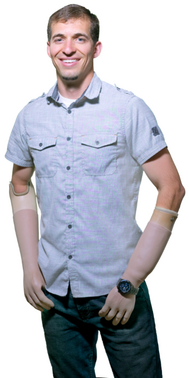
Brad Hurtig – Keynote Speaker
After losing both hands in a workplace accident, Brad Hurtig turned tragedy into purpose. His Find A Way® message focuses on why safety matters and how organizations can turn safety awareness into action.
|
Joe Pacheco – Closing Session
Workplace Violence & Active Shooter Preparedness — practical strategies to help organizations protect employees and stay prepared.
Plan Ahead: 2026 Safety Stand-Down Events
Throughout the year, MIOSHA supports national and statewide stand-down events that raise awareness about leading workplace hazards and promote safer work practices.
-
April 28: Workers Memorial Day
Workers Memorial Day, observed April 28, honors workers lost due to workplace incidents, illnesses and diseases. Events and resources for Workers Memorial Week (April 20–24) are available on OSHA’s Workers Memorial Day webpage.
Learn More: Worker Memorial Events, April 20-24
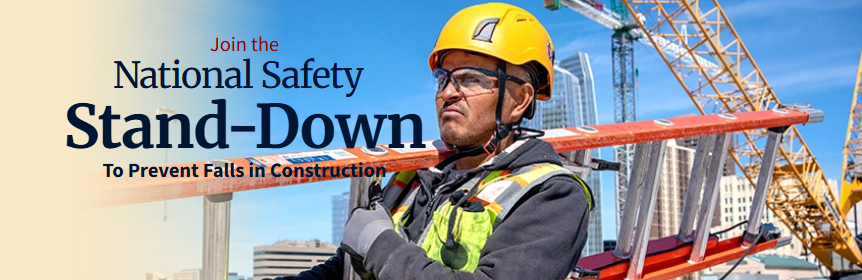
Additional 2026 Stand-Down Events Include:
-
June 15–19: Trench Safety Stand-Down
Promotes trenching and excavation safety, with emphasis on preventing cave-ins.
Learn more: Trench Safety Stand Down
-
August 10–14: Take a Stand for Workplace Safety and Health
MIOSHA staff visit worksites statewide to provide free, one-on-one safety consultations. Participation in the Take a Stand event also provides participants registration in the national safe and sound week
Learn more:
MIOSHA Take a Stand for Workplace Safety and Health
OSHA Safe and Sound Week
-
September 14–18: Construction Suicide Prevention Week
Raises awareness of mental health risks and suicide prevention in the construction industry
Learn more: Construction Suicide Prevention Week
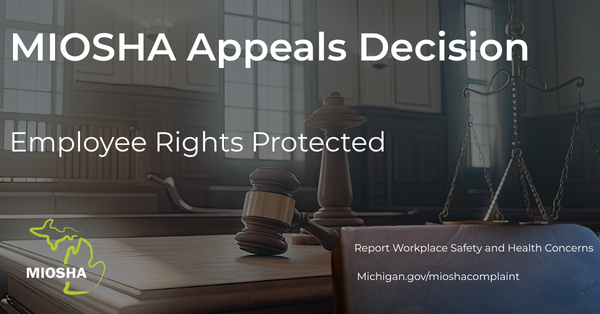 A recent MIOSHA discrimination case resulted in an Administrative Law Judge and circuit court ruling in favor of an employee who reported workplace safety concerns. As a result, the employer was ordered to reinstate the employee, restore benefits and pay back wages after MIOSHA determined the employee experienced retaliation for reporting a sewage backup hazard.
The case highlights employee protections under Section 65 of the MIOSH Act, which prohibits employers from discharging or discriminating against employees who raise workplace safety and health concerns. This case highlights the protections available to workers who exercise their rights under the Act.
Employee Reports Workplace Safety Concern
The employee, a shift manager at a fast-food establishment, discovered a sewage backup at the workplace on Jan. 26, 2024. Although management had been notified, the store remained open with the drive-through operating.
Concerned about health and safety risks — and while pregnant at the time — the employee contacted the Wayne County Health Department. A health inspector conducted an emergency inspection and recommended the store close until the sewage backup could be cleaned and sanitized. The store closed that day and reopened after remediation was completed.
Adverse Actions and MIOSHA Investigation
Shortly after the inspection, the employee was called into a meeting and informed she would be reassigned from shift manager to crew member due to a lack of ServSafe certification. The reassignment included a pay reduction from $19 per hour to $15 per hour.
The employee later learned from the health department that only one certified manager was required and that the store already met that requirement. After raising this information with management, the reassignment was rescinded and she returned to her shift manager position. However, she remained off the work schedule for approximately one week.
On Feb. 5, 2024, the employee filed a MIOSHA discrimination complaint, alleging retaliation after reporting the sewage backup.
Later that month, the employee was again called into a meeting and asked to complete an availability form. After indicating limited availability due to pregnancy-related restrictions, she was informed she would again be reassigned to a crew member position with a reduced pay rate of $13.50 per hour. The employee declined the reassignment, and her employment ended on Feb. 29, 2024.
Following its investigation, MIOSHA determined that the employee engaged in protected activity by reporting workplace safety concerns and contacting the health department, that the employer was aware of the protected activity and that the employee experienced adverse employment actions, including removal from the schedule, demotion and termination. MIOSHA further determined there was a connection between the employee’s protected activity and the adverse actions.
On Sept. 30, 2024, MIOSHA concluded the employee’s discrimination complaint was valid. The employer appealed the determination.
Court Upholds MIOSHA Decision
A Michigan Administrative Law Judge determined the employee had been constructively discharged. The employer appealed the decision to circuit court, which upheld the Administrative Law Judge’s findings.
The rulings required the employer to remove disciplinary actions from the employee’s personnel file, offer reinstatement to the employee’s former position, restore seniority and benefits and pay back wages and benefits with interest. The back pay award included wages, holiday pay, bonuses and other benefits.
This case underscores the protections provided under Section 65 of the MIOSHA Act. Employees have the right to report workplace hazards, participate in safety investigations and raise safety and health concerns without fear of retaliation. Employers should ensure workplace safety concerns are addressed promptly and that employment decisions are not influenced by protected activity.
Filing a Discrimination Complaint
Workers who believe they have experienced retaliation or discrimination for exercising their rights under the MIOSHA Act may file a complaint with the MIOSHA Employee Discrimination Section. Complaints must be filed within 30 days of the alleged incident.
The Employee Discrimination Section investigates complaints involving retaliation related to workplace safety and health concerns, including reporting hazards, participating in inspections, raising safety concerns or exercising other protected rights under the MIOSHA Act.
To file a complaint or learn more, visit Michigan.gov/mioshacomplaint.
You may also contact the MIOSHA Employee Discrimination Section directly:
MIOSHA Employee Discrimination Section
P.O. Box 30644
Lansing, MI 48909
Phone: 313-456-3109
 |
Variances from MIOSHA standards must be made available to the public in accordance with Part 12, Variances (R408.22201 to 408.22251). MIOSHA variances are published online at:
Michigan.gov/mioshavariances.
There have been eight work-related fatalities reported to MIOSHA in 2026. The information below shares preliminary details about those fatalities, which are believed to be covered by the MIOSH Act. The description reflects information provided to MIOSHA at the initial report of the incidents and are not the result of any official MIOSHA investigation.
Preliminary summaries of all fatalities are available at Michigan.gov/mioshafatalities.
Preliminary Summary of Recent Incidents
A 44-year-old school bus driver was assisting another bus driver in navigating around a semi-truck that was blocking the road. After assisting the bus driver, the employee was struck by a passing vehicle. The victim was taken to the hospital. The employer was notified the employee died from their injuries the following day.
A 19-year-old service technician responded to a disabled vehicle service call on the shoulder of eastbound I-696 near Mound Road. The disabled vehicle driver had deployed cones/triangles to alert oncoming traffic. Upon arrival, the technician activated the vehicle's emergency lights and exited to provide assistance. While moving between vehicles, another vehicle traveling eastbound on I-696 abruptly cut off a second vehicle causing the second vehicle to swerve striking the victim.
A 43-year-old department of public works supervisor was cutting tree limbs that had fallen onto a roadway due to high winds. During the task, a limb from a nearby tree fell and struck the worker.
A 55-year-old owner was attempting to unload vehicles from a car hauler truck. During the task, a vehicle door inadvertently opened and struck the controls to the hydraulic system of the car hauler’s upper platform. The upper platform then rose and crushed the victim between platforms of the car hauler.
A 21-year-old laborer was overcome by air contaminant, most likely hydrogen sulfide, while working in a pit to unplug a groundwater well. The well was located at a vacant residence that was undergoing maintenance and repair prior to resale. The victim had poured muriatic acid into the well to unplug it.
Quick Links
Agency/Division Instructions/Memorandums
Air Contaminants Initiative
Asbestos Program
CET Request for Consultative Assistance Services (RCA)
CET Training Calendar
Construction Safety and Health Division (CSHD)
Contact MIOSHA (phone and email)
DVD/video Library Service
Employee Safety Health and Discrimination Complaint Forms
Fall Prevention Campaign (Stop Falls. Save Lives)
General Industry Safety and Health Division (GISHD)
Hazard Communication/GHS
Laboratory and Equipment Services
Michigan Alliances
Michigan Safety and Health Achievement Recognition Program (MSHARP)
Michigan Voluntary Protection Program (MVPP)
MIOSHA FOIA Request
MIOSHA News
MIOSHA Publications
MIOSHA Recordkeeping
MIOSHA Standards
MIOSHA Take a Stand Week
MIOSHA Training Institute (MTI)
MIOSHA Updates
MIOSHA Variances
Radiation Safety Section
Residential Construction
Strategic Plan and Initiatives
|