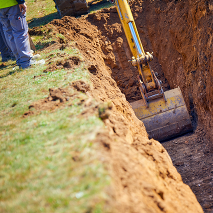
Excavation and trenching remain among the most hazardous construction activities. Cave-ins can occur without warning and often result in serious injuries or fatalities. To help prevent these incidents, MIOSHA is increasing its emphasis on excavation safety throughout March, aligning with a regional focus by federal OSHA’s Chicago Region, formerly Region 5, on trenching and excavation hazards.
Cave-ins are among the most feared excavation hazards. However, other serious risks also exist, including asphyxiation from lack of oxygen, inhalation of toxic fumes and drowning. Workers may also face electrocution or explosions when excavation work contacts underground utilities.
Throughout March, MIOSHA will focus on education and outreach to help employers and workers recognize excavation hazards and apply proven methods to prevent cave-ins and struck-by incidents.
One upcoming opportunity includes the MIOSHA Training Institute online seminar Excavations: The Grave Danger on March 11. The course covers soil classification, protective systems, competent person responsibilities and common excavation hazards encountered on construction sites.
|
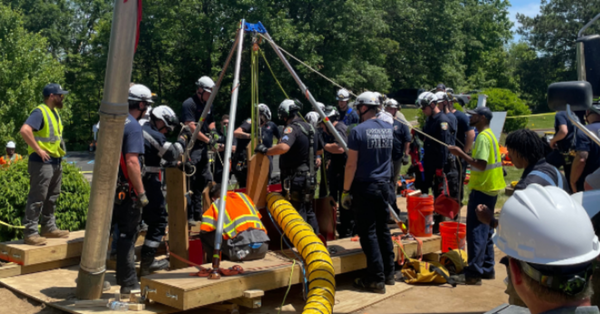 Rescue crews worked for five hours to free a man trapped in a 10-foot-deep trench in Portage, Michigan on May 31, 2024. The employer was cited for having an unsupported open excavation operation more than five feet deep.
MIOSHA also encourages employers to take advantage of its consultation services, which offer free, voluntary workplace safety and health consultations without citations or penalties. These on-site visits are conducted by MIOSHA occupational safety consultants or industrial hygienists and may include a full or partial review of excavation and trenching operations. Employers must agree in advance to correct any serious hazards identified during the consultation.
Employers and employees should remember the following essential trench safety requirements:
- Protective systems must be in place for trenches five feet deep or deeper, including benching, sloping, shoring or shielding.
- A registered professional engineer must approve trenches 20 feet deep or deeper.
- A competent person must inspect trenches daily, and as conditions change, before anyone enters. The competent person must be able to identify hazards, soil types and protective systems and have authority to take prompt corrective action.
- Excavated soil must be kept at least two feet from trench edges.
- Underground utilities must be located and marked before digging begins.
- Ladders or other means of egress, must be provided every 25 feet of lateral travel to ensure safe entry and exit.
MIOSHA’s outreach efforts will build toward the 2026 Trench Safety Stand-Down, scheduled for June 15–19. The national event, hosted by the National Utility Contractors Association in partnership with federal OSHA, raises awareness to help prevent injuries and fatalities caused by trench cave-ins. MIOSHA will join employers at worksites across Michigan to encourage open dialogue and training on trenching hazards.
MIOSHA encourages all employers involved in excavation and trenching activities to use March as an opportunity to review their excavation safety programs, verify that a competent person is designated and ensure protective systems are in place on every jobsite.
For more information on excavation safety training and resources, visit Michigan.gov/trenching.
 The 95th Annual Michigan Safety Conference will be held at the Lansing Center April 14-15, 2026. Visit MichSafetyConference.org for more information.
Mark your calendars for the 2026 Michigan Safety Conference, scheduled for April 14–15, 2026, at the Lansing Center in Lansing. The annual conference brings together safety and health professionals, employers, regulators and industry experts to strengthen workplace safety and health across Michigan.
The two-day, in-person event will feature more than 120 workplace safety and health classes, educational sessions across a wide range of topics, exhibits from safety vendors and opportunities to earn continuing education credits. Attendees can connect with trainers and peers, explore new products and services and participate in hands-on safety demonstrations.
MIOSHA’s Consultation Education and Training Division will lead sessions focused on regulatory updates, enforcement processes and practical hazard prevention strategies.
During the conference on April 14–15, MIOSHA staff will lead 11 additional sessions, including:
- MIOSHA Update
- MIOSHA Construction Safety and Health Division Update
- Behavior-Based Safety: Safety at the Next Level
- Right to Know: Discover What’s New in MIOSHA’s Hazard Communication Standards
- Fall Prevention for Everyone
- When MIOSHA Enforcement Visits
- How MIOSHA Enforces Fire Extinguishers
- Lockout/Tagout: Minor Tool Change Exception
- A Closer Look at Workplace Fatalities
- The Top Ten Most Frequently Cited Serious Violations for 2025
- Preparing for Proposed Heat Stress Regulations in Industrial Settings
A keynote session on April 14 will feature Diane Rohlman, PhD, from the University of Iowa’s Healthier Workforce Center of the Midwest, who will discuss enhancing safety and performance through a Total Worker Health approach.
The Michigan Safety Conference also includes networking opportunities, a president’s dinner, professional recognition awards and opportunities to engage directly with MIOSHA staff and other safety professionals.
MIOSHA encourages employers, safety professionals and workers to attend as part of their ongoing commitment to protecting the safety and health of Michigan workers.
For more details on sessions, registration and exhibitor opportunities, visit MichSafetyConference.org.
 MIOSHA’s Consultation Education and Training (CET) Division offers free, confidential hazard surveys to help employers identify and correct workplace safety and health hazards before injuries occur.
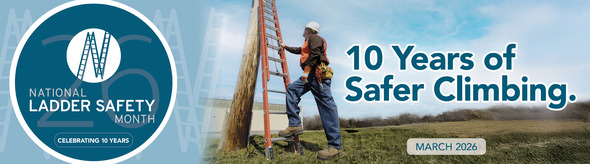
Falls from ladders remain one of the leading causes of serious injuries and fatalities in construction and general industry. In recognition of National Ladder Safety Month, MIOSHA is reminding employers and workers to review ladder safety practices and take steps to prevent falls before work begins.
Ladder-related incidents often result from improper ladder selection, damaged equipment, unsafe setup or misuse. Many of these incidents are preventable through training, routine inspections and adherence to basic safety requirements.
Employers should ensure the correct ladder is selected for the job and that ladders are in good condition before use. Ladders should be inspected for defects such as cracked rails, broken rungs or missing feet and removed from service if damaged. Workers should never use makeshift ladders or place ladders on unstable surfaces.
Proper setup is critical. Extension ladders must be secured to prevent movement and positioned at the correct angle. Step ladders should be fully opened with spreaders locked in place and should never be used in a closed or leaning position. Workers should maintain three points of contact when climbing and avoid carrying tools or materials that could cause a loss of balance.
Training is another key factor in preventing ladder-related injuries. Employers are responsible for ensuring workers are trained to recognize ladder hazards and understand safe use requirements. This includes knowing when ladders are appropriate and when alternative equipment, such as scaffolds or lifts, may be safer.
MIOSHA encourages employers to use National Ladder Safety Month as an opportunity to review ladder safety policies, conduct refresher training and reinforce safe work practices on jobsites.
MIOSHA’s On-Site Consultation Program offers free, voluntary workplace safety and health consultations without citations or penalties. These consultations can help employers identify fall hazards, review ladder use practices and strengthen overall fall protection programs.
For more information on ladder safety resources, training opportunities and consultation services, visit Michigan.gov/cet.
Resources for Ladder Safety
 MIOSHA is hosting two upcoming Coffee with MIOSHA events this March, offering employers and employees a chance to connect with MIOSHA staff and learn more about workplace safety and health resources in an informal setting.
Coffee with MIOSHA events offer a unique opportunity to:
Kent County Road Commission – Walker
MIOSHA and the Kent County Road Commission invite employers and employees to attend Coffee with MIOSHA on:
-
Date: Thursday, March 12, 2026
-
Time: 9 – 11 a.m.
-
Location:
Kent County Road Commission
1900 4 Mile Road NW
Walker, MI 49544
To register, contact
George Smith at gsmith@kentcountyroads.net or 616-745-0456.
Rescheduled Event – St. Jospeh
A previously scheduled Coffee with MIOSHA event has been rescheduled and will now take place at Corewell Health Lakeland Hospital, Frederick S. Upton Education Center:
-
Date: Tuesday, March 24, 2026
-
Time: 8 a.m.
-
Location:
Frederick S. Upton Education Center
1234 Napier Avenue
St. Joseph, MI 49085
Agenda:
- 8 – 8:30 a.m. | Coffee, light breakfast and networking
- 8:30 a.m. | Presentation
- 10:30 a.m. | Additional networking and Q&A with MIOSHA
Both events are free to attend and open to employers and employees interested in strengthening workplace safety and health.
Variances from MIOSHA standards must be made available to the public in accordance with Part 12, Variances (R408.22201 to 408.22251). MIOSHA variances are published online at:
Michigan.gov/mioshavariances.
There have been four work-related fatalities reported to MIOSHA in 2026. The information below shares preliminary details about those fatalities, which are believed to be covered by the MIOSH Act. The description reflects information provided to MIOSHA at the initial report of the incidents and are not the result of any official MIOSHA investigation.
Preliminary summaries of all fatalities are available at Michigan.gov/mioshafatalities.
Preliminary Summary of Recent Incidents
A 21-year-old laborer was overcome by air contaminant, most likely hydrogen sulfide, while working in a pit to unplug a groundwater well. The well was located at a vacant residence that was undergoing maintenance and repair prior to resale. The victim had poured muriatic acid into the well to unplug it.
A 20-year-old painter was overcome by air contaminants, most likely hydrogen sulfide, when he attempted to rescue another worker who had collapsed in a pit while unplugging groundwater well.
A 53-year-old laborer was fatally injured while disassembling an excavator. Two employees were standing in the bucket of a front-end loader attempting to reinstall a pin on the arm of an excavator. The operator of the front-end loader went to start and move the excavator arm to help with reinstalling the pin. While doing so, the excavator cab and arm rotated, pinning the victim between the excavator arm and the bucket of the front-end loader. The employee was transported to a local hospital, where they were pronounced dead
A 26-year-old tow truck helper was standing at the rear of the tow truck cab when they suffered a fatal head injury after becoming caught between the carriage and the cab.
Quick Links
Agency/Division Instructions/Memorandums
Air Contaminants Initiative
Asbestos Program
CET Request for Consultative Assistance Services (RCA)
CET Training Calendar
Construction Safety and Health Division (CSHD)
Contact MIOSHA (phone and email)
DVD/video Library Service
Employee Safety Health and Discrimination Complaint Forms
Fall Prevention Campaign (Stop Falls. Save Lives)
General Industry Safety and Health Division (GISHD)
Hazard Communication/GHS
Laboratory and Equipment Services
Michigan Alliances
Michigan Safety and Health Achievement Recognition Program (MSHARP)
Michigan Voluntary Protection Program (MVPP)
MIOSHA FOIA Request
MIOSHA News
MIOSHA Publications
MIOSHA Recordkeeping
MIOSHA Standards
MIOSHA Take a Stand Week
MIOSHA Training Institute (MTI)
MIOSHA Updates
MIOSHA Variances
Radiation Safety Section
Residential Construction
Strategic Plan and Initiatives
|