|


Connected Nation celebrated Digital Inclusion Week 2025 with a nationwide campaign that trained more than 2,200 people in digital skills and online safety. As part of the celebration, Connected Nation’s Digital Literacy and Learning program brought workshops to communities across Michigan, helping residents gain the knowledge and confidence to use technology safely and effectively.
The Digital Literacy and Learning program provides free digital skills classes for people of all ages. Training sessions cover computer and internet basics, email use, online safety and using mobile devices. The program is designed to make learning simple and accessible, offering both in-person and virtual options in English and Spanish.
In Michigan, Connected Nation hosted seven Digital Inclusion Week workshops at four local senior centers:
-
Ishpeming Senior Center in Ishpeming
-
Negaunee Senior Center in Negaunee
-
Marquette Senior Center in Marquette
-
Forsyth Township Senior Center in Gwinn
Each session gave participants hands-on experience using technology to stay connected with family, access services and protect their privacy online. For more information on the Digital Literacy and Learning program, visit the Connected Nation’s website.
|
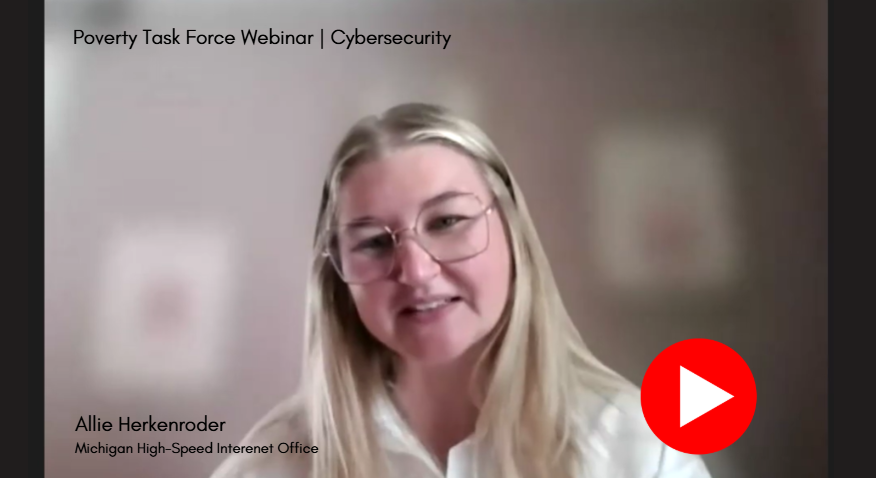
Allie Herkenroder from the Michigan High Speed Internet Office (MIHI) facilitated a panel discussion about cybersecurity best practices during a recent Poverty Task Force webinar. Cybersecurity experts from the Department of Management and Budget, Michigan State Police and others weighed in on how Michiganders can stay safe online. Here are helpful resources from the discussion:
Artificial intelligence (AI) is changing the way we work and create. Many people use AI tools like chatbots and image generators to write, brainstorm or edit images and other content. These tools can be helpful, but it is important to use them safely. AI tools can store what you type, copy what you upload and even become targets for hackers.
The Cybersecurity and Infrastructure Security Agency (CISA) offers the following tips to stay secure when using AI:
-
Protect your personal information. Never enter personal, financial or workplace data into an AI system. Anything you share might be stored or reused later.
-
Choose trustworthy tools. Only use AI tools that your organization approves or that come from verified, reputable sources. Fake AI apps can contain malware.
-
Check what you share online. AI systems often learn from public information. Think before you post or upload images because once it is online, it may be copied forever.
-
Be alert to scams and deepfakes. Cybercriminals can use AI to create convincing messages, voices or images. If something seems unusual, verify it before responding or clicking links.
-
Keep your defenses strong. Use strong passwords, enable multifactor authentication, update your software and report suspicious messages.
For more tips on safe AI use and other cybersecurity resources, visit the CISA website.

|
|
|
|