|
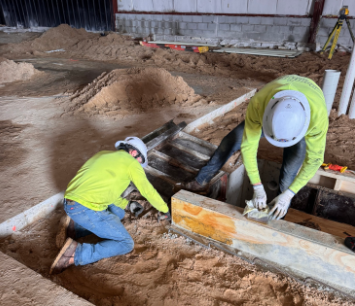
Michigan businesses with 250 or fewer employees can apply for a dollar-for-dollar match up to $5,000 through MIOSHA’s Workplace Improvement to Safety and Health (MIWISH) grant program. These grants provide critical support for employers looking to invest in equipment and training that directly improve workplace safety and health.
In FY 2024–25, MIOSHA awarded $500,000 to 136 employers. Funded projects included fall protection systems, AEDs, trench boxes, respirators, ergonomic lift tables, gas monitors and other equipment that helps reduce the most serious workplace hazards. These grants have made a measurable difference for small employers by allowing them to purchase lifesaving equipment that might otherwise be out of reach.
Eligibility:
- Employers with 250 or fewer employees company-wide
- Must fall under MIOSHA jurisdiction
- Conduct a site-specific evaluation justifying the purchase
- Show how the project reduces risks of injury or disease
- Demonstrate ability to complete and implement the project
The new grant cycle began Oct. 1 and funds will be awarded until exhausted. Preference is given to high-hazard industries and projects tied to State and National Emphasis Programs such as trenching, silica, heat illness, amputations, and cannabis safety. Employers that received a MIWISH grant in FY 2025 may also apply for additional funding after Jan. 1, 2026, if funds remain available.
For full details and application information, visit Michigan.gov/MIOSHAGrants or contact MIOSHA’s grant administrator at 517-647-3155.
|
|
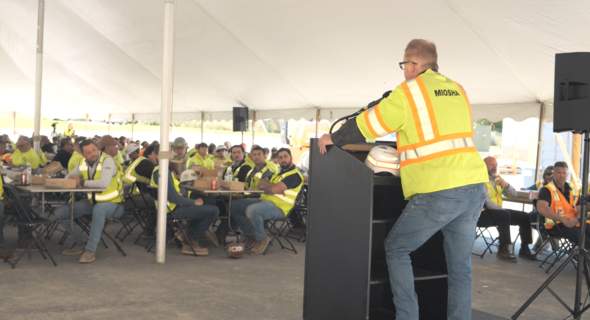 MIOSHA construction safety consultant Jim Getting presents at a 2025 Construction Suicide Prevention Week event in Lansing, highlighting resources to support workers’ mental health.
MIOSHA joined contractors, trade groups and construction workers across Michigan to mark Construction Suicide Prevention Week, held Sept. 8–12. The annual campaign focuses on mental health in construction, where suicide rates remain among the highest of any occupation.
“Every worker deserves the support to thrive,” said Sean Egan, Michigan Department of Labor and Economic Opportunity deputy director. “In construction, where suicide rates are highest, we must break the stigma, raise awareness and give employees and their employers the tools and resources they need to stay healthy, safe and strong.”
The urgency is clear. Nationally, nearly 6,000 construction workers died by suicide in 2022, according to the U.S. Bureau of Labor Statistics. In Michigan alone, 175 construction worker suicides were reported that year, underscoring the need for targeted outreach in this predominantly male workforce of more than 200,000 statewide.
“Suicide remains a serious, often overlooked problem in construction, with tragic consequences for workers and their families,” said MIOSHA Director Bart Pickelman. “By strengthening connections on the jobsite and encouraging open conversations, we can reduce risks and build a culture of care across the industry.”
This year’s theme, building community, encouraged employers and workers to check in with one another and create connections that reduce isolation and suicide risk.
Additional resources:
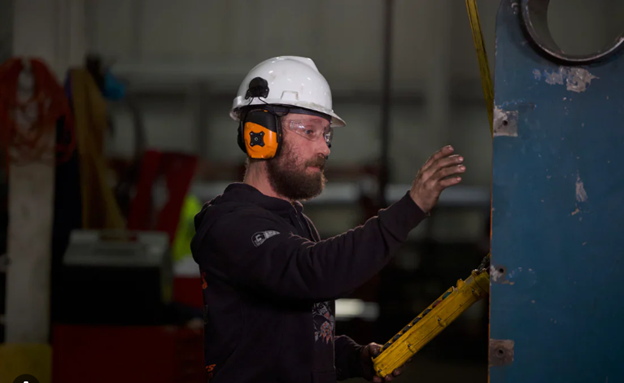 Prolonged or repeated exposure to high levels of noise can cause serious health effects. The most significant is noise-induced hearing loss, which is irreversible and often goes unnoticed in its early stages. Noise exposure can also contribute to stress, fatigue, cardiovascular problems, irritability, memory issues, anxiety and depression. In the workplace, noise interferes with communication and warning signals, creating additional hazards.
This October, MIOSHA encourages Michigan employers and workers to raise awareness about hearing loss prevention.
Noise Sources
High noise levels are common in industries such as manufacturing, transportation, construction and entertainment. Examples include:
-
Transportation: road traffic, aircraft and trains.
-
Manufacturing: compressors, turbines, stamping, forging, pneumatic tools and other machinery.
-
Construction: bulldozers, excavators, jackhammers, saws and demolition work.
-
Entertainment: concerts, sporting events and firework displays.
Measuring Noise
Noise is measured in decibels (dB) on a logarithmic scale, where every 10-decibel increase represents a doubling of sound pressure. For comparison, normal conversation is about 50–70 dB, a diesel truck can reach 80–90 dB, and a jet taking off registers around 120 dB. Instruments such as sound level meters and dosimeters are used to measure noise, employing the A-weighted scale, which reflects the frequency sensitivity of human hearing. Technology advancements have made it possible to measure noise using smartphone applications, such as the National Institute for Occupational Safety and Health (NIOSH) Sound Level Meter App available to the public on iOS devices.
Noise Regulations
MIOSHA General Industry Standard Part 380, Occupational Noise Exposure in General Industry: Mandates employers in general industry to develop and implement a hearing conservation program when employees are exposed to noise at or above an 8-hour, time-weighted average of 85 dBA. A hearing conservation program consists of noise monitoring, baseline and annual audiograms, the provision of hearing protectors, annual noise training, and posting of the noise standard. Above an 8-hour, time-weighted average of 90 dBA, hearing protection becomes mandatory, and the employer must institute feasible engineering and administrative controls to bring noise levels to at or below 90 dBA. As a best practice, MIOSHA recommends making hearing protection mandatory for all workers above 85 dBA to maximally protect workers from the damaging effects of noise.
For construction sites, MIOSHA Construction Standard Part 680, Occupational Noise Exposure requires an employer to institute feasible engineering and administrative controls to bring noise levels to at or below 90 dBA. If those controls fail to bring noise levels to at or below 90 dBA, the employer must ensure that hearing protectors are provided to employees. As a best practice, MIOSHA recommends that construction employers implement the full hearing conservation program required for general industry employers including the policy of requiring hearing protection above 85 dBA.
 Controlling Noise Exposure
-
Engineering controls are the preferred method because they eliminate noise at the source. Examples include equipment maintenance, acoustic enclosures, vibration dampers, mufflers, sound-absorbing materials and upgrading to quieter machinery. Workers can also be separated from noise sources with sound-insulated booths or cabs.
-
Administrative controls involve limiting exposure time, such as rotating employees through noisy tasks. For example, 90 dB is permissible for 8 hours, 95 dB for 4 hours and 100 dB for 2 hours. However, these controls are difficult to enforce and can spread risk among more workers, so they are not recommended as a primary solution.
-
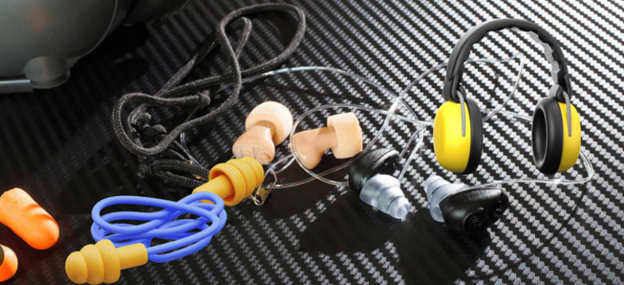
Personal protective equipment such as earplugs and earmuffs is necessary when noise cannot be controlled by other means. Hearing protectors are effective when properly selected, fitted and maintained. A variety of styles are available to ensure comfort and effectiveness.
|
 The Safety Leadership Conference will be held Nov. 6, 2025, at Macomb Community College’s South Campus, hosted by CAM and ASSP Greater Detroit.
The Construction Association of Michigan (CAM) and the Greater Detroit Chapter of the American Society of Safety Professionals (ASSP) are hosting the annual Safety Leadership Conference on Nov. 6, 2025, at Macomb Community College’s South Campus in the John Lewis Conference Center.
This one-day event brings together company owners, top executives, safety managers and human resource professionals to share innovative strategies for protecting workers and strengthening workplace safety cultures.
What to Expect
- Up to four interactive workshops throughout the day
- Recertification credits for professional designations
- Networking with industry professionals
- Breakfast and lunch included

Tarah Kile, director of MIOSHA’s Consultation Education and Training (CET) Division, will present MIOSHA Essentials: Resources, Grants and Programs for Safer Workplaces.
Attendees will learn how MIOSHA can support their organization’s safety and health initiatives through CET services, grant funding opportunities such as MIWISH, training through the MIOSHA Training Institute (MTI) and scholarships, the Voluntary Protection Program (VPP) and more. The session will provide a comprehensive look at MIOSHA’s resources and how employers can leverage them to create safer, healthier workplaces.
Conference details:
-
Date: Thursday, Nov. 6, 2025, from 8 a.m. to 3:30 p.m.
-
Location: Macomb Community College, South Campus — John Lewis Conference Center, 14500 E. 12 Mile Road, Warren, MI 48088
-
Registration: $249. Deadline is Oct. 29.
For details and to register, visit the Construction Association of Michigan (CAM) Safety Leadership Conference website.
|
|
 MIOSHA encourages employers to prioritize workplace safety with the message “Educate Before We Regulate.” Resources are available at Michigan.gov/cet.
There have been 34 work-related fatalities reported to MIOSHA in 2025. The information below shares preliminary details about those fatalities, which are believed to be covered by the MIOSH Act. The description reflects information provided to MIOSHA at the initial report of the incidents and are not the result of any official MIOSHA investigation.
Preliminary summaries are available at Michigan.gov/mioshafatalities.
Preliminary summaries of the 2025 incidents
Two cement finishers were grinding and polishing a concrete floor in a customer's pole barn. When the employer had not heard from them by 8:30 p.m., he contacted the homeowner, who found both employees unconscious. The 43-year-old victim was pronounced deceased at the scene, while the second employee was hospitalized in critical condition. The employees had used propane-powered equipment in the enclosed barn without ventilation.
A 42-year-old laborer was pulling a trailer with a side-by-side utility task vehicle (UTV) when the trailer came off the hitch. The trailer’s tongue went underneath the truck causing it to collide with a stationary metal pole. The pole penetrated the cab of the truck fatally injuring the victim.
A 29-year-old roofer was working on a residential roof. The roof of this home was covered with plywood and tarps. The victim went on the roof to remove the tarp. While the victim was cutting the tarp, the victim fell approximately 20 feet onto their head. The victim was found on the ground wearing a harness. The victim was pronounced deceased at the worksite.
A 34-year-old senior foreman pipefitter was performing underground piping when the trench caved in burying the victim. The employee died as a result of the injuries at the worksite.
A 32-year-old roofer was installing a roofing membrane when they fell off the roof approximately 20 feet to the ground. The victim was transported to the hospital, placed on life support, and died as a result of the injuries on March 9.
A 63-year-old machine repairman was performing maintenance tasks near a conveyor line. During the task, a motorized arm pinned the victim to the conveyor causing fatal crushing injuries.
A 64-year-old truck driver was parked on a hill to unload a double trailer of aggregate for a water and sewer project. The rear trailer needed to be unhooked in order to dump the front trailer. After both trailers were emptied, the victim was in the process of hooking up the rear trailer when it began rolling down the hill, striking the driver, causing fatal injuries.
A 38-year-old Arborist was working at a logging site. After taking a break, the victim walked onto the property line and was struck by a tree affected by oak wilt, approximately 60 feet away and not part of the work area. The victim died at the scene.
A 71-year-old machine operator was cutting steel banding securing a bundle of 2-inch by 2-inch square metal tubing. After the banding was cut, the tubing collapsed and struck the victim’s legs, causing them to fall and hit their head. The victim was transported to the hospital and placed on life support but died from their injuries four days later.
A 32-year-old laborer was operating a riding lawnmower along the edge of a steep embankment with a 10-foot drop to a drainage ditch. The lawnmower overturned, pinning the victim at the bottom of the ditch for about five minutes before being removed by coworkers. The victim was transported to the hospital and died from their injuries three days later.
A 46-year-old student support specialist was found unresponsive with a metal file cabinet on top of them. Emergency services were called. The employee was pronounced on scene. The autopsy indicated the cause of death to be traumatic (compression) chest asphyxia from the file cabinet.
A 27-year-old laborer, and another employee were working on a high school gymnasium setting steel trusses. A few hours before the fatal incident, there was a near miss when unsecured steel trusses fell, one landing on the ground and one landing on an aerial lift occupied by the two employees. As the two employees were in an aerial lift going up to reinforce the trusses on a second attempt, several unsecured steel trusses fell. The steel trusses struck both employees trapping them in the aerial lift resulting in them both being hospitalized. One of the two employees died from their injuries.
A 48-year-old truck driver was backing up his truck for stone delivery. While backing up, the truck jack-knifed causing the truck to tip over crushing the cab.
A 17-year-old laborer was tasked to cut up a felled tree at a residential location. The owner found the victim next to the chainsaw with a laceration to their neck.
A 24-year-old gutter installer was replacing a gutter system at a customer location. While the victim was in an elevated lift, they came into contact with overhead energized electrical lines and fell out of the lift approximately 30-feet.
A 23-year-old laborer was between the bucket of a large excavator and a concrete structure. The bucket was resting on the ground. The operator of the excavator didn’t see the employee and moved the bucket and struck the victim.
A concrete mixing truck backed into a 47-year-old laborer pinning them between a dumpster and the mixing truck.
A 56-year-old co-owner was placing cones for customer parking and walking toward the office when the victim was struck by another employee driving a personal vehicle to the employee parking lot. The victim was taken to the hospital and died from their injuries two days later.
A 50-year-old highway maintenance laborer was struck by a passenger vehicle while performing road work. The victim died at the scene.
A 44-year-old laborer was cleaning on the roof of a building under renovation. Debris was being dropped through a chute into a dump truck on the ground. The victim was in the truck bed, trying to reposition the chute, when the building’s parapet wall collapsed and fell onto them. The worker died at the scene.
A 34-year-old senior researcher was installing and setting up a machine at a customer location when the machine activated, and the victim was caught between the frame and the lifting mechanism.
A 61-year-old delivery driver was filling a propane tank at a residential home when the tank caught fire. The driver sustained burns to their entire body and was taken to the hospital. The employer was notified on July 28 that the worker had died.
A 41-year-old school bus driver was in a boom lift performing the non-routine task of trimming trees near energized power lines at the perimeter of the school bus parking lot. During the task, the victim came in contact with the power lines and died from injuries sustained.
A 55-year-old equipment operator was operating a paving roller alongside a driveway when the roller slid into the ditch. The roller turned over crushing the victim.
A 64-year-old registered nurse was exposed to tuberculosis (TB) in 2017 through patient care. The individual tested negative for TB in 2017. They continued to work until March 9, 2025, when they began feeling ill and exhibiting symptoms. On that date, they were admitted to a hospital and tested positive for TB. On April 22, 2025, the individual died due to complications from TB. An investigation conducted by the employer’s infectious disease specialists, in collaboration with the health department, determined that the TB strain matched genetically with the 2017 exposure, indicating that the infection was occupational in origin and not acquired through community exposure.
A 43-year-old tree trimmer was struck by a towable articulating boom lift when it became unattached and began rolling down a hill. The victim was dragged down the hill sustaining a fatal head injury.
A 30-year-old laborer was riding on the tailgate of a pickup truck while pulling barrels to set up a lane closure. The decedent fell off the tailgate while the truck was moving and struck the pavement. The victim was taken to the hospital and died from their injuries six days later.
A 40-year-old mechanic technician collapsed inside the vessel of an MC331 bobtail propane delivery truck. The worker had dropped a mechanical component into the vessel and summoned an attendant before entering to recover it. The victim collapsed shortly after entering and later died. The employer was made aware of the victim’s death two days later.
A 64-year-old lumber handler was tailing lumber at a conveyor when a piece of lumber was ejected from the nearby edger causing it to ricochet off a backstop striking the victim in the head.
A 49-year-old farmhand was mowing grass along a ditch on a zero-turn riding lawn mower. Around 1:30 p.m. the worker was found in a ditch pinned beneath the overturned mower.
A 30-year-old roofer was installing metal roofing. The victim stepped onto the metal roofing, slipped, and fell about 15 feet to a lower level. The victim was taken to a hospital. The employer was made aware of the death on September 23, 2025.
A 40-year-old industrial painter and a coworker were applying an overcoating inside a penstock, a confined space. During the task, the multi-gas meter alarmed, and the hole watch attendant notified both workers inside the space. One worker was able to exit the confined space, but communication was lost with the second worker. Emergency services were called to the scene.
A 32-year-old casing crew operator was preparing to install the last section of casing at an oil well drilling site. The victim was struck on the head by a circulating swage that had separated from the casing collar.
Variances from MIOSHA standards must be made available to the public in accordance with Part 12, Variances (R408.22201 to 408.22251). MIOSHA variances are published online at:
Michigan.gov/mioshavariances.
Quick Links
Agency/Division Instructions/Memorandums
Air Contaminants Initiative
Asbestos Program
CET Request for Consultative Assistance Services (RCA)
CET Training Calendar
Construction Safety and Health Division (CSHD)
Contact MIOSHA (phone and email)
DVD/video Library Service
Employee Safety Health and Discrimination Complaint Forms
Fall Prevention Campaign (Stop Falls. Save Lives)
General Industry Safety and Health Division (GISHD)
Hazard Communication/GHS
Laboratory and Equipment Services
Michigan Alliances
Michigan Safety and Health Achievement Recognition Program (MSHARP)
Michigan Voluntary Protection Program (MVPP)
MIOSHA FOIA Request
MIOSHA News
MIOSHA Publications
MIOSHA Recordkeeping
MIOSHA Standards
MIOSHA Take a Stand Week
MIOSHA Training Institute (MTI)
MIOSHA Updates
MIOSHA Variances
Radiation Safety Section
Residential Construction
Strategic Plan and Initiatives
|