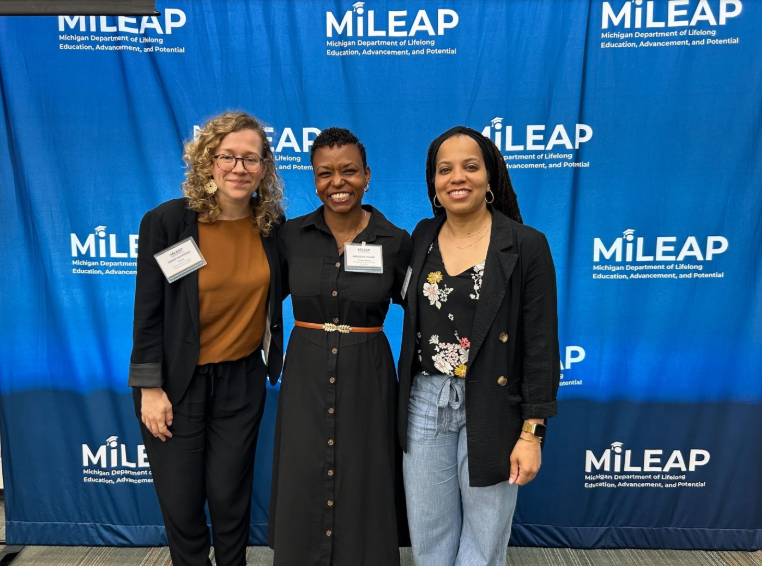
  Sarah Szurpicki, Director, Office of Sixty by 30, Michigan Department of Lifelong Education, Advancement, and Potential, Precious Miller, Program Director, Michigan Community College Association, Jessica Robinson, Digital Inclusion Manager, Michigan High-Speed Internet Office
On May 15, the Michigan Student Basic Needs Task Force hosted a report launch event at Wayne State University to share 12 recommendations for helping college students access essentials like food, housing, mental health care, childcare and broadband internet.
The task force was created by the Office of Higher Education within the Michigan Department of Lifelong Education, Advancement and Potential (MiLEAP). It includes 15 members from across the state who represent colleges and universities, state government, advocacy organizations and areas of subject matter expertise.
Jessica Robinson from the Michigan High-Speed Internet Office (MIHI) serves on the task force and took part in the event. Her involvement reflects MIHI’s commitment to supporting digital equity as part of a broader strategy to remove barriers that can keep students from completing their education.
Expanding broadband in rural Michigan isn’t just about better connectivity – it's about saving lives and reducing healthcare costs. With telehealth options available through better broadband services, 540,000 rural residents could experience better health outcomes, leading to 81,000 fewer ER visits and 112,5000 fewer hospitalizations every year. A study by the American Medical Association (AMA) found that over 60% of clinicians reported that telehealth has improved the health of their patients. This indicates that patients utilizing telehealth services can experience better health outcomes, as remote consultations facilitate timely medical advice, early interventions, and consistent monitoring of chronic conditions.
Quishing is a new kind of phishing attack that uses QR codes to trick people into visiting fake websites. Scammers place QR codes in emails, texts, social media posts or on posters in public places like restaurants or parking meters. When scanned these codes can lead you to a malicious site that steals your personal or financial information.
The Michigan Cyber Command Center warns that QR codes can bypass normal security steps because people often scan them without thinking. These scams have become more common in recent years and can lead to identity theft, fraud or ransomware attacks. To protect yourself:
-
Only scan QR codes from trusted sources.
-
Before clicking any link, check the website address carefully.
-
Be cautious of messages that use urgent language, have misspelled text or a sender email address that is unfamiliar.
- If you receive a QR code by email or message, contact the sender directly using a known method to confirm it's safe.
For more tips and resources, visit the MC3 website.

|