|
|
Hello, and welcome to the July edition of the MPSC Spotlight! We’ve got info on the departure of Commissioner Alessandra Carreon, managing energy costs while keeping your home comfortable this summer, major new electric transmission lines approved by the Commission, and more.
|
|
|
Commissioner Alessandra Carreon bid an emotional farewell to the MPSC as her appointment comes to an end. Her last Commission meeting was July 10.
“Serving as a Commissioner has been a true honor,” Carreon said at the July 10 meeting. “Importantly, I leave this bench with sincere and deep gratitude for the Staff at the Commission, who wake up every day and perform their duties as public servants and leaders for the benefit of Michiganders across our great state, and for my two exceptional colleagues, whose brilliance, compassion and integrity will continue to serve the best interests of the people of Michigan.”
Commissioner Carreon was appointed to the MPSC in July 2023 by Gov. Gretchen Whitmer. A Detroiter and professional engineer, she’s the first Asian American to serve on the Commission. She received a bachelor’s degree in chemical engineering from Rice University and a master of business administration from the University of Michigan.
Chair Dan Scripps said the last two years have been a critical for Michigan’s energy transition, with the state’s 2023 energy law revamp establishing more aggressive clean energy goals. The MPSC has been working to implement parts of the energy laws.
“It’s clear that the progress that has been achieved over the last two years would simply not have been possible, or nearly as much fun, without you,” Scripps said. “At the same time, you have quickly emerged as a national leader on a number of issues, including electric vehicles, natural gas planning and community engagement. … But what stands out most about your tenure is the commitment that you brought to every discussion, pushing us to be better regulators and never forgetting the public we serve.”
Commissioner Katherine Peretick also praised Carreon’s leadership.
“You are a true public servant in every aspect of your work,” Peretick said. “You’ve been a fearless champion for Michigan electric, natural gas and telecommunications customers and approach every single decision that you make from a lens of fairness and inclusion and protecting our vulnerable citizens. And you have the keenest eye I’ve seen for following through and tracking metrics to ensure that results actually materialize. Your humble approach to leadership engenders a deep respect from all who meet you.”
|
|

Summer weather can mean higher electric bills, especially if your household has air conditioning. But there are a number of steps Michiganders can take to beat the heat affordably while also helping reduce stress on the power grid when demand is at its peak during weekday summer afternoons.
Minor actions like raising your thermostat a couple degrees — especially if you’re not at home — can save on your electric bill while maintaining a comfortable temperature.
It’s most expensive to generate electricity during hot summer weekday afternoons, when residential demand for electricity to power air conditioning peaks. Small acts like turning up the AC a few degrees, postponing doing laundry or delaying running the dishwasher — can help keep your energy bill in check. Installing and setting a programmable thermostat could help you save up to 10% yearly on heating and cooling costs.
DTE Electric Co. and Consumers Energy Co. have two-tiered rates for electricity during summer weekdays to reflect the cost of generating power more accurately during peak times. The cost of electricity is higher in the afternoon and lower all other hours of the day. Shifting electricity use to mornings or later in the evenings when rates are lower leads to longer-term cost savings for customers, by avoiding the need for utilities to build more generation or contract more supply to serve customers.
Here are other tips:
- Close curtains and shades on windows during the day to keep the sun from heating the inside of your home.
- During moderate temperatures, use fans and open windows. Using a ceiling fan allows you to raise the thermostat setting about 4 degrees without impacting your comfort.
- When you cook, use an exhaust fan to blow hot air out of the kitchen. Consider grilling outside instead of using the stove or oven. If you run the dishwasher, consider letting dishes air dry instead of using the dishwasher’s heater.
- Check with your utility about voluntary programs that automatically adjust your thermostat for a rate discount.
- Make sure your cooling system is well maintained with periodic professional maintenance, and clean or replace air filters as recommended.
- Shut vents and close off unoccupied rooms, which can save 5% to 10% on your cooling costs.
Check out the MPSC’s Be Summerwise page and its Beat the Heat and Save tip sheet to find more tips and resources.
|
|
|
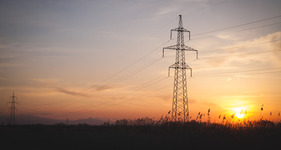
The MPSC on June 10 approved the first significant new electric transmission lines in more than a decade – and the first interstate transmission lines in 50 years – with two projects meant to strengthen Michigan’s power grid, reduce grid congestion and allow for more integration of renewable energy into the grid (Case No. U-21471).
The Commission approved certificates of public convenience and necessity for Michigan Electric Transmission Co. (METC) for the Nelson Road to Oneida project, a 39-mile, 345 kilovolt (kV) double circuit line between substations in Gratiot and Eaton counties, and the Helix to Hiple project, a 55-mile, 345 kV double circuit line between substations in Calhoun and Branch counties, in addition to the new Helix Substation as part of the project.
Public Act 30 of 1995 gives the MPSC authority for siting of transmission lines in Michigan that are more than 5 miles long and that transfer 345 kV or more electricity. In Act 30 cases, which are contested, the Commission must issue an order within a year of an application.
METC submitted one proposed route and one alternate route for each line, as required by statute. The MPSC approved the Nelson to Oneida line to be built on METC’s alternate route and the Helix to Hiple line to be built on METC’s proposed route.
The Commission found that, for the Nelson to Oneida line, the alternate route was reasonable and preferable to the proposed route, noting it has fewer heavy angles and road crossings, impacts fewer wetlands and hydric soils, and uses a long-standing existing utility right of way, displaying sounder routing principles. For the Helix to Hiple line, the Commission found the proposed route reasonable, saying the alternate route would have avoided impact to the R&R Ranch Airport but would result in more impacts on archeological sites, increase the number of residences within 500 feet of the line’s right of way, and expand the number of parcels crossed by the line.
The projects were proposed as part of the Midcontinent Independent System Operator’s (MISO) Long-Range Transmission Planning initiative, with the MISO Board of Directors approving the portfolio of projects that included these projects in July 2022.
For more information, read the MPSC’s issue brief on this case or the MPSC brief on its role in electric transmission line siting.
The Commission chastised METC for public engagement with landowners that was cursory at best, but noted METC still complied with the law’s low threshold, and the Commission conditioned its approval on a number of actions METC must take:
- The company must consider landowners’ specific requests for minor modifications to the major transmission line routes approved in this order. The Commission directed METC to file in the case docket a memorandum on how impacted landowners may submit minor route modification requests to the company and directed the company to file a monthly report documenting any minor modification requests, how METC accommodated the request, or why it was unable to do so.
- METC must provide landowners along the approved routes and adjacent landowners with contact information so that they can communicate concerns to METC about the projects. The Commission required METC to file monthly reports detailing the communications with these landowners.
- METC must investigate every noise complaint received from landowners to ensure there is not a system issue that needs to be addressed.
|
Here’s information about orders the Commission issued at its June 10, 2025, meeting:
- Amid ongoing work to improve the MPSC’s rate case review process, the Commission directed MPSC Staff to file a draft proposal for exploring the potential to create proceedings to address cost of service and rate design separately from the determination of revenue requirement (Case No. U-21637). The Commission directed Staff to file the proposal by Oct. 30, 2025, and convene collaborative meetings with interested persons in December 2025. Staff must then file a report summarizing discussions by Jan 15, 2026, and interested persons may file comments by Feb. 16, 2026. In addition, the Commission invited comment on several issues: the appropriate schedule for a contested settlement in a rate case; a new process for demand response reconciliations; and how potential bill impacts should be communicated to customers during rate cases. Comments may be mailed to Executive Secretary, Michigan Public Service Commission, P.O. Box 30221, Lansing, Michigan 48909; emailed to LARA-MPSC-Edockets@michigan.gov, or submitted via the Submit Comments option located within the E-Docket file for the case. The proceeding to improve the rate case process grew out of the Public Act 231, part of the 2023 updates to the state’s energy laws.
- The MPSC approved Indiana Michigan Power Co.’s (I&M) application for reconciliation of its power supply cost recovery plan costs and revenues for the 12 months ending Dec. 31, 2023 (Case No. U-21262). The Commission set a net underrecovery of $16,286,307 as the company’s 2024 power supply cost recovery reconciliation beginning balance. The Commission disallowed $2,250,305 in costs associated with its intercompany power agreement with Ohio Valley Electric Corp., under MPSC Code of Conduct rules governing transactions between affiliated companies, and $793,238 in unit power agreement costs at I&M’s Rockport Unit 1.
- The MPSC approved DTE Electric Co.’s application for contract approval for the 80-megawatt (MW) Beecher Solar Project in Raisin and Palmyra townships in Lenawee County (Case No. U-21361). The Commission approved an engineering, procurement and construction master service agreement with Barton Malow Co. to design, engineer, construct, install, start up, and test the Beecher Solar Project and master supply agreements with Boviet Solar USA Ltd and Canadian Solar (USA) Inc. for solar panel modules. DTE Electric estimates the project’s installed cost is $2,259 per kilowatt (kW) and the price is expected to be $79 per megawatt-hour (MWh). The Commission in May approved a special contract between DTE Electric and the University of Michigan for an 80-MW site to meet U of M’s annual requirement for renewable energy credits.
- The MPSC opted to waive, until further notice, some of the fees the agency had proposed to help fund the Commission’s costs for reviewing siting applications for certain utility-scale wind, solar and energy storage facilities under Public Act 233 of 2023 (PA 233) (Case No. U-21547). PA 233, which went into effect in November 2024, granted the MPSC siting authority for utility-scale renewable energy projects, and the Commission in October 2024 approved application instructions that include information on requirements, fees and other matters. The Commission postponed the collection of base application fees ($10,000 per application), additional Staff hour fees (billed hourly), and formal complaint fees. Fees associated with expert consultant testimony, external public meetings, court fees and environmental reporting and testing, and other fees remain in effect.
Tune in to our next regularly scheduled commission meeting on Aug. 7 at 1 p.m.
|
|
|
Have a utility complaint, or need help with your utility service? We’re here to help. Submit your complaint or inquiry online or call 800-292-9555.
The mission of the Michigan Public Service Commission is to serve the public by ensuring safe, reliable, and accessible energy and telecommunications services at reasonable rates.
Michigan Public Service Commission
517-284-8100
7109 W. Saginaw Hwy,
Lansing, MI 48917
Stay Connected with Us!
|
|
|
|
|