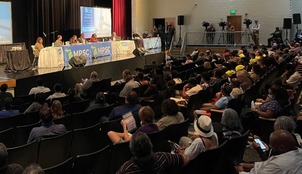
The MPSC held a public hearing on the pending DTE Electric Co. rate case in Detroit Sept. 18, to hear directly from customers of the utility.
A large crowd packed the auditorium at Mumford High School on Detroit’s northwest side. The Commission heard concerns from residents and community representatives during the two-hour hearing.
“As the MPSC examines ways to broaden public participation in regulatory matters, this hearing is a chance for ratepayers to speak directly to Commissioners and MPSC Staff,” Chair Dan Scripps said.
DTE Electric in March filed an application to raise rates by approximately $456.4 million. Under statute, the MPSC has 10 months to issue an order in the matter, in this case by late January 2025.
MPSC Staff also attended the hearing to provide educational materials about utility regulation, energy assistance, resolving disputes with utilities and other matters.
|
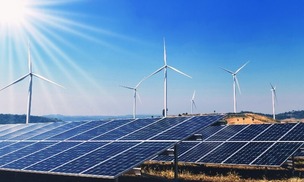
The Commission on Oct. 10 adopted application instructions and procedures that electric providers and independent power producers must use when seeking the Commission’s approval for siting of renewable energy projects under Public Act (PA) 233 of 2023.
PA 233 gave the MPSC siting authority for utility-scale solar, wind and energy storage projects under specified conditions.
MPSC Staff conducted a monthslong review with eight public meetings to engage with experts, local government representatives, project developers and others to develop the application process. The Commission clarified a number of issues, including guidance on what constitutes a CREO, or compatible renewable energy ordinance, what constitutes an affected local unit of government, and that the Commission will review the entirety of a renewable energy or energy storage project when it is located in multiple communities, some of which have CREOs and some do not.
More information about the new siting law, which takes effect Nov. 29, 2024, is available at the MPSC’s Renewable Energy and Energy Storage Facility Siting webpage.
|
The MPSC for the first time held a regular Commission meeting in the Upper Peninsula on Oct. 10 at Bay College in Escanaba as part of the Commission’s efforts to expand public outreach and make it easier for Yoopers and other Michiganders to participate in regulatory matters.
It’s the first time the MPSC has held a regular Commission meeting in the UP; the Commission has similarly taken its regular meetings to Detroit and Grand Rapids.
Other recent Commission visits to the UP have included a public hearing in July as the MSPC conducts a study of the UP’s unique energy issues and meets with UP business, civic and Tribal leaders, energy providers, utility customers and others.
Among other actions, the Commission approved a rate increase for Upper Michigan Energy Resources Corp., the first rate increase requested by the utility since it was authorized in 2016 to begin providing electric service to areas of the UP.
UMERC had sought to raise rates $11,162,357 to fund infrastructure investments in new generation, maintaining safety and reliability and other factors. The Commission approved $6.6 million of the request, a reduction of more than 40%.
A typical residential customer using 500 kilowatt-hours (kWh) a month in the former Wisconsin Electric Power Co. service territory will see an increase of $10.51, or 15.4%, in their monthly bill starting January 1, 2025. The rate realignment charge will decrease annually until 2033, resulting in an additional reduction of $0.21, or -0.3%, by January 1, 2033. A typical residential customer using 500 kWh a month in the former Wisconsin Public Service Corp. service territory will see an increase of $10.48, or 15.8%, in their monthly bill starting January 1, 2025. The rate realignment charge will increase annually until 2033, resulting in an additional increase of $4.24, or 5.5%, by January 1, 2033.

The MPSC is encouraging utility customers across the state to be extra wary if someone claiming to be a utility worker shows up at your door unannounced and seeking access to your home or to your personal financial information.
Utility customers should be aware of signs that someone is an impostor, and never let someone in your home unless you’re sure they’re who they say they are.
These tips can help keep your family safe:
- Utilities generally seek to contact customers in advance, by phone, email or text, before visiting a home. Utility employees will only rarely need to enter a home, but when it is necessary, utilities will try multiple ways to contact customers in advance to notify them of work that needs to be done.
- Utility employees are required to carry photo identification badges and show the badge when asked. A utility employee or contractor who refuses to show their badge should be refused entry.
- Ask the employee why they are there and, if in doubt, call your utility directly, using the customer phone number your utility includes on your bill, to confirm the visit is needed before allowing anyone entry or access to their property. Keep your door locked when making the call, and if you must speak to the person, do so without allowing them access to your home.
More information about keeping safe from utility impostors is available at the MPSC’s webpage on utility scams.
|

The MPSC was thrilled to recognize Paul Proudfoot, director of the MPSC’s Energy Resources Division, for 50 years of service to the agency.
Proudfoot, a graduate of Michigan State University, joined the MPSC on Oct. 6, 1974, and has held numerous positions over the years. He’s currently director of the MPSC’s Energy Resources Division.
In some ways, Proudfoot is “the heart and soul of this place,” Chair Dan Scripps said during the Commission’s Sept. 26 meeting, when Proudfoot’s accomplishment was honored. “In fact, we’ve got a sign in our office that says, ‘Commissioners come and go, but Paul Proudfoot lasts forever.’ I certainly hope that’s true, but 50 years affiliated with any one organization is just an incredible achievement.”
Tune in to our next regularly scheduled commission meeting Nov. 7 at 1 p.m.
|
|