UPDATE: Governor Whitmer COVID-19 Daily Update March 10
Michigan Executive Office of the Governor sent this bulletin at 03/10/2021 06:30 AM EST
|
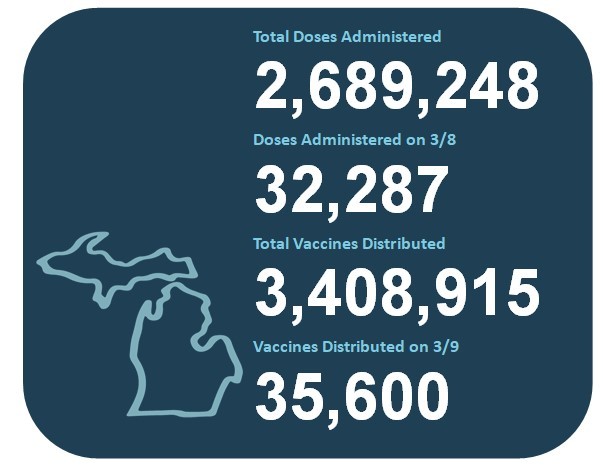
VACCINE UPDATE
To view the total distribution of vaccines and more vaccine information, visit www.michigan.gov/covidvaccine to view the COVID-19 Vaccine Dashboard.
The goal of the pilot program is to help remove barriers to vaccine access for Michiganders 60 and older who live in communities with high Social Vulnerability Index (SVI) and high COVID-19 mortality rates. If providers have additional capacity in their project, they may expand vaccination to include people age 50-59 with disabilities or comorbid conditions.
"We want to make sure all Michiganders have access to the safe and effective vaccines as we work toward our goal of vaccinating 70% of Michiganders age 16 and up as quickly as possible," said Dr. Joneigh Khaldun, chief medical executive and chief deputy for health with MDHHS. "I want to thank everyone who submitted an application to support these efforts and to help increase vaccinations for those most at risk of negative COVID-19 outcomes. I look forward to more outreach to vulnerable communities as vaccine supplies increase. Your ability to get a vaccine should not be impacted by whether you are in a rural or urban part of the state, are lower income, are living with a disability, are not fluent in English, or don't have access to a car, a computer or the Internet."
ICYMI
“One year ago, our world changed forever as we confronted the greatest challenge of our generation,” Governor Gretchen Whitmer said. “By lowering the flags to honor the one-year anniversary of the virus’s confirmed presence in Michigan, we remember the nearly 16,000 sons and daughters, moms and dads, and neighbors and friends who passed away from COVID-19 in Michigan. As we honor their legacies, let us also take a moment to grieve together, and know that we are not alone in our mourning.
One year after our first confirmed case, we now have three safe and effective vaccines to prevent the spread of the coronavirus. I encourage all Michiganders to continue to practice social distancing and proper hygiene and get vaccinated once they are eligible because this is the most effective way to protect you, your family, and others from COVID-19. There is light at the end of the tunnel, and we will get through this pandemic together.”
“I think it’s great news that we’ve been able to get some of the federal funding available to us appropriated, including passing two of my key proposals to provide a wage increase for direct care workers and increased funding to help expand vaccinations for Michiganders who are 50 years old or older,” said Governor Gretchen Whitmer. “However, the reality is that there is more work to be done and there are still billions of dollars in federal funding that we need to get out the door to help businesses and families across the state. The bills I received were not negotiated with me or my administration, and I continue to call on the legislature to ensure that we work together to ensure we maximize every penny that is available. There were problems in the bills that I had to veto, and I expect the legislature to step up to fix the bill to allocate all of the money so we can get back to normal as soon as possible.”
HAPPENING ACROSS STATE GOVERNMENT
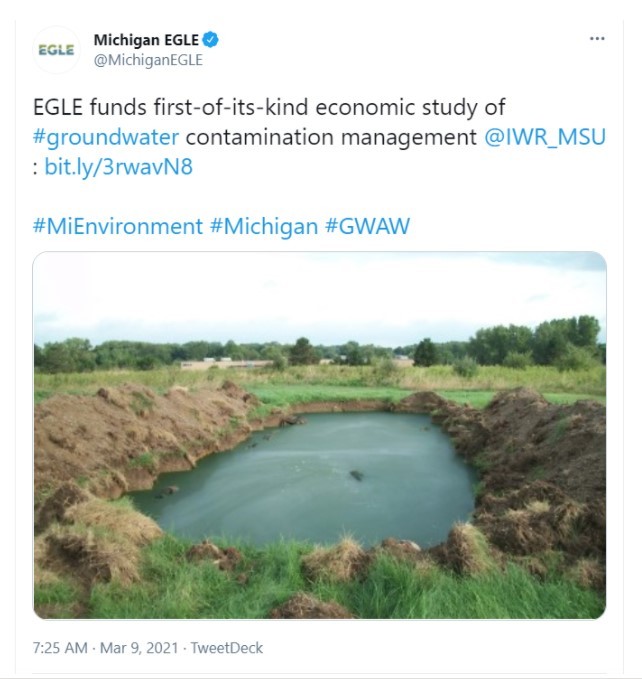
The research team will use case studies to better understand the long-term implications, risks and costs of using institutional controls and other restrictions — such as limiting the use of an aquifer — when managing risks associated with groundwater that is unusable. The team will also develop a framework to guide future decisions.
"Institutional controls are often the management strategy with the lowest upfront costs, which creates a strong short-term incentive to select them," notes Emily Finnell, Great Lakes senior advisor and strategist in the Office of the Great Lakes. "However, we do not know what the long-term costs have really been, and we think that this is important information to have as we consider how to best manage Michigan's water resources."
This live online town hall meeting is part of a series of events that will help drivers learn and ask questions about Michigan’s new auto insurance law and the choices they will need to make for policies issued or renewed after July 1, 2020.
Event Information: Tuesday, March 9, 12:00 p.m. To attend the virtual town hall event, click the event link at its start time. Instructions for attendees are available and explain how to join an event and ask questions.
The state's Farmland Preservation Local Grants Program provides funding to local farmland preservation programs that are qualified to close on permanent agricultural conservation easements. Twenty-four local programs were eligible to submit grants for funding. Farm preservation ensures communities have locally sourced fresh food and agricultural jobs.
"Ensuring the long-term sustainability of Michigan's nearly 10 million acres of farmland is the foundation for preserving our food production and supply," said Director Gary McDowell. "These grants assist local preservation programs in purchasing development rights to preserve important farmland in their communities thereby protecting farmland for future generations."
MEDIA COVERAGE
A BIT OF RELIEF
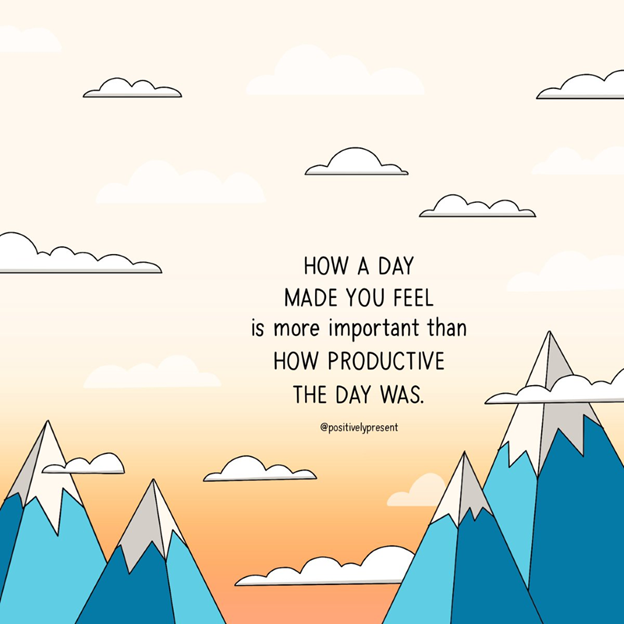
Some words of encouragement given our busy work schedules!
RESOURCES
|