 The Michigan Department of Corrections is committed to providing our employees with up-to-date information as it relates to our efforts in dealing with the coronavirus disease 2019 (COVID-19).
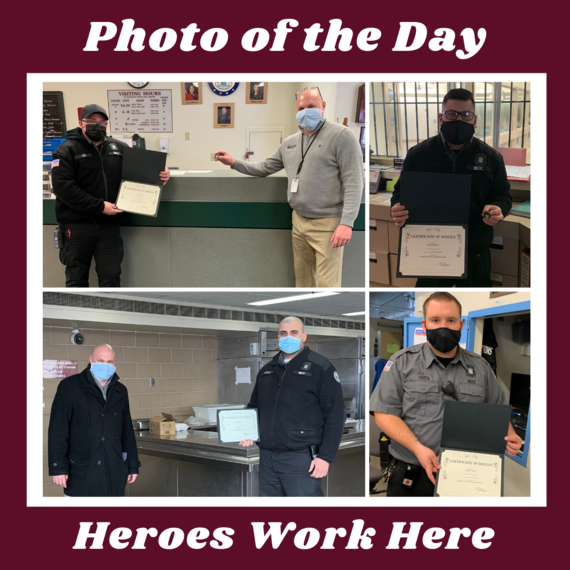 We join Warden Noah Nagy and the team at G. Robert Cotton Correctional Facility in thanking the following corrections officer for their individual five years of dedicated service (from top right): Officer Thomas Cox, Officer James Benitez, Officer Hussein Farhat and Officer Brent Trotta. Thank you all for your continued commitment and hard work.
Warden Nagy recently presented each officer with his five year service pin and certificate.
Results from the daily testing of prisoners and staff at the Bellamy Creek Correctional Facility, in Ionia, has resulted in the detection of 90 cases of the SARS-CoV-2, B.1.1.7 variant.
This testing occurred after an employee at the prison was found to have the variant and the MDOC immediately began to test daily, all prisoners and staff.
Of the first set of samples provided to the Michigan Department of Health and Human Services Bureau of Laboratories, 90 of the 95 were found to have the variant. Of the 90, there were 88 prisoners and two employees.
All of the results from this round came from IBC. Further samples from IBC, as well as Macomb Correctional Facility and Duane Waters are still at the lab. There are more than 100 lab results still pending.
This variant is believed to be more contagious compared to the SARS-CoV-2 virus, and as soon as it was detected in the prison, additional precautions were put in place, along with the daily testing.
Since the daily testing results have come in, the number of COVID-19 positive cases at the facility has been on the decline, which indicates the swift efforts undertaken to reduce the spread is working.
Based on available evidence, current tests and vaccines for COVID-19 also work against this new variant. Protective actions that prevent the spread of COVID-19 will also prevent the spread of the new variant, B.1.1.7.
Michiganders should:
• Wash hands often.
• Wear a mask around others.
• Stay 6 feet apart from others.
• Ventilate indoor spaces.
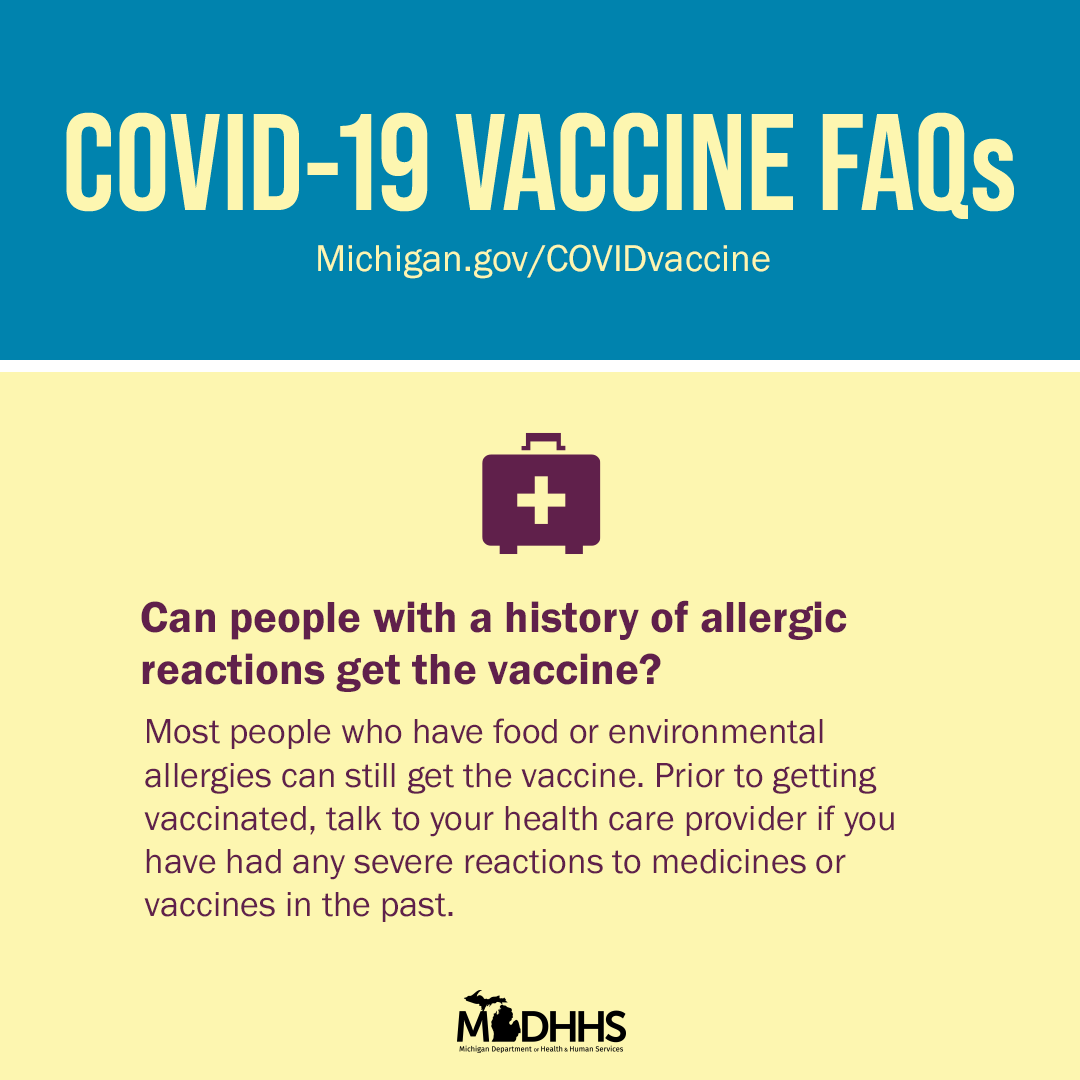
• Make a plan to get the vaccine when the opportunity becomes available.

Before a correctional facility bore his name, Dr. G. Robert Cotton was an educator and a long-time public servant. Cotton served as a corrections commissioner for almost 18 years and was the first appointed to the Michigan Corrections Commission by Governor Romney in September 1966.
He was reappointed to the commission until 1984 and passed away on Nov. 5, 1984.
Former Director Perry Johnson said he had a "great respect for Dr. Cotton the pioneer" during a dedication ceremony for G. Robert Cotton Correctional Facility in November 1987.
"His commitment to corrections was something special," Johnson said, according to a transcript of his speech for the ceremony. "His sense of integrity and his belief in the importance of human dignity were essential qualities in facing the many thorny problems of corrections over the years."
Cotton came from humble beginnings and went on to become the first African American student at Ohio State University to earn a doctorate degree.
In addition to serving on the Michigan Corrections Commission, Cotton also held positions as director of the Michigan State Chamber of Commerce, trustee for Hampton University in Virginia and worked for the U.S. Surgeon General.
|
Thanks in no small part to the hard work of each and every MDOC employee, Michigan’s recidivism rate has been on a steady overall decline for the past decade and for the second year in a row stands at its lowest rate in state history.
In an annoucement shared today, Director Washington said, “Our staff, from the prison to the field and everywhere in between have all had a hand in our success and it is because of their efforts, we continue to see these historic declines."
The recidivism rate, which measures the percentage of offenders who return to prison within three years of release, is now at 26.6 percent. This continues to place Michigan’s rate among the best in the country. Last year, the department’s recidivism rate stood at 26.7 percent. The year before that it was at 29.1 percent.
In 2020, the department built upon its success and began new efforts to further enhance Offender Success that will help to reduce the number of people coming back to prison even more in the years to come.
The department’s third Vocational Village is set to launch soon at the Women’s Huron Valley Correctional Facility. And last summer, the MDOC and the Michigan Department of State announced a joint initiative to help returning citizens reintegrate into their communities by providing them with a driver’s license or state ID upon their parole.
Efforts to reduce opioid addiction, provide mentors to parolees and use of a new model to improve interactions with those the MDOC supervises are just some of the plans rolling out this year as part of the department’s strategic plan.
Thank you all for your contribution to this incredible milestone!
Governor Whitmer has proclaimed February as Black History Month in Michigan, in recognition of the significant cultural, historical, and economic contributions African Americans have made to the development of America and the American way of life, while encouraging each of us to take time to reflect on the systemic barriers Black Americans have faced and still face to this day.
Michigan is home to countless Black Americans who have made significant contributions to our state. For Black History Month, The Michigan Department of Civil Rights is featuring a week of daily messages on each of four individuals. Each week they will focus on one person’s story told in seven snippets.
As an educator and academic leader, Dr. Warfield understood that education was essential to uplifting communities of color. While he mentored many in educational leadership, as head of the Kalamazoo NAACP he was also focused on finding ways to improve access and outcomes for K-12 students.


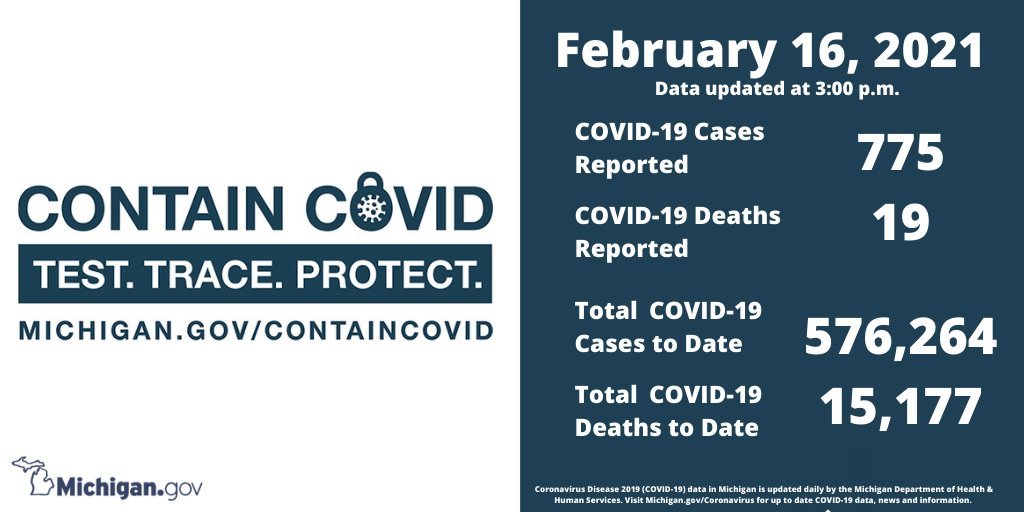 It is important for everyone to remain vigilant and continue to take steps to help break the chain of infection and slow the spread, both while at work and while in the community.
You can find more information at Michigan.gov/Coronavirus
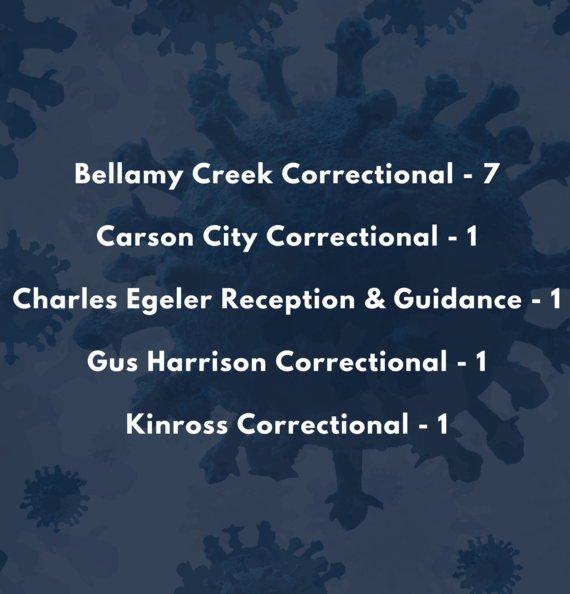
On February 16, there were 95 new positive prisoner cases to report, including:
Bellamy Creek Correctional - 90
Kinross Correctional - 3
Women's Huron Valley Correctional - 2
*Results are downloaded each afternoon and are reported after they are added into the medical record following receipt of information from labs.
You can also find a full listing of cumulative testing and total results by facility here.
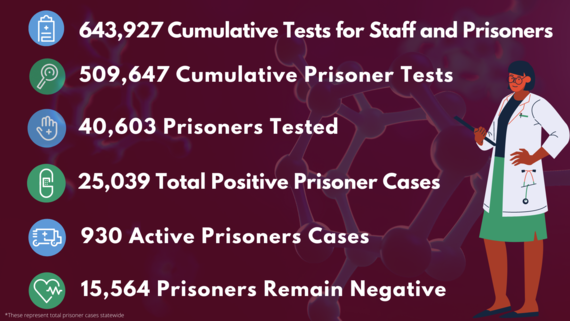
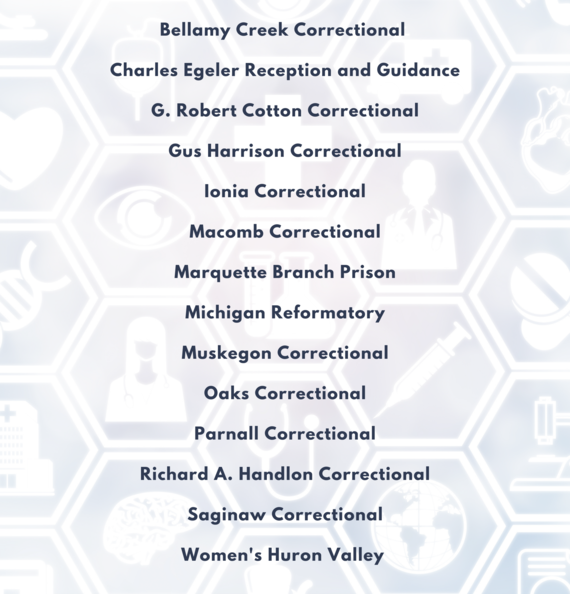
The following correctional facilities are on outbreak status due to cases of COVID-19. This list does not include facilities with single units under separate quarantine status.
|