|
|
DYK The chances that you might get a tick-borne disease from a single tick bite depend on many factors, such as the type of tick, where it came from and how long it is attached to you.
|
|
Michigan Ticks Toolkit
With ticks on the rise in Michigan, the Michigan Department of Health and Human Services (MDHHS) Michigan Environmental Public Health Tracking Program (MiTracking) and the Emerging and Zoonotic Infectious Disease Section (EZID) have created a Michigan Ticks Toolkit to share important tick information and resources.
The toolkit contains tick-related social media messages, graphics and printable materials (e.g., fact sheets, identification card, poster). The materials are designed to make sharing tick information easy! The resources can be freely used by anyone, including state and local organizations to share tick information in your communities.
We encourage you to share these tick-related materials through various avenues to reach more Michiganders. Consider using these tools on social media platforms, websites and more. These actions will help increase knowledge and awareness of ticks in Michigan as well as provide guidance on where to find information and data on ticks.
|
|
Ticks - Social Media
Below are sharable social media posts and images on ticks.
|
|
|
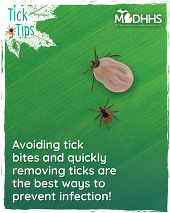
Avoiding tick bites and quickly removing ticks are the best ways to prevent infection! Learn more tick bite prevention tips, how to remove a tick and find tick identification help at EH.Michigan.gov/MichTickPrevention. #MiTracking
|
|
|
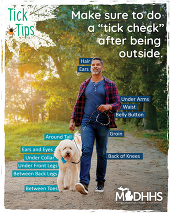
Make sure to do a tick check on yourself and pets after being outside, even in your own yard. Check out the image for common tick hiding areas. You can find more info at EH.Michigan.gov/MichTickPrevention. #MiTracking
|
|
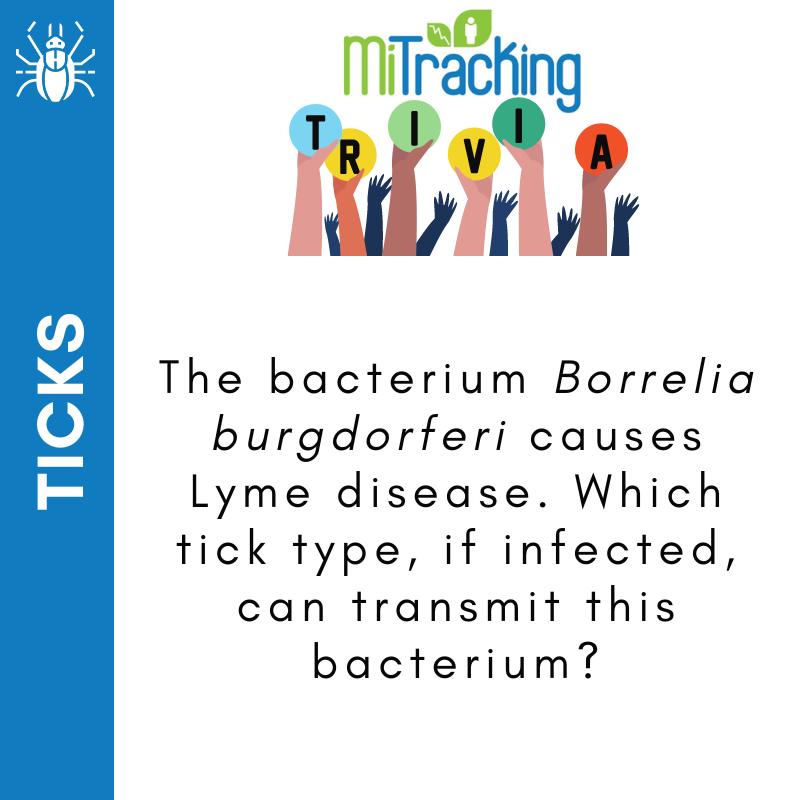
Trivia time! Click on the image for the answer.
|
|
Fact Sheets - Carbon Monoxide (CO)
Below are sharable seasonal CO fact sheets. You can find more CO information and resources at Michigan.gov/CarbonMonoxide.
|
|
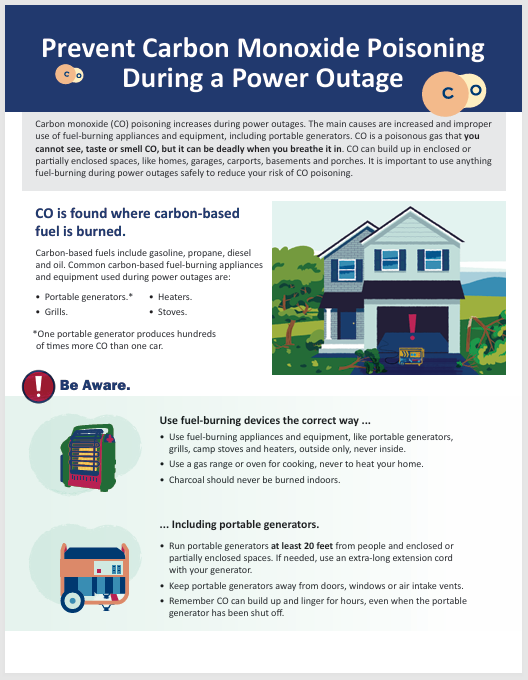
Power Outages
Cases of CO poisoning increase during power outages. The main causes are increased and improper use of fuel-burning appliances and equipment, including portable generators. CO is a poisonous gas that you cannot see, taste or smell, but it can be deadly when you breathe it in.
One portable generator produces hundreds of times more CO than one car. CO can build up in enclosed or partially enclosed spaces, like homes, garages, carports, basements and porches, leading to CO poisoning. It is important to use anything fuel-burning during power outages safely to reduce your risk of CO poisoning.
|
|
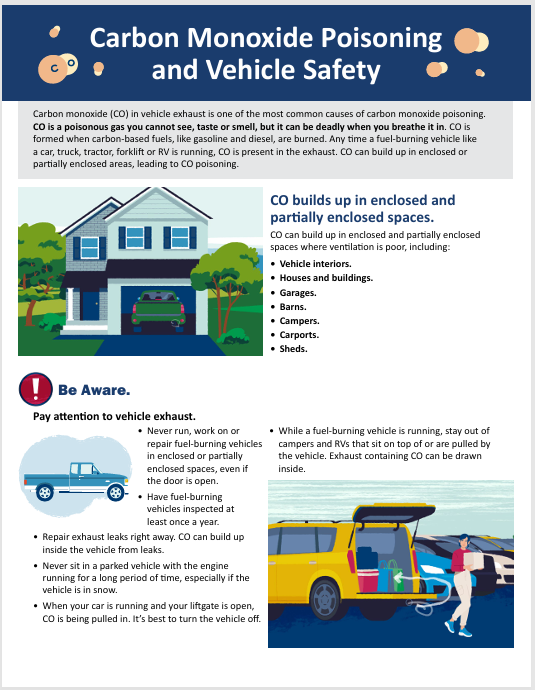
Vehicles
CO in vehicle exhaust is one of the most common causes of carbon monoxide poisoning. CO is a poisonous gas you cannot see, taste or smell, but it can be deadly when you breathe it in.
CO is formed when carbon-based fuels, like gasoline and diesel, are burned. Any time a fuel-burning vehicle like a car, truck, tractor, forklift or RV is running, CO is present in the exhaust. CO can build up in enclosed or partially enclosed areas, leading to CO poisoning.
|
|
Virtual Presentations
MiTracking offers free virtual presentations to groups across Michigan on the following topics:
- Exploring data on the MiTracking Data Portal.
- CO awareness and prevention.
If your group is interested in a free training, email MiTracking at MDHHS-MiTracking@michigan.gov.
|
|
|
MiTracking gathers existing Michigan environmental, health and population data, providing them all in one online location. Data is displayed in tables, charts and maps which you can download, save and print.
Everyone from community members to public health professionals to students can run data searches. With these tools, MiTracking can help all Michiganders explore how the environment may impact their health.
The MiTracking Program is part of the Centers for Disease Control and Prevention Environmental Public Health Tracking. MiTracking is a MDHHS Environmental Health Bureau program. You can find MiTracking at Michigan.gov/MiTracking.
|
|
|
|