July 2025 MDHHS Healthcare Workforce Division Newsletter
Michigan Dept of Health & Human Services sent this bulletin at 07/30/2025 08:25 AM EDT
You are subscribed to Healthcare Workforce Division for Michigan Dept of Health & Human Services. This information has recently been updated, and is now available.
July 2025
Welcome to the first edition of the Healthcare Workforce Division newsletter. This newsletter aims to provide information and updates on Healthcare Workforce Division programs and initiatives.
This month’s newsletter will introduce the Healthcare Workforce Division and the two sections operating within it, with a focus on some of the division’s current programs and initiatives.
Introduction to the Healthcare Workforce Division
The Healthcare Workforce Division operates within the Bureau of Policy and Planning at MDHHS. The division consists of two sections, Workforce/Access & Grants Management and the Office of Nursing Programs. Details regarding each section can be found below:
-
Workforce/Access & Grants Management
- Manages special projects and provides coordination for the Department’s healthcare workforce programs.
- Manages activities that assess the need for health care services and providers.
- Promotes the recruitment and retention of health care providers to fulfill identified needs.
- Promotes broad health policy programs such as healthcare workforce policy and support for safety net providers/sites.
- The goal of this section’s efforts is to reduce health workforce shortages and barriers to health care in high need areas; improve accessibility of primary care, dental, and mental health resources in underserved areas.
- Section also functions as the State Primary Care Office (PCO) as part of the Cooperative Agreement managed by the federal Health Resources and Services Administration (HRSA).
-
Office of Nursing Programs
- Provides professional nursing leadership, expertise, and coordination in health policy development to promote safe practice in all nursing environments.
- Performs data collection, research, and analysis to support collaborative stakeholder engagement in symposiums, pilot efforts, and demonstration projects.
- Annual ONP efforts are determined based on a review of national and statewide research, data, and trends as well as state issues and priority needs.
- The goal of this section’s efforts is to facilitate the modernization and advancement of nursing education and practice in Michigan.
Provider Recruitment and Retention Programs
A key focus of the Workforce/Access & Grants Management section is provider recruitment and retention. Attracting new healthcare providers and keeping existing providers to reduce healthcare workforce shortages throughout Michigan is essential in addressing the healthcare needs of the state.
One recruitment and retention strategy is offering student loan repayment to qualified healthcare providers in exchange for service obligations at approved practice sites. Some of the loan repayment programs managed by the section include:
 |
Participants in these programs must be U.S. Citizens and licensed in their respective fields (where applicable) to practice in Michigan. These programs also require that participants select qualified sites or facilities for their service obligations, which are predominantly located in identified Health Professional Shortage Areas (HPSAs). Providers interested in these programs should check the specific eligibility requirements, application timelines, and detailed benefits associated with each program which can vary annually based on policy updates and funding availability.
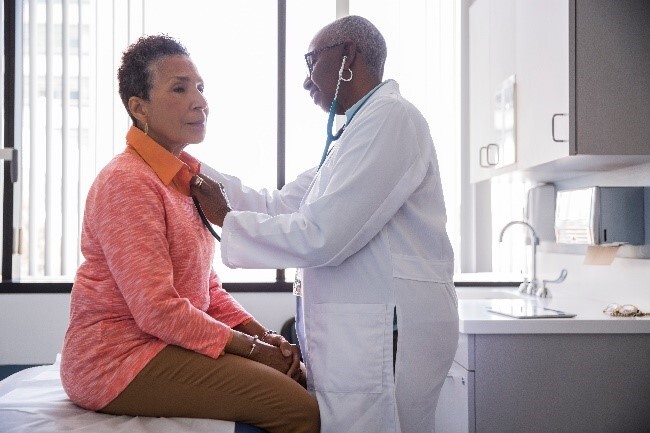
Another program offered is the Michigan Behavioral Health Internship Stipend Program. This program strives to increase the number of qualified behavioral health professionals in Michigan by providing a stipend of up to $15,000 to eligible student interns. Eligible interns must be completing a bachelor or graduate level behavioral health degree program that leads to a behavioral health profession dedicated to serving children.
 |
The Conrad 30/J1 Visa Waiver program aims to address the shortage of qualified doctors in medically underserved areas. This program allows international medical graduates to apply for a waiver of the 2-year foreign residence requirement upon completion of the J-1 exchange visitor program. This is done in exchange for a three-year commitment to work in underserved areas designated by the federal government. MDHHS acts as the Interested Governmental Agency (IGA) for the Michigan State Conrad 30 Program and may sponsor up to 30 waiver applications each fiscal year for qualified J-1 Visa physicians. |
Detailed information regarding the section’s Provider Recruitment and Retention Programs can be expected in future newsletter editions and can also be found on the Workforce/Access & Grants Management website.
Shortage Designation and Coordination
 |
MDHHS coordinates the designation of Health Professional Shortage Areas (HPSA) and Medically Underserved Areas/Populations (MUA/P) in the state. HPSAs and MUA/Ps are areas, population groups, and facilities designated by the United States Department of Health and Human Services as having met criteria indicating a significant need for additional health care resources and providers. These designations are used to prioritize limited federal and state resources and direct them to areas with the greatest unmet health care needs, especially for the recruitment and retention of providers in these areas. |
Shortage designation coordination is a comprehensive process that involves the following:
- Collection and validation of provider data
- Administration of data analysis and technical assistance
- Conducting a Statewide Community Health Needs Assessment every five years
- Development of a Statewide Rational Service Area Plans (SRSA)
- Preparation of resources to facilitate the designation work
- Submitting designation applications to the federal government (HRSA)
Future newsletter editions will provide further insight into Shortage Designation Coordination efforts. To learn more about this critical tool for coordinating access to healthcare, please visit the Health Professional Shortage Area website.
Nursing Education Resources
The ONP is committed to promoting safe patient care, advancing nursing practice through health equity principles, and promoting a continuous supply of high-quality direct care nurses, nurse faculty, and nursing education programs. To accomplish this, one of the ONP’s efforts is supporting Michigan nursing education partners in the development of innovative nursing education resources. Featured materials can be found on the ONP website and include:
|
 |
These resources aim to enhance alternative clinical experiences, support culturally sensitive care, and provide professional development for nursing educators and students in a variety of healthcare settings.
Upcoming Opportunities & Other Updates
 |
|
Healthcare Workforce Division Staff
| Amber Myers, MPH- Division Director MyersA1@michigan.gov | Megan Linton, JD- MIOTA LRP Coordinator, NHSC Contact LintonM3@michigan.gov | Reanna Kathawa- BHLRP Program Coordinator KathawaR@michigan.gov |
| Miguelina Carela Garcia, MPH- Workforce/Access & Grants Management Section Manager CarelaGarciaM@michigan.gov | Juliette Rousseau- Free Clinics & NLRP Program Coordinator RousseauJ@michigan.gov | Sophia Hubbell- NLRP, MSLRP HubbellS1@michigan.gov |
| Casey Klein, BS- ONP Section Manager kleinc7@michigan.gov | Sarah Kleis, MA- Conrad 30/J1 Visa Program Coordinator KleisS1@michigan.gov | Ninette Probyn- MSLRP ProbynN1@michigan.gov |
| Sarah Jennings, DNP, MPA, RN, NEA-BC- ONP Senior Nurse Advisor jenningss2@michigan.gov | Jilliann Betzer, LMSW- BHLRP, MI-BHISP BetzerJ@michigan.gov |
Mattie Robinson, MS- BHLRP RobinsonM28@michigan.gov
|
| Brittany Brookshire, MPH- MSLRP Coordinator BrookshireB1@michigan.gov | Kaylen Brooks, BA, BSN, RN- ONP Departmental Analyst brooksk22@michigan.gov | |

|
Want to Learn More? Workforce/Access & Grants Management Section
SUBSCRIBER SERVICES: |
| STAY CONNECTED: | ||||
 |
 |
 |
 |
 |