Michigan Dept of Health & Human Services sent this bulletin at 06/26/2025 10:00 AM EDT
The Michigan Update
Stay Cool ... Pass It On
For many people, warm weather is a time for fun-filled outdoor activities. However, hot weather and outdoor activities don't always mix well, especially during periods of extreme heat— times when temperatures are substantially hotter and/or more humid than average for a location and date.
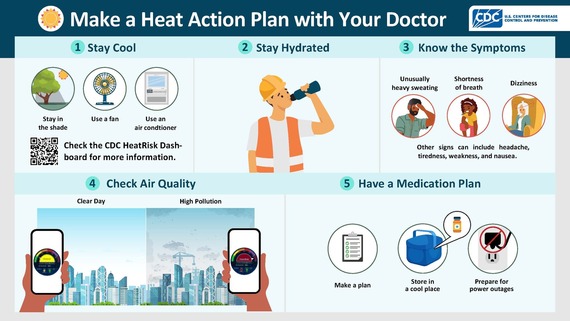
Extreme heat can cause people to suffer from heat-related illness, and even death. People suffer heat-related illness when their bodies are unable to properly cool themselves. Older adults, young children, and people with chronic medical conditions are at high risk for heat-related illness and death. More than 700 people die from extreme heat every year in the United States.
Warmer temperatures can also mean higher ozone levels. Pay attention to the U.S. Environmental Protection Agency's Air Quality Index (AQI) when planning outdoor summer activities, especially if you have asthma or another lung disease. Wildfire smoke can also impact the AQI as well.
Make sure to track extreme heat in your area. The CDC Heat & Health Tracker provides local heat and health information so communities can better prepare for and respond to extreme heat events. You can use it to explore how extreme heat affects your county, populations that are at risk, and resources for response.
Steps to Protect Yourself
When temperatures are extremely high, take steps to protect yourself and your loved ones:
Stay in an air-conditioned indoor location as much as you can.
Drink plenty of fluids even if you don't feel thirsty.
Schedule outdoor activities carefully.
Wear loose, lightweight, light-colored clothing and sunscreen.
Pace yourself. Take cool showers or baths to cool down.
Check on a friend or neighbor and have someone do the same for you.
Never leave children, pets, or the elderly in cars.
Check the local news for health and safety updates.
Take summer health a few steps further by being careful to avoid mosquitoes, ticks, harmful algae blooms, and carbon monoxide (from grills and camp stoves). Michigan's Climate and Health Adaptation Program (MICHAP) focuses on climate and health education, offering informational packets and sharable social media posts.
NACCHO Awards $400,000 to Local Health Departments to Strengthen Immunization Outreach and Communication Across All Ages
The National Association of County and City Health Officials (NACCHO), the voice of the country's over 3,300 local health departments, has awarded a total of $400,000 to 10 local health departments to strengthen their immunization outreach for people of all ages, with the goal of improving public health by increasing vaccine uptake and building community trust. One of the counties, was here in Michigan— Congratulations to Genesee County Health Department.
Biological Incidents - New Chapter in Hospital Readiness and Response: An Online Guidebook
Biological incidents requiring an emergency management response span a wide range of impacts and scenarios. A new Biological Incidents chapter reviews the hierarchy of controls and the identify, isolate, inform framework, and details some considerations for epidemics and pandemics, special pathogens, and bioterrorism. The entire guidebook Hospital Readiness and Response Online Guidebook is available from ASPR TRACIE.
Communicating About Data and Surveillance During Infectious Disease Emergencies
In the Association of State and Territorial Health Officials' (ASTHO) upcoming webinar, learn how effectively communicating data and surveillance information can ensure the best response during emergencies. Attendees will hear expert insights on sharing complex information and using specific frameworks to address uncertainty and convey emerging evidence.
Tracking all publicly available media data, Infodemiology.com's Monitoring Lab is a monitoring system which provides real-time intelligence on the health narratives trending across the country. Both regional and state specific dashboards are available.
All disasters, either man made or natural can quickly create unique and overwhelming needs for those affected and those responding. Depending on the nature and scope of the incidents/ disasters and requests from the local emergency management agencies or other agencies involved, the American Red Cross offers assistance in collaboration with other agencies in a variety of areas. Red Cross service also includes staffing of local, county and or state Emergency Operations Centers.
Presenter: Bob Sauer - Volunteer Emergency Management Liaison for the Michigan Region of the American Red Cross and as the Volunteer Partner to the North Central Division (IA, IL, MI, MN, NE, ND, OH, and SD) Division Disaster Director
EMS, Physician, Nursing, Social Worker and Nursing Home Administrator credits are available for all sessions.
Extreme Heat & Health: Clinical and Public Health Strategies for Prevention and Action
Join the American Public Health Association (APHA) for this comprehensive training tailored specifically for health professionals both in and beyond clinic walls, empowering you to be a leader on extreme heat and health issues.
The Guardian of Public Health is a monthly newsletter from the Bureau of Emergency Preparedness, EMS and Systems of Care (BEPESoC), within the Michigan Department of Health and Human Services (MDHHS). The Guardian aims to provide readers with relevant content on topics that affect the public health of Michigan's citizens and communities.
This publication was supported by Cooperative Agreement number 1NU90TP922062-01-00, funded by the Centers for Disease Control and Prevention. Its contents are solely the responsibility of the authors and do not necessarily represent the official views of the Centers for Disease Control and Prevention or the Department of Health and Human Services.
Bureau of Emergency Preparedness, EMS and Systems of Care | 1001 Terminal Rd, Lansing, MI 48906 | 517-335-8150