|
Division of EMS and Systems of Care – An Important Component of Public Health
Emily Bergquist, MSA, Paramedic I/C
One of the less generally known areas of the Michigan Department of Health and Human Services is the Division of EMS and Systems of Care, inside the Bureau of Emergency Preparedness, EMS & Systems of Care. The Division crosses multiple sectors, including licensing, health care, public safety, and of course, public health.
The division is divided into two areas, which do incredible work to protect public health in Michigan. The Systems of Care Section encompasses three systems supporting patients with time-sensitive emergencies. The first, and most mature is the Trauma System, which is fully operational and began its development nearly 25 years ago. The other two, Stroke and STEMI, which means ST Elevation Myocardial Infarction (a type of heart attack), only recently have been funded and had full regulatory authority through the administrative rules process. These newer systems are intended to be integrated into the current trauma system, utilizing the same regional and committee structure.
|
|
New Ethical AI Guidelines: A Must-Read for Public Health Communicators
|
The National Public Health Information Coalition (NPHIC)
|
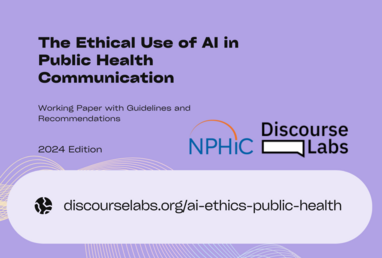
Artificial Intelligence is reshaping public health communication, and NPHIC has proudly contributed to a groundbreaking new resource: the guidelines for the 'Ethical Use of AI in Public Health Communications.' Developed by a diverse working group of public health and technology leaders, this initiative ensures AI is used responsibly while upholding accuracy, transparency, and equity.
|
The Ethical Use of AI in Public Health Communication from NPHIC and Discourse Labs
Executive Director Robert Jennings and NPHIC supported this effort to provide communicators with practical, adaptable principles for integrating AI ethically. Access the short guide or full working paper, read more about the guide, and join the conversation shaping the future of AI in public health.
|
|
ASPR-TRACIE
The Administration for Strategic
Preparedness & Response (ASPR) Technical Resources, Assistance Center, and Information Exchange (TRACIE) Technical Resources domain consists of two components: the Resource Library and Topic Collections. The Resource Library includes resources from numerous databases from the National Library of Medicine (NLM) and other government agencies. It contains up-to-date disaster medical, healthcare system preparedness, and public health emergency preparedness materials. These Collections include the most robust and useful peer-reviewed and other public and privately developed materials (e.g., fact sheets, technical briefs, articles, toolkits, webinars, and plans) that assist helpful to stakeholders in improving healthcare system preparedness and resilience.
Michigan Climate and Health Outlook: Spring 2025
From March through May, there is an equal chance that Michigan will experience above or below normal temperatures and a 40-50% chance most of the Lower Peninsula will experience above normal precipitation while most of the Upper Peninsula has a 33-40% chance of above normal precipitation. For February, you can expect equal chances of temperatures above or below normal with chances for above normal precipitation. “Normal” values are based on the most recent 30-year average from 1991 to 2020. As the ground thaws from winter temperatures, it is important to prepare for possible flooding.
|
|
Spring Climate and Health Education Resource Packet
The Michigan Climate and Health Adaptation Program (MICHAP) supports a climate-resilient public health system by investigating climate-driven health risks, identifying information for decision making and collaboratively implementing climate adaptation strategies.
This Spring Climate Health Education Resource Packet explains the impacts of climate change on health in the spring months and includes fact sheets about how to protect health and safety.
The resource packet is for everyone. It was created to help local governments and nonprofits educate the public on spring climate health topics.
|
AWR-232: Mass Fatalities Planning and Response for Rural Communities
BEPESoC is hosting a free, in-person, 8-hour DHS/FEMA-certified training class designed to equip our community with essential skills in mass fatality planning and response. This course is specifically tailored for rural and Tribal communities, ensuring that you and your team are prepared for any situation.
May 22 from 8:00 a.m. to 5:00 p.m.
Location: Mid-Michigan Community College, 2600 South Summerton Road, Mt. Pleasant, MI, 48858.
FEMA Student ID required
For more information or questions, please call 877-855-RDPC (7372) or email helpdesk@ruraltraining.org.
MGT-319: Medical Countermeasures: Point of Dispensing (POD), Planning and Response
Texas A&M Engineering Extension Service (TEEX) 16 hour - Live Online, Instructor Led Training
This course is a guide for local health officials and their partners to coordinate plans to provide mass response to a large-scale public health incident. This course focuses on planning considerations, recommendations to achieve the Centers for Disease Control and Prevention’s (CDC’s) 48-hour standard for Mass Prophylaxis, and the local community’s Mass Prophylaxis and Point of Dispensing (POD) site preparedness. The course material is applicable to pandemic influenza, bio-terrorism, and other public health emergencies.
Schedule:
- 4/2 - 4/3: Live from Tallahassee, FL
- 4/16 - 4/17: Live from Upper Marlboro, MD
- 4/23 - 4/24: Live from Clovis, CA
- 5/7 - 5/8: Live from Victoria, TX
This schedule is subject to change without notice. If you have not received confirmation of the class prior to the class start, please contact the division at (866) 878-8900 or esti@teex.tamu.edu to get the latest schedule.
|
|
|
The Guardian of Public Health is a monthly newsletter from the Bureau of Emergency Preparedness, EMS and Systems of Care (BEPESoC), within the Michigan Department of Health and Human Services (MDHHS). The Guardian aims to provide readers with relevant content on topics that affect the public health of Michigan's citizens and communities.
|
|
|
This publication was supported by Cooperative Agreement number 1NU90TP922062-01-00, funded by the Centers for Disease Control and Prevention. Its contents are solely the responsibility of the authors and do not necessarily represent the official views of the Centers for Disease Control and Prevention or the Department of Health and Human Services.
Bureau of Emergency Preparedness, EMS and Systems of Care | 1001 Terminal Rd, Lansing, MI 48906 | 517-335-8150
|
|
|
|
|