|
August
05 | Final Epi-Work Plan deliverables due to regional epidemiologists,
08 | Monthly PHEP Partner’s meeting on Teams,
15 | BP5 Year End Progress Report due in Qualtrics.
27 | Emergency Response Volunteer Conference at Michigan State University.
September
02 | Labor Day – State of Michigan offices closed.
12 | Monthly PHEP Partners Meeting on Microsoft Teams
17 | Preparedness Lunch and Learn
24 | Noontime Nugget Training
|
|
|
Recently the 2 CFR Part 200 guidance, also known as the Uniform Guidance, was updated. Below are some of the top highlighted changes that impact the PHEP subrecipients:
• Equipment has changed from any one item of $5,000 to $10,000; disposal needs approval (page 32)
• Disposal proceeds from $500 to $1000 can be kept (page 33)
• IDR de minimums from 10% to 15%
• Single Audit threshold requirement from $750,000 to $1,000,000
• NOFO: new definition - Participant – not an employee but more like a partner. (page 12)
• Prior Approval – Key personnel listed (page 30)
These changes to the UG took effect July 1, 2024. Please contact Janis Tipton with any questions.
The Preparedness Lunch & Learn session for August has been cancelled. The series will resume again on September 17.
A course designed for continuity planners throughout the Whole Community. This course assists continuity practitioners with an understanding of their continuity roles and responsibilities, and provides them with the knowledge, skills, and tools necessary to help develop and maintain a viable continuity plan for their organization.
The course does have a prerequisite of IS-1300 and can be completed here. Registration for L-1301 ends on August 31, 2024.
|
|
|
The National Association of County Health Officials (NACCHO) released a practical guide to support rural local health departments (LHDs) in their efforts to build a climate-ready workforce. Rural LHDs can refer to this guide when building a climate and health program for the first time, or when scaling up their programs to increase their climate response and adaptation capacity. Although this guide is tailored to assist rural LHDs, the activities may be adaptable to LHDs of varying capacities.
DC recently released the annual update to the Disability and Health Data System (DHDS), providing quick and easy online access to state-level health data on adults with disabilities. The latest data, from the 2022 Behavioral Risk Factor Surveillance System (BRFSS), reveal that more than one in four – more than 70 million – adults in the United States reported having a disability in 2022.
The COVID-19 pandemic has led to a significant rise in telemedicine usage across healthcare organizations nationwide. This surge in digital care has also brought about increased challenges in securing patient data. WRAP-EM has highlighted cybersecurity as a crucial element in providing safe and effective virtual healthcare services. In response, the United States Department of Health and Human Services (HHS) 405(d) Task Group has released specific cybersecurity guidelines for healthcare settings.
|
|
|
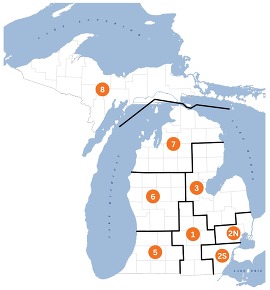
Region 1: Denise Fleming
Region 2N & 2S: Jeannie Byrne
Region 3: Jim Koval
Region 5: April Walton
Region 6: Terra Riddle
Region 7: Jeannie Byrne
Region 8: Kerry Chamberlain
Tribes: Terra Riddle & Rose Ann Davis
|
|
This message is being sent to the Division of Emergency Preparedness & Response, Tribal Health Care Coordinator, Local Health Department Emergency Preparedness Coordinator, and Local Health Department Health Officer mailing lists. |
|
|
|