mRNA vaccines (Pfizer, Moderna) given a clinical preference over Johnson & Johnson
The CDC is endorsing updated recommendations made by the Advisory Committee on Immunization Practices (ACIP) for the prevention of COVID-19, expressing a clinical preference for individuals to receive an mRNA COVID-19 vaccine over Johnson & Johnson's (J&J) COVID-19 vaccine. ACIP’s unanimous recommendation followed a robust discussion of the latest evidence on vaccine effectiveness, vaccine safety and rare adverse events, and consideration of the U.S. vaccine supply.
The U.S. supply of mRNA vaccines is abundant – with nearly 100 million doses in the field for immediate use. This updated CDC recommendation follows similar recommendations from other countries, including Canada and the United Kingdom. Given the current state of the pandemic both here and around the world, the ACIP reaffirmed that receiving any vaccine is better than being unvaccinated.
Individuals who are unable or unwilling to receive an mRNA vaccine will continue to have access to the J&J COVID-19 vaccine.
Why is this Recommended?
The reason for the update is due to a new analysis showing that the risk of Thrombosis with Thrombocytopenia Syndrome (TTS) (a blood clotting condition) after the J&J vaccine is still rare but greater than previously thought. In light of the new information, the CDC did a risk-benefit analysis showing that the mRNA vaccines by Pfizer and Moderna are safer and more effective than the J&J vaccine. This is the vaccine safety and monitoring process working as intended.
What should persons do if a J&J vaccine was received?
If a person already received one dose of J&J vaccine it is preferred that you receive a single mRNA booster dose (Pfizer or Moderna) at least two months after receiving the J&J vaccine.
Those who have received the J&J vaccine and have not experienced any symptoms of TTS (listed here) within 42 days are not at risk but do have protection against severe cases of COVID-19. While an mRNA booster is preferred, those who received a J&J vaccine may receive a J&J booster. However not enough people have received a booster dose of the J&J vaccine to determine the risk of TTS after receiving the booster.
CDC is working to update the Clinical Considerations to reflect this change.
MDHHS urges Michiganders to choose right place of care, get vaccinated to alleviate burden on health care systems
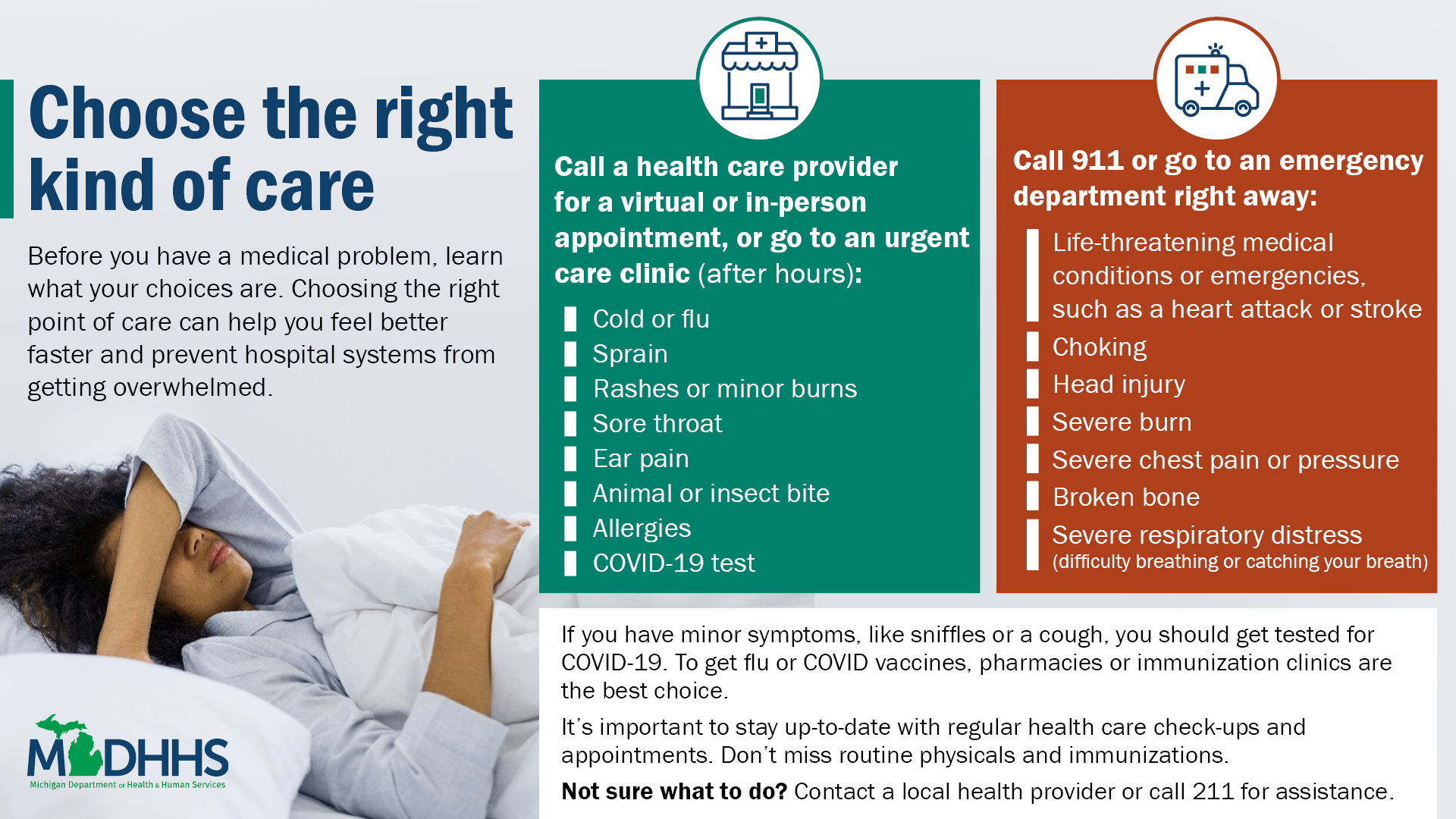
In order to take every measure necessary to relieve the burden on our state’s health care systems, the Michigan Department of Health and Human Services (MDHHS) is reminding Michiganders to choose the right place of care for medical needs.
Calling a health care provider for a virtual or in-person appointment is encouraged for non-emergency ailments such as cold or flu, sprains, rashes or minor burns, ear pain, animal or insect bites, allergies and COVID-19 testing.
Resource
|