|
February | 2021
In this newsletter, you will find important updates about HIV and STIs in Michigan. If you have any questions or feedback about the newsletter, please reach out to us at: MDHHS-DHSPSupplies@Michigan.gov

The Division of HIV and STI Programs has officially changed the "STD" in our name to "STI". This change comes after many years of questioning whether or not to adapt using the word “infection” instead of “disease”. We have finally made the decision to make the change, as the CDC is moving towards this change as well. The change to “STI” is about reducing stigma and increasing accuracy.
According to the American Sexual Health Association (ASHA), “disease” suggests a medical problem associated with clear signs and symptoms. Given that several of the most common sexually transmitted viruses have little to no signs or symptoms, it is more accurate to refer to them as infections, rather than diseases. Additionally, the use of STI instead of STD reflects the reality that not all sexually transmitted infections turn into a disease and infections are treatable.
Please update the below division email addresses for your records. For a short period of time, emails that use "STD" will be redirected, but please plan on changing your address books, as appropriate. These changes will also be noted on our website, Michigan.gov/HIVSTI.
MDHHS-HIVSTIoperations@michigan.gov
MDHHS-HIV-STI-monitoring@michigan.gov
MDHHS-STISupplies@michigan.gov
|
DHSP is currently working on an IT project to develop and implement a comprehensive and integrated HIV and STI Surveillance, Prevention, and Care application. This application will be an essential tool in furthering the work we do to prevent new infections, improve health outcomes for PLWH (including achieving and sustaining viral suppression to implementing treatment as prevention), and reduce related health disparities. The application will be developed in accordance with national prevention goals, HIV continuum of care and CDC’s High Impact Prevention (HIP) approach by using quality, timely, and complete surveillance and program data to guide coordinated HIV prevention efforts.
This project will affect all persons who use eHARS, HIVLMS, Aphirm, CAREWare, MiDAP, and MDSS, by providing a consolidated application that will allow a user to have one login to access the data that currently exists in multiple systems. The project is expected to be complete by July 2023.
In order to inform our work on this project, DHSP would like to know how you prefer to receive information from us. Please click on the link below to take a short survey regarding how information is communicated to you. Your thoughts are valued and appreciated!
CLICK HERE FOR SURVEY
In December 2020, the CDC updated its recommendation for the treatment of uncomplicated gonorrhea in adults. Gonorrhea should now be treated with just one higher dose (500 mg) injection of ceftriaxone, and dual therapy is no longer the recommended approach. The new recommendations are available in the 2020 Update to CDC's Treatment for Gonococcal Infections. This new recommendation supersedes the gonorrhea treatment recommendation included in the 2015 STD Treatment Recommendations.
Patients who have been treated for gonorrhea should be retested three months after treatment to ensure there is no reinfection. This is different and distinct from a test-of-cure.
In response to these changes, the Michigan Department of Health and Human Services, Division of HIV and STI Programs (MDHHS/DHSP), has adjusted medication ordering practices to include daily/weekly orders of 500mg ceftriaxone doses, as well as an increased supply of doxycycline to meet the higher demand in local health department clinics.
The Division is updating disease surveillance, 340B tracking, and Expedited Partner Therapy (EPT) recommendations to align with the new guidelines.
Drug-resistant gonorrhea remains an urgent public health threat. According to the CDC, while they are not seeing treatment failures in the U.S. yet, half of all gonorrhea infections are resistant to at least one antibiotic.
CDC expects to publish the full revised STI Treatment Guidelines in 2021.
Local public health departments with questions about the implementation of these guidelines are encouraged to contact Malasha Duncan, Public Health Liaison, at Duncanm5@michigan.gov. If you have questions regarding management of STIs, please contact Amy Peterson, STI Interventions Unit Manager, at 313-456-4425 or Petersona7@michigan.gov.
|
Expedited Partner Therapy (EPT) is the clinical practice of providing medication or written prescriptions to sex partner(s) of patients diagnosed with chlamydia (CT) and gonorrhea (GC). During the pandemic, MDHHS acknowledges that STI, reproductive health care, and essential health care services, have been disrupted. In an effort to remain flexible and realistic, the State of Michigan temporarily expanded the use of EPT. EPT in Michigan now also includes sex partners to those patients diagnosed with trichomoniasis, as well as men who have sex with men (MSM) with uncomplicated gonorrhea.
On December 18, 2020, the CDC released new guidelines for gonococcal infections that directly impact the medication regimen used for EPT to treat GC. The medication regimen by the CDC no longer supports dual therapy for GC and advises providers to dispense EPT as follows:
For sexual partners of patients with GC only:
Cefixime (Suprax) 800 mg orally in a single dose.
For sexual partners of patients with GC who are co-infected with CT, or for whom a CT result is not available:
Cefixime (Suprax) 800 mg orally in a single dose PLUS doxycycline (Vibramycin) 100mg BID x 7 days.
An important reminder: during this time of easing restrictions and the reopening of some sexual health clinics, MDHHS asks providers to continue to utilize EPT as a partner management tool for those who are unwilling or unable to seek treatment.
If you have questions regarding EPT in Michigan, contact Partner Health Improvement Coordinator, Bianca Clarke, by email at Clarkeb3@michigan.gov, or by phone at 517-582-4353.

The State of Michigan HIV & STI Conference planning committee is now accepting proposals for presentations at our 2021 conference.
This year's conference will be a virtual event held over two half days. In addition to our live sessions, we will also be offering participants a variety of pre-recorded sessions that can be viewed on-demand around the conference. The conference goal is to maximize participant knowledge and skills, share best practices, and promote collaborative opportunities.
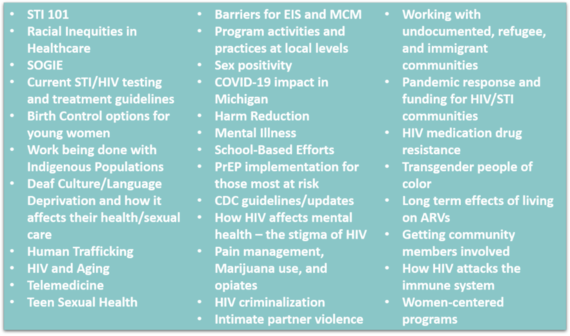
The committee is looking for a wide variety of session topics. The graphic below shares some topic suggestions that participants have an interest in. Abstracts can be submitted on any topic; the graphic is for inspiration purposes only.
|
 You can complete an online abstract proposal HERE.
When completing the abstract proposal, please be prepared with the following information:
- How you want to present (live or pre-recorded).
- Preferred date if live.
- Proposed presentation title.
- Names and email addresses of any presenters.
- A description of what will be presented (750 words or less).
- 3-4 objectives stating what the participant will take away from the presentation.
- Interaction with the audience beyond Q&A.
- How your information can be used by a participant in their agency.
You can download a PDF of the electronic version here: Abstract PDF
Abstracts will be accepted through Friday, March 12, 2021.
While syphilis is a curable infection, the adverse manifestations of it may not be reversible. The more damage the bacteria can cause to a person’s body, the more likely the person will suffer permanent effects, including death.
Assessing for manifestations, including neurological, ocular, and optic syphilis during an exam allows for detection and subsequent treatment. It is important for providers to be mindful and think of syphilis when examining patients who present with the symptoms listed below and refer to an infectious disease specialist. These manifestations can occur during any stage of the infection, so in doing so, you could be saving a life.
 If a patient presents to you with any of the above symptoms, please have the patient tested for syphilis, including a CSF-VDRL. Syphilis treatment guidelines from the CDC can be found here.
If you have any questions, please reach out to the Michigan Department of Health and Human Services STI Statewide Provider Liaison, Karen Lightheart, at LightheartK@michigan.gov or 313-446-8943.
HIV testing has been significantly impacted during the COVID-19 pandemic. HIV prevention organizations around the state have had to quickly pivot and adapt their efforts to accommodate a new way of seeing clients and testing for HIV.
The Lansing Area AIDS Network
Many organizations have discussed the possibility of drive-up HIV testing. The Lansing Area AIDS Network (LAAN) was able to develop and implement a successful drive-up testing program.
LAAN's process in developing the program included an array of strategies to mitigate risk for both the client and tester, while still providing client centered services. Clients are able to make an appointment online or over the phone and complete pre-test counseling online through doxy.me (secure telemedicine).
On the day of the appointment, clients pull up to the designated HIV testing tent and contact the tester. Consent is given via a QR code that the client scans on their mobile device while in their car. Once the client’s information and consent are verified, the finger poke occurs outside the car window, and the sample is transferred to a test, which is kept in an individualized container under the tent. While the tests run, clients drive away and wait for a text to return for results. Upon returning and verifying identity, clients are provided with their results, post-test counseling, and a swag bag of resources. LAAN has tested over 40 people so far with this strategy and continues to expand their marketing and testing efforts to innovatively engage their clients and community.
Wayne State University Prevention
In partnership with MDHHS, and as part of the federally funded Ending the HIV Epidemic initiative, Wayne State University Prevention (W’SUP) is implementing a self-testing program.
HIV self-testing programs consist of mail order HIV test kits that can be administered at home or in a private location. The only rapid self-test currently available in the US is an oral fluid test which provides results in 20 minutes. This program is managed by Monique Green-Jones, MPH, who is the Manager of Prevention Programming at W’SUP.
The program is seeking to reach those individuals who identify as Wayne County residents (Detroit included), aged 18 to 34, and who meet certain at-risk criteria for exposure to HIV. The program was initially enacted as a way to reach individuals who have previously been unable to access on-site (in clinic or non-clinical settings) HIV testing, whether it is from barriers such as transportation or scheduling conflicts. However, due to the current COVID-19 crisis, the project is seen as a timely solution to an increasing need for remote healthcare services. While similar tests are available at many pharmacies or online for a fee (around $40), the kits for this program are free to those who qualify.
Outreach about the program will be carried out through online avenues, including social media platforms, as well as banner ads on certain dating apps. Emails will be sent to appropriate health departments and community-based organizations to announce the program as well. Visit https://www.mihivstatus.org/ for more information.
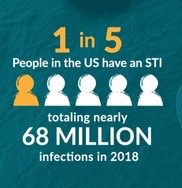
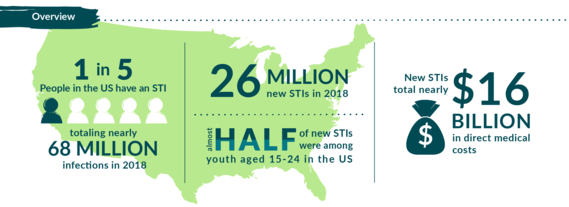 A recent CDC analysis has provided us a clear picture of STIs in the United States, and the cost they add to the U.S. healthcare system. The CDC estimates about 20% – approximately one in five people in the U.S. – had an STI on any given day in 2018, and STIs acquired that year will cost the American healthcare system nearly $16 billion in healthcare costs alone.
These estimates are critical to better understanding the vast scope of the STI epidemic and who is most affected. (CDC, 2021)
The Great Lakes Partnership (GLP) Virtual Meeting was held on January 21, 2021 with over eighty participants. The meeting was organized by MDHHS staff – Yasmin Flack, Jason Johnson, Tracy Peterson-Jones, Bianca Clarke, and Alexis Cooper. The purpose of the meeting was to bring together staff of funded community-based organizations and local health departments to enhance their collective partnerships, collaboration, and communication, in efforts to deliver appropriate services to persons living with HIV.
MDHHS staff also provided updates on DHSP specific programs during the meeting. Specifically, MDHHS staff provided an overview of the relaunching of the Ambassador Program, which is renamed as the Ambassador Alliance Program. The program’s focus will be to facilitate sustainable partnerships between our funded agencies. Over fourteen (14) participants volunteered to be a part of the Ambassador Alliance Program. A virtual meeting to review the roles and responsibilities for volunteers of the Ambassador Alliance Program will be held in April. For additional information on GLP or the Ambassadors Alliance Program, please contact Yasmin Flack, Jason Johnson, or Tracy Peterson-Jones.
Michigan’s Link-Up program utilizes public health data to identify persons living with HIV who are in need of HIV medical care or social services and facilitate linkage to these services. An annual report describing demographics and outcomes of Link-Up clients can be found here.
The STI-HIV Coinfections in Michigan, 2019 report describes HIV prevalence among people diagnosed with new syphilis, gonorrhea, or chlamydia infections during 2019. This data identifies populations that may be in need of increased access to integrated STI and HIV testing and care, as well as populations engaging in unprotected sex who are at an increased risk of HIV transmission.
The latest Annual HIV Prevalence Report describes the demographics of diagnosed persons living with HIV in Michigan at the end of 2019 and includes estimated HIV transmission and STI-HIV coinfection rates.
In December 2020, the Region 2 Field Services Unit welcomed two new Disease Intervention Specialists (DIS), Aisha Habeeb and Jerry Starett.
Both DIS are currently in the training process but look forward to working toward improving the health of the communities they serve in the near future.

Aisha Habeeb will be housed at Cadillac Place in Detroit and play a key role in Michigan’s recently awarded Ending the HIV Epidemic grant, covering select syphilis and HIV investigations in Wayne County and the City of Detroit. She will work in partnership with longtime Wayne County DIS, Cathy Hollis, as well as DIS in the Detroit Field Services Unit. She is a graduate of Wayne State University, coming to us with a diverse background in social work administration and mental health consulting. Aisha has two daughters and enjoys helping them with their businesses, traveling, zip lining, and singing karaoke with family.
|

Jerry Starett will work out of the Kent County Health Department, covering syphilis investigations for Kent, Ottawa, Muskegon, and Iona Counties; he will also provide HIV partner services for Ottawa and Ionia Counties. Jerry earned a Bachelor of Psychology from Ashford University; he has worked for the State of Michigan for over 8 years as a Child Protective Services Specialist. He is a father of three, 2 boys and a girl. Jerry also has three dogs, a Burmese Mountain Dog (Brutus), a Golden Doodle (Ralphie), and a Chihuahua (Elvis). When not working, he enjoys kayaking, camping, woodworking, and tech dorkery. He has built most of the shelving and picture frames in his home, as well as his and his wife’s wedding rings.
|
Our division is proud to offer educational materials on HIV and STIs, such as brochures, to our partners in the field at no cost. Currently, we have the following available to order physical copies of:
Resources for providers:
Resources for patients/clients/consumers:
If you would like to order any of these materials, please send an email with what you would like to order and a mailing address to MDHHS-DHSPSupplies@Michigan.gov.
Thank you for reading our newsletter!
DHSP newsletters come out four times a year. Please send any feedback to MDHHS-DHSPSupplies@Michigan.gov. Please feel free to share this newsletter.
Michigan.gov/HIVSTI
|