New proposal would eliminate all residential blight from every Detroit neighborhood by mid-2025
City of Detroit, Michigan sent this bulletin at 09/16/2019 04:12 PM EDT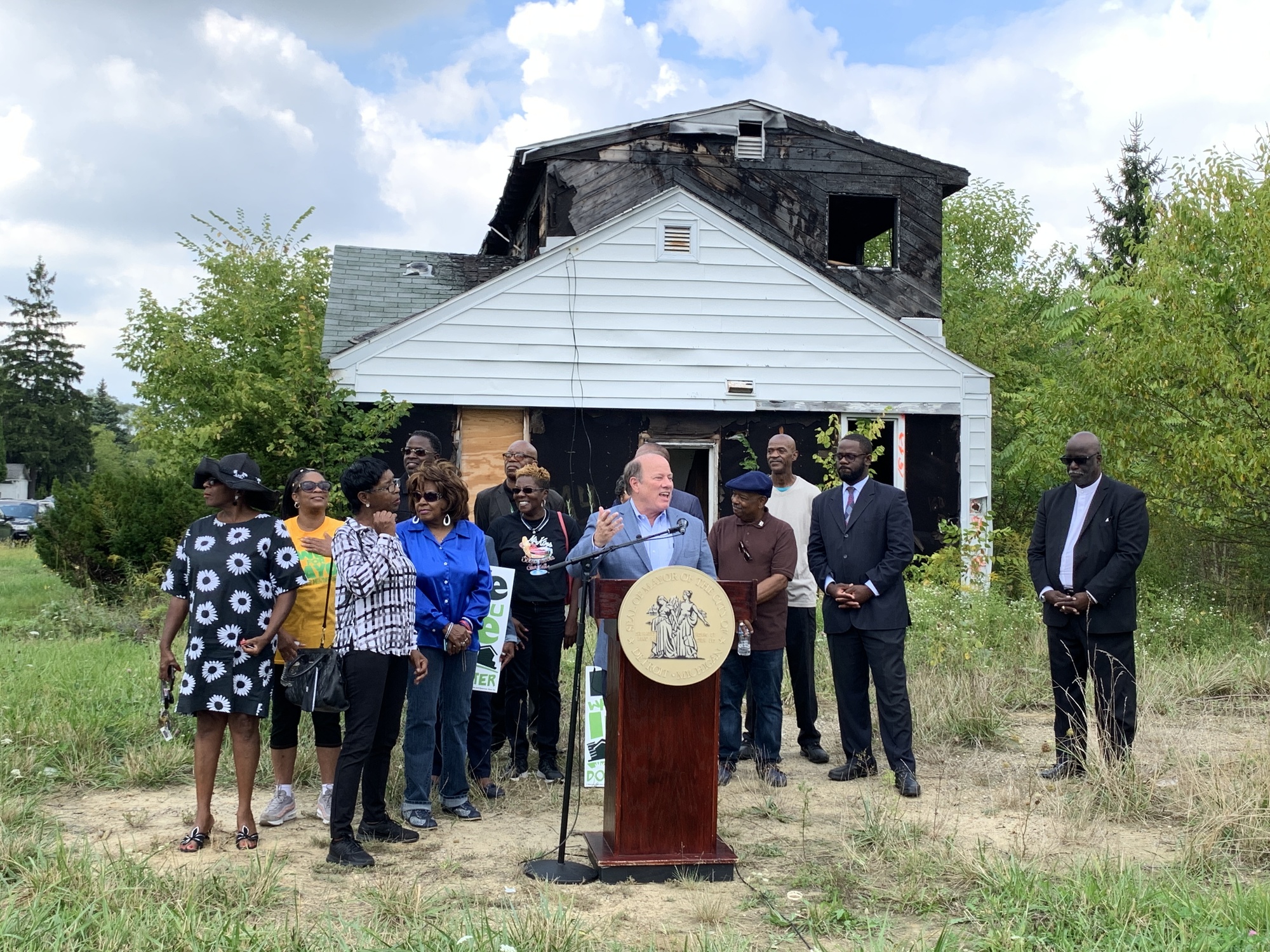
New proposal would eliminate ALL residential blight from EVERY Detroit neighborhood by mid-2025
"We feel like we have an obligation as a city to get every abandoned house of every neighborhood. This is the proposal that will do this. We're confident this will get the blight finally erased."
- Mayor Mike Duggan
Joined by neighborhood residents and Councilmembers Andre Spivey and Scott Benson, Mayor Mike Duggan today announced a request for Detroit City Council to authorize a $250 million bond initiative for the March 2020 ballot that would completely eliminate all residential blight from every Detroit neighborhood by mid-2025.
No tax increase for Detroit residents: The proposal, if approved by Council and passed by voters, would not increase taxes for Detroiters. It would allow for the city to demolish 19,000 abandoned residential buildings while rehabbing and occupying approximately 7,000 homes that can be saved.
It would take 13 years for the City to complete the same number of demolitions without this bond proposal, which would eliminate residential blight citywide in five years.
Program would reach every city neighborhood: Until now, the City's blight removal efforts have been funded by mostly federal Hardest Hit funds, which can only be used in limited areas of the city as directed by the federal government. This program would allow the city to remove blight in EVERY neighborhood across Detroit.
“For the past five years, residents living outside of the federal boundaries have been asking me when it’s going to be their turn and those have been difficult conversations,” Mayor Duggan said. “Because these funds will be completely controlled by the city, neighborhoods that have lived with blight for decades will see all of it removed within five years of the bond sale being approved.”
Program would also support some renovations: In addition to the 19,000 properties that would be demolished over five years, Duggan said he anticipates another 8,000 will be renovated through Land Bank sales and legal actions against owners' privately owned vacant buildings. He also is proposing using a portion of the bond funds to help incentivize renovations on 1,000 or more of these homes that otherwise would be demolished.
“If it’s going to take $15,000 to demolish a house that would be salvageable if not for the high cost of renovation, we can use that same $15,000 to help pay for renovations, instead of demolition,” the Mayor said. “This wasn’t possible with our federal funding due to US Treasury rules, but since we are moving forward with all city funding, we have the ability to be more creative.”
Program would support Detroit-based businesses: While the majority of demolitions in the city so far also have been bound by federal rules that prohibit the city from granting location based preferences, the city’s demolition program going forward will have greater latitude to allow it to use such preferences. Since 2018, 54% of all city-funded residential demolitions have been completed by Detroit-based businesses, compared to 37% on federally funded demolitions.
The City’s Office of Contracting and Procurement also will establish limits on the number of properties each contractor can be awarded at a time, which will create more opportunity for smaller companies.
Blight removal's impact on neighborhoods: No other city effort has as much positive impact on neighborhoods than blight removal, Mayor Duggan said. Since the city ramped up its demolition and vacant home renovations efforts in 2014:
- Average property values across the city have nearly doubled, increasing by 90% according to Zillow (2013-2018)
- Structure fires in the city have gone down by 42%
- Studies by Wayne State and Harvard University/University of Michigan demonstrate a 3% reduction in violent crime for every 10 demolitions and an 11% reduction in fatal and non-fatal shootings in areas of concentrated demolition.
Next steps: In order for the ballot initiative to make the March 2020 election, City Council will have to approve ballot language by December 17th. Mayor Duggan said he hopes for earlier approval to allow for a full public education campaign.
If the measure is approved by voters in March, the city plans to issue debt by the end of the summer and begin applying the bond funds to blight removal program.