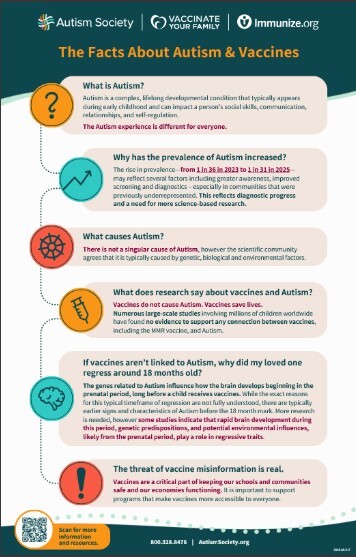
The Centers for Disease Control and Prevention recently updated its webpage on autism and vaccines. Following are statements in response.
A statement from the Maine CDC
“There’s overwhelming evidence that vaccines don’t cause autism, but they do save lives,” said Maine CDC Director Dr. Puthiery Va. “The evidence is clear. Vaccines are one of the most powerful tools in public health: cost-effective, proven to reduce instances of debilitating and deadly diseases like polio, measles, and smallpox, and essential to protecting lives and easing the strain on our health systems.”
A statement from the Northeast Public Health Collaborative
“CDC’s recent statement regarding vaccines and autism is inconsistent with decades of research and more than 40 carefully designed and scientifically sound studies involving 5.6 million people that show no link or association between vaccines and autism.
Vaccines used in the United States are rigorously tested and monitored for safety. Claims suggesting a cause-and-effect relationship between vaccines and autism are not supported by credible scientific evidence nor are they grounded in rigorous, peer-reviewed research and consensus.
This issue has been studied thoroughly for many years by experts around the world through major cohort studies, meta-analyses, and systematic reviews. The claims of a link between vaccines and autism spread inaccurate information, will result in unnecessary confusion, and may lead to unnecessary fear and harm.
What is clear is that vaccine-preventable diseases cause a substantial disease burden affecting populations worldwide. Vaccines are safe and help prevent illness, hospitalization, and millions of deaths worldwide every year.
The Northeast Public Health Collaborative encourages the public to consult with qualified health care professionals and clinicians and rely on trusted medical sources when making decisions about their health or the health of their children. We also urge caution in sharing or acting on unverified health claims.”
The Northeast Public Health Collaborative is a voluntary coalition of public health agencies working together to share expertise, improve coordination, enhance capacity, strengthen regional readiness, and protect evidence-based public health in our jurisdictions.
Statements on Hepatitis B Vaccines
Maine CDC supports immunizing newborns with the hepatitis B birth dose within 24 hours of birth. This practice is widely accepted by the scientific and medical community. And yet, some are challenging it. Following are statements in support of the practice.
A statement from Maine CDC Director, Dr. Puthiery Va.
“Timely vaccination is a vital public health measure, ensuring that all infants receive immediate, lifesaving protection and is essential to protecting the health of our youngest and most vulnerable population,” said Maine CDC Director, Dr. Puthiery Va. “The birth dose offers a proven, safe, and dependable layer of protection – not only against undetected maternal infections, but also against potential exposure from caregivers or household members with undiagnosed hepatitis B.”
A statement from the Northeast Public Health Collaborative.
“The Northeast Public Health Collaborative has reviewed the relevant scientific literature and medical professional guidance related to the hepatitis B vaccine among newborns.
The Collaborative continues to recommend that all newborns receive a hepatitis B vaccine birth dose within 24 hours of delivery. Newborns born to birth parents who test positive for hepatitis B infection or have an unknown status should be vaccinated within 12 hours of birth. Additionally, all children should complete the full vaccination series within 18 months.
These recommendations align with the American Academy of Pediatrics’ (AAP) Recommended Child and Adolescent Immunization Schedule and reflect a consensus statement from the Northeast Public Health Collaborative. We hope the Advisory Committee on Immunization Practices (ACIP) will join us in these recommendations.
We encourage the public to consult with qualified health care professionals and clinicians and rely on trusted medical sources when making decisions about their health or the health of their children. We also urge caution in sharing or acting on unverified health claims.
The Northeast Public Health Collaborative is a voluntary coalition of public health agencies working together to share expertise, improve coordination, enhance capacity, strengthen regional readiness, and protect evidence-based public health in our jurisdictions.”
Do your patients have questions about vaccines and autism? Use these trustworthy resources.
Trustworthy resources can help to support your communication efforts with clear information to help address patient questions about autism and vaccines:
The Maine Immunization Program (MIP) has also compiled trusted resources from state and national partners, including the Maine Medical Association (MMA), the American Academy for Pediatrics (AAP) and the Northeast Public Health Collaborative. You can find their statements on MIP's Vaccine Safety webpage.
The agenda includes discussions on vaccine safety, the childhood and adolescent immunization schedule, and hepatitis B vaccines. Recommendation votes may occur. No registration is required to watch the webcasts. A draft agenda is available but is subject to change.
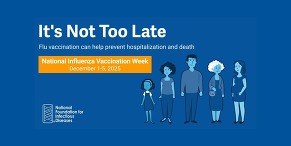
December 1-6, 2025, is National Influenza Vaccination Week (NIVW), an annual observance that helps to promote influenza vaccination. It is not too late to be vaccinated against the flu, with viruses continuing to circulate across the country. Everyone aged 6 months and older are encouraged to get an annual flu vaccine, especially pregnant women, young children, and others at higher risk.
Several public health organizations have posted tools and resources, to use to promote NIVW, including:
CDC is reporting the following on respiratory virus' nationwide:
COVID-19: Hospitalizations remain low and stable nationally.
RSV: Activity is still low, but pediatric RSV is increasing in some areas.
Influenza: Activity is rising nationwide, especially influenza A(H3N2) among children.
CDC's RespVaxView dashboards will launch December 3 with weekly updates on flu vaccination coverage, doses administered and supply.
Respiratory vaccines and long-acting monoclonal antibodies (mAb) (nirsevimab and clesrovimab) are currently available for ordering to enrolled providers through MIP.
Please ensure you have sufficient supply for your patients. We recommend maintaining a 4–6-week supply of vaccine.
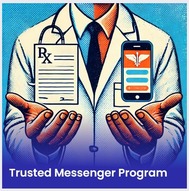
The Trusted Messenger Program created by Public Good Projects has released its first module, "Maximizing Trust and Reducing Resistance." This 1-hour training offers practical, evidence-based strategies to help providers address patient concerns and improve communication. It also highlights common missteps that healthcare providers may make when giving recommendations and provides tools for building trust. CME credit is offered.
If you have any questions, please contact the Maine Immunization Program at: Main Line: (207) 287-3746 ImmPact Helpdesk: (207) 287-3006 / Support/Education: (207) 287-9972