|
The 2018-2020 State Health Improvement Plan (SHIP) has been released.
The SHIP is designed to improve the health
of all Maine people. It focuses on five health priorities, with goals,
objectives, and strategies for achieving measurable success over the next three
years:
- Cancer
- Chronic Diseases
- Obesity
- Mental Health
- Substance Abuse, including Tobacco
Maine CDC is
responsible for providing essential public health services that preserve,
promote, and protect health. In addition to Maine CDC, there
are many organizations, both public and private, that also share this goal. An
engaged public-private collaboration assures efficient and effective services
and systems. This plan reflects the public health priorities of the Maine DHHS,
with significant input from our public health partners. The final content was
approved by the State Coordinating Council for Public Health and Maine DHHS. It
is intended to be a living, working document that will be revised as available
resources change and new partner activities are identified.
For more information, visit http://www.maine.gov/dhhs/mecdc/ship/
The Maine Tracking Network did some spring cleaning and
spruced up childhood lead poisoning content with data for the year 2016. This
release provides users with the most up-to-date information on lead poisoning
and screening for the state, counties, high-risk areas, and towns.
In addition to the new year of data, the Maine Tracking
Network launched a new mapping tool to enhance users’ abilities to visualize
and explore lead poisoning, screening, and risk factor data. These enhanced
features allow users to view and interact with maps in ways that were not
possible before – such as viewing street names in high-risk area maps.
Go to data.mainepublichealth.gov/tracking
to start exploring the 2016 childhood lead poisoning data and the new mapping
tool.
More Maine Tracking
Network Updates
Carbon monoxide, birth defects, and cancer content areas
also received freshening up with new data. Some highlights of the new data are
carbon monoxide detector prevalence data for the years 2015 and 2016, birth
defects data for the years 2010 to 2016, and cancer data for the years 2010 to
2014.
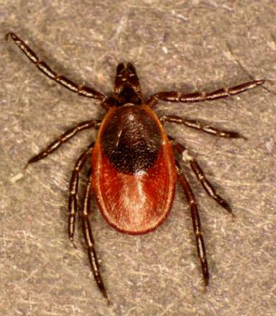
Warmer weather is coming and the majority of tickborne
illnesses occur during the summer months when ticks and humans are active
outdoors. Lyme
disease is the most common tickborne disease in Maine with 1,769 cases
reported in 2017 (preliminary data as of 1/16/18). Lyme disease is a bacterial
infection and is most common in adults over the age of 65 and in children
between the ages of 5 and 15 years in Maine. May is Lyme
Disease Awareness Month, which is the perfect time to remind you to use the
“No Ticks 4 ME” prevention methods when spending time outdoors:
- Wear protective clothing
- Use an EPA approved repellent
- Perform daily tick checks
- Use caution in tick-infested areas
Lyme disease is not the only disease that can be carried by
deer ticks in Maine. Anaplasmosis, babesiosis, and Powassan are three other
tickborne infections found in Maine. In 2017, the number of anaplasmosis cases
rose to 662, the number of human babesiosis cases rose to 117, and the number
of human Powassan cases increased to 3 (preliminary data as of 1/16/18).
If you
are bitten by a tick, or spend a lot of time outdoors, watch for symptoms for
up to 30 days, and call your doctor if symptoms develop. Symptoms for tickborne
diseases include fever, headache, and joint or muscle pain.
To learn more about tickborne diseases, please visit http://www.maine.gov/dhhs/mecdc/infectious-disease/epi/vector-borne/index.shtml.
|