 Christopher Pezzullo, D.O., has accepted the position of Chief Health Officer of the Maine Department of Health and Human Services. Dr. Pezzullo has been serving in this role in an acting capacity since March.
The Chief Health Officer’s (CHO) role is to develop and coordinate an integrated, results-oriented approach throughout DHHS to address significant health issues that span many of the programs within the Department The CHO will work to implement innovative public health strategies that partner community health promotion efforts with health care clinicians and leaders as well as to construct a more integrated, effective health system through collaboration between clinical care and public health. All of these efforts are designed to provide strong clinical leadership within the Department to positively improve the health of Maine people.
“I have been impressed with Dr. Pezzullo’s knowledge of and commitment to the public health issues that are impacting Mainers,” wrote DHHS Commissioner Mary Mayhew when announcing the appointment. “His experiences in clinical practice will be helpful as we focus on critical issues like drug-affected babies, fragmented care delivery, chronic disease management, eldercare and effective primary care screenings for tobacco, alcohol and drug use.”
Dr. Pezzullo has been practicing medicine for nearly 20 years in Maine as a pediatrician. He’s a graduate of the University of New England College of Osteopathic Medicine and has been recognized as a Diplomate of the American Board of Pediatrics and the National Board of Osteopathic Medical Examiners. Dr. Pezzullo previously served as the Medical Director of the Division of Population Health at Maine CDC, beginning in 2012. Prior to joining State government, he was the Chief Medical Officer for University Health Care from 2008 to 2012.
|
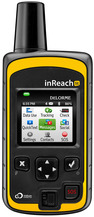 In its role of managing various vaccines and antidotes in the event of a public health emergency, Maine CDC’s Public Health Emergency Preparedness (PHEP) program identified the need to keep drivers of these types of supplies safe and secure.
Delorme InReach was ultimately chosen to meet this goal, as it allows for real-time GPS tracking. The technology also features text-based communication from the device to a web-interface that can be monitored at a central location.
Recently, this technology was used by the Maine State Police in their manhunt for suspect Robert Burton in Piscataquis County, which ended after 68 days on August 11. The State Police appreciated the use of these units:
“What the units have enabled us to do is to track personnel in real time as we deploy tactical assets in the field. By equipping each team with a device, we are able to visually demonstrate to the planners and managers of the incident where each team is tracking. Not only is that demonstration valuable for progress display, it also allows for the ongoing consideration of reactionary forces should the team encounter a threat.
“The devices have also afforded us a communication alternative in an environment where radio communication is poor. By utilizing the satellite capabilities to communicate, we are more assured that we are able to relay relevant information to the field as well receive urgent data from any team.”
This real-life application of the technology also served as on-the-job training for the State Police who were active in this search. They are now ready to assist in any public health emergency without additional training.
|
Maine Public Health Association has released a series of "Touched by Tobacco" videos featuring various Maine leaders discussing their personal stories.
The videos are available at https://www.youtube.com/channel/UCcf2iG7W5qIA2IhysC-sBag
Ticks are generally found in brushy or wooded areas and near the ground. They cannot jump or fly.
Ticks are attracted to a variety of host factors, including body heat and
carbon dioxide. They will transfer to a potential host when one brushes
directly against them and seek a site for attachment.
Ticks cause a variety of diseases, including Lyme disease,
anaplasmosis, babesiosis, ehrlichiosis, Powassan and Rocky Mountain spotted
fever, all of which are reportable in Maine.
Cases of tickborne diseases reported in Maine through August 17 include:
- 467 cases of Lyme disease, compared to 1,400 for all of 2014
- 109 cases of anaplasmosis, compared to 191 for all of
2014
- 24 cases of babesiosis, compared to 42 cases for all of 2014
For more information:
Summer is here, which means mosquitoes are here as well.
Arboviral diseases, including eastern equine encephalitis (EEE) and West Nile
virus (WNV), are very serious infections that are transmitted by the bite of an
infected mosquito. Additionally, Powassan
virus is an arboviral disease transmitted by the bite of an infected tick. Although rare, these diseases have
potentially severe and even fatal consequences for those who contract them. Maine CDC reminds clinicians of the potential
for human disease activity in Maine and to consider testing for arboviral
disease in patients presenting with unexplained encephalitis, meningitis or
fever (≥100.4°F or 38°C) during the summer and early fall.
EEE and WNV were first detected in Maine in 2001 in
birds. In 2009, Maine experienced
unprecedented EEE activity with 19 animals and two mosquito pools testing
positive. In 2012, Maine reported its
first human case of locally-acquired WNV neuroinvasive illness. In 2014, Maine reported its first human case
of locally-acquired EEE neuroinvasive illness. Powassan was first identified in
Maine in 2000 but is rarely reported; a confirmed case in 2013 was the first
reported case in nearly a decade. In
2014, Maine reported EEE in an emu from Cumberland County. In addition, 22 mosquito pools from York
County and one human from York County.
Many people infected with arboviral illness remain
asymptomatic. The following groups of people are at higher risk for clinically
significant arboviral infection:
- Residents of and visitors to areas with mosquito or tick activity
- People who engage in outdoor work and recreational activities
-
People older than 50 and younger than 15
Additional
Information
- Disease
consultation and reporting available through Maine CDC at 1-800-821-5821
Cases of pertussis (whooping cough) continue to be reported
statewide.
As of August 17, 201 cases have been reported in Maine this
year, and the majority of the cases are in school-aged children.
Maine CDC encourages providers who see patients for cough in
an outbreak area to test for pertussis and treat empirically. (Providers do not
need to wait for positive results to return or a two-week history of cough in
order to treat.)
DTaP vaccine is recommended for all infants and children.
Tdap vaccine is recommended for all preteens, teens and adults, including
health care providers. According to the American Congress of Obstetricians and
Gynecologists, Tdap is also recommended in the third trimester of every
pregnancy.
For more guidance and
information, visit http://go.usa.gov/dCO
|