Hope this finds you all doing well. Hard to believe that summer is here. I know it has been a challenging year and a half with COVID and all. Hope you all plan to do something fun during the summer.
This issue’s question is, what are some opportunities to socialize with other Deaf and hard-of-hearing folks or what are some resources to get information?
Here in Maine we have the Maine Association of the Deaf (MeAD) which is a state association that has social events, and meetings. Currently, the co-presidents are Thomas Minch and Sitara Sheikh and the email contact is mainedeaf2016@gmail.com.
The Maine Deaf Senior Citizens group provides social events on the first and third Tuesdays of the month at the Maine Educational Center for the Deaf and Hard of Hearing/Governor Baxter School for the Deaf. Currently Ronald Madore is president and Bonnie Snow is the secretary. For more information please contact jbsnow@roadrunner.com.
The Maine Recreation Association of the Deaf is a volunteer organization for Deaf, hard-of-hearing and late-deafened people who want to participate in family activities. There are activities for all ages, including the Deaf Timberfest. Debbie Bolduc is currently the president and the email contact is djbolduc11@gmail.com.
The TRI-Flying Hands Club, in the Bangor area, is another group that meets and has social events. Dawna Thorpe is the current president and the email contact is triflyinghandsclub@gmail.com.
On a national level there is National Association of the Deaf (NAD). You can find more information at https://www.nad.org/.
Another resource on a national level is Hearing Loss Association of America (HLAA) and you can find more information at https://www.hearingloss.org/.
I hope you find these resources helpful and share with others.
I would also like to remind you that if you know of someone who has been contributing to the Deaf and hard-of-hearing community to please consider nominating them for our Deaf Culture Tea Awards. The information is below and feel free to contact us if you have any questions.
Maine Behavioral Healthcare is pleased to offer this highly specialized program to Deaf, hard of hearing, deaf-blind and late-deafened adults, and children throughout the state of Maine. This program also offers services to hearing children, siblings, parents, and family members of Deaf individuals.
About Services:
Services are provided by mental health clinicians and case managers who are skilled in American Sign Language (ASL) and familiar with Deaf culture. Our staff is aware of the unique needs of members of the Deaf and hard of hearing community, and the diversity that exists within that community.
Services are offered for:
Identification of hearing loss
Depression and anxiety
Acute and chronic mental illness
Relationship, couple, and family problems
Parenting and child rearing challenges
Behavioral and emotional problems in children
Abusive or destructive relationships
Sexual and/or physical abuse
Family crises, including separation, divorce, and death
We also provide adult community integration services to Deaf and hard of hearing adults who have a mental health diagnosis. Like children’s case managers, community integration clinicians conduct assessments of an adult’s strengths and weaknesses, work with the adult to create an effective service plan to address their needs in the community, locate and develop resources, and monitor progress and effectiveness of established services.
To learn more about Deaf Counseling Services, contact Kristine Gile, Program Supervisor. 207-874-1030
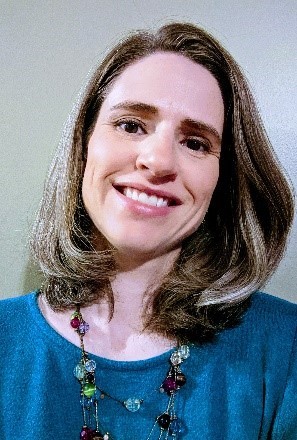
Could you share with us what your family life was like as a child?
I had a happy, busy childhood while growing up in rural Iowa. I was blessed with an amazing family who were very supportive and encouraging. When it was discovered that I was deaf around 9 months old, my mother’s family immediately signed up to learn sign language. My mom sat down and started learning and teaching both my older sister and me “Signed Exact English.” At a young age, I already looked up to my sister who was a chatter box, and I wanted to be like her. I refused to learn and would sit on my hands or run away while my sister was learning. My mom respected my wishes and she signed us up with family speech therapy. The speech therapist had me, my sister, and my younger brother involved, and I learned to lip read and speak. My family was very inclusive that my siblings and I were encouraged to do anything. I was involved with dance, piano, school band (played the baritone), 4-H, individual and large group speech, team sports, Spanish Club, and so much more. Due to being so involved and very isolated, I was the only deaf student in my town, my Teacher of the Deaf created a group called “Northwest Iowa Impressions.” This allowed a group of Deaf, hard-of-hearing, and hearing kids get together and perform skits and music to the community all over Iowa. We were educating the families, communities, and schools about Deaf/hard-of-hearing culture. It was an amazing experience. I eventually became the first Deaf Commissioner of Iowa, Jr. I felt like I could do anything I wanted as long as I had my family and friends supporting me and cheering me on.
What mode of communication did you use as a child?
My mother initially planned to have me learn Signed Exact English (SEE) as it was something that would be supportive of my English. However, my mother respected my decision that I wanted to communicate through spoken English, and she ensured that I would have that opportunity. My family still had Sign Language as a secondary language to support my growth. I eventually added American Sign Language to my language base. I am proud to say that I know three languages: Spoken English, Sign Exact English, and American Sign Language.
Where did you go to school?
I attended mainstreamed public school while growing up. I graduated from Spencer High School in Spencer, Iowa. I went to University of Tulsa in Tulsa, OK to receive my B.A. in Deaf Education. Then I attended Lewis & Clark College in Portland, Oregon for my M.A. in Counseling Psychology.
Have you always lived in Maine?
No, I moved to Maine in 2003 for work. I was given a great opportunity to work with the Deaf Community as a therapist and to be near family again after attending school all over the US. Maine is a beautiful state.
What is your family life like now?
I am happily married with two very active, creative, fun little boys and two sweet, big dogs. I’m fortunate that my mom, my sister, and my sister’s family are here in Maine as well. My brother and his family reside in France. We still hold the same values from my childhood which is supporting each other in our adventures.
What kind of work have you done?
Growing up, I’ve had the opportunity to have so many different work experiences. My first job was the typical job that many people in my area would have… babysitting. It was fun to watch children of different ages and play with them. There were challenges back then due to phone barriers, but every parent trusted me, and we worked through it. Then I moved on to other jobs such as working in grocery store as a bagger, cashier, and stocker. I’ve also worked during the summer on a farm “walking the beans.”
Once I went to college, I held multiple jobs such as bus girl at a sorority, Disney Store, Nanny, Deaf Mentor, and office admin. Each of these jobs gave me an opportunity to learn new skills, business etiquette, networking, and career exploration.
For the past 18 years, I’ve had the pleasure of working with Maine Behavioral Healthcare (formerly Community Counseling Center) in multiple roles. I’ve been a case manager and a clinician to the Deaf, Hard of Hearing, and Hearing community. I am currently the Program Manager for the Deaf Services and Outpatient Therapy. We are providing case management and counseling statewide to Deaf, Hard of Hearing, and Hearing family members. We are honored to maintain a state contract that allows up to provide additional free services to support and grow the community’s skills and knowledge. It’s been wonderful to grow from this experience and work/meet so many diverse people.
What are some of your successes?
I love my family. My mom and siblings continue to be my rock while moving on with their own adventures. My husband may be hearing, but he has always been accepting of who I am and what I will set out to do with my personal and professional life. He’s my rock. My sons make me so proud to be a mother. They may be little, but I can see them growing into kind, smart, young men. They are so different from each other, but they embody the values what I have been teaching them which is supporting each other, striving for your best, having fun with life.
I’m proud of my own success professionally with obtaining my degrees, licenses, credentials. It was a long journey with some challenges, but I was able to meet people on the way who inspire me to do more. I can see that I inspired them to make changes on how they serve our population as well.
Within my work, it was a great achievement to create a transitional module with my colleagues at Disability Rights Maine, Vocational Rehabilitation, and Maine Educational Center for the Deaf and Hard of Hearing for Deaf/hard-of-hearing teens. We have the opportunity to inspire teens to look beyond high school with more hope and career opportunities. I look forward to seeing a new diverse group of successful Deaf/hard-of-hearing individuals.
My Deaf Services team are a huge contributor to success in my professional life as well. We work together to share and teach new information and resources for Deaf/hard-of-hearing community as well as providers. We are seeing more and more individuals become more independent and creating new paths.
My success are not mine alone. I credit everyone I have the honor and pleasure to work with.
What are some of your challenges?
This year, my biggest personal challenge was also my greatest personal success. I learned how to communicate and teach other to communicate with the mask. It was a fear and isolating situation to overcome.
Professionally, I will always meet people who have the pre-conceived notion that “deaf” is a disability and that I may not have the skills or intelligence to do specific task. But, with patience, kindness, and perseverance, changes will happen.
What would you like to see happen for those that you work with?
I would like to see continued collaboration between all agencies and strengthen our goals and values to support the community. Our community has so many hidden strengths and skills and it is time to make them shine.
The Telecommunications Equipment Program (TEP) was established by state law to provide no- or low-cost adaptive phone equipment to any Maine resident who cannot use their home's conventional telephone due to a physical, sensory, or cognitive disability. The program was established to assist low-income residents, and most clients pay nothing for the phone equipment they receive. Through a simple application process, DRM's TEP staff determine which amplified, captioned, or voice-activated telephone and/or call signaler will best meet your needs.
To apply, complete the TEP application form, available online at Disability Rights Maine-Deaf Services TEP https://drme.org/deaf-services/tep or call to have us mail you one. Send completed application to DRM with: Verification of Disability (note from doctor, an audiogram, or diploma from deaf school) Proof of Household income for all family members for prior 12 months (tax returns, pay stubs, social security award letters, or bank statements) DRM Program staff will assist you in selecting the best phone for your needs. Staff are also available to assist with installation and training. As of March 2020, we are providing virtual appointments- contact us for more information. If you find that the equipment does not meet your needs, DRM staff will assist you in selecting a different phone. Through the TEP Lending Program, clients may keep the equipment for as long as you need or want it, but you cannot give it to someone else, or take it out of the state of Maine. If your needs change or the equipment breaks down, DRM staff will work with you to resolve the issue by repairing or replacing your equipment.
For those whose income may put them above the program limit for no-cost assistance, we offer a 'Cost-Share' option. Cost-Share allows individuals to pay a portion of the equipment cost, on a sliding scale, to purchase the equipment they need. As with no-cost equipment, we ship the equipment directly to you. However, the equipment is the client’s property, just as if it had been purchased from any store. If repairs or replacement needs arise, program staff can refer Cost-Share clients to the appropriate repair center or warranty process. The cost of repair or replacement for Cost-Share equipment is the individual’s responsibility.
TEP applicants who are over age 65 have the option of receiving a single telecoil-equipped hearing aid instead of a phone. There are additional requirements for applicants seeking a hearing aid; in addition to proof of disability and proof of income, applicants must also submit proof of age and a recent audiogram with their application. Program staff are available to answer any questions about the application process or eligibility.
For more information, contact: Lisa Penney, Advocate Email: lpenney@drme.org
Could you share with us what your family life was like as a child?
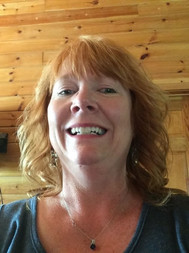
I am a sixth generation Mainer of a large, Deaf family. We grew up in the country on a small farm with cows, pigs, chickens, ducks, dogs, cats, and lots of family. It was usually a confusing mess with lots of loud talking, signing, laughing and love.
What mode of communication did you use as a child?
We used a combination of signs, finger spelling and I voiced with my family members who were hearing.
Where did you go to school?
I grew up in the public-school system. When I was a younger my hearing loss was single sided. As an adult, what I considered my good ear has progressively worsened. I went to Kennebec Valley Community College and though there were no accommodations, such as CART, my teachers were very understanding and I had a spot at the front of the classroom. Teachers were available after class to help if I missed something.
What is your family life like now?
Much quieter than when the girls were home. We are so fortunate to live in a time when communication access is so readily available and my kids are just a text or video sign chat away. Growing up my mother did not have the same luxuries to communicate with my sister and me. She wrote letters to my sister and yelled to me on the phone, until we got the TTY!
Could you tell us a little about yourself?
I am married to Kelly and have two grown daughters, Samantha and Allison. In my free time, I like to work outside in my container gardens and have just started hiking again with a friend on the beautiful trails in Maine.
What kind of work have you done?
I worked for 13 years at ALLTech on a team providing assistive technology (AT) assessments to consumers of all ages with physical, cognitive and sensory disabilities. I also managed ALLTech’s AT Loan and Reuse Program, including 10 years of experience installing and supporting clients in using a variety of specialized telephones.
As a Deaf or hard-of-hearing professional, what are your proudest accomplishments?
My best days are when a client calls or emails to tell me how happy they are with the hearing
aid that they received from our program.
Where do you work?
I have worked for almost three years at Disability Rights Maine (DRM) as an advocate for D/deaf and hard-of-hearing consumers seeking access to adaptive landline telephones and hearing aids through DRM’s Telecommunications Equipment Program (TEP).
What population do you work with?
Primarily people who are hard of hearing and deaf.
What are some of your successes?
I graduated the Hearing Loss Mentoring Certificate Program at Gallaudet University in 2015. My two beautiful, successful, and happy daughters.
What are some of your challenges?
For the past year and a half, the biggest challenge has been understanding people wearing masks. Another challenge would definitely be understanding speech in noisy environments.
What would you like to see happen for those that you work with?
What do I really want? Free hearing aids for everyone! The cost is so ridiculous; I am happy to work in a program to help improve access to hearing aids, amplified phones and assistive listening devices (i.e. PockeTalkers) for people with hearing loss. I would also like to see the words “discrete and invisible” never used when describing hearing aids.
Is there anything you feel is important to mention?
Hearing loss is not something to pity. Don’t apologize for your hearing loss. And if you know someone with hearing loss, remember these simple tips: please face me, speak clearly and remember if you mumble, I won’t hear you. Life is short; enjoy each day. Please learn to sign!