It is hard to believe it has been a year since Covid-19 appeared here in Maine. It has changed many things. It has also led us to look at things differently, such as using technology, to continue working and connecting with our families, friends and others. We are looking forward to Spring and warmer weather. We would also like to remind you about our Resource Guide for Deaf and Hard of Hearing resources here in Maine.
March 22nd was Vocational Rehabilitation Counselor (VRC) appreciation day. We/I would like to take this time to show appreciation to our VRC’s and Rehabilitation Counselors for the Deaf (RCD). We appreciate all you do.
The question for this issue is, what is an RCD?
An RCD is a Rehabilitation Counselor for the Deaf that works with the Deaf and hard-of-hearing population. It is the same as a vocational rehabilitation counselor, with the only difference being that RCD’s tend to specialize in Deaf and hard-of-hearing clients.
What does an RCD/VRC do?
An RCD works with Deaf, hard of-hearing, or Deaf blind clients to obtain and or maintain employment. They also work with clients to overcome barriers for Deaf/hard of hearing/Deaf blind. They work on connecting clients with resources that would allow them to advance in their careers or employment. Some RCD’s work with both transition students and adults, some only with adults and some only with transition. They work with students to prepare for college or work.
Group partners with mask supplier to deliver masks to children, families, teachers and other professionals.
The Percival P. Baxter Foundation (PPBF) for Maine’s Deaf and Hard of Hearing Children is a Portland-based 501(c)(3) that is on a mission to develop programs that allow Maine’s Deaf and hard-of-hearing children to connect and fully engage with their community. When individuals and institutions across Maine began using facial coverings to curb the spread of COVID-19, the foundation quickly recognized the impact that such coverings would have on those who rely on seeing the mouth and lips to understand those around them.
“Without this visual aid, Deaf and hard-of-hearing children cannot communicate or connect effectively with teachers, doctors and others that they rely on, which places them at risk of being further disadvantaged,” said Kathie Marquis-Girard, President of the Percival P. Baxter Foundation for Maine’s Deaf and Hard of Hearing Children.
Determined to remove this barrier to effective education and care, the foundation sought out a mask manufacturer to supply clear masks to Deaf and hard-of-hearing children throughout Maine and to their family members, teachers and other professionals that work with the children. Their search led them to Rafi Nova, a Newton, Massachusetts based company founded by the wife and husband team of Marissa and Adam Goldstein, and their Smile Mask.
“We tried a number of clear masks. The Smile Mask was very high quality and Rafi Nova was an engaged partner that was fully committed to the mission,” said O.J. Logue, a Foundation board member and former Executive Director of the Maine Educational Center for the Deaf and Hard of Hearing.
The Foundation introduced the Smile Mask program in early November and made masks available through an online ordering form on the Foundation’s website. The masks could be ordered in a variety of colors and sizes. Through the end of January, the Foundation supplied nearly 300 masks, reaching fourteen of the sixteen counties in Maine.
Pleased with the reaction to the program, the Foundation is in discussions with Rafi Nova to extend and expand the offering. According to Marquis-Girard, “We would like to continue offering the program across Maine to Deaf and hard-of-hearing children, their families, teachers and other professionals, but we are also looking to expand the offering to include classmates so these students can experience those vital connections as well.”
ABOUT THE PPBF
The mission of the Percival P. Baxter Foundation for Maine's Deaf and Hard of Hearing children is to benefit, support and enhance programs and services for children with hearing loss in Maine, their families, and provide professional development training for the professionals with whom they work. In service of this mission, the foundation: (a) develops and supports programs that provide opportunities for Maine's Deaf and hard-of-hearing children and their families to connect with one another and engage with their communities; (b) supports the professional development and training of staff who engage with Deaf and hard-of-hearing children; and (c) has established a scholarship fund for Maine's Deaf and hard-of-hearing children interested in or pursuing higher education.
To learn more about the foundation and to make a charitable donation to support its work, please visit https://www.ppbfme.org.
Maine Relay Service is a free statewide service that connects voice telephone users with people who are deaf, hard-of-hearing, have a speech disability, or are late-deafened. The service allows consumers to use special equipment (such as captioned telephone, TTY, VCO or HCO) to communicate with standard voice telephone users through specially trained relay operators (RO).
Stay connected with family, co-workers, and friends! It has never been easier with Maine Relay. Relay services use specially trained Relay Operators to connect calls between TTY or VCO users and standard telephone users. Maine Relay Service is available 24 hours a day, every day, 365 days a year. All calls are confidential. No records of any conversations are maintained.
Want to use Maine Relay? Simply dial 711 or one of the relay numbers below, which will connect to a relay operator. The relay operator will dial the requested number and relay the conversation between the two callers.
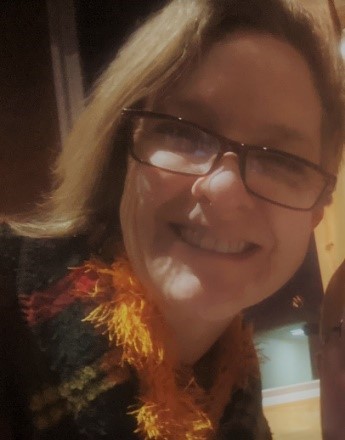
Could you share with us what your family life was like as a child?
I grew up with 'normal' hearing. Mom used American Sign Language (ASL) and Signed Exact English (SEE) at work; I learned simple sign language growing up.
What mode of communication did you use as a child?
Oral language.
Have you always lived in Maine?
No, I moved here a few years ago, when a job opportunity became available; and I love the snow!
Could you tell us a little about yourself?
About eight years ago, I started college. Within the first month, my hearing dropped - I couldn't understand the professors, classmates mumbled, and conversations all blended together. It affected nearly every aspect of my life. I invested in bilateral hearing aids, which I wear daily. I took ASL classes and explored accessibility options for use at school and in my daily life. That is when I discovered a phone captioning app, which captions what people are saying during phone calls. This led to my current profession.
As a hard-of-hearing professional, what are your proudest accomplishments?
Working with others who are hard of hearing, especially when someone loses their hearing as an adult. Showing them how they can use Maine Relay captioning on a phone or in a Zoom meeting - it's rewarding to show people how to access communication.
Where do you work? What do you do?
I work at Disability Rights Maine, providing outreach throughout the state about Maine Relay. Maine Relay includes Sprint IP Relay, a non-cost service that captions during phone calls. I also work with the Telecommunications Equipment Program (TEP) advocate, providing specialized telephone equipment to qualifying Mainers.
What population do you work with?
Mainers who are hard of hearing, deaf and have speech loss.
What are some of your successes?
When Covid hit last Spring, I stopped traveling the state for work - and everything went virtual. I learned how to set-up meetings on Zoom, provide presentations and attend virtual conferences - even teach people how to use Zoom WITH Relay Conference Captioning. All online and from the comfort of my home office. I feel passionate about the work I do. And making life more accessible for people like myself who have hearing loss - very rewarding.
What are some of your challenges?
Inaccurate TV captions! And mumblers - especially now that we all NEED to wear masks to stay safe. It can be frustrating. I use an app called LiveTranscribe to help me understand what's being said behind the mask.
What would you like to see happen for those that you work with?
I need captions in so many areas of my life - when I talk on the phone, watch TV, attend Zoom and in-person meetings. I wish that captions were automatic - where we don't have to request them ahead of time - and that they be 100% accurate. Captions should be as natural as taking a breath.
Is there anything you feel is important to mention?
Hearing loss is not something that only happens to older people; it is different for everyone. Losing my hearing has been exhausting, eye-opening and took time to accept. I never stop asking questions and looking for new ways to make the world more accessible. My advice: empower yourself by helping others to help themselves.
Contact information:
Debra Bare-Rogers, Advocate for Telecommunications Relay Services (TRS)
The Maine Educational Center for the Deaf and Hard of Hearing/Governor Baxter School for the Deaf, has a long-standing history of supporting and educating Deaf and hard-of-hearing children throughout the state of Maine since 1957. Over the years, the services provided for deaf and hard-of-hearing children throughout the state of Maine expanded. To better reflect this and our mission, we became The Maine Educational Center for the Deaf and Hard of Hearing/Governor Baxter School for the Deaf in 2005.
Our professional staff are uniquely trained and qualified to provide specialized programs, services and support to Maine’s children and adolescents who are deaf and hard-of-hearing, their families and the professionals serving them. Our programs and services are available to newborns as young as two weeks of age (and their families) through high school students as they prepare to transition to post-secondary education and/or a career path. We are committed to high quality programs and services covering the language continuum utilizing American Sign Language, Cued Speech, spoken language/English, and other communication approaches that families choose for their deaf/hard of hearing child.
Furthermore, we work closely with medical professionals as families determine the efficacy of a cochlear implant for their child and as consultants and educators for children with cochlear implants and their families. Our offices in Bangor and Caribou enable us to provide the same professional services to all counties in Maine.
Today our programs include:
Our Statewide Education and Family Services Department includes the following:
Governor Baxter School for the Deaf Site-Based Programs consisting of the Mackworth Island Preschool on Mackworth Island with educational site-based programs for kindergarten through twelfth grade programs within Portland Public Schools and an educational site-based program for grades K-8 in Brewer. All of these programs are open to deaf and hard-of-hearing students, regardless of their chosen communication modality. They are staffed by a combination of deaf/hard-of-hearing and hearing, highly qualified personnel who provide instruction in accordance with Individualized Education Plans and the Common Core.
Public School Outreach - itinerant based consultative and direct services to students age 3-21 in their local preschools and K-12 programs throughout the state of Maine. This program offers support, consultation and professional expertise to School Administrative Units throughout the state. We provide services through the child's individual education plan.
Our Early Intervention and Family Engagement Department includes the following:
Early Intervention - This program provides routines based early intervention services to families with children newborn through age 2 years of age who are deaf or hard of hearing. We provide information to families and professionals statewide, support the choices that families make to benefit their children and assist them with identifying the resources that will help them meet the individual needs of their infant or young child. These services are delivered in a collaborative manner with Maine's Child Development Services.
Maine's Health Resources and Services Administration Grant - Earliest Interactions Program:
MECDHH was awarded a four year grant to support comprehensive and coordinated state Early Hearing Detection and Intervention (EHDI) systems of care so families with newborns, infants, and young children up to 3 years of age who are deaf or hard of hearing receive appropriate and timely services that include hearing screening, diagnosis, and early intervention (EI).
The goal of this funding opportunity is to support the development of state/territory programs and systems of care to ensure that children who are Deaf and hard of hearing are identified through newborn, infant, and early childhood hearing screening and receive diagnosis and appropriate early intervention to optimize language, literacy, cognitive, social, and emotional development.
The MECDHH program has a strong focus on developing positive interactions with early medical providers, family engagement and a strong focus on engaging Deaf and hard-of-hearing adults in the lives of Deaf and hard-of-hearing children and their families. https://www.mecdhh.org/Homepage-Message
Watch an incredible interview with Karen Hopkins and Maine 207.
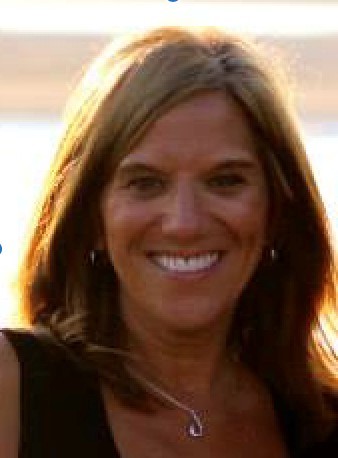
Could you share with us what your family life was like as a child? I grew up in northern Maine in the small town of Millinocket at the base of Mount Katahdin. I was born the youngest of five children in a very supportive family. I was also the youngest in a very large extended family so always had cousins and family friends in my life growing up. I was fortunate to spend summers at the lake at our family camp and have many memories of swimming, reading books with my mother, and playing games with my family. I was involved in many activities both school and community and always loved interacting with younger children. My mother was a teacher and had a preschool in our home that gave many children in my town an early love of learning. My family had very high expectations for me and supported me all the way! I taught swimming lessons all through my high school and college years and loved teaching from an early age.
What mode of communication did you use as a child? As a child I communicated in spoken language as I lost my hearing throughout my childhood and my parents didn't know other approaches existed. There were no resources or support offered to families of deaf children at that time in Northern Maine. My family would often repeat and restate what others said to make sure I was included in conversations.
Where did you go to school? I went to school in Millinocket, Maine. I was mainstreamed my entire school career. At the age of 17 I was one of the first outreach students from Governor Baxter School for the Deaf (GBSD) and in my Junior year of high school I learned about Gallaudet University. We went for a visit and this was the first time I ever met another Deaf or hard-of-hearing individual. This was an incredible experience for me, and I knew I had to go to college there. I graduated in 1991 then continued my education at the University of Maine and the University of New England. I am currently back in school at the University of New England. I am a life-long learner!
Have you always lived in Maine? With the exception of my years at Gallaudet University while in college, yes.
What is your family life like now? I have been married to my husband Scott for 29 years. We have three beautiful children. Andrew lives in Florida and will get married to his fiancé, Ayla, this summer, Alyssa is in her Senior year of college studying education and preparing for graduate school at Endicott College in MA, and Adrianna is in her Senior year of high school preparing to make a decision on where she will attend college next year! Adrianna is hard of hearing and the rest of my family are all hearing.
Could you tell us a little about yourself? I am a passionate educator who loves to help people and develop programs and systems that support deaf and hard of hearing children and their families. This has been my life's work. I am the type of person that likes to collaborate with other agencies to make system change that will benefit others. I have found including families and Deaf and hard-of-hearing adults in our systems work and direct work with families offers many benefits. Families of Deaf and hard-of-hearing children need to meet Deaf adults and children. I started Maine Hands & Voices with a few parents of Deaf children to bring family to family and Deaf/hard of hearing support for families to Maine.
I have had many challenges in my life that have supported my growth and determination. Through my college years I had many seizures that left my right side paralyzed. With the support of my family, fiancé' and friends I would learn to walk time and time again. A few years ago, I had a fall that left me with a traumatic brain injury that once again took my right side and affected my vision. I am so fortunate to have made a near complete recovery and was left with just some vertigo and vision challenges.
What kind of work have you done? I started my teaching career supporting my mother in her preschool in our home. Watching the way she worked with young children left a lasting impact on my career. I taught swimming lessons for 6 years and enjoyed being the Director of the pool and lifeguards. Upon graduation I worked as an education technician with deaf children then taught as an early childhood teacher. I worked with teenagers creating summer experiential programs then began my career in early intervention with deaf children and their families. From there I moved to Maine Educational Center for Deaf and Hard of Hearing (MECDHH)/GBSD and taught preschool and coordinated the 0-5 programs. During my time at MECDHH/GBSD I have worked in early intervention, preschool, academic, and outreach. I have been a coordinator and a Director and am currently the Executive Director.
As a Deafprofessional, what are your proudest accomplishments? I am most proud of the changes I have been able to make in our early intervention, education and family support systems in Maine that benefit deaf and hard of hearing and the families.
Where do you work? I currently work as the Executive Director at the Maine Educational Center for the Deaf and Hard of Hearing.
What population do you work with? I oversee early intervention and Deaf education services for children age 0-22 throughout the state of Maine and their families.
What are some of your successes? I was awarded the State of Maine's Federal Health, Resources and Services Administration (HRSA) grant twice and am currently overseeing this year's $235,000 grant. This is a four-year grant that is bringing new programs to Maine focusing on family engagement and Deaf/hard-of-hearing engagement. We are also focusing on educating the medical community on the needs of Deaf and hard-of-hearing children. I have also written other grants that have brought in education programs and training opportunities to Maine. With the support of the incredible staff at MECDHH/GBSD, I have led the development of several new programs that have become national models. I have traveled nationally and internationally presenting on these programs and am especially proud of my work supporting Deaf Education and early intervention in China.
What are some of your challenges? The biggest challenge, which I think is also a success, is systems work. I have found that by learning and understanding state and federal systems and laws and focusing on what we know is evidenced based practice in deaf family centered early intervention and deaf education we can create programs that are embedded in state systems and are strong evidenced based programs.
What would you like to see happen for those that you work with? For the Deaf and hard-of-hearing children I work with, I wish for a world of acceptance, access, educational aspirations high expectations and most importantly happiness. For the incredible team of staff that I am so fortunate to work with I would love to see us continue to build a strong community within MECDHH/GBSD that extends throughout Maine. Our staff are the most dedicated, skilled and passionate educators you will ever meet, and it is my hope they find a love of education in our organization and a sense of community.
Is there anything you feel is important to mention? I am so fortunate to have the support of my family, the educational community at MECDHH/GBSD an incredibly supportive school board, and the honor of working with hundreds of Maine's Deaf and hard-of-hearing children and their families.