Maine, and especially the Department of Labor, is committed to creating an environment in which you succeed. From workforce development to workplace regulations, our goal is to make it easier for people to get the job done efficiently, safely, fairly, and in the highest quality way possible.
Our team at the Department of Labor is here to assist you in making that happen. Whether we are helping our workforce gain the right skills to meet the needs of current and future employers, ensuring that employers have a level playing field and comply with the law, or helping people laid off through no fault of their own get back to work, we are here to serve the people and employers of Maine.
The LePage Administration is committed to making our state competitive, growing our economy, ensuring that businesses thrive, and making the people of Maine prosperous.
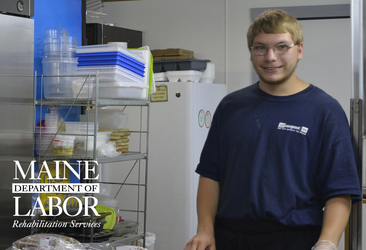
Several Maine employers are providing work experiences to youth with disabilities this summer. Here, Jaysun is helping a restaurant in Rumford.
To learn how you can host students and recruit these workers, contact Christine Robinson with the Bureau of Rehabilitation Services at Christine.C.Robinson@maine.gov.
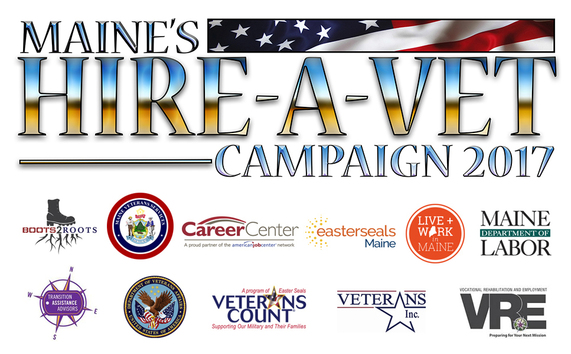
Join the campaign to hire more veterans in Maine! It’s the right thing to do and it’s good business. The campaign pledges to work with you to find the appropriate fit for your job vacancies.
Support for Maine Employers to Include:
Network of veterans support service agencies working for you.
Advanced Military Culture 201 training.
Assistance with recruiting, hiring and retention of veterans and military families.
Title 7 MRS, Chapter 417, §2454
states: “3. School, employer or landlord may not discriminate. A school,
employer or landlord may not refuse to enroll or employ or lease to or
otherwise penalize a person 21 years of age or older solely for that person's
consuming marijuana outside of the school's, employer's or landlord's
property.”
When the Legislature delayed
most of the Marijuana Legalization Act from taking effect until February 2018,
that delay included §2454’s employment-related provisions. Right now, as an
at-will state, a Maine employer or employee can end the employment relationship
for any reason, and an employer may choose not to hire an applicant with a
marijuana-positive drug test without a certification for medical use.
If §2454 does not change and
does go into effect, at that time, the department recommends employers not
conduct applicant drug screening for marijuana because doing so could violate §2454.
SafetyWorks' "Impairment Detection Training for Employers" is designed to help owners, managers and supervisors recognize and respond appropriately to employee impairment in the workplace in order to reduce worker accidents and injuries. Participants will be taught procedures to detect impairment regardless of the substance used or physical conditions such as illness, fatigue etc. that might be the cause.
This class is designed to fulfill the federal DOT requirements for reasonable suspicion training of supervisors. In addition, participants will learn how to develop and implement policies that address impairment in the workplace and are in compliance with Maine’s Substance Abuse Testing Law.
Impairment Detection Training for Employers
August 23, 8:30 a.m. to 3:30 p.m. Greater Portland CareerCenter, 151 Jetport Blvd., Portland
October 25, 8:30 a.m. to 3:30 p.m. SafetyWorks! Training Institute Maine Department of Labor, 45 Commerce Dr., Augusta
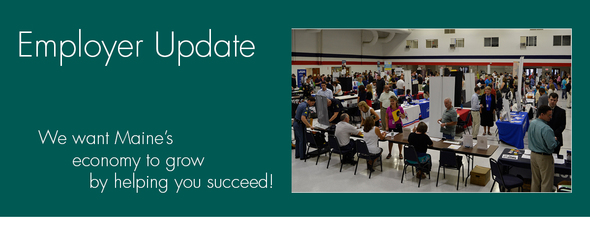
Our CareerCenters are hosting and participating in recruiting events and job fairs. Contact your closest CareerCenter to participate and get assistance with recruiting.
The Silver Collar Employer Award honors employers whose policies and practices match the needs of mature employees, capturing their skills and experience, strong work ethic, flexibility and enthusiasm. Deadline for entry is Friday, September 1, 2017. Employers may self-nominate.
The following labor law changes
took effect immediately upon becoming law; additional changes will become
effective this fall, stay tuned for details.
Minors: 14 and 15 year olds may
now work in bowling alleys, movie theaters and permanent amusement parks, and in
expanded occupations in bakeries and hotels.
Unemployment: Employers may now
appeal cases involving audit findings, for example, worker misclassification or
tax cases, directly to the Division of Administrative Hearings and then may
appeal again to the Unemployment Insurance Commission before being appealing to
the courts.
The “new” requirements that were
passed as part of that law reflect the requirements as currently enforced by
the Maine Department of Labor. Employers who are already in compliance should
see no change in the way they pay tipped employees using the tip credit. These
requirements are:
1. Cannot take credit card fees out of the tip when the
customer pays the tip with a credit card (already a law but not as explicit to
tips, see 26 MRS §629(4)).
2. Must inform new hires that they will be paid using a tip
credit. Maine law now reflects federal law:
“An employer who elects to use the tip credit must inform the affected
employee in advance, either orally or in writing, of the following information:
A. The amount of the direct wage to be paid by the employer to the tipped
employee;
B. The amount of tips to be credited as wages toward the minimum
wage;
C. That the amount of tips to be credited as wages may not exceed the
value of the tips actually received by the employee;
D. That all tips received
by the affected employee must be retained by the employee, except for a valid
tip pooling arrangement limited to employees who customarily and regularly
receive tips in accordance with subsection 2-A;
E.That the tip credit may not
apply to any employee who has not been informed by the employer of the
provisions for a tip credit; and
F. If the employer uses a tip pooling
arrangement, then any required tip pool contribution amount from the employee.”
3. When using the tip credit, the employer must be able to
show that the employee receives at least the minimum hourly wage when direct
wages and the tip credit are combined within the established 7-day
workweek. The 7-day workweek is the
workweek established by the employer and is the same work-week used to establish
overtime.
Address: 45 Commerce Drive, Augusta, Maine
Mail: Maine Department of Labor, 54 State House Station, Augusta, Maine 04333