Outdoor Adventurer or Citizen Scientist? You Decide!
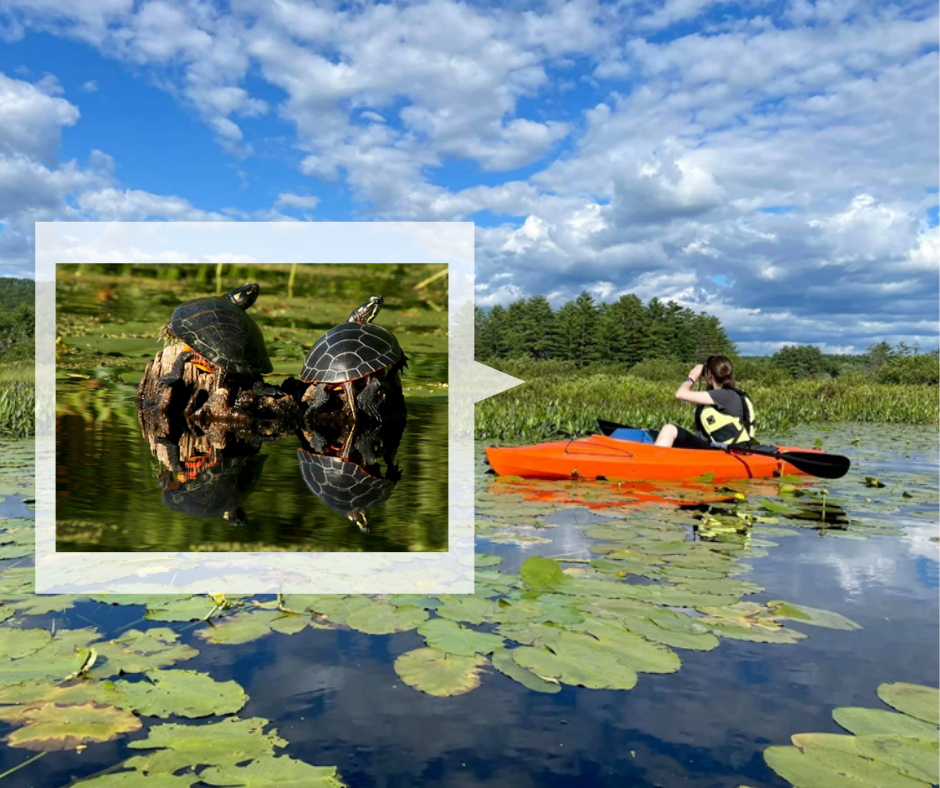 Help Maine's wildlife as you explore
With over 33,000 square miles, Maine is a LARGE state! Our population is 1.3 million people... making us outnumbered by the state's abundant wildlife. Being outnumbered by beautiful birds, sunbathing turtles, buzzing bees, and majestic mammals is pretty awesome, isn't it?
That's why citizen science projects are so effective... The more people recording wildlife observations, the better we can make informed decisions to protect our furry, flying, slimy, and tiny wildlife neighbors.
In 2022 we are wrapping up two citizen science projects and we really need more eyes on the ground (and waterways) looking! And we are especially looking for help in more remote areas of the state where there are fewer people.
This spring and summer as you head to more remote and adventurous areas for a hike, paddle, camping, or fishing, take note of the birds, salamanders, turtles, snakes, and frogs you see! And share them with the Maine Bird Atlas and Maine Reptile and Amphibian Atlas Projects.
Make note of the species, location, time, number, and take a photo! Then share it with us after your adventure.
Maine Reptile and Amphibian Atlas Project (MARAP)
One of the priority goals of the 2022 Maine Amphibian and Reptile Project field season is to fill in geographical gaps in data on species distributions. Even for the most common species such as painted turtles and bull frogs, there are still several areas where observations have not been recorded.
Data gaps could be close to home, but are most common in more remote areas that are difficult to access or visited less frequently such as the North Maine Woods. If you vacation at a camp on a lake or pond in Maine, we need your records! The farther north and more remote your explorations, the more valuable your sightings are likely to be. Learn more about finding reptiles and amphibians on our website or in our latest blog.
Check out the following list of trips if you are an outdoor enthusiast interested in adding MARAP to your next adventure. As always, please be prepared, stay safe, and respect private landowner wishes.
- Experienced paddlers might consider a trip on the Allagash and St. John Rivers to help add snapping turtle and wood turtle observations in northwestern Maine. Southeastern Aroostook and northern Hancock/Washington Counties have very few records even for common species, but a hike or paddle in that region could help fill many species gaps.
- Baxter State Park has been surveyed relatively well, but areas farther north in northeastern Piscataquis County still need records. Consider surveying for reptiles and amphibians during a fishing trip to Mooseleuk, Munsungen Lake, or another waterbody in the region.
- A hike at Mount Blue or Tumbledown conservation area could be a fun adventure, especially if you are interested in contributing new reptile records. There is a data gap in the Sandy River region west of Farmington for milksnakes, smooth greensnakes, red-bellied snakes, and snapping turtles.
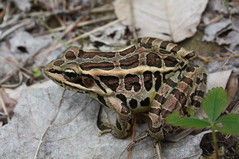
- If it’s frogs you are interested in, the St. John River along the border in northeastern Aroostook County is an area of special interest for pickerel frogs, which still have not been documented there.
- Extreme western Maine – the northern portions of Oxford, Franklin, and Somerset counties (west and north of Kingfield and Jackman) – is also poorly surveyed. Simply documenting a green frog or a redback salamander in these areas is quite likely to represent a novel township observation.
pickerel frog photo by Trevor Persons
|
Maine Bird Atlas
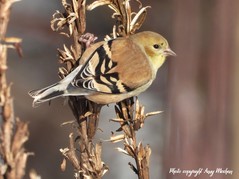
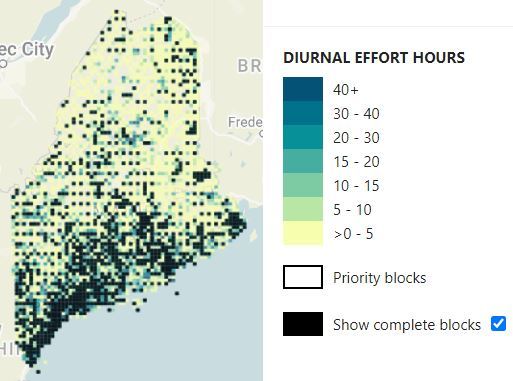
The Maine Bird Atlas is in the final season of the five year project. Since 2018, almost 5,000 volunteers have contributed over 5 million records of over 200 species of breeding birds in Maine! This season is the final push to close geographical gaps in data. Just like MARAP, these gaps are mostly in remote Northern Maine. Experienced Bird Atlas volunteers are chipping away at the 288 of 974 priority blocks remaining to be surveyed by August 15th, but anyone can still join the effort in this important final season! Pack your binoculars for your next hiking trip to the North Maine Woods, your summer camping trip, or weekend canoe adventure. You don't have to be a pro, just report what you know, and learn along the way! Every observation helps. Let's bird!
American goldfinch photo by Amy Meehan
|
Check out the following video for an insider look into participating in the Atlas up North, and start planning your citizen science adventure today!
"Maine Bird Atlas in the North Maine Woods" by Bob Duchesne
|