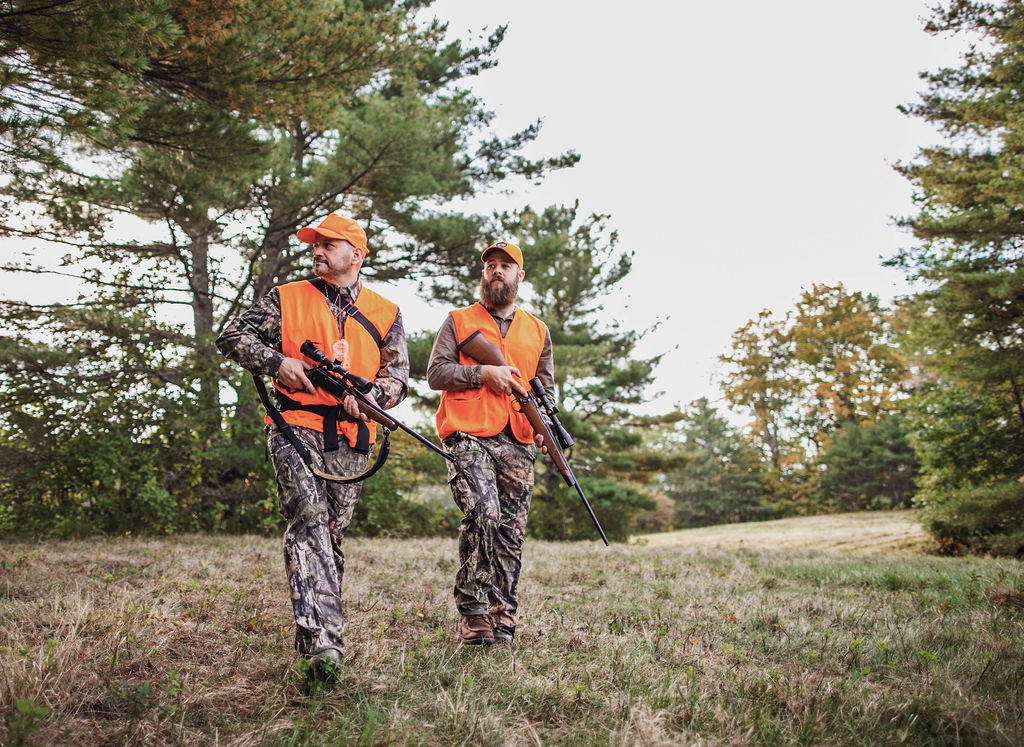
Why make the switch to nonlead ammunition?
Cheap and efficient, lead has long prevailed as the primary material for big game hunting ammunition. But in recent years, studies have illuminated serious wildlife health and environmental risks of using lead-based ammunition for hunting, and manufacturers responded with cost-effective and powerful nonlead options.
Hunters themselves are conservationists, maintaining species populations and protecting habitats. Switching to nonlead ammunition is yet another way they can support wildlife.
Impacts of lead ammunition to avian scavengers
The presence of lead ammunition in the environment can have an impact on avian scavengers such as bald eagles. As compared to other birds and mammals, bald eagles have a highly acidic stomach which breaks down the tiny fragments of lead and then it enters their bloodstream. When eagles consume lead, it only takes a small fragment, about the size of a grain of rice, to become toxic and often lethal.
Although lead fishing tackle is an issue for loons, large game such as deer or other game shot with lead ammunition remaining on the landscape is the primary source of lead poisoning for eagles. This is well-documented and a long-standing concern for eagles not only in Maine but across the country.
When an animal is shot with a lead bullet, as much as a third or more of the bullet’s total weight will be fragmented into hundreds of tiny pieces upon impact and remain inside as much as 18 inches from the pathway of the bullet. Lead bullets fragment even if it passes all the way through the intended target and is independent of hunter skill or where the animal’s body is shot. Some of these lead fragments are so small they are not visible to the naked eye but are clearly present in x-rays.
When gut piles or carcasses remain in the field such as for bait, lead fragments are left with it. Avian scavengers take advantage of these free meals, ingesting lead fragments while consuming the meat. When they do, the lead toxifies their blood, tissue and bones, causing neurological and motor impairments that can lead to death within a matter of days.
|
Frequently Asked Questions
Do non-lead bullets work as well as lead bullets?
Yes! While lead bullets can lose up to 40% of their mass into tiny fragments, potentially straying up to 18 inches from the wound channel, copper bullets retain between 95-100% of their mass. This produces a smaller wound cavity, minimal fragmentation, greater weight retention and more kinetic energy to drive the bullet, allowing for a greater impact and quicker, more ethical kill.
Where can I find non-lead ammunition to purchase?
Availability and cost of nonlead ammunition varies depending on the retail store. L.L.Bean, Kittery Trading Post and Cabela’s are larger participating retailers in Maine, however, most local retailers either carry non-lead ammunition or are willing to order it for you. Additionally, there are many online retailers offering an assortment of options, ranging from material, cost, and caliber. Be sure to check with huntingwithnonlead.org to find specific ammo.
Is non-lead ammunition more expensive than lead ammunition?
Ammunition is often the least expensive part of hunting and requires only two or three shots to sight in your firearm. Non-lead ammunition can cost slightly more than certain types of lead ammunition, but often the cost difference can be less than $10. Costs continue to drop as manufacturers continue producing nonlead options.
|