OCTOBER 2026
Check out the October schedule for this comprehensive line-up of no-cost EPA Cybersecurity Webinars.
Cybersecurity 102 - October 6, 2026. Take a deeper look at Operational Technology (OT) cybersecurity and learn practical steps for navigating today’s threats.
Cybersecurity 103 - October 8, 2026. Understand current threats, risks, and vulnerabilities facing water systems and how to stay informed.
Cybersecurity 104 - October 13, 2026. Get simple, low‑cost best practices tailored for small and resource‑constrained utilities.
Cybersecurity Refresher - October 15, 2026. Reinforce foundational concepts from Cyber 101, 102, and 103.
Cybersecurity 201 - October 20, 2026. Explore how AI supports defenders and attackers—and learn how to use it safely.
Cybersecurity 202 - October 22, 2026. Learn practical Zero Trust steps to strengthen access controls and protect Information Technology (IT)/Operational Technology (OT) environments.
Water Cybersecurity Assessment Tool (WCAT) Webinar - October 27, 2026. See how EPA's WCAT can assess cybersecurity gaps at water and wastewater systems.
Cybersecurity Procurement Checklist Tool Training - October 28, 2026. Learn how to evaluate vendors using EPA’s procurement checklist.
Cybersecurity 203 - October 29, 2026. Identify and reduce risks from vendors, contractors, and other third parties.
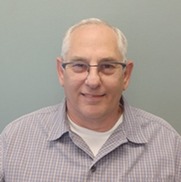
Gary Brooks - Eastern Maine Compliance Manager
Gary Brooks, DEP’s Eastern Maine Compliance Manager and long-time wastewater professional, is retiring from the wastewater industry after 47 years.
Gary started in the wastewater field in 1979 as a maintenance technician at the Orono Water Pollution Control Facility. He then advanced to Chief Operator/Lab Analyst where he served for the next five years.
Gary then moved to the Veazie Sewer District, where he held the position of Superintendent for 23 years. When he began at Veazie there was no sewage treatment, all direct discharge, and he helped startup the brand new lagoon system. He began his position in a construction trailer, in January, but luckily the trailer had a portable heater!
Gary was one of three operators, along with John Fancy and Edward Petrilak, who came up with the idea for Lagoon Day, which has since become a favorite state-wide tradition for lagoon operators. In addition, the three were expert contributors to the Lagoon Task Force that developed the Lagoons in Maine website, which serves as an engineering and operational network for managing aerated wastewater lagoon systems across the state.
Gary took a few years off from wastewater to drive a cement mixer. He joined the Department as the Eastern Maine Compliance Manager in Bangor in 2016.
In retirement, Gary plans to work in his woodshop, get back into fishing, and do some home remodeling. We wish him well in retirement.
Bill Johnson – OBD Program Manager
William (Bill) Johnson stumbled into the State of Maine employment after working 18 years at Stadler Tissue in Augusta. After the mill closed, he went to UMA to study Business Administration, then worked for a few summers with the DEP Overboard Discharge Program (OBD) as a Conservation Aide. At the time there were 2500 OBDs, discharging untreated sewage into Maine’s waters. Bill worked for a while back at Stadler as an Environmental Technician with Water & Wastewater operations, then for a few years with drinking water at DHHS until 2008 when he joined the Department full time. During his tenure, he reduced the number of OBDs down to about 650, a big accomplishment.
In his retirement Bill has no plans except not to come to work!
|
Hot off the press that EPA DMR-QA Study 46 opened on September 22, 2026!
EPA sent a letter to all participants, but in case you do not receive it, please click on this link to download the DMR-QA packet:
Discharge Monitoring Report - Quality Assurance Study 46 (2026)
What do I need to do?
- Please complete the Address Verification form found on page 2 of the study and email to A.Goodrich@maine.gov by October 13, 2026.
- Order your PT samples from an Accredited Proficiency Testing Provider listed on Page 9 of the announcement. Testing is required for all samples analyzed at your in-house lab for permit compliance reporting.
- Report your results to the DMR-QA PT provider by December 4, 2026. If you participated in a WP study, you must meet the WP study and the DMR-QA deadlines. So be sure to pay attention to the WP study open/close dates.
- The NPDES Permittee Data Report Form (found on page 13 of the study packet) along with a copy of the graded test results and laboratory checklists are due to the State DMR-QA Coordinator (A.Goodrich@maine.gov) by January 29, 2027.
- Refer to page 1 for Important Dates to Remember.
Please note that page 16, Whole Effluent Toxicity (WET) Analyte Checklist can be filled out by your WET contract laboratory and does not need to be submitted to DEP by the wastewater facility.
If Enterococci Bacteria (Entero) testing is currently required in your MEPDES permit and you perform in-house bacteriological testing, you will be required to perform Proficiency Testing for Enterococci bacteria using a blind, Water Pollution (WP) Study provided by an Accredited PT Provider. Make sure a copy of the WP test results are sent to Brett.A.Goodrich@maine.gov.
Once testing is completed, if your laboratory happens to receive a “Not-Acceptable” score for one or more parameters, you must complete a corrective action and perform retests for all parameters with Not Acceptable results. A copy of the corrective action report and retest results must be sent to the State DMR-QA coordinator by March 12, 2027.
If you have questions about the DMR-QA program, please contact Brett Goodrich at 207-450-5590 or Brett.A.Goodrich@maine.gov.
Building Resiliency in Maine: Manual Operations Exercises & Workshops – FREE!
Is your plant prepared for an emergency situation? Join MWUA, Tom’s Water Solutions and the Maine Drinking Water Program (DWP) for a three-part workshop focused on preparing to run your plant “manually” in the case of no internet, no SCADA – all manual operations. The live webinars are held:
- September 30, November 10, and the last date TBD.
- 3.0 TCHs each!
To register, go to: Building Resiliency in Maine: Manual Operations Exercises & Workshops - MWUA. You don’t need to be a MWUA member and can sign-in and register as “Guest”.
Six-Part “Reimagining Residuals” Webinar Series – One Session Left!
Join NEIWPCC and NEBRA in the last of six engaging webinars spotlighting the technologies shaping the future of sludge and biosolids management:
- Part 6: Embryonic Stage Technologies, 10/7/26. Learn about new and evolving technologies that have the potential to help manage PFAS and emerging contaminants in biosolids, including hydrothermal alkaline treatment (HALT), plasma destruction, and electrochemical treatment.
Classes are approved for 1.5 TCHs each. Go to Events to register.
Kennebec Valley Community College (KVCC) Offers Wastewater for Beginners!
Build your career in wastewater treatment with this in-person training course – guaranteed to help you prepare for the Grades 1 & 2 Wastewater Exams! Taught by Tom Bahun, co-founder of Tom’s Water Solutions. Tom is a Grade 5 wastewater operator with 40+ years’ experience. Courses begin Friday, October 2, 2026 and are eligible for 50% Alfond grant reimbursements.
Register today and continue advancing your career!
MRWA’s ASCEND Leadership Academy - Practical Leadership for Maine's Water and Wastewater Professionals
Beginning October 2026 and running through June 2027, MRWA, in association Career Management Associates, will hold nine monthly classroom sessions at the MRWA office in Richmond to teach management skills to water and wastewater professionals. The aim is to develop the practical leadership, communication, supervisory, organizational, human resources, and financial skills needed to lead water and wastewater utilities.
The academy is designed for technically capable operators who are moving into leadership or seeking to strengthen their effectiveness as supervisors and managers.
Go to Registration for more details.
Flood Resiliency: Keeping Your Head Above Water
Flooding can create significant operational, infrastructure, and water quality challenges for water and wastewater systems, especially considering recent flooding events across the U.S. This virtual session held on October 23 will explore practical approaches to improving system resilience, preparing for flood events, and reducing impacts before, during, and after an emergency. Offered by MWUA. Click Here to register.
Chemical Feed Pumps – Two Locations
On Tuesday, October 27 in Caribou and Wednesday, October 28 in Bangor MRWA will present Chemical Feed Pumps for 4 TCHs.
The class provides an overview of chemical feed systems, from bulk storage tanks and transfer pumps to day tanks, and ultimately to the chemical metering pump. Topics include calibration columns, pressure relief valves, and other essential system components that ensure safe, accurate, and reliable operation. Go to Events for more details.
JETCC Offers Exciting Fall Lineup
Join Maine’s JETCC for upcoming training opportunities. Classes include:
MRWA’s 46th Annual Conference and Tradeshow
Mark your calendars for MRWA’s 46th Annual Conference and Tradeshow December 8 – 10 at the Cross Insurance Center in Bangor!
More information can be found Here.
Save the Date MWUA's 101st Annual Tradeshow & Conference
Mark your calendars and save the date for MWUA 101st Annual Tradeshow & Conference on February 3 – 4, 2027 at the Augusta Civic Center.
Please consider submitting an abstract for a one-hour presentation by going to Call for Abstracts | Maine Water Utilities Association Annual Conference or emailing program@mwua.org.
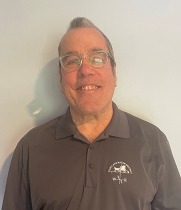
James (Jim) Galasyn has held many laboratory positions in the water & wastewater laboratory arena since 1987. He has worked as a Laboratory Director, Senior Chemist, Organics and GC/MS Supervisor, and currently serves as a Lead Scientist at Portland Water District (PWD). Jim has received numerous awards for his dedicated work with lab practices, quality assurance, and laboratory excellence.
Jim started his profession as a chemist with EC Jordan in Portland, and moved into management positions at ABB Environmental, Katahdin and Northeast Laboratories. While at Katahdin he became a Principal and Vice-President at Kestrel Environmental Technologies in Freeport where he validated hundreds of laboratory data packages in compliance with USEPA, Army Corps, and AFCEE guidelines. In 2010 Jim joined PWD where he currently serves as a Lead Scientist.
Like many great leaders, Jim has spent time giving back to the community, specifically with WEF, NEWEA, and MEWEA. He served as the Chair of the NEWEA Lab Practices Committee from 2016-2019 and Vice-chair from 2013-2015. He received the WEF Laboratory Excellence Award in 2017, an honor established by the WEF Board of Control in 1993 to recognize individuals for outstanding performance, professionalism and contributions to the water quality analysis profession. Jim was inducted into the NEWEA Crystal Crucible Society in 2015, a program that recognizes and honors individuals for their outstanding contributions to promote increased professionalism in the wastewater laboratory field. In 2019 Jim received the MEWEA David Anderson Laboratory Excellence Award. In 2024 Jim was inducted into the Secret Society of Sanitary Sludge Shovelers.
Jim is a go-to person for all things lab, and enjoys meeting with people, giving tours at PWD, and contributing to JETCC training. He spent many years judging the laboratory component of Ops Challenge in Maine and throughout New England. According to Dustin Price, Chief Operator of the East End plant, "Jim has a way of making you feel more than a coworker. He makes you feel valued as a colleague and a friend, and he is one of the industry’s best mentors. He also has a killer Batman-themed Hawaiian shirt collection.”
Jim received his B.S. in Chemistry from the University of CT, Ph. D in Chemistry from Dartmouth, and completed two years of postdoctoral research in atmospheric chemistry at Colorado College.
Thank you Jim, for your long service to the Water/Wastewater Laboratory profession!
|
Water and wastewater professionals have been protecting the public health and safety for over a hundred years. September 26th marked the 118th anniversary of chlorination of public water supplies in the U.S. It took the daring actions of public utility employees in Jersey City, NJ to begin a technology that has saved millions of people, particularly children, around the globe.
At the turn of the last century, public health was poor in large cities and people were dying in high numbers from waterborne illnesses, particularly typhoid fever. At the time, most scientists and doctors considered chlorine a poisonous chemical, and the thought of adding it to public water supplies not only a preposterous idea but also an illegal act. It took the courageous physician, Dr. John L. Leal and sanitation engineer George W. Fuller to prove it could be done safely and effectively on a large scale.
In a dramatic court proceeding, the Jersey City water company was given 90 days to propose a method to purify its drinking water. Dr. Leal and Mr. Fuller designed and constructed the disinfection project in just 99 days, supplying chlorinated water to homes, schools, and businesses on September 26, 1908.
This “experiment” in public health was so successful in reducing rates of waterborne diseases (see Typhoid Fever chart) that by 1914 over 21 million people were being served chlorinated water in the U.S. By 1918, more than 1,000 North American cities were using chlorine to disinfect their water supplies to serve over 33 million people.
Then and now, water and wastewater professionals have helped save countless lives by their dedication, hard work, and ability to apply technology for the public good.
1. ________ are the smallest, most numerous, and most important of the activated sludge microorganisms.
a. Bacteria
b. Fungi
c. Protozoa
d. Amoebic
e. Rotifers
2. One common type of weir design for measuring flow is –
a. B-Notch
b. C-Notch
c. Z-Notch
d. V-Notch
e. Inverted Siphon
3. If the _____ loading on the plant is high, the operator would need to ______ Dissolved Oxygen (DO) levels.
a. Inorganic / Decrease
b. Inorganic / Increase
c. Organic / Decrease
d. Organic / Increase
e. Surface / Restrict
4. _____________ gas is colorless, odorless, and heavier than air.
a. Hydrogen sulfide
b. Chlorine
c. Methane
d. Nitrogen
e. Petroleum
5. The influent to a 4 MGD activated sludge plant contains 350 mg/L BOD. The primary clarifier removes 47% of the BOD. What is the organic loading in pounds per day to the secondary process?
a. 742 lb/day
b. 6188 lb/day
c. 658 lb/day
d. 5488 lbs/day
6. A single piston reciprocating pump has a 6-inch diameter and 12-inch stroke. The pump makes 22 strokes per minute. What is the pumping rate in gpm?
a. 32.3 gpm
b. 22 gpm
c. 4.4 stroke/min
d. 9 gpm
7. The federal agency which has primary responsibility for establishing policy and regulations concerning water pollution control in the United States is the:
a. Environmental Protection Agency (EPA)
b. Industrial Pretreatment Program (IPP)
c. U.S. Sewer Use Regulations
d. Clean Harbors Act
8. The ORC at a wastewater plant is the:
a. Operator for Resource Control
b. On-call Responsible Contractor
c. Operator in Responsible Charge
d. Operations Responsible for Conduct
Answers
1. a. bacteria
2. d. V-notch weir
3. d. Organic / Increase
4. a. Hydrogen sulfide
5. b. 6188 lbs/day BOD
First, find the BOD removed in the primary clarifier: 0.47 X 350 mg/L = 164.5 mg/L
Next, subtract the amount removed in the primary clarifier to find the mg/L of BOD applied to the secondary process: 350 mg/L – 154.5 mg/L = 185.5 mg/L.
Next, use the pounds formula to find lb/day of BOD applied to secondary process:
185.5 mg/L X 4 MGD X 8.34 = 6188 lbs/day BOD.
6. a. 32.3 gpm.
Convert to feet: 6-inch diameter = 0.5 ft, 12-inch stroke = 1 ft.
Find the volume of one stroke: 0.785 X 0.5 ft X 0.5 ft X 1 ft = 0.2 cf/stroke
Change to gal/stroke = 0.2 cf * 7.48 gal/cf = 1.5 gal/stroke
Find gpm: 22 strokes/min X 1.5 gal/stroke = 32.3 gal/min.
7. a. Environmental Protection Agency (EPA)
8. c. Operator in Responsible Charge
|





