July 2026
In this Issue:
- When a non-conforming structure is replaced or reconstructed by more than 50% of its market value, a greatest practical extent review is required from the town to determine if a more conforming location is available.
- A permit under the Natural Resources Protection Act (NRPA) is often required for work in the shoreland zone, however it does not replace any required town permits under shoreland zoning standards. Work in, or adjacent to, natural resources often require both a town and State permit.
- If updating a town shoreland zoning map or ordinance, Department review and approval are required before the map or ordinance can be implemented locally.
- We can come to your town to conduct a shoreland zoning/CEO training presentation, please reach out to us.
- The definition of “height of a structure” is very specific under shoreland zoning standards, check with your local CEO or Department staff for exact height measurement standards.
- If your town retains the old floor area and volume metric for expansion of a non-conforming structure, the project needs to also be reviewed under the current State standards, which are currently footprint and height. The more restrictive standard would apply.
- Accessory dwelling units in the shoreland zone are not exempt from town and State shoreland zoning standards. Each Accessory dwelling unit needs to meet the dimensional requirements independently from the principal dwelling on the property.
As always, reach out to your local town office or Department shoreland zoning staff with any questions!
|
The Nonpoint Source Training Center (NPSTC) provides training and certification opportunities to individuals seeking to educate themselves on the effects of NPS in Maine, primarily through the DEP’s Erosion Control Certification Program. Currently, 2,950 individuals - contractors, landscapers, municipal officials, engineers, inspectors, project managers, and others - are certified by the NPSTC, ensuring those working near protected resources have the tools to protect water quality and get the job done right.
We are working with community leaders to expand the NPSTC’s training program throughout Maine. We are especially focused on expanding training opportunities to communities and partners that have not yet benefitted from the NPSTC’s programs and resources. We are looking to provide NPSTC services to partners that may not know about them, that may be relatively isolated compared to other parts of the state or simply don’t know how to engage with the NPSTC to have a training event in their town.
Since Code Enforcement Officers are key resources in Maine’s communities, with significant networks of local partners and understanding of local contexts, the NPSTC would like to:
- Assist CEOs to establish the training program (at least one course but ideally many) in the communities you serve, on an annual basis.
- Request that CEOs share with NPSTC the points of contact for any local organizations working on natural resources management and nonpoint source pollution prevention. Often, these are soil and water conservation districts, environmental NGOs, economic development non-profits, builder/contractor associations, private sector outfits, e.g. landscaping companies, and lake associations.
Hosting a training event near you is straightforward. In-person courses are generally scheduled at least three (3) months in advance. Partners and organizations that are interested in hosting a course should contact the Nonpoint Source Training Center. You will find information on available courses through our Course Catalogue.
For more information, please contact John Maclaine (John.Maclaine@maine.gov) or Jordan Kimball (Jordan.Kimball@maine.gov), or send an email to NPSTraining.Dep@maine.gov.
|
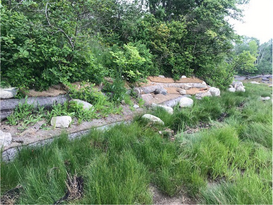
- The Department’s updated Chapter 310 rules that took effect June 17, 2025 include the following provisions for structural shoreline stabilization activities (riprap, boulders, other hard armoring) that require an individual permit under the Natural Resources Protection Act (NRPA):
- Placement of riprap or other structural shoreline stabilization measures is limited to a defined set of purposes, including public safety projects; protection of water-dependent structures (piers, boat ramps, etc.), septic systems, farmland, or open spaces serving the public; or protection of dwellings, buildings, and other non-water dependent structures built prior to 2026 that are within 100 feet of the upland edge of an eroding bank or that are at risk of a landslide.
- If the project is not for one of the above purposes, riprap may still be placed at the toe of the slope to prevent undercutting of the bank, up to three feet high (and may be used in conjunction with biodegradable materials and vegetation), as long as the area is not a coastal bluff that is a significant source of sediment to the coastal wetland.
- An alternatives analysis is required to show that biodegradable materials and/or vegetation cannot practicably stabilize the shoreline. There is a rebuttable presumption that biodegradable materials and/or vegetation can practicably stabilize shorelines in environments with little or no wave energy and on coastal bluffs mapped as stable by the Maine Geological Survey.
- The Department’s Chapter 305 rules allow the following shoreline stabilization activities through permit-by-rule (PBR), subject to applicable standards:
- Up to 100 linear feet of riprap on freshwater water bodies, except Shoreland Zoning rivers;
- Up to 125 linear feet of riprap on the coast, provided the project is designed to protect existing structures near the shoreline, or public spaces;
- Biodegradable stabilization materials (e.g., coconut fiber coir logs) may be used for shoreline stabilization in conjunction with planting of native vegetation.
- A comprehensive overview of the new rules may be found in this slide deck and webinar recording.
|

Please note that most site development projects that disturb one acre or more of soil may require a permit from the DEP Bureau of Land Resources (BLR):
-
Disturbed Area means all land areas that are stripped, graded, grubbed, filled, bulldozed or excavated at any time during the site preparation or removal of vegetation for, or construction of, a project (see DEP Chapter 500).
Please do not assume that a project is exempt from permitting; instead, contact your regional DEP office during on-call hours to discuss the project as early as possible and clarify any permitting requirements.
Maine Construction General Permit (MCGP)
DEP issued a new MCGP in January 2025. Under the MCGP, a Notice of Intent (NOI) and accompanying submittals must be reviewed and approved by the DEP prior to any construction activity beginning.
- If your project has a Stormwater Law or Site Law permit that was issued before the effective date of the current MCGP (January 14, 2025) and you are just starting construction, you must submit an MCGP NOI. Please visit the DEP MCGP page for more information, including application forms and submittal guidelines.
Maine Enterprise Licensing System (MELS)
All Land permit applications are now processed via MELS. To assist applicants and system users, the DEP has prepared comprehensive walk-throughs and guides explaining how to create an account, submit different types of application materials, and navigate the site. Please visit the MELS Hub for all these resources and further information.
Upcoming Revision of Maine’s Stormwater Management Rule
The Department plans to propose updates to its Chapter 500 Stormwater Management Rules later this year. This will be a major substantive rulemaking process with substantial opportunity for public input. You can learn more about the process on the project status webpage and sign up for project updates. In tandem with the development of updated Chapter 500 rules, the Department’s Stormwater Manual will also be updated to provide essential technical guidance for compliance with the new rules. The manual update project which has its own webpage. Please check back regularly to follow the progress of this major project.
DEP BLR Stormwater Program Updates
Interested in receiving the latest on DEP BLR Stormwater program? Please subscribe to our Stormwater Engineering mailing listserv to receive occasional updates related to our work.
|
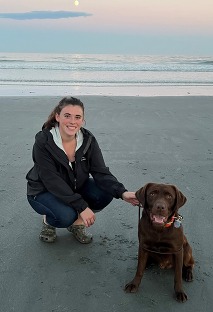
Sara Johnson
In April of 2026, I joined the Shoreland Zoning Unit as an assistant coordinator serving the Eastern Maine region within the Department of Environmental Protection. Prior to joining the Shoreland Zoning Unit, I worked for the Department’s Land Bureau, reviewing Natural Resource Protection Act (NRPA) permit applications and compliance reviews. Before my time with the DEP, I worked in both the state and private sectors focusing on wildlife research and management throughout the state of Maine and beyond. When not working, I enjoy hunting, fishing, and hiking with my dog, Buck. I look forward to taking on this new role and working with Municipalities and Department Staff throughout Maine to protect the natural areas that I have been lucky enough to experience so far in my career and free time. Even the smallest effort taken now will ensure these resources are available for generations to come, and I am proud to be a small part of that protection.
|
|
|