Browntail Moth Update #6: May 26, 2023
Last Friday, we received a report of fungal pathogens that killed caterpillars on Eagle Island. Now that the caterpillars are growing larger, rain storms like the ones we had this past weekend are aiding in the development of pathogens that can cause death in the browntail caterpillars. We did find evidence of pathogen-related death at some of our monitoring sites this week. Some of our sites had caterpillars with a puffy appearance; this bloating is usually due to a fungal pathogen and we expect to see more dead caterpillars next week. Once caterpillars begin to die from viral or fungal pathogens, these pathogens are usually spread to surrounding caterpillars and can be a good source of control in a small area.
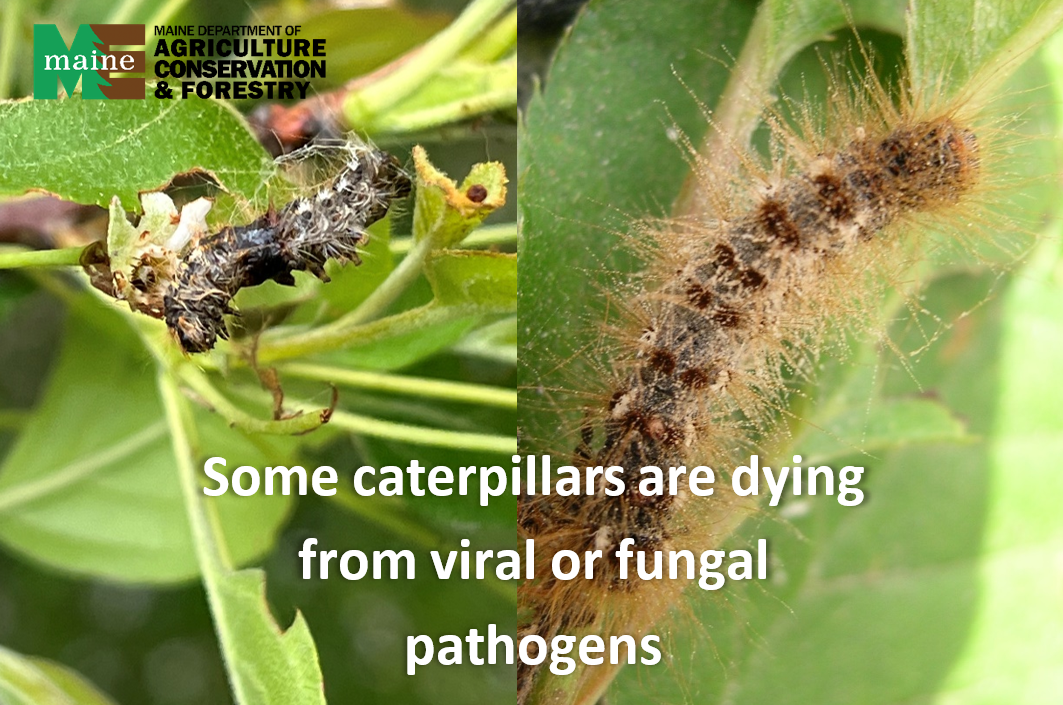
These browntail caterpillars were found at our monitoring site in Skowhegan, ME and have likely died from a viral (left photo) or fungal (right photo) pathogens.
Bloated caterpillars typically indicate a fungal infection, so we expect some mortality when we check our monitoring sites again next week. Once the caterpillars die, the fungus has potential to spread and infect other nearby caterpillars. Bangor, ME.
We have found evidence of viral and fungal pathogens at some of our monitoring sites. We will continue to be on the lookout and we welcome your reports as well. Some signs of pathogens may be:
- White/yellow fungal spores on caterpillars
- Swollen, puffy caterpillars
- Liquid expulsion of the caterpillar guts (often the caterpillar rests in an upside-down "V" shape)
- Dead caterpillars
The caterpillars will continue to grow up to 1.5 inches in length; as they grow, remember that their hairs readily break off their bodies and can cause an irritating rash. Please take caution while performing outdoor yardwork near trees that have browntail to avoid contracting a rash from the toxic hairs - wear long sleeves, eye protection, and gloves.
Large browntail caterpillars are already being found crawling on the sides of houses, decks and around your dooryard. This means that there may be an increased chance of people coming into contact with the caterpillars, so caution should be exercised in areas of high infestations. These wandering caterpillars are also quite capable hitchhikers, and care should be taken not to spread them to other areas.
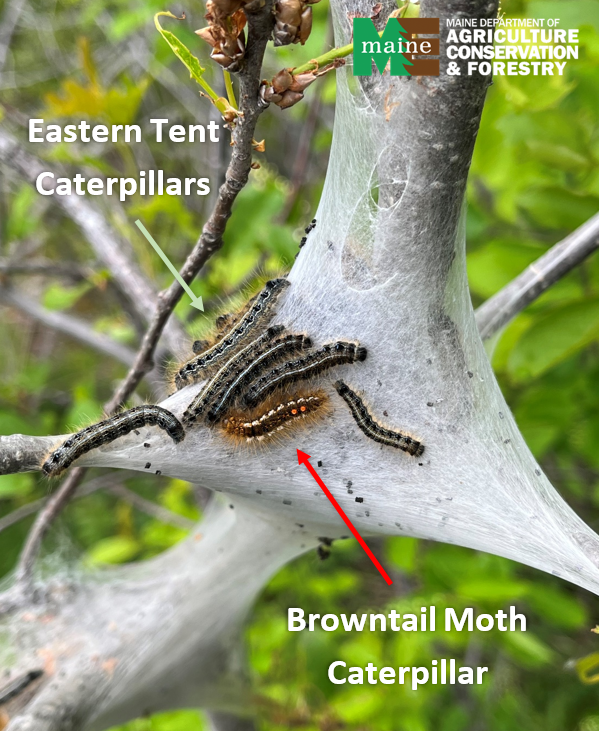
This browntail caterpillar is so good at wandering that it wandered right into a native eastern tent caterpillar web! Ellsworth, ME.
To remove wandering caterpillars on your house:
-
DO:
- Exercise caution when performing yardwork in high infestations by wearing personal protective equipment and avoiding contact when possible
- Use a strong jet of water to dislodge them from the side of your house
- Fill a wet/dry vacuum with soapy water and vacuum up the caterpillars. Let the caterpillars soak in the soapy water for a few days to kill them, then you can safely dispose of them in the trash
- Remember that the toxin in the hairs can remain active in the environment for up to 3 years
-
DON'T:
- Touch the caterpillars. Be sure to wear personal protective equipment when in areas of high infestations
- Use a leaf blower to remove caterpillars; this will stir up the hairs and can cause rash
Caterpillars often misidentified as Browntail Moth

Browntail Moth Mitigation Fund Update
The application period has now closed. Please stay tuned for more updates.
For more answers to your browntail moth questions, check out our FAQ page:
|