|
August/September 2026 Newsletter
Sustaining the Port, One Site, One Community At A Time.
|
|
Building Better Wetlands: Lessons From Poplar Island
For more than 15 years, University of Maryland Center for Environmental Science (UMCES) Associate Research Professor Lorie Staver and her colleagues have monitored wetland development at Poplar Island, helping researchers and project partners understand what makes restored marshes resilient.
 |
|
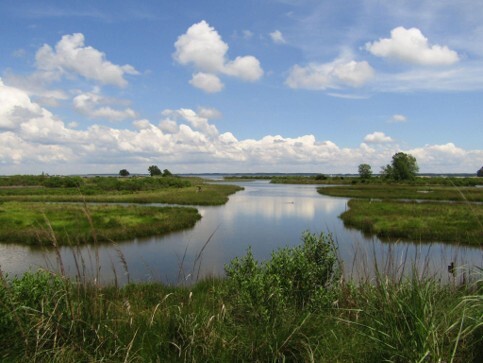
Work at Poplar Island has shown that wetlands created with dredged material can develop rapidly into high-quality habitat. Tracking vegetation, elevation, marsh channels, and soil processes helps researchers understand how these systems function and how their designs can be improved. Maintaining the right elevation is especially important, as marshes must build upward fast enough to keep pace with sea-level rise. |
Photo (Above): Poplar Island Wetlands
Photo by MES
“Understanding how well these systems are functioning and whether they’re functioning like natural marshes is important for the Port of Baltimore and the U.S. Army Corps of Engineers. It helps us understand what we’re doing right, what we could do better, and how we can continue creating high-quality habitat through these long-term projects,” said Staver.
|
|
Lessons learned at Poplar will be transferred to Mid-Bay projects
What the Maryland Port Administration learns from Poplar Island will inform the Mid-Chesapeake Bay Island Ecosystem Restoration, also known as the Mid-Bay Project, which will restore over 2,000 acres of land and wetlands, at what remains of James and Barren Islands. Researchers are also examining how upland and wetland habitats at Poplar Island can better connect. In the initial designs, the two habitats were not closely connected, but they would be in a natural environment. Studies are examining existing connections, including how water moves from uplands into wetlands.
|
The research is also creating opportunities for the next generation of environmental scientists. The project has provided numerous students with research projects, giving them hands-on experience while helping train future leaders in wetland science and restoration.
|
|
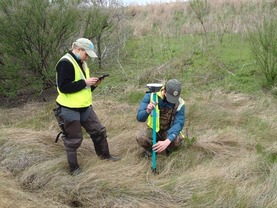 |
Photo (Left): Graduate students Anna Windle and Ben Malmgren prepare for a drone flight to survey the Cell 3D marsh at Poplar Island to develop a remote sensing method for mapping marsh vegetation.
Photo by Lorie Staver, University of Maryland Center for Environmental Science
The upland focused cell development team continues to meet annually. UMCES is conducting a flume study by introducing fresh water to the wetland to mimic the future upland freshwater connection to the wetlands.
|
|
Terns Take to New Bird Islands at Barren Island
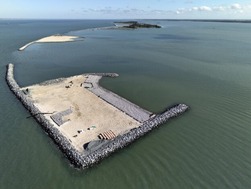
The new bird islands at Barren Island were designed with nesting birds in mind, but wildlife moved in even before construction was complete. Common terns and least terns began nesting on the newly created sandy habitat during a pause in construction this summer.
 |
|
Totaling about 8.5 acres, the two bird islands were intentionally designed to provide remote, protected nesting habitat. Surrounded by water, sparsely vegetated, and covered with a sandy shell mix, the islands offer nesting conditions that help limit access by predators.
|
Photo (Above): New bird islands create critical habitat for the Chesapeake’s native and migrating birds.
Photo by Gahagan and Bryant Associates
|
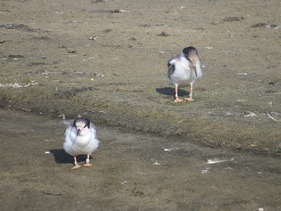
“Birds started showing up as soon as we placed the sand habitat, which was exciting since it meant the restoration was already attracting them,” said Maryland Environmental Service (MES) Lead Environmental Specialist Maura Morris.
Photo (Right): Common Terns on Barren Island
Photo by Tim Carney, MES
|
|
 |
 |
|
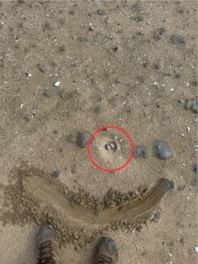
When the terns began nesting, Maryland Department of Natural Resources and U.S. Fish and Wildlife Service staff confirmed just under a dozen nests, along with dozens of shallow scrapes where birds had prepared nesting sites. Because terns are protected under state and federal law, construction on the island was paused to protect the birds.
Photo (Left): Tern nest on a new bird island
Photo by U.S. Fish & Wildlife Service
|
Unfortunately, the nests and chicks did not survive. Even so, the early nesting remains an encouraging sign that the habitat is functioning as intended. The islands were designed specifically to provide habitat for rare, threatened, and endangered species as natural nesting areas are lost to sea-level rise and erosion.
“I’m excited to watch it go from a report to coordination to design to construction to a thriving habitat functioning exactly as intended,” Morris said.
|
|
Charging Ahead: Investing in Cleaner Air for Port Communities
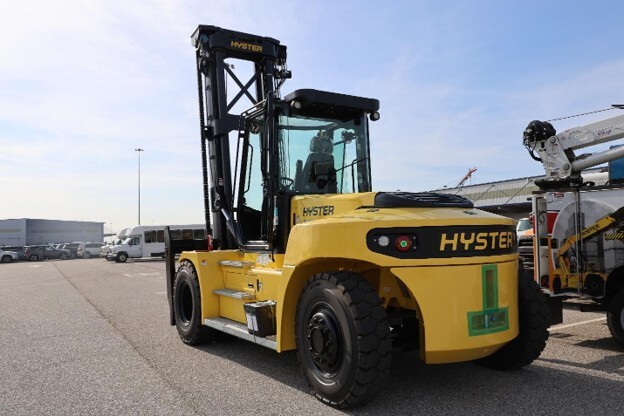
MPA is investing in cleaner technologies to improve air quality, reduce emissions, and support a more sustainable future for the Port of Baltimore and neighboring communities through the Environmental Protection Agency's (EPA) Clean Ports Program. MPA was awarded approximately $147 million in federal funding, with an additional $36 million committed by private-sector partners, for a total investment of more than $184 million.
 |
|
“Through these partnerships, we are modernizing operations, reducing emissions, and positioning the Port to contribute meaningfully to Maryland’s long-term climate and energy goals,” said MPA Deputy Executive Director Robert Munroe.
Photo by MES
|
The largest single source of greenhouse gas emissions from operations at the Port of Baltimore is cargo-handling equipment used by tenants on terminals. The Clean Ports Program funding supports MPA and six private-sector partners replacing 220 pieces of older diesel-powered equipment with new zero-emission cargo-handling equipment, trucks, forklifts, and other vehicles. Project implementation is well underway. So far, 35 pieces of zero-emission equipment have been received by MPA and partners and will be integrated into their fleets, replacing older diesel-engine equipment. With additional equipment expected to arrive later this year, these upgrades will reduce greenhouse gas emissions by 35% from 2020 levels once all equipment is deployed, improving air quality for Port workers and nearby neighborhoods.
With investments in zero-emission trucks, cleaner cargo handling, workforce training, and community engagement, MPA is supporting local workers and building a healthier, more resilient Port of Baltimore.
Learn more here and see what MPA Sustainability Manager Jessica Shearer has to say in this video.
|
|
MPA Highlights Sustainability Progress
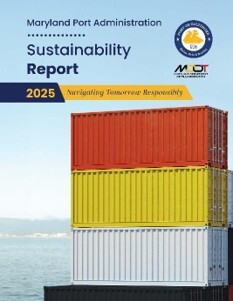
In August, MPA released its latest sustainability report, highlighting efforts that balance the movement of commerce with environmental stewardship, community responsibility, and economic growth at the Port of Baltimore.
|
The report highlights initiatives designed to reduce environmental impacts, support surrounding communities, and advance sustainable economic growth. It also reflects MPA’s commitment to integrating sustainability into the Port’s continued growth and operations.
“Every Marylander deserves access to clean air, clean water, and resilient communities,” Maryland Gov. Wes Moore wrote in the report. “Our work will not stop to uplift neighborhoods that have been previously left behind and help ensure a more competitive economy and healthier communities for all.”
|
|
 |
As the Port of Baltimore continues to serve as a major economic engine for Maryland, MPA is building on this foundation through forward-thinking solutions and responsible practices. The report demonstrates how a thriving port, healthy environment, and strong communities can move forward together.
Read the 2025 MPA Sustainability Report to learn more about MPA’s sustainability initiatives and its vision for a more sustainable future at the Port of Baltimore.
|
|
Port Donations Support Community Green Spaces
Two Baltimore communities are turning donated Port resources into tools for neighborhood revitalization, thanks to Baltimore Port Alliance (BPA) members.
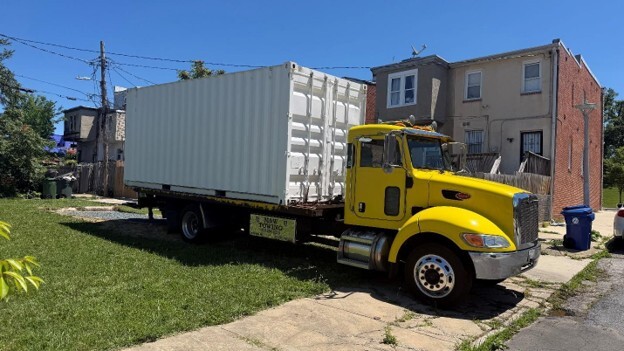
In New Broadway East, the New Broadway East Community Association received a donated container that will provide much-needed secure storage and flexible space for community programs. Ports America Chesapeake refurbished the container and made it available for donation, while M&W Towing transported and placed it at a location in the Broadway East neighborhood of Baltimore City. Led by Dr. Doris Terrell, the association supports residents, creates safe spaces for children and families, and strengthens neighborhood green spaces. The community has increased its tree canopy from about 10% to approximately 17%, with a long-term goal of reaching 40%.
 |
|
Without a physical headquarters, the container will provide space to store lawnmowers, program supplies, and other equipment. It can also serve as a meeting or program space for reading, children’s activities, and other community needs.
|
Photo (Above): The donated container arrives in New Broadway East.
“For a marginalized community, resources are limited unless you have partners,” Terrell said. “The Port is a lifeline for the Broadway East community and allows us to do things we would not otherwise be able to do.”
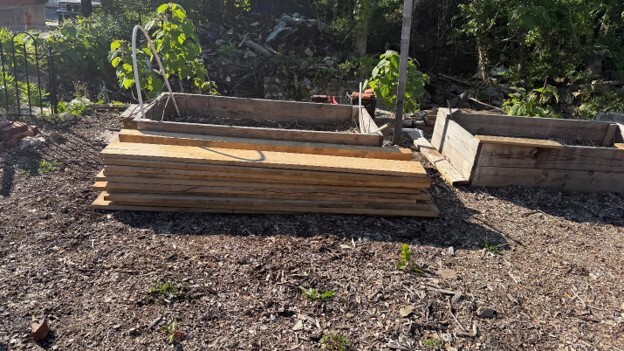
In southwest Baltimore City, in Shipley Hill adjacent to Carrollton Ridge, Marilyn Carlson is transforming an overgrown vacant space into the Sweet Spot Community Garden. After removing invasive plants and trash, Carlson began building pathways, fencing, and garden infrastructure with help from neighbors. Lumber made available by BPA member Mid-Atlantic Terminal, a subsidiary of Wallenius Wilhelmsen, is now being used to construct plant beds. MES provided the transport from Dundalk Marine Terminal.
|
Carlson envisions the garden as a gathering place where neighbors can grow and share food, knowledge, and resources.
Photo (Right): Donated lumber will enhance the Sweet Spot Community Garden in Shipley Hill.
|
|
 |
Photos by Dan Spack, EcoLogix Group, Inc.
“The whole point of the community garden is for communal reasons,” Carlson said. “I wanted it to be a space where everyone comes together for the same reason.”
Together, the projects demonstrate how Port donations can help Baltimore communities create greener spaces, strengthen connections, and turn underused resources into community assets.
|
|
More Voices of Mid-Bay: Memories Resurface
In a recent Voices of Mid-Bay article, as well as during our long-time planning process for James and Barren Islands, we shared stories illustrating the deep connections between the Mid-Bay islands and the people who have lived, worked, and spent their lives on the surrounding waters. We invited readers to share their own memories and family histories—and were delighted to receive responses that offered fascinating glimpses into a landscape that has changed dramatically within just a few generations.
Barren Island was once home to a thriving community, and memories of that community have endured even as much of the island disappeared beneath the Chesapeake Bay. One reader shared the story of a family member born on Barren Island in 1900. Later generations remembered camping on the remaining island in the 1950s and, during particularly cold winters, walking across the frozen water from Hoopers Island to Barren. Even small artifacts carried the island’s history forward: marbles from the former Barren Island community reportedly washed ashore on Hoopers Island years later.
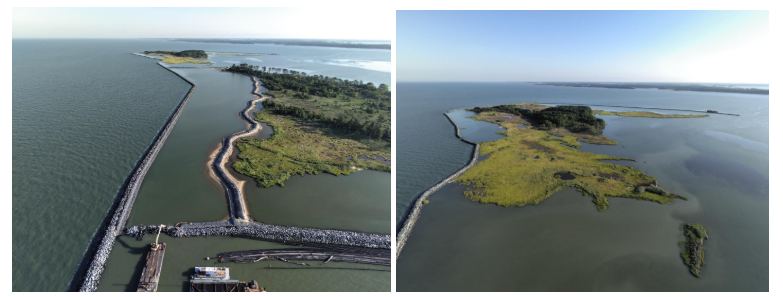 Photos (Above): The future restored wetland cell to the southwest of the Barren Island remnants (Left) and what remains of Barren's northern remnant (Right).
Photos by Gahagan and Bryant Associates
James Island holds equally remarkable stories. One reader shared the story of a family member being born in 1911 when the doctor crossed the shallows from Taylors Island at low tide to assist with the birth. The family later relocated to Taylors Island.
James Island also has a surprising connection to American surveying history. Its former shoreline served as the western endpoint of the Transpeninsular Line used to establish an important boundary point between Maryland and Delaware. The line was the first surveyed by Mason and Dixon before their more famous work establishing the Mason-Dixon Line. As James Island eroded, that historic endpoint eventually disappeared beneath the water.
Today, the Mid-Chesapeake Bay Island Ecosystem Restoration Project is creating a new chapter for Barren and James islands. As restoration changes their physical landscapes once again, stories like these help preserve something equally important: the human history of places that have shaped generations of life on the Chesapeake Bay.
Do you have a Mid-Bay memory or story to share? We would love to hear it. Every story adds another piece to our understanding of what these islands have meant—and what their restoration can mean for generations to come.
|
|
Dredged Material Management Act 25th Anniversary: Major Milestones
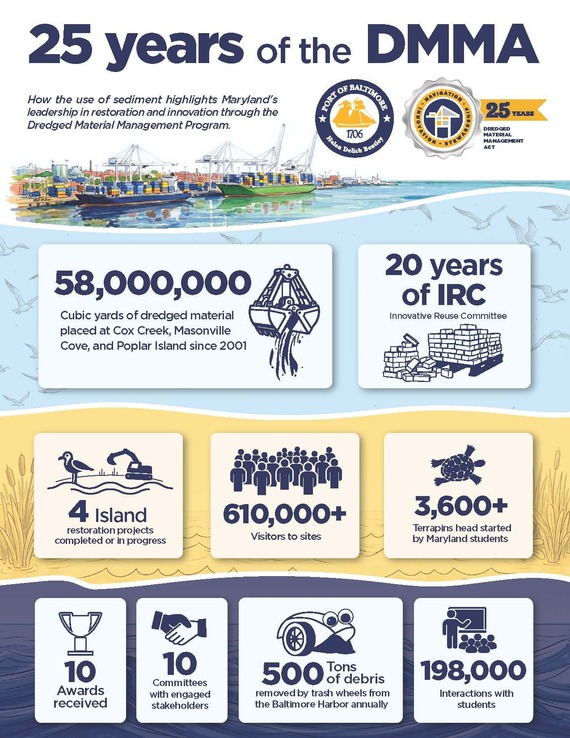 Photo (Above): Established through the 2001 Dredged Material Management Act, Maryland’s Dredged Material Management Program (DMMP) continues to advance innovative approaches to managing dredged material. Explore the program’s impact and accomplishments over the past 25 years.
|
|
Stakeholder Committee Members Get an Up-Close Look at Island Restoration Success
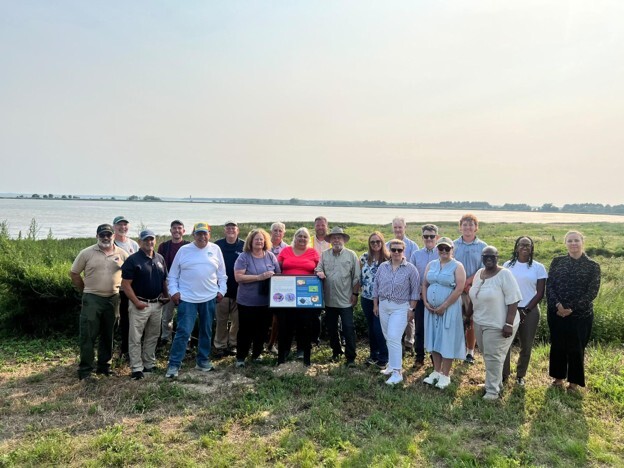
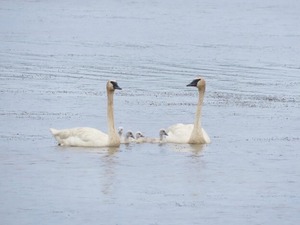
Each summer, the Hart-Miller Island (HMI) Citizens Oversight Committee (COC) meets in person on the island, giving members an opportunity to see firsthand how the island’s habitats are developing and learn about ongoing environmental activities. In July, committee members joined a guided birding tour led by MES Senior Environmental Specialist Tim Carney. The tour highlighted the island’s importance as a bird habitat, including Maryland’s first known breeding pair of trumpeter swans since 2020. The group also explored shorebird habitat, where open mudflats provide critical feeding areas for long-distance migrants.
 |
|
“Dredged-material management sites such as Hart-Miller, Poplar Island, Masonville, and Cox Creek have become important foraging habitat for these birds,” said Carney. “At Hart-Miller, you can sometimes see thousands of shorebirds at once, and if you look closely, there can be 20 or more different species mixed together. |
Photo (Above) The tour also gave COC members a chance to see new interpretive signage highlighting birds, insects, and other wildlife.
Photo by Danielle Fisher, MPA
For HMI COC Chair Paul Brylske, the experience reflects how far the island has come. “Birding has become a wonderful part of the experience at Hart-Miller Island,” said Brylske. “As the island’s environment has developed, it has become a highlight for birders throughout Maryland and the region.”
|
Photo (Right): Trumpeter swan pair with cygnets at HMI. According to eBird, HMI has recorded 217 bird species so far this year, ranking No. 2 in Maryland, just six species behind Blackwater National Wildlife Refuge. Despite its limited public access, Hart-Miller ranks No. 4 in Maryland for all-time species recorded.
Photo by Tim Carney, MES
|
|
 |
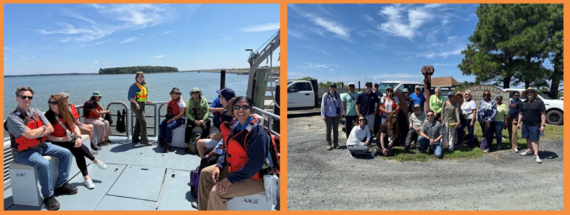
Similar stakeholder engagement continued during a summer field trip to Poplar Island, officially known as the Paul S. Sarbanes Ecosystem Restoration Project where committee members witnessed how dredged material is helping restore Chesapeake Bay habitat. While discussing the internationally recognized beneficial use project, participants learned about erosion control, habitat creation, water quality monitoring, and the diverse plant and animal species that now call the island home.
Photos (Above):
Photos by Angie Ashley Consulting
Together, Hart-Miller Island and Poplar Island demonstrate the success of collaboration, education, and environmental restoration spurred by dredged material management. Through continued partnerships and engagement, these projects highlight how dredged material management can provide lasting benefits for the Chesapeake Bay and the communities connected to it.
|
|
Building Conservation Leaders at Masonville Cove
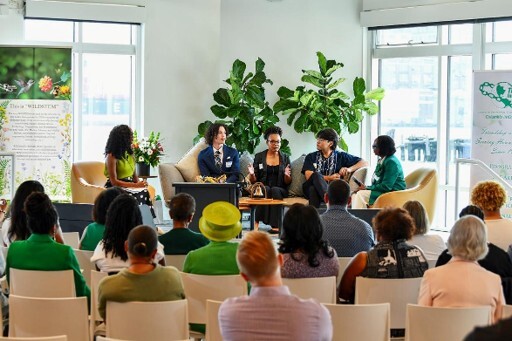
The 2026 Masonville Cove Links WildSTEM Internship concluded August 7 with a Closing Showcase celebrating six weeks of exploration, leadership, impact,and an internship intentionally designed to be anything but average.
 |
|
Co-designed by the Masonville Cove Partnership and The Links, Incorporated, the program combines hands-on conservation with professional development, networking, civic engagement, and access to mentors and role models. From their opening charge to be changemakers, interns were treated not simply as students, but as emerging professionals whose perspectives matter. |
Photo (Above): The interns participated in a panel discussion.
Through programs connected to Masonville Cove, interns explored the Maryland Dredged Material Management Program, visited conservation sites and laboratories, practiced wildlife monitoring and stewardship, supported community programming, and engaged directly with leaders in state government, science, and advocacy. Each also completed an independent “Legacy Project,” applying their interests and expertise to leave something of lasting value to Masonville Cove.
The impact was perhaps best expressed by the interns themselves. Courtney Scott, a University of Maryland environmental technology student, reflected, “Before this internship, I believed that as an inexperienced college student, my voice was drowned out in the world. Now I believe that my voice matters.” Bryan Mendoza-Turcios, a University of Maryland biodiversity student, similarly shared that the experience helped him “fully envision myself in a conservation career.” Jacob Thompson, a University of Delaware environmental engineering student, discovered local workforce opportunities, saying that his “environmental engineering background would help me assess placement site design, erosion control, and long-term site stability.”
That transformation took center stage at the Closing Showcase, themed “Our Voice, Our Power.” Coordinator Rachael Dickey Gilde of MPA reflected on how the internship’s new identity evolved through the partnership with The Links and the unique contributions of partners and interns alike: “We stepped back and let it become what it wanted to be. Today it’s a recognized, replicable, authentically collaborative model—not your ordinary internship.” |
|
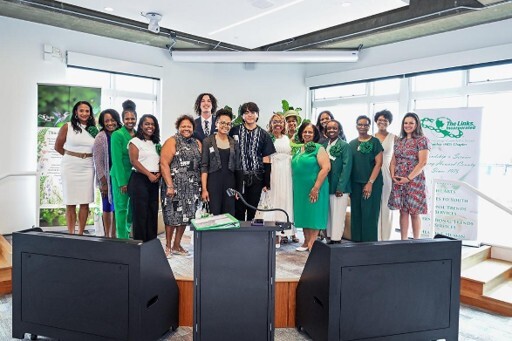 |
Photo (Right): The interns and their MPA Internship Coordinator join members of The Links, Incorporated to celebrate their summer experiences.
Photos by Epps Graphics Photography
Interns presented their Legacy Projects and joined a conversation with conservation advocacy leaders representing the National Aquarium, Chesapeake Bay Foundation, and Maryland Sea Grant. The celebration culminated with each intern receiving a Governor’s Citation from Governor Wes Moore—a fitting conclusion to a program helping young people recognize the power of their own voices and their potential to lead.
|
|
Friends of Masonville Cove Achieves Nonprofit Status
Friends of Masonville Cove has successfully achieved nonprofit 501(c)(3) status, establishing a new model for community-driven conservation at Masonville Cove.
The new designation gives Friends of Masonville Cove greater flexibility to support community engagement, conservation, and education while creating opportunities to bring additional resources and partners to Masonville Cove.
“I’m really excited about the formation of the Friends of Masonville Cove group and the opportunity to open up space for the community—real, live people—to activate, express, learn, create, and discover within a space that is part of their own community,” said Friends of Masonville Cove Chairwoman Ralinda Wimbush.
Wimbush said the group also provides an opportunity for community members to take an active role in conservation. “When we have natural and conserved spaces, there is a meaningful relationship between humans and wildlife,” she said. “The two can come together, coexist symbiotically, and nurture one another.”
“Having a friends group creates a space where people can practice conservation, care for nature, care for their communities, and care for one another,” continued Wimbush.
The friends group has established a board, hired a coordinator, and appointed former National Aquarium President and CEO John Racanelli as a public liaison, building the structure and leadership needed for continued growth.
“I think it is especially powerful that, through Friends of Masonville Cove, people have the opportunity to become leaders in this realm,” Wimbush said.
Friends of Masonville Cove celebrated the designation on Urban Wildlife Conservation Day, Sept. 19. The group also thanks Beveridge & Diamond PC, for providing pro bono assistance with its application.
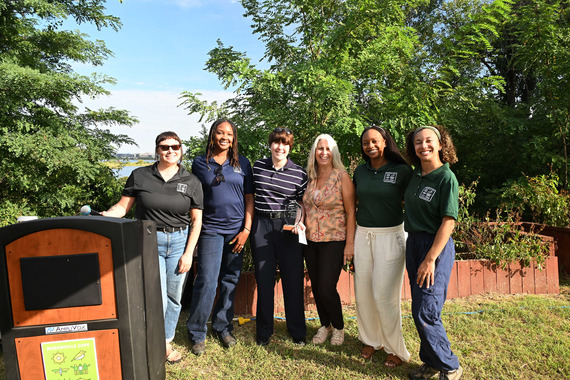 Photo (Above): Friends of Masonville Cove Executive Board & Beveridge & Diamand P.C.
Photo by Bill McAllen, MPA
|
|
|
These committee meetings are open to the public, some meetings may be virtual or in-person. Please visit maryland-dmmp.com for details and to access information for each meeting. For questions, please contact ecoport@marylandports.com.
|
|
October
Hart-Miller Island Citizens Oversight Committee Meeting – October 13th at 6:00 PM
In-Person Event – For more information, visit https://maryland-dmmp.com/committees/.
Location to be determined
Port of Baltimore Open House – October 17th at 10:00 AM
In-Person Event – For more information, visit https://maryland-dmmp.com/committees/.
Cox Creek Dredged Material Containment Facility 1000 Kembo Rd., Baltimore, MD
Citizens Advisory Committee Meeting– October 22nd at 5:30 PM
In-Person Event – For more information, visit https://maryland-dmmp.com/committees/.
Cox Creek Citizens Oversight Committee Meeting – October 28th at 5:30 PM
In-Person Event – For more information, visit https://maryland-dmmp.com/committees/.
Cox Creek Operations and Maintenance Complex 1000 Kembo Rd., Baltimore, MD, 21226
November
Management Committee Meeting – November 4th at 10:00 AM
In-Person Event – For more information, visit https://maryland-dmmp.com/committees/.
World Trade Center, Staton Room (20th Floor) - 401 E Pratt St., Baltimore, MD, 21202
Innovative Reuse Committee Meeting – November 10th at 5:30 PM
In-Person Event – For more information, visit https://maryland-dmmp.com/committees/.
Mid-Bay Island Ecosystem Restoration Project Community Poster Session – November 17th at 4:00 PM
In-Person Event – For more information, visit https://maryland-dmmp.com/committees/.
Madison Volunteer Fire Department 1154 Taylors Island Road, Madison, MD, 21648
|
|
The ECOPort Newsletter is the Maryland Port Administration’s bi-monthly update of projects and programs that help the agency contribute to a thriving economy, environmental stewardship, and community partnerships. As always, we thank the many private sector businesses, government leaders, communities, and individual citizens who have helped make these achievements a reality. |
|
|
Samantha Biddle, Interim Executive Director
Maryland Port Administration
The World Trade Center
401 East Pratt Street, Baltimore MD 21202
1-800-638-7519 / www.marylandports.com
|
|
|
|
|