|
June/July 2026 Newsletter
Dredging Up Success
|
|
Stewardship Fueled by Science: A 20+ Year Vision Becomes Reality
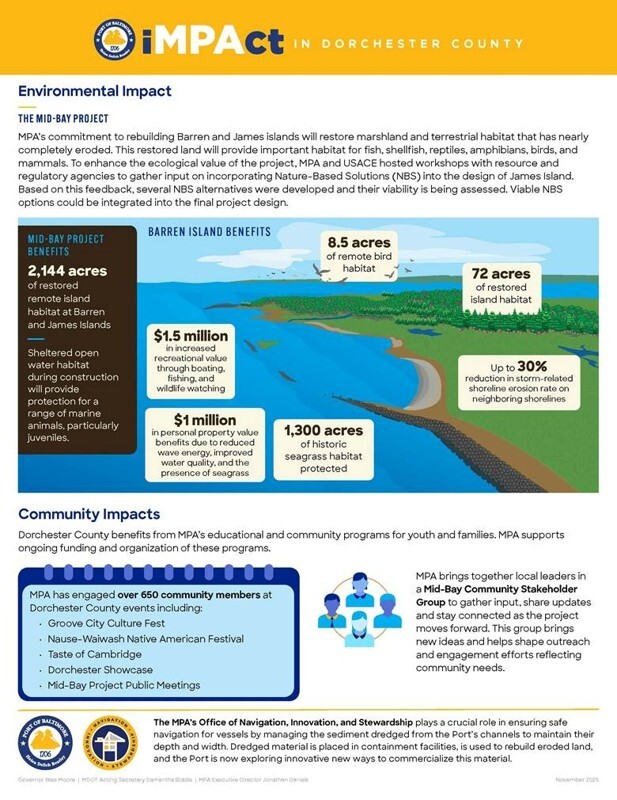
The start of construction at James Island, one of the two restored islands as part of the Mid-Chesapeake Bay Island Ecosystem Restoration (Mid-Bay) Project, marks a momentous milestone for Maryland. After decades of technical analysis, thoroughly vetting islands from a list of 105 sites for a cost-effective solution, regulatory review, phased funding, and coordination across agencies, we can finally say: construction has begun!
At more than 2,000 acres, James Island, located in the Chesapeake Bay off the coast of Dorchester County, is the largest island restoration effort yet. The project is modeled after the innovative success of Poplar Island — one of the first major projects led by the U.S. Army Corps of Engineers to formally tie navigation dredging to ecosystem habitat restoration. |
|
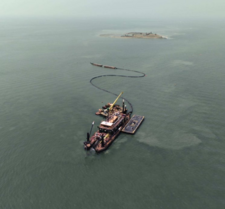 |
Photo (Above): Wetland and upland habitat will be restored at James Island using dredged material.
Photo by Maryland Environmental Service (MES)
The successful implementation of the James Island portion of the Mid-Bay Project has global implications, amplifying the Port of Baltimore’s attractiveness to the shipping industry for long-term investment. The local implications are significant as well—benefits to Dorchester and Talbot counties are detailed in iMPAct reports about the wide array of benefits for the area surrounding the project.
Few projects nationwide match this combination of scale, longevity, and ecological performance monitoring. Science-driven and adaptive, James Island moves beyond simple “placement” to evidence-based restoration engineering and is essential to our state’s economic success and environmental health.
This is not just restoration. It is coastal resilience infrastructure — engineered with precision, functioning ecologically, and built through a partnership model that other states now seek to replicate.
|
|
Captain Trash Wheel's Birthday Boom
On June 5, Masonville Cove welcomed community members of all ages for a festive First Friday celebration in honor of Captain Trash Wheel’s eighth birthday. Approximately 30 community members joined the fun, with some even arriving in costume to help celebrate one of Masonville Cove’s beloved local icons. The evening featured cupcakes for everyone, face painting, creative crafts, Captain Trash Wheel coloring pages, Trash Wheel trivia games, and birthday-themed activities. Guests also helped make decorations for Captain, including painted rocks, trash candles, and festive decorations for Captain Trash Wheel’s birthday cake.
Captain Trash Wheel is a critical part of both mitigation and community engagement at Masonville Cove. Supported by Clearwater Mills, MPA, and the Waterfront Partnership of Baltimore, Captain helps protect Masonville Cove, the Patapsco River, and the surrounding watershed by collecting floating trash and debris before it can continue downstream. Although Captain is the smallest of Baltimore’s Trash Wheels, they still remove nearly 10 tons of floating trash and debris each year and have collected more than 65 tons of trash from Masonville Cove over the past eight years.
 |
|
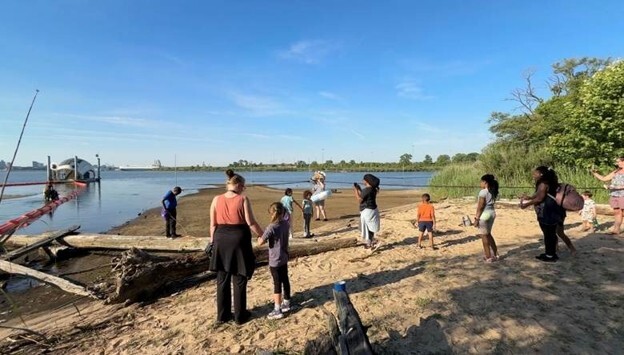
Together with Baltimore City’s Trash Wheels family, Captain helps keep the harbor cleaner while also serving as a creative and memorable way to teach visitors about litter prevention, watershed stewardship, and the importance of protecting local wildlife habitat. |
Photo (Above): Community members enjoy the Captain’s eighth birthday party.
Photo by Cy Appleby-Kellett, Clearwater Mills
At the close of the celebration, community members sang Happy Birthday and presented Captain with their trash cake, consisting of a truck tire and trash that had washed into the Masonville Cove outflow. Cy Appleby-Kellett of Clearwater Mills, also known as the Trash Wheel Doctor, gave a dedication speech recognizing Captain’s many years of service to Masonville Cove and the ongoing care needed to keep them running smoothly. "Eight 'Trash Wheel years' are almost like 30 human years," Cy shared. "Captain may require a little more maintenance these days, but they're still going strong."
No birthday is complete without gifts. Captain received new bright orange booms, which help contain and direct floating trash and debris toward the Trash Wheel. With their refreshed equipment and continued community support, Captain Trash Wheel is ready as ever to keep Masonville Cove clean and continue doing their part to protect the Patapsco River.
|
|
Masonville Cove Bird Banding Station Celebrates First Foreign Recapture and Record-Breaking Spring Season
The 2026 spring migration season was one for the record books at the Masonville Cove Bird Banding Station.
Now in its fourth year of operation, the station opened on March 6, 2026, and operated weekly through early June. This season, the station expanded to 165 meters of mist nets and, with the support of numerous partners and volunteers, banded 842 birds representing 62 species. That total made Spring 2026 the busiest season in station history, surpassing both the previous spring record and the station's overall seasonal record.
Several milestones were reached along the way. On May 9, 2026, the team experienced its busiest day ever, banding 120 new birds and encountering 20 species. Nine species were recorded at the station for the first time, including spotted sandpiper, green heron, red-eyed vireo, blue-gray gnatcatcher, and chestnut-sided warbler. Particularly exciting were captures of a yellow-bellied flycatcher and an American pipit, two unexpected visitors that provided memorable moments for the banding team.
One of the season's biggest highlights came from a bird that was no longer at Masonville Cove. In May, the Bird Banding Laboratory notified staff that a yellow-rumped warbler originally banded at Masonville Cove in October 2025 had been recaptured more than 300 miles away at the Crown Point Banding Station in Essex County, New York. The encounter marks the station's first known foreign recapture.
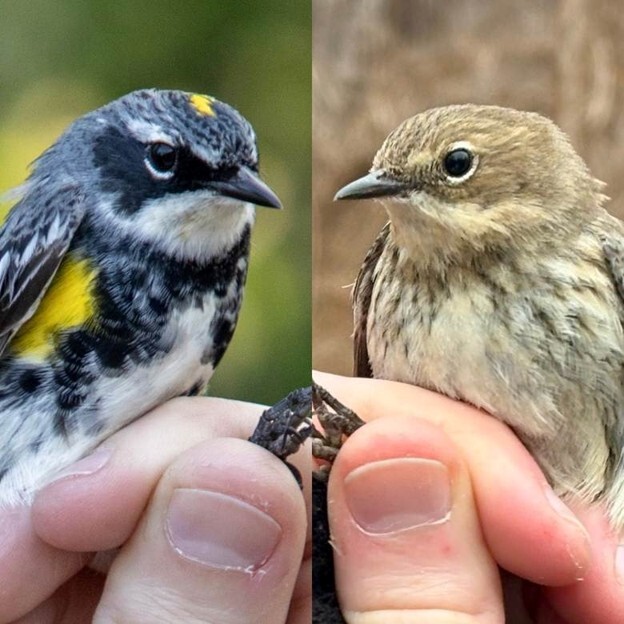 Photo (Above): The station's first known foreign recapture, a myrtle yellow-rumped warbler in breeding season (left) versus nonbreeding season (right).
Photos by Angel Ruszkiewicz (left)/Mike Hudson (right)
"Getting news of our first foreign recapture was incredibly exciting," said Mike Hudson, station manager and bander-in-charge of the Masonville Cove Bird Banding Station. "That single yellow-rumped warbler connected Masonville Cove to a site hundreds of miles away in New York. It is a powerful reminder that migratory birds depend on a network of habitats across the landscape, and that every banding station contributes an important piece to the larger conservation picture."
The season was also a record-breaker for public engagement, with 276 visitors attending banding demonstrations and educational programs.
“As the season concludes, Birds of Urban Baltimore extends its sincere thanks to its many partners, supporters and dedicated volunteers. Their enthusiasm and commitment make both the scientific research and community education work at Masonville Cove possible,” continued Hudson. The birds are handled by trained personnel and banded under a federal permit issued by the Bird Banding Lab at the U.S. Geological Survey and with appropriate state permits from the Maryland Department of Natural Resources.
|
|
Growing a Healthier Chesapeake Bay Together
Nearly 19,000 young oysters (spat) were added to the oyster reef at historic Fort Carroll on May 8, 2026, as part of the Chesapeake Bay Foundation’s (CBF) Maryland Oyster Gardening Program. The restoration effort was supported by the MPA Office of Environment, Safety and Sustainability (OESS), Masonville Cove Partnership, and Port of Baltimore businesses, including Ports America Chesapeake (PAC), the Vane Brothers Company, Domino Sugar, and C. Steinweg Baltimore.
The oyster gardening program supports restoration of the Chesapeake Bay’s native oyster population by raising young oysters and transplanting them to sanctuary reefs, where they help improve water quality and provide habitat for aquatic life. The Fort Carroll reef is part of ongoing efforts to restore oyster populations in the Patapsco River and Baltimore Harbor. |
|
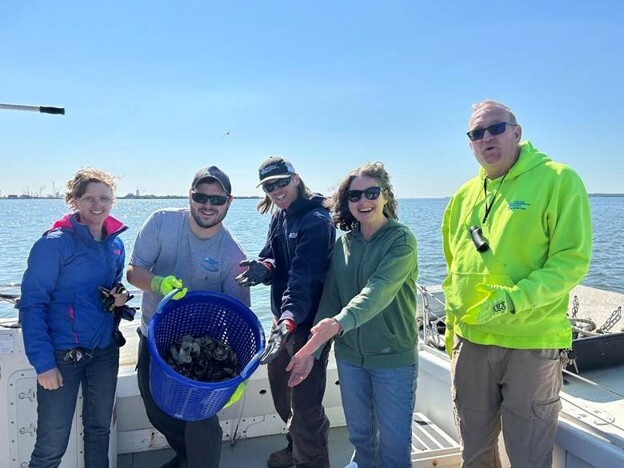 |
Photo (Above): MPA and MES staff work together to plant oyster spat in the Patapsco River near historic Fort Carroll.
Photo by Morgan Shapiro, CBF
"Environmental stewardship is most effective when it becomes a shared commitment. It’s inspiring to see so many Port of Baltimore partners come together in support of oyster restoration and the health of the Chesapeake Bay,” said MPA Environmental Manager Cindy Hudson. “Efforts like this demonstrate how collaboration can create lasting benefits for our environment and future generations. Thank you to the Chesapeake Bay Foundation and our Port partners for their continued commitment to improving water quality. We look forward to participating in next year’s gardening program!"
|
|
Port of Baltimore Joins Sail 250 Celebration
As Baltimore welcomed tall ships and thousands of visitors for the nation's 250th anniversary celebration, the Port of Baltimore gave families a hands-on look at one of Maryland's leading economic engines and its environmental restoration efforts.
The Port joined the three-day Sail 250 STEM Exploration Zone, organized by the Living Classrooms Foundation (LCF) as part of America's semiquincentennial celebration. The event welcomed approximately 16,000 visitors and gave the Port a unique opportunity to connect with students, families, and tourists from around the world.
 |
|
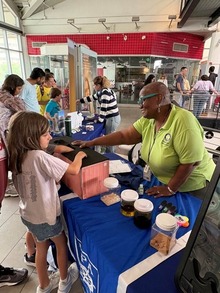
The Port's exhibits encouraged visitors to learn by doing. One activity invited children to use a claw machine to “dredge” sand-filled containers and build a model of the Paul S. Sarbanes Ecosystem Restoration Project at Poplar Island (Poplar Island), demonstrating how dredged material is used to restore valuable habitat. Another exhibit, developed with the Baltimore Port Alliance (BPA), challenged participants to identify commodities by touch and smell, including molasses, raw sugar, olive oil, peppercorns, cocoa beans, and cinnamon sticks, while learning how these products move through the Port.
|
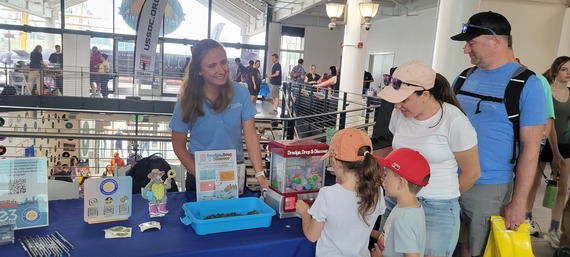 Photos (Above): Approximately 1,500 visitors stopped to engage directly with the Port's exhibits.
Photos by Christine Truett, LCF
|
|
Container Donation Helps Power Neighborhood Programs
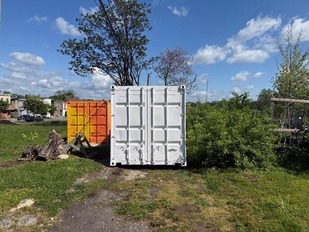
A donated shipping container from PAC, a member of the BPA, is helping create more opportunities for community programming in East Baltimore.
The container was donated to The 6th Branch, a Baltimore-based nonprofit that transforms vacant lots and underused spaces into community assets through urban farming, tree planting, workforce development, and neighborhood engagement initiatives.
This marks the second container donation from the BPA to The 6th Branch. The organization's first container has provided secure storage for tools and equipment used in community greening projects and urban farming efforts for several years.
 |
|
The newly donated container will be transferred to a community partner organization that hosts neighborhood events, food distributions, and community giveaways. Once final city approvals are in place, the container will be installed in a neighborhood park and used to store tables, chairs, food distribution supplies, clothing giveaway items, and other event materials. |
Photo (Above): Two shipping containers donated by the BPA help support community efforts.
Photo by The 6th Branch
"Access to secure and convenient storage is one of the biggest operational challenges for many community organizations," said The 6th Branch Urban Canopy Director Colin Lyman. "By having resources stored where programs actually happen, we can reduce logistical barriers and spend more time focusing on serving our communities."
Lyman said the donation also gives community leaders greater flexibility to expand programming and take ownership of neighborhood assets.
The partnership highlights how organizations with different strengths can work together to create practical solutions for Baltimore communities.
"The Baltimore Port Alliance and the maritime industry have resources and expertise that can directly support community organizations," Lyman said. "When we work together, we can address longstanding challenges and build stronger, more connected neighborhoods."
|
|
Air Tour Connects Community Leaders with Port Sustainability Efforts
Seventeen community, nonprofit and government representatives recently got an up-close look at the Port of Baltimore's ongoing efforts to improve air quality during the BPA’s latest Air Tour.
Participants represented a diverse group of organizations, including Turner Station Conservation Teams, Harborview Towers, New Broadway Community East, Chesapeake Conservancy, Norwood-Holabird Community Association, Waterfront Partnership of Baltimore, Maryland Waterways Foundation, the Maryland Department of the Environment's Air & Radiation Administration, and the Maryland Department of Transportation's Office of the Environment.
The Air Tour highlights the work being done across Baltimore's maritime community to reduce emissions from port operations while supporting economic growth. The tours also provide an opportunity for open dialogue between port stakeholders and community members, helping to build understanding and strengthen relationships.
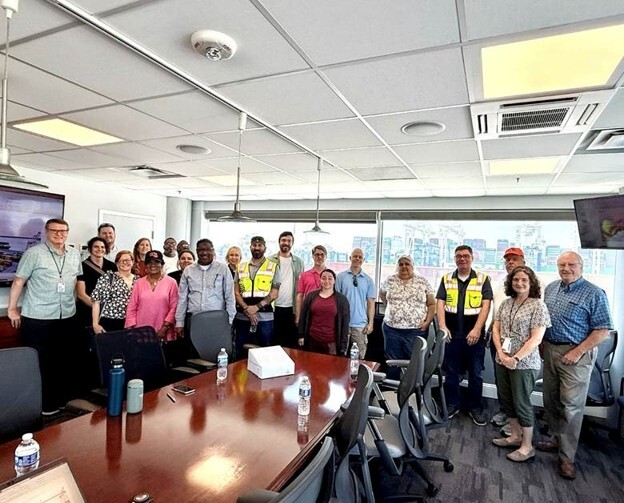 Photos (Above): Tour participants at PAC.
Photo by Denise Sarchiapone, B&D Environmental
"I would highly recommend this tour to other community members," said Edythe Brooks of Turner Station Conservation Teams. "I came away with a greater appreciation for the scale of the port's operations, its contribution to local jobs and the economy, and the efforts being made to balance growth with environmental improvements and community concerns."
BPA has hosted Air Tours regularly since 2013, pausing only during the pandemic. Over the years, the tours have become an important way to raise awareness about air quality initiatives and create opportunities for constructive conversations among residents, environmental organizations, government agencies, and the maritime industry.
Plans are underway for another Air Tour later this fall, continuing the BPA’s commitment to community engagement and environmental stewardship throughout the Port of Baltimore.
|
|
Future Public Health Leaders Tour the Port of Baltimore
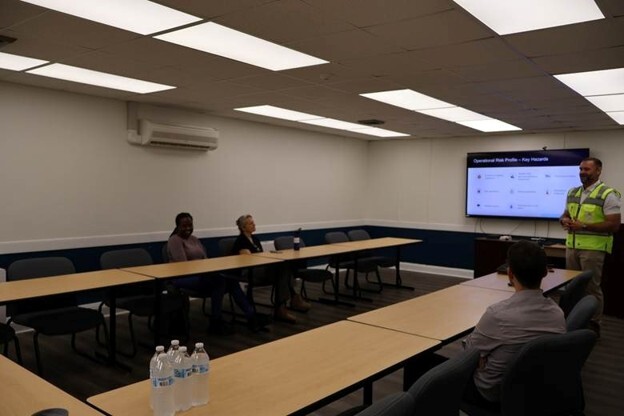
MPA OESS recently hosted four graduate students from the Johns Hopkins University (JHU) Bloomberg School of Public Health for an educational tour of the Port of Baltimore.
The visit offered students a firsthand look at how occupational safety, worker health, emergency preparedness, and environmental stewardship intersect in one of Maryland's most complex transportation environments.
The day began with an overview of the Port of Baltimore, its economic importance to the state, and the work of MPA's marine terminals and dredged material containment facilities. Students then toured Dundalk Marine Terminal, where they observed cargo-handling operations, heavy equipment, traffic controls, hazardous material management, and the many safety measures that support daily port operations.
Two of the students were medical doctors pursuing additional education in occupational safety and health, while the other two were safety professionals seeking to expand their expertise.
 |
|
"The Port provides an opportunity to see occupational health and safety in a setting that is very different from many traditional workplaces," said MPA OESS Deputy Director Andrea Williams. "It helps students understand how worker health, emergency management, and operational continuity all work together." |
Photo (Above): Four graduate students from the JHU Bloomberg School of Public Health at a stop along an educational tour of the Port of Baltimore.
Photo by Andrea Williams, MPA
Students showed particular interest in maritime incident response and how ports prepare for public health threats, including international disease outbreaks. OESS staff also discussed coordination with agencies such as the U.S. Coast Guard and the Centers for Disease Control and Prevention.
The overwhelmingly positive visit renewed a longstanding relationship between MPA and JHU and opened the door to future tours, guest lectures, and other educational partnerships.
|
|
From Planning to Progress: Mid-Bay Community Meeting Highlights
On May 7, the Mid-Bay Project Team convened with its Community Stakeholder Group in their annual meeting to share updates on community issues, project planning, and construction progress. The group brings together a wide range of local perspectives and established spheres of influence, reflecting a shared commitment to protecting the culture, history, and character of the surrounding community. Their ongoing input continues to strengthen communication, deepen relationships, and ensure the community remains informed as the project advances.
A highlight of the day was a tour hosted by the University of Maryland Center for Environmental Science (UMCES), where the group has been convening. UMCES welcomed the community leaders and project representatives on a tour of its Horn Point Oyster Hatchery, showcasing its work restoring and sustaining the Chesapeake Bay’s keystone oyster population.
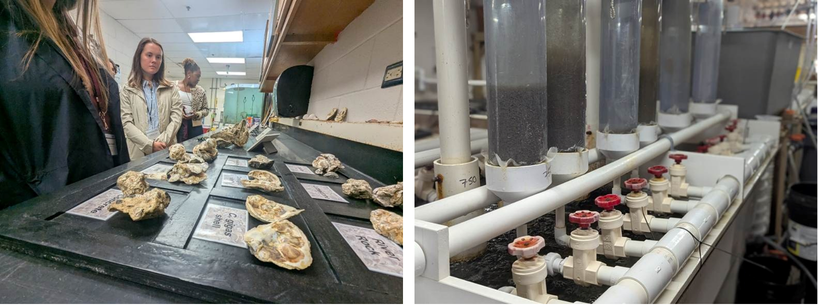 Photo (Above): Members of the Mid-Bay Project Team and Community Stakeholder Group enjoyed a tour of UMCES’ Horn Point Oyster Hatchery.
Photos by Rachael Dickey Gilde, MPA
The Mid-Bay Community Stakeholder Group serves as a cornerstone of outreach efforts, fostering open communication, supporting long-term relationship building, and providing a structured forum to surface questions, concerns, and ideas. During the meeting, members exchanged updates on community issues and project impacts while reviewing current construction activities and planning milestones. The Dredged Material Management Program (DMMP) and the Mid-Bay Project are greatly enriched by the members’ time, insight, and collaboration.
|
|
2026 Mid-Year Report Now Available
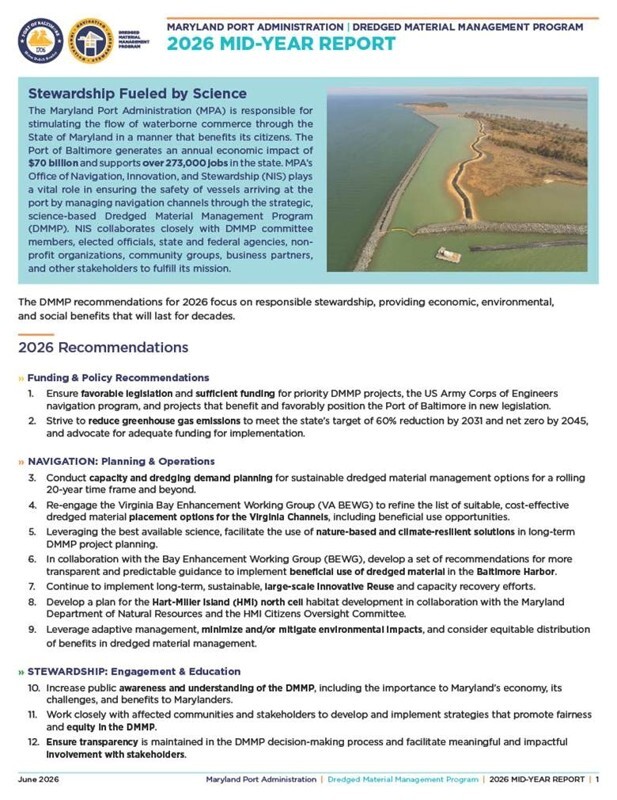
MPA’s Office of Navigation Innovation and Stewardship is pleased to announce the release of the 2026 Mid-Year Report, highlighting progress achieved in the first half of the year in advancing collaborative, science-informed stewardship of Maryland’s DMMP. Building on the recommendations outlined in the 2025 Annual Report, the Mid-Year Report reflects the continued momentum of partners working across agencies, academia, industry, and community organizations to turn shared priorities into measurable outcomes.
This year’s update highlights continued progress in beneficial use and restoration efforts, advancements in environmental monitoring and applied research, and ongoing improvements in long-range planning tools that support responsible decision-making. Learn about the more than $229 million allocated in funding for the DMMP; how Cox Creek Dredged Material Containment Facility is changing its function from being a storage location for dredged material to a source of dredged material to be reused with the development of the Cox Creek Sediment Technology and Reuse (STAR) Facility; and how MPA is working to increase understanding of the complexities tied to dredged material management to facilitate impactful public and stakeholder engagement.
Together, these efforts demonstrate how data, research, and partnership are guiding practical solutions that support both environmental health and navigation needs.
We invite readers to explore the full report to learn more about the accomplishments achieved so far in 2026. The report can be found at this link: https://maryland-dmmp.com/resources-reports-and-webinars/#reports
|
|
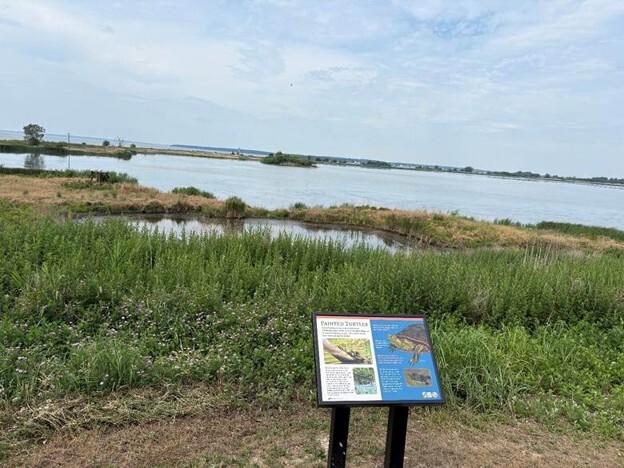
New Signs Bring Hart-Miller Island's Story to Life
Visitors exploring Hart-Miller Island this summer will have a new way to learn about the island's rich history, diverse habitats, and unique wildlife.
The Friends of Hart-Miller Island, a volunteer organization dedicated to supporting the island through stewardship, education, and advocacy, recently secured a $25,000 Baltimore County Community Development Grant, with support from Baltimore County, to fund the design and installation of approximately 25 interpretive signs throughout the island.
|
The educational displays highlight the island's native plants, birds, environmental features, and history, helping answer questions visitors may have while exploring the popular destination.
Photo (Right): The signs reflect the beauty and significance of the various species of birds, animals, plant and fauna on the island.
Photo by James Cooper, MES
|
|
 |
“They offer visitors from throughout Baltimore County, the state and region an opportunity to learn more of what Hart-Miller Island has to offer to the citizens of Baltimore County,” said Friends of Hart-Miller Island Chair Paul Brylske.
"The signs help explain the things visitors are seeing and experiencing on the island, enhancing their overall experience while exploring Hart-Miller Island," said MPA Outreach Coordinator Danielle Fisher.
The project was led by the Friends of Hart-Miller Island, which worked with MPA and MES to bring the signs to life. Former ranger Robin Reed also helped develop the educational content featured on the displays.
"The friends group really led the way on this project, and I think it serves as a great example of community-based stewardship," said Fisher.
|
|
Celebrating 25 Years of the Dredged Material Management Act
This year marks the 25th anniversary of Maryland's Dredged Material Management Act (DMMA), a landmark piece of legislation that transformed how the state manages dredged material and plans for the future of its waterways.
Passed in 2001, the DMMA was created in response to growing concerns over where dredged material from shipping channels leading to the Port of Baltimore should be placed. The legislation prohibited open water placement of dredged material, established a new approach that prioritizes beneficial use and innovative reuse of sediment while requiring long-term planning to ensure Maryland has the capacity to manage it responsibly.
The DMMA also created the collaborative framework that remains in place today through the Dredged Material Management Program's (DMMP) executive, management, citizen oversight, and citizen advisory committees.
Over the past 25 years, the DMMA has helped drive some of Maryland's most significant environmental successes. One of the most notable examples is Poplar Island, which has been restored using dredged material from Chesapeake Bay channels and is now recognized nationally as a model for habitat restoration.
The Act also encouraged innovative approaches for reusing dredged material, ranging from shoreline protection and habitat creation to the potential development of commercial products. Today, projects such as the STAR Facility at Cox Creek continue that work by transforming dredged material into products with economic and environmental value.
Community members can learn more and stay involved through public committee meetings and events, including Urban Wildlife Conservation Day and the annual Open House at Cox Creek, where visitors can see Maryland's innovative dredged material management efforts firsthand.
“Our voices mattered, and many of our recommendations were implemented into the long-term process, and we thank you [MPA] for that” said Gloria Nelson, President of the Turner Station Conservation Teams.
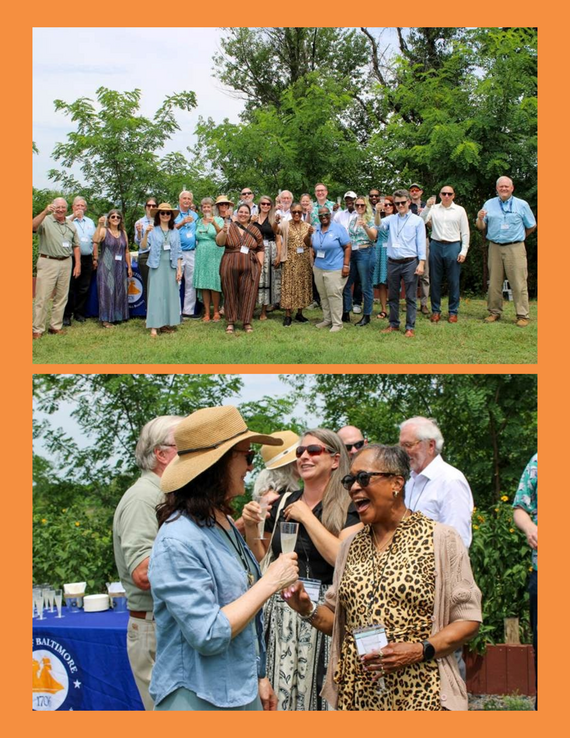 Photos (Above): A sparkling cider toast to the DMMA in commemoration of its 25th anniversary.
Photos by Madeline Morrell, MES
|
|
20 Years of Innovation: Celebrating the Innovative Reuse Committee
The Innovative Reuse Committee (IRC) marked its 20th anniversary in 2026, celebrating two decades of partnership, innovation, and progress in advancing sustainable dredged material solutions for Maryland’s DMMP.
The IRC serves as a multi-disciplinary advisory body composed of representatives from industry, engineering, science, environmental organizations, and community stakeholders. Its purpose is to guide the development of Innovative Reuse (IR) strategies, foster collaboration across sectors, and help shape policies that transform dredged material from a disposal challenge into a valuable resource.
Over the past 20 years, the IRC has played a pivotal role in advancing key milestones, including supporting state guidance that enabled dredged material reuse, informing specifications that enable its use in construction applications, and contributing to a robust portfolio of nine research and development projects. IRC input has also helped advise on large-scale efforts such as the Cox Creek STAR Facility. Their time and expertise continue to be a critical support for the DMMP, which relies on a plan to scale up IR significantly in the near term to support the rolling 20-year dredged material management plan.
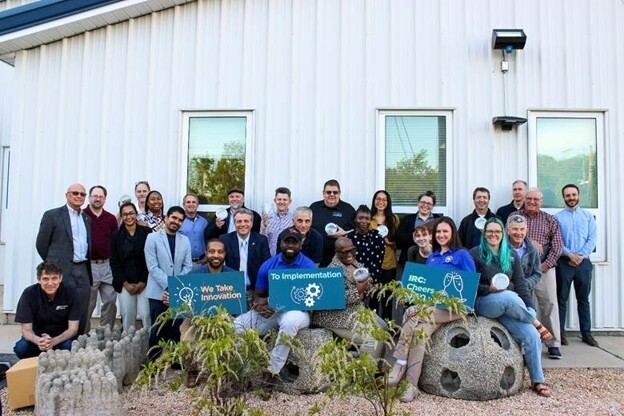 Photo (Above): IRC members celebrate the committee’s 20th anniversary.
Photo by Madeline Morrell, MES
The anniversary was commemorated at the May 2026 meeting with a special celebration featuring a dredged material-themed gourmet pudding dirt cup dessert for attendees and a group photo showcasing a collection of innovative research and development products developed from dredged material over the years. The milestone highlighted both past achievements and continued momentum toward future innovation.
|
|
Statewide Recognition for the Port’s Environmental Education Program
The Port of Baltimore Environmental Education Program recently earned statewide recognition as a newly designated Certified Maryland Green Center by the Maryland Association for Environmental and Outdoor Education (MAEOE).
“We’re thrilled that the Port’s Environmental Education Program has been designated a Certified Maryland Green Center, recognizing its strong commitment to environmental leadership and literacy through hands-on learning experiences that connect students and communities to Maryland’s waterways, natural resources, and our maritime history,” said MES Senior Lead Environmental Specialist Laura Baker.
The recognition came at the MAEOE Annual Youth Summit on May 28, 2026, where the program received a Maryland Green Center flag, official citations, and a commemorative plaque marking the achievement. The recognition highlights the Port’s continued efforts to promote environmental stewardship and expand opportunities for meaningful environmental education across the region.
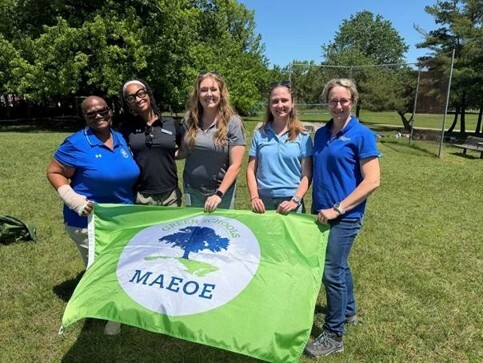
As a first-time Maryland Green Center, the Port of Baltimore now joins a statewide network of organizations working to advance sustainability, environmental awareness, and student engagement.
Photo (Right): Members of the Port’s Environmental Education Program celebrate the new Maryland Green Center designation at the MAEOE Youth Summit.
Photo by MAEOE
“We’re excited to build on this momentum, and we are proud of this recognition, which highlights the program’s continued impact and efforts to foster a more environmentally informed future for Maryland,” continued Baker.
|
|
|
|
These committee meetings are open to the public, some meetings may be virtual or in-person. Please visit maryland-dmmp.com for details and to access information for each meeting. For questions, please contact ecoport@marylandports.com.
|
|
August
Masonville Citizens Advisory Committee Meeting – August 5th at 5:30 PM
In-Person Event – For more information, visit https://maryland-dmmp.com/committees/.
Masonville Cove Environmental Education Center - 1000 Frankfurst Ave., Baltimore, MD, 21226
Innovative Reuse Committee Meeting – August 11th at 5:30 PM
In-Person Event – For more information, visit https://maryland-dmmp.com/committees/.
Cox Creek Operation and Maintenance Complex - 1000 Kembo Rd., Curtis Bay, MD, 21226
September
Management Committee Meeting – September 16th at 10:00 AM
In-Person Event – For more information, visit https://maryland-dmmp.com/committees/.
World Trade Center, Staton Room (20th Floor) - 401 E Pratt St., Baltimore, MD, 21202
Urban Wildlife Conservation Day – September 19th at 9:00 AM
In-Person Event – For more information, visit https://www.masonvillecove.org/.
Masonville Cove Environmental Education Center - 1000 Frankfurst Ave., Baltimore, MD, 21226
|
|
The ECOPort Newsletter is the Maryland Port Administration’s bi-monthly update of projects and programs that help the agency contribute to a thriving economy, environmental stewardship, and community partnerships. As always, we thank the many private sector businesses, government leaders, communities, and individual citizens who have helped make these achievements a reality. |
|
|
Jonathan Daniels, Executive Director
Maryland Port Administration
The World Trade Center
401 East Pratt Street, Baltimore MD 21202
1-800-638-7519 / www.marylandports.com
|
|
|
|
|