|
February/March 2026 Newsletter
Environmental Progress in Full Bloom Ahead
|
|
American Bittern Released at Poplar Island
On January 8, a rehabilitated American bittern was successfully released at the Paul S. Sarbanes Ecosystem Restoration Project at Poplar Island (Poplar Island), highlighting a coordinated effort among several wildlife conservation partners.
In September, the bittern was admitted to Tamarack Wildlife Rehabilitation Center in Pennsylvania with a fractured shoulder girdle, likely caused by a vehicle collision. After several months of treatment and recovery, the center contacted Kristina Motley, a volunteer with Owl Moon Raptor Center in Maryland, who previously worked for Maryland Environmental Service (MES) at Poplar Island.
 |
|
The bittern’s caretakers were in search of a release site known to support overwintering bitterns. Both Hart-Miller Island (HMI) and Poplar Island were candidates for the release.
The bird was transported to Owl Moon Raptor Center for a final health assessment before release. Poplar Island was ultimately chosen as HMI had access issues on the release day.
|
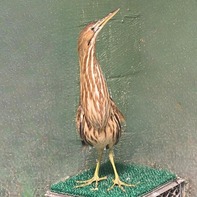
Photo (Above): The American bittern while still in the treatment facility.
Photo by Kristina Motley, Owl Moon Raptor Center
The American bittern is a fascinating and peculiar marsh bird native to North America and a member of the heron family. According to MES Senior Environmental Specialist II Tim Carney, the bittern is a slow-moving and patient bird that can stretch its neck very far upward, a behavior known as “skypointing,” to camouflage itself and blend into the surrounding reeds.
|
The species breeds in freshwater wetlands across southern Canada and the northern United States and migrates through the Mid-Atlantic region during spring and fall. While many continue south for winter, some remain in Maryland when both open water and adequate food resources are available, at sites such as HMI, Poplar Island, Blackwater National Wildlife Refuge, Deal Island, Elliott Island, and North Point State Park.
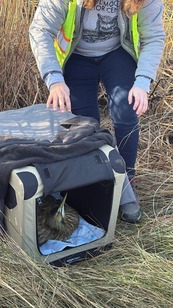
Photo (Right): Thanks to the helping hands of a total of seven people, the bittern was safely released at Poplar Island.
Photo by Kristina Motley, Owl Moon Raptor Center
|
|
 |
|
|
Modernizing the Port While Protecting Our Environment
The Maryland Port Administration (MPA) is working to make the Port of Baltimore cleaner, more efficient, and better prepared for the future through the Environmental Protection Agency’s (EPA) Clean Port Grant program.
This effort includes two parts: a $1.9 million planning grant and a $145 million implementation grant. The planning grant helps the Port better understand current emissions, explore cleaner energy options, and increase communication and outreach with surrounding communities. The implementation grant funds major upgrades to equipment and infrastructure, including important electrical improvements at the Dundalk Marine Terminal that will support the use of more electric equipment.
 |
|
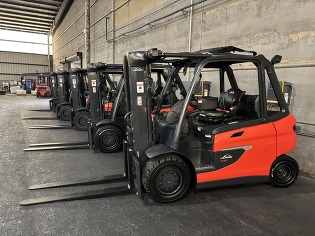
Work on the implementation phase began in January 2025, and new zero-emission cargo equipment is already being purchased and delivered. So far, 21 electric forklifts have arrived, and more equipment is on the way. Altogether, the project will add about 220 zero-emission vehicles, including trucks, forklifts, and large cargo-moving machines. Construction on electrical upgrades is expected to begin this spring. |
Photo (Left): Thanks to the EPA’s Clean Port Grant program, 21 electric forklifts have arrived.
Photo by Nick Freese, C. Steinweg
Switching to electric equipment is expected to lower greenhouse gas emissions by about 35 percent compared to 2020 levels. Electric equipment also requires less maintenance and does not need fuel refills, which can help improve day-to-day operations. The new electrical infrastructure will also help support future projects, such as expanding shore power options for ships.
“The Clean Ports Grant is allowing us to upgrade our equipment fleet with eco-friendly options,” said C. Steinweg Inc. Chief Financial Officer David Paddy.
Over the next several months, community members and Port partners can expect to see more equipment deliveries, construction activity, and outreach efforts to help keep residents, businesses, and stakeholders informed as the project moves forward.
|
|
New Video Spotlights Clean Truck Technology at the Port of Baltimore
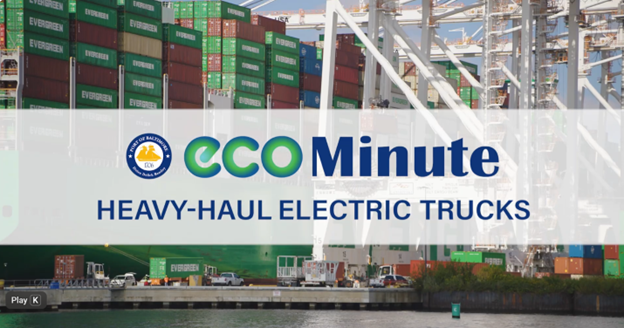
MPA recently released a new EcoMinute video featuring a heavy-haul battery electric vehicle (BEV) dray truck operated by Keen Transport in partnership with Wallenius Wilhelmsen. The truck was purchased with support from the MPA’s Diesel Equipment Upgrade Program, which helps companies transition to cleaner and more energy-efficient equipment.
“Having a heavy haul electric truck produces zero tailpipe emissions, improves the air quality at the Port and nearby communities,” said Wallenius Wilhelmsen Solutions/Keen Transport Senior Manager of Transportation Steve Bourne.
“The Maryland Port Administration has been leveraging these funding opportunities since 2008 to encourage companies that work at the Port of Baltimore to reduce their carbon footprint,” said MPA Deputy Executive Director Bob Monroe. Since its launch, the program has continued to support the replacement of diesel-powered dray trucks, cargo handling equipment, marine engines, and locomotive engines. Marketed as Dollars for Drays, the program has to date replaced 351 dray trucks that service the Port of Baltimore.
Wallenius Wilhelmsen/Keen Transport Director of Fleet & Maintenance Luis Gonzalez noted the truck’s performance and driver benefits. “Some of the key features that we really get a lot of positive feedback from the drivers are no emissions. It also has a pretty significant amount of torque right off the line,” Gonzalez said. He added that regenerative braking and fewer moving parts help reduce maintenance needs and operating costs.
For more information, please watch the video and visit the Port of Baltimore’s Diesel Equipment Upgrade Program website.
 This project has been funded wholly or in part by the United States EPA under assistance agreement 96389601 to MES. The contents of this document do not necessarily reflect the views and policies of the EPA, nor does the EPA endorse trade names or recommend the use of commercial products mentioned in this document.
|
|
Mid-Bay Construction Progress
The Mid-Chesapeake Bay Island Ecosystem Restoration Project (Mid-Bay Project), which is an effort to rebuild the severely eroded James and Barren Islands in Dorchester County using dredged material from Maryland’s navigation channels, continues to mark major construction milestones.
The multi-year project will restore more than 2,100 acres of remote island habitat by beneficially reusing 90–95 million cubic yards of dredged material. By pairing navigation maintenance with environmental restoration, the project will keep shipping channels navigable while rebuilding critical habitat in the Chesapeake Bay.
 |
|
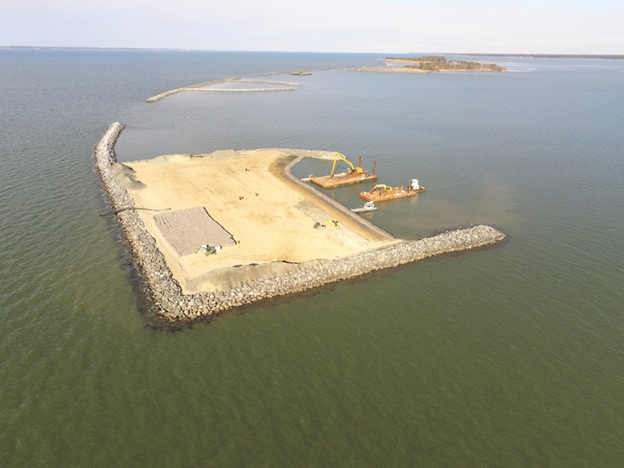
At Barren Island, progress is already visible. Phase I construction was completed in October 2024, with crews installing most of the protective stone sills and breakwaters designed to shield the island from wave action. Once finished, restoration at Barren Island will create at least 72 acres of wetlands using material from nearby shallow-draft channels. |
Photo (Above): Southern bird island with the northern bird island and Barren Island seen in the background
Photo by GBA
Phase II at Barren Island began in early 2025 and continues to move forward. The southwest wetland containment cell has been constructed, and filling of one of two planned bird islands is now complete. Foundation replacement and construction of the northeast sill are expected to wrap up by the end of summer 2026.
Filling of the second bird island, along with the islands’ protective reefs and shell cap, is scheduled for completion by late 2026. Installation of the southern spillway will occur in 2026 before dredged material placement begins. Dredging and placement of material from the Honga River channel is planned for late 2026 through early 2027.
James Island represents the largest portion of the restoration project. It will be restored to 2,072 acres, approximately 45% uplands and 55% wetlands, using material from the deep-draft channels leading to the Patapsco River. The Phase I construction contract is expected to be awarded by the end of March 2026, with work beginning in late spring or early summer on a large, confined sand stockpile that will support future dike construction.
|
|
Chesapeake WILD Funding Helps Friends Groups Expand Community Conservation
The Friends of Hart-Miller Island has been awarded a $200,000 Chesapeake Watershed Investments for Landscape Defense Grants Program (Chesapeake WILD Grants Program) from the National Fish and Wildlife Foundation. The funding will expand stewardship efforts, strengthen environmental education, and advance conservation of critical habitat at both Masonville Cove and Hart-Miller Island.
Masonville Cove is the nation’s first Urban Wildlife Refuge Partnership and a Chesapeake Gateway site recognized by the National Park Service (NPS). It stands as a powerful example of how restored natural spaces can support wildlife while remaining open and welcoming to nearby communities. The South Cell of Hart-Miller Island is a 350-acre state park that provides vital habitat for birds and other wildlife while offering trails, campsites, and public programs that connect visitors to the Chesapeake Bay.
The grant will fund the creation of two new coordinator positions, one at each site. These coordinators will play a key role in organizing programs, supporting volunteers, strengthening partnerships, and planning for the future care of both places. Plans are underway to have the coordinators on board by mid-to-late March.
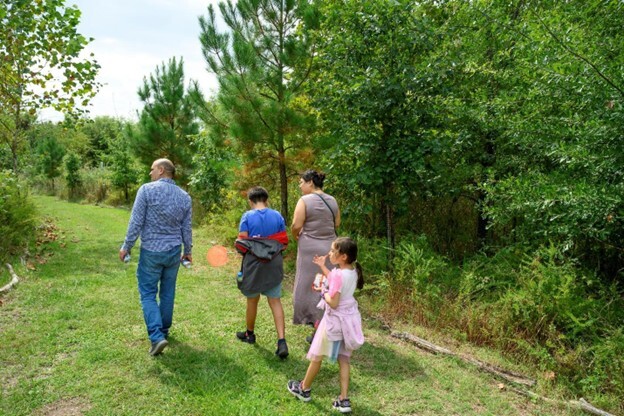 Photo (Above): Chesapeake WILD grant funding will help welcome community members to engage with both Masonville Cove (pictured here) and Hart-Miller Island.
Photo by National Aquarium
The award also supports the development of a friends group for Masonville Cove, creating new ways for community members to get involved and help guide the site’s future.
In the months ahead, partners will expand education programs, host volunteer events, and offer more opportunities for people to connect with nature at both sites. Stay tuned for more information about attending events and volunteering.
|
|
Snow Day Logistics: Powered by the Port of Baltimore
As Marylanders begin looking ahead to spring after an eventful winter, Rukert Terminals Corporation Vice President Evan Nastalski is reminding residents that behind every cleared highway and treated neighborhood road is a supply chain operation that often starts at the Port of Baltimore.
 |
|
“Much of the road salt used across the region originates from countries such as Mexico, Chile, and Egypt,” Nastalski said. “Ships carrying this essential cargo arrive at the Port’s Pier 5 berth, where a rail-mounted gantry crane manages the discharge process. The crane transfers salt directly from the vessel into a hopper, which feeds the material into waiting dump trucks safely and efficiently.” |
Photo (Above): The Port of Baltimore supports the region’s winter weather response.
Photo by Evan Nastalski, Rukert Terminals Corporation
Once loaded, the trucks transport the salt to a designated storage pad, where it is dumped and carefully shaped into large stockpiles using a dozer. The material remains staged and ready for rapid distribution whenever winter weather is forecast.
“While Rukert Terminals does not own the salt, the company plays a critical role by providing unloading and storage services for its customers,” Nastalski added. “Around the time of a snowstorm, it is common to see between 500 and 600 dump trucks loaded each day, all helping ensure Maryland’s roads remain safe and passable.”
|
|
Charting the Next Chapter for Masonville Cove
In February, members of the Masonville Cove Partnership met to map out the next chapter for the nation’s first national urban wildlife refuge.
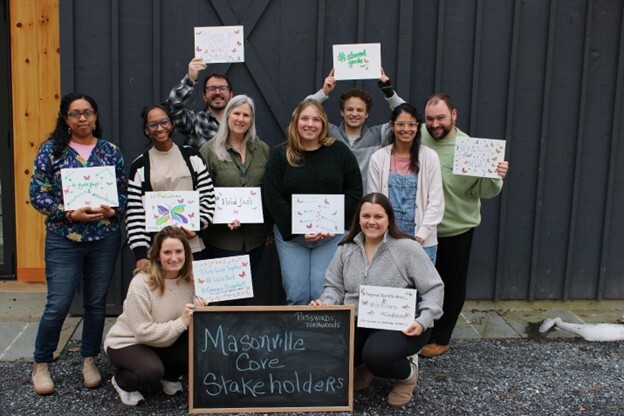
Held at the Environment at King’s Eye in Baltimore County, the 2026 Masonville Cove Stakeholder Retreat brought together approximately 11 staff members representing the partnership’s core organizations. Participants included representatives from the National Aquarium, MPA, U.S. Fish and Wildlife Service, MES, and Living Classrooms Foundation, all of whom help lead the day-to-day work that supports Masonville Cove.
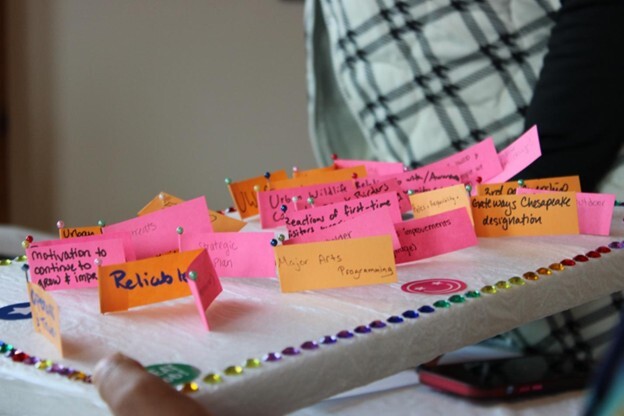 Photo (Above): The Masonville Cove Partnership celebrated the many accomplishments achieved in 2025.
Photo by Madeline Morrell, MES
Now in its third year, the annual retreat provides dedicated time for partners to step away from daily responsibilities and focus on collaboration and long-term planning. This year’s gathering centered on implementing the newly developed 2026 to 2030 Masonville Cove Strategic Plan, which builds on the momentum of the partnership’s previous five-year roadmap. “There was a real sense of momentum throughout the retreat. We're not just talking about bold goals - we're building the structure, trust, and collaboration needed to achieve them,” said MES Senior Environmental Specialist II, Mackenzie Brown.
Throughout the two-day working session, participants clarified top priorities and outlined clear next steps and responsibilities for each organization, ensuring the strategic plan translates into coordinated, measurable action. Equally important was the time dedicated to strengthening relationships. Team-building activities fostered connection, trust, and renewed energy among partners, a reminder that Masonville Cove’s greatest strength are the people and relationships who sustain the partnership.
 |
|
“The gift of a partnership: we can do hard things and come together to celebrate our wins while chartering a course for the future,” said National Aquarium Conservation Programs Coordinator Gregory Atkin.
Photo by Mamie Parker, EcoLogix
|
|
|
Modeling Connection: Masonville Cove at the 2026 NPS Partner Meeting
Fresh off its recent designation as a Chesapeake Gateways site, Masonville Cove took the stage at the 2026 Chesapeake Gateways Annual Partner Meeting in Charlottesville, Virginia. The February gathering, hosted by NPS, brings together partners from across the region each year to share ideas, strengthen connections, and explore new ways to link communities with the Chesapeake’s history, landscapes, and waterways.
|
MPA staff joined colleagues from The Mariners’ Museum and Park for a panel discussion on how overlooked or underused spaces can become vibrant hubs for community connection and environmental stewardship. The two organizations shared different but complementary approaches to engaging the public.
|
|
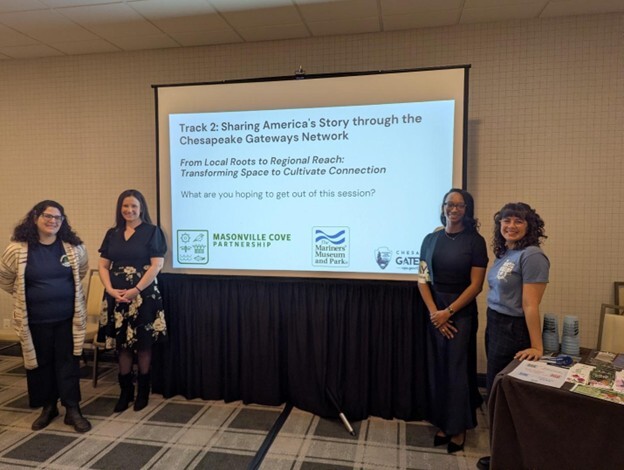 |
Photo (Above): Staff representing Masonville Cove (Rachael Dickey Gilde & Danielle Fisher) and Mariners Museum and Park (Andrea Rocchio & Claudia Moncada-Wireman) present "Transforming Space to Cultivate Connection."
Photo by Kierstin Klimas, NPS
The Mariners’ Museum team spoke about creating a “third space,” a welcoming environment outside of home and work where people feel comfortable gathering and building relationships. Masonville Cove staff highlighted their research-based co-design process, which invites community members to help shape both programs and physical spaces.
Together, the panel showed that meaningful community spaces do not have to be large or flashy. With thoughtful planning and a focus on the audience, even modest sites can become valued local assets.
Beyond presenting, MPA staff built relationships with fellow Gateways partners, engaged with NPS resources, and contributed to conversations about reimagining the traditional park model as a watershed-wide network of interconnected sites.
The invitation to present on a national stage reflects the reputation Masonville Cove has built as a leader among urban wildlife refuges, inspiring other communities and sharing practical and replicable ideas.
|
|
Introducing Dr. Tallulah Terrapin
Making her debut at the Maryland Association for Environmental and Outdoor Education (MAEOE) Annual Conference in February, Dr. Tallulah Terrapin is a lively new avatar bringing fun and engagement to the Port of Baltimore’s environmental education efforts. She helps connect students, educators, and community members through programs such as the Port of Baltimore Terrapin Education and Research Partnership (TERP).
Through the TERP Headstart program, participating classrooms raise diamondback terrapin hatchlings from November through June. During this time, students collect scientific data and help care for the terrapins while they grow to roughly the size of a five-year-old terrapin, about the size of a cheeseburger. The terrapins are then returned and released at Poplar Island. The hands-on experience also helps students learn about the Port of Baltimore and build a personal connection to local wildlife and environmental stewardship
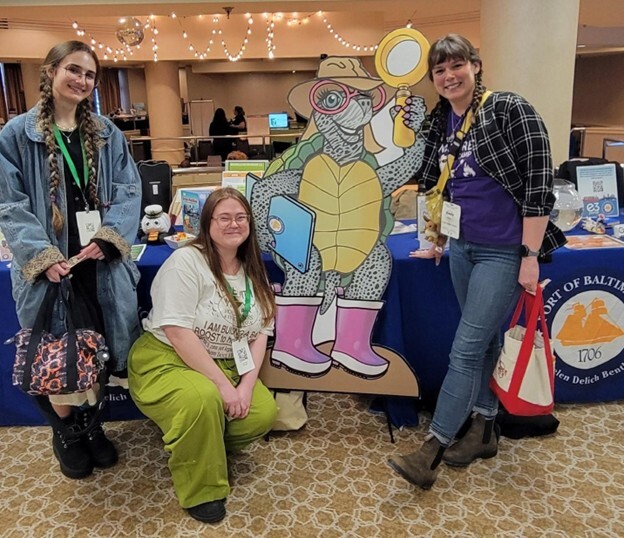 Photo (Above): Dr. Tallulah makes new friends at the MAEOE Annual Conference.
Photo by Katrina Jones, MPA
“This research professor avatar was created to make complex environmental science accessible and engaging for students and the community,” said Katrina Jones, MPA Program Manager for Education and Stakeholder Engagement. “She also gives schools a fun, consistent way to track their terrapins and stay connected to the program.”
Maryland’s official state reptile faces ongoing habitat loss, making restoration projects like Poplar Island and conservation efforts like TERP especially important. Each year, the program supports up to 200 terrapins and inspires students to care for the environment. Community members can follow terrapin progress through social media @TerrapinTales1706 on Facebook or Instagram, including the popular “Terrapin Trivia Tuesday” and “Wednesday Weigh-In.” Schools interested in participating can request a lesson through the Port of Baltimore’s e3 environmental education e-learning portal.
|
|
Voices of the Mid-Bay Community
A Dorchester County watermen, a former Tribal chief, small business owners, ecotourism operators, and longtime maritime stakeholders are among the community leaders who make up the Mid-Bay Stakeholder Group. Since 2024, MPA’s Eastern Shore liaison, Rob Etgen, has convened this informal group to strengthen communication and foster understanding around the Port’s restoration and dredging initiatives.
The key focus of these discussions is the Mid-Bay Project, which will restore the severely eroded James Island and Barren Island in Dorchester County using dredged material. The surrounding waters, especially near Hoopers and Barren Islands, remain among the most productive fishing grounds in Maryland. “The area around Barren Island is a hotbed for fall crabbing,” said Etgen, noting that the region serves as both a nursery and migration corridor for crabs and fish. Discussions with this group help MPA to apply local insight in balancing the needs of the Mid-Bay Project construction and restoration with the needs of day-to-day life for the people who live near it.
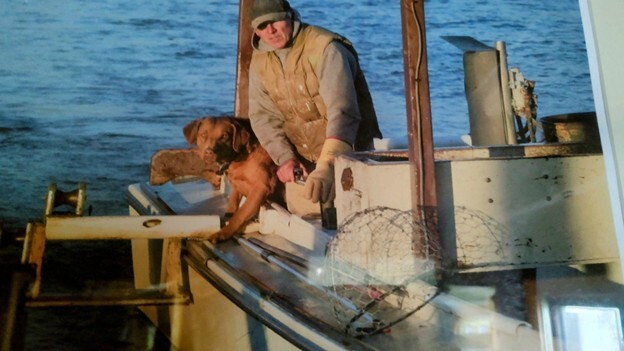 Photo (Above): Watermen Fred Pomeroy and his Chesapeake Bay retriever, named Sprey, trot lining on the Little Choptank River. “I am one of the few watermen still working who remembers when James Island was still a substantial body of land. I first worked there in the 1960s and later proposed to my wife on a camping trip to this magical island that divided the bay from the river. Our tent was pitched under a big oak tree, and there was another couple camping about a quarter mile away. Lex and I are still married, but the island is long gone. I look forward to seeing it come back in a new incarnation under the Mid-Bay Project.”
Photo by Dave Harp
In the long run, the Mid-Bay Project will help one of the area’s most dominant economic drivers, the seafood industry, by improving crabbing grounds, providing wind and wave protection, and reestablishing productive contours and depths. More immediately, it will ensure the Port of Baltimore economic engine remains open for business with channels deep enough to accommodate shipping vessels.
Etgen also points to long-term environmental progress as a reason for optimism. “The last 50 years have seen gradual but steady improvement. Water clarity now varies between good and excellent. You can see your toes when you are in water up to your chest,” he said. While challenges such as sea level rise and climate change remain, “The Bay is a very resilient body of water. If we keep the pressure up on protecting it, I’m very hopeful.”
|
|
From Strategy to Implementation: What’s Next for the IRC?
At its first meeting of the year, the Dredged Material Management Program’s (DMMP) Innovative Reuse Committee (IRC) focused on what comes next, now that its original goal has largely been met. The committee was formed to develop a strategy for recycling and reusing dredged material from Baltimore Harbor. With that strategy now in place and moving into implementation, the IRC turned its attention to how it should evolve and continue to offer expertise to the MPA.
 |
|
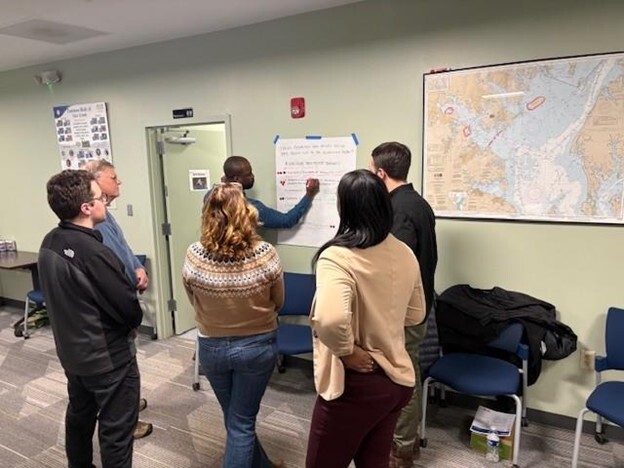
The February meeting offered a collaborative space for members and stakeholders to share their perspectives and help shape the next chapter. Participants shared ideas about the committee’s future priorities, how it can communicate most effectively, and which audiences to engage to keep the momentum going for innovative reuse. |
Photo (Above): Small group discussions with IRC members about a renewed approach to the committee
Photo by Sari Rothrock, RK&K
The discussion marked an important step forward for the IRC. By inviting stakeholders to help guide its future direction, MPA reaffirmed its commitment to transparency, collaboration, and ongoing progress in expanding dredged material reuse across the region.
|
|
Eastern Shore County iMPAct Reports Released
The MPA Office of Navigation, Innovation, and Stewardship (NIS) is pleased to announce the publication of two new iMPAct reports: Dorchester County, home to the Mid-Bay Project, and Talbot County, where Poplar Island is located. These reports highlight the specific economic, environmental, and community benefits MPA provides as an essential partner in each county and throughout the region.
In these Eastern Shore reports, readers will find information about hundreds of millions of investment dollars in each county, the important environmental impact of MPA projects on the Eastern Shore, and how MPA is advancing science and participating in local educational opportunities.
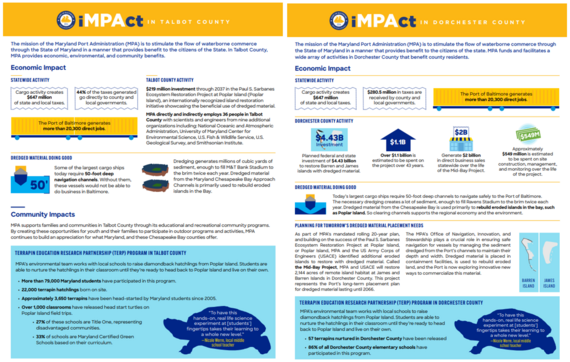 There are now a total of five county-specific impact reports, including Anne Arundel County, Baltimore County, Baltimore City, Dorchester County, and Talbot County. Check out all of these reports HERE.
|
|
Spotlight on Community Engagement
 MPA has recently released its latest installment in the Spotlight Series of webinars, talking about its commitment to community engagement. This new video, linked HERE, talks to MPA’s approach to working with stakeholders, examines a recent stakeholder engagement, and provides an overview of ways community members can learn about, connect with, and provide feedback on current Port activities.
NIS is responsible for ensuring the Port of Baltimore is able to receive and do business with the ultra-large, modern ships operating today. NIS accomplishes this through the DMMP, which finds adequate long-term placement capacity for the millions of cubic yards of dredged material created each year.
This latest edition of the webinar series comes after previous episodes covering topics like an overview of dredged material in Maryland, the evolution of dredged material management, and innovation in the sector, including emerging management techniques. Check out the entire Spotlight Series HERE.
|
|
|
These committee meetings are open to the public, some meetings may be virtual or in-person. Please visit maryland-dmmp.com for details and to access information for each meeting. For questions, please contact ecoport@marylandports.com.
|
|
April
Hart-Miller Island Citizens Oversight Committee Meeting – April 14th at 6 PM
In-Person Event – For more information, visit https://maryland-dmmp.com/committees/.
Conference Room - 2200 Broening 2200 Broening Highway, Baltimore, MD, 21244
Cox Creek Citizens Oversight Committee – April 22nd at 5:30 PM
Hybrid Event – For more information, visit https://maryland-dmmp.com/committees/.
Cox Creek Operations and Maintenance Complex 1000 Kembo Rd., Baltimore, MD, 21226
Turner Station Community Day and Day Celebration – April 25th at 8 AM - Noon
In-Person Event – Turner Station Park, 23 Rayme Road, Dundalk MD 21222
Baltimore Port Alliance Career Expo – April 30th at 10:30 AM - 1:30 PM
In-Person Event – For more information, visit www.baltimoreportalliance.org
Community College of Baltimore County, Dundalk Campus, Alvin & Mary Lloyd College Center, 7200 Sollers Point Road, Dundalk, MD 21222
May
Masonville Citizens Advisory Committee Meeting – May 5th at 5:30
Hybrid Event – For more information, visit https://maryland-dmmp.com/committees/.
Executive Committee Meeting – May 11th at 1 PM
In-Person Event – For more information, visit https://maryland-dmmp.com/committees/.
Innovative Reuse Committee Meeting – May 12th at 5:30 PM
Hybrid Event – For more information, visit https://maryland-dmmp.com/committees/.
Pearce Creek Implementation Committee Meeting – May 15th at 10 AM
In-Person Event – For more information, visit https://maryland-dmmp.com/committees/.
Parklands Building - Cecilton, MD 90B North Center Street, Cecilton, MD, 21919
|
|
The ECOPort Newsletter is the Maryland Port Administration’s bi-monthly update of projects and programs that help the agency contribute to a thriving economy, environmental stewardship, and community partnerships. As always, we thank the many private sector businesses, government leaders, communities, and individual citizens who have helped make these achievements a reality. |
|
|
Jonathan Daniels, Executive Director
Maryland Port Administration
The World Trade Center
401 East Pratt Street, Baltimore MD 21202
1-800-638-7519 / www.marylandports.com
|
|
|
|
|