|
January/February 2025 Newsletter
Innovating the Port of Baltimore: Safe Harbors, Greener Engines & Smarter Solutions
|
|
Safe Harbor for Spat: Baltimore Port Alliance Members Aid Oyster Restoration
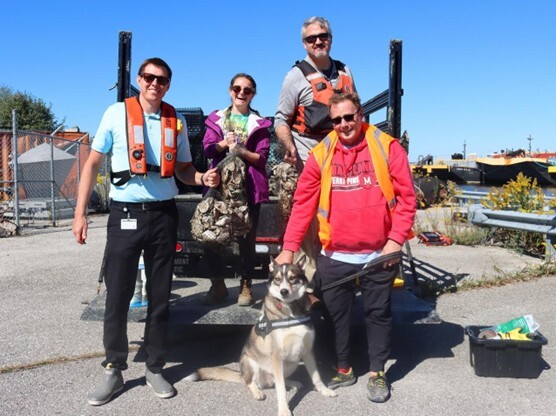
An unused pier on the Patapsco River at the Vane Brothers Company is now a safe harbor for spat—juvenile oysters vital to Chesapeake Bay restoration. In October, with support from the Chesapeake Bay Foundation (CBF), two members of Vane Brothers' Health, Safety, and Environmental (HSE) team installed four oyster-growing cages to nurture the young oysters until they are strong enough for relocation.
Once matured, the oysters will be transferred to deeper Patapsco waters at a 30-year-old sanctuary reef at Fort Carroll, where six million oysters have been planted over the past six years.
“The oyster restoration project will cultivate native oysters that naturally filter algae, sediment, and other pollutants from our waters,” said John Shkor, Vane Brothers' HSE Manager and an active member of the Baltimore Port Alliance. “Vane Brothers is committed to protecting the marine environment and promoting healthier waterways for future generations. We encourage the entire Port community to become involved in oyster restoration projects that contribute to cleaner water.”
Photo (above): Participating in the planting of oyster cages outside Vane Brothers’ Baltimore headquarters on October 10, 2024, were, from left, Vane Brothers HSE Manager John Shkor, CBF Baltimore Oyster Restoration Coordinator Morgan Shapiro, Vane Brothers HSE Regional Manager-East Matt Frank, and CBF Maryland Oyster Restoration Specialist Dan Johannes, with his dog, Max. Vane Brothers is a marine transportation provider with a 126-year history in the Port of Baltimore.
Photo by Vane Brothers Company
Baltimore Port Alliance member, Ports America Chesapeake (PAC) is also participating in the program for the first time, starting out with four cages and is planning to double their impact with eight cages next season. “There was widespread interest within the company to become a part of the project, and the members of the Chesapeake Bay Foundation made the setup very easy,” said PAC Crane Manager Michael Ryan.
“Ports America Chesapeake, along with its Environmental Committee and Health, Safety and Sustainability department, is always looking for new opportunities to support the environment. The oyster project gave us the unique opportunity to put underused waterfront towards such a unique and positive project. It has the added benefit of creating learning experiences for everyone who asks about the project—and everyone asks about the project,” continued Ryan.
According to CBF, a single adult oyster can filter up to 50 gallons of water per day, playing a crucial role in improving water quality and ecosystem health.
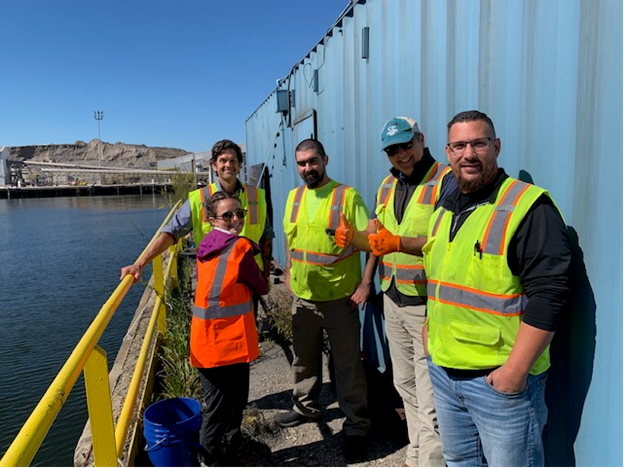 Photo: Pictured from PAC, Michael Ryan, Ezequiel Sedona Celario, Frits de Goede, Aaron Brockmeyer, and CBF Program Coordinator Morgan Shapiro
Photo by PAC
|
|
Port of Baltimore Welcomes Nation’s First Maritime Electric Rail Car Mover
As part of its commitment to decarbonization, Wallenius Wilhelmsen (WW) has become the first to deploy an electric rail car mover in the United States maritime industry—right here at the Port of Baltimore. Manufactured by Zephir, the zero-emissions rail car mover is already a favorite among operators thanks to its cutting-edge technology, including automation, ergonomic design, and collision prevention.
By replacing the older, diesel-powered equipment, this battery-operated rail car mover is expected to:
- Reduce nitrogen oxide emissions by 13.87 tons
- Cut carbon emissions by 182 tons annually
- Eliminate the use of 16,000 gallons of diesel fuel each year
“It is very exciting to have the opportunity for Wallenius Wilhelmsen to partner with the Maryland Port Administration (MPA) in leading the North American Maritime Industry with introducing an electric variant railcar mover to the Port of Baltimore’s cargo handling operations. This asset is a testament to our mutual decarbonization and sustainability goals, and I am looking forward to future opportunities to continue together in this great direction,” said Mid Atlantic Terminal General Manager Matt Stahl.
“Together, MPA and our Port partners are committed to achieving our shared environmental goals. Our gratitude goes to Wallenius Wilhelmsen, a leader in the push to net zero, for bringing the nation’s first maritime electric rail car mover to the Port of Baltimore,” said MPA’s Environmental Manager Cindy Hudson.
This project was made possible by funding from Maryland’s Volkswagen mitigation agreement in coordination with the Maryland Department of the Environment.
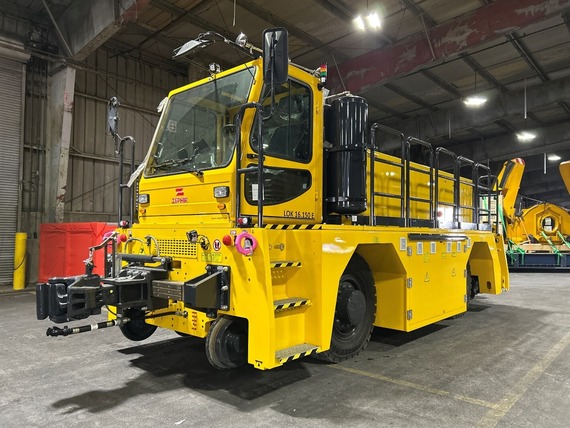 Photo (above): The Zephir model Lok 16E
Photo by Amira Hairston/MPA
|
|
Charging Ahead: Ports America Chesapeake Rolls Out Electric Yard Tractors
PAC is making progress on their goal to reduce their carbon footprint while upgrading equipment. Over the next few months, four Terberg electric yard terminal tractors will be put into duty, replacing older diesel models. The funding for this project came from PAC and from the United States Environmental Protection Agency (EPA) Diesel Emissions Reduction Act (DERA) grant program.
 Photo (above): Following the installation of their EV charging stations, four new electric yard terminals will be ready to roll.
Photo By PAC
“There’s a lot of excitement about this new equipment,” said PAC Manager of Equipment Services David Simpson. “We look forward to improving air quality through upgraded and more reliable equipment. After conducting a survey with the operators to compare similar EV products, the operators selected the Terberg model as the machine they were most comfortable driving and operating. Our operators like this product and are looking forward to working with it.”
The new equipment offers many benefits:
- Zero emissions, therefore cleaner air
- Low noise, low vibrations
- Universal charging system
- Battery pack combination up to 222 KWH
- Motor performance similar to diesel
- Suitable for cold and warm climates
- Long range capacity
|
|
DERA Funding Helps Green the Fleet
Spirit of Baltimore, a City Cruises sightseeing and dining cruise vessel docked at the Baltimore Inner Harbor, and Junior, the tugboat, owned by Smith Shipyard in Curtis Bay MD, which operates within Baltimore Harbor, Chesapeake Bay and its tributaries, have new, cleaner and greener engines with help from the Maryland Port Administration's (MPA) Diesel Equipment Upgrade Program and funding from the EPA DERA.
“Spirit of Baltimore’s original mechanical engines were from 1988, with cable controls, mechanical throttles, and outdated technology. The new equipment has electronic controls and is more fuel efficient with lower emissions, more responsive, and therefore more reliable, and consequently safer. It’s important because this is a United States Coast Guard (USCG) certified passenger vessel, which has higher standards than a commercial non-passenger or a pleasure boat,” said City Cruises National Director of Marine Operations Captain John Lake.
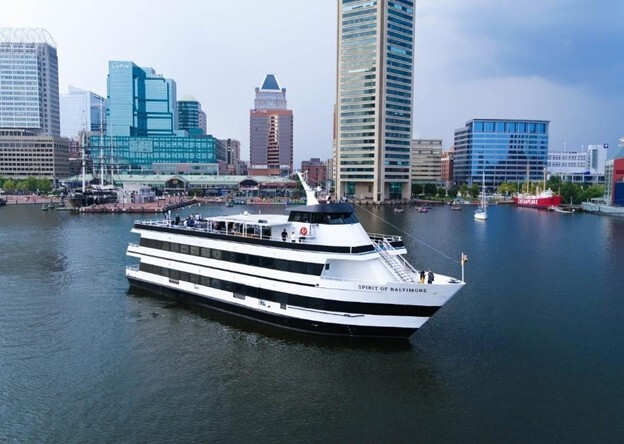 Photo (above): Spirit of Baltimore’s upgrade will extend the vessel’s life, reduce fuel usage by approximately 1,000 gallons annually and reduce nitrogen oxide emissions by an estimated 3.50 tons. The project cost totaled around $800,000, with City Cruises funding a little over 60% and $318,000 covered by DERA grants.
Photo by City Cruises
“Since the new engines were installed we have seen a reduction in our fuel cost and a more reliable platform that is quieter, smoother, and cleaner, which is also more pleasant from a passenger enjoyment perspective, and we also have a cleaner harbor,” continued Captain Lake. “City Cruises is committed to operating a cleaner and greener fleet of vessels. We work with the EPA, USCG, and local port partners through the DERA program and as a member of the Passenger Vessel Association’s Green Waters environmental program.”
Junior, the tugboat, built in 1981, will now meet current Clean Emission Standards with much stronger horsepower, which is important for a tug with the primary duty of supporting Coast Guard Cutters around the Curtis Bay Yard.
Smith Shipyard was founded in 1905 by August Smith, who assisted schooners and sailing ships into Baltimore Harbor. “Over the years, the Company has evolved with the times through wind, steam, and diesel power while remaining family-owned and operated over six generations. The re-fit on this tug is just another example of the evolving power sources in our industry that we welcome and are proud to be a part of. We thank the Maryland Port Administration and the consultants at EcoLogix Group, Inc., who helped us navigate this process and make this possible,” said Smith Shipyards Vice President Kevin Smith.
With the engine upgrade, Junior went from 450 horsepower to 630 horsepower and is much more environmentally friendly, improving air quality around the harbor and reducing fuel consumption.
|
|
Ninth and Final Contract Awarded to Study Innovative Reuse of Dredged Material
 |
|
Annual maintenance dredging of the Chesapeake Bay and Baltimore Harbor shipping channels is essential for keeping the Port of Baltimore open to some of the world's largest cargo ships, but managing the vast amounts of dredged material remains a key challenge. |
One forward-thinking solution treats this material as a valuable resource for commercial, industrial, horticultural, and agricultural applications—a process known as innovative reuse.
In November 2019, the Maryland Port Administration (MPA) issued a request for proposals (RFP) for research and development projects focused on finding practical and scalable innovative reuse solutions. To date, nine contracts have been awarded to private industry applicants to support research and development of novel end-use applications of dredged material. Understanding the potential uses of dredged material will help inform the next steps in the MPA innovative reuse program. The RFP is now closed, and details about the contracts awarded can be found on the Innovative Reuse and Beneficial Use webtool.
“Innovative reuse was one of the priority areas established by the 2001 Dredged Material Management Act, which led to the creation of the Dredged Material Management Program. The nine contracts awarded, including this latest one to HarborRock, demonstrate MPA’s continued progress in this area,” said MPA Chief of Innovative Reuse Strategy & Partnerships Kelvin Moulden.
The final contract under this RFP awarded to HarborRock will investigate the feasibility of using dredged material in the production of lightweight aggregate (LWA) and supplementary cementitious material (SCM) — two promising applications for sustainable construction materials. Results from this study are expected in late 2025. Products previously investigated for dredged material applications include bricks, sod, shoreline protection structures and more.
“Dredged material can support both environmental sustainability and community-driven innovation,” continued Moulden. The RFP findings have set the stage for a bright future for innovative reuse to be a major player in the future of dredged material management. It facilitated blending talent, expertise and creativity to scientifically vet a wide variety of applications for dredged material, solidifying its standing as a valuable resource that can be used effectively in a manner that is safe for the health of humans and the environment, a far cry from its historical characterization as a waste product.
|
|
In Dialogue with Communities about CAD
In 2023, the Maryland Port Administration (MPA) embarked on a robust outreach and engagement program to educate, inform, and solicit feedback from communities about the Confined Aquatic Disposal (CAD) program. The goal was to raise awareness and foster community engagement by providing timely project information in easily accessible, interactive forums. Overall, the outreach program was impactful, creating an inclusive, collaborative, transparent, and responsive process to educate, engage, and establish a productive dialogue with a broad range of project stakeholders.
Communications facilitated a comprehensive exchange of information about Port dredging and needs, including its capacity planning process, and the potential CAD may offer as a dredged material management technique based on lessons learned from the previous pilot and an exploration of how a new pilot may be undertaken. In the past year, the Port created an array of communications tools including:
- A new newsletter, the CAD Bulletin which published three issues
- Enhanced CAD webpages to include more robust information and an online platform to provide feedback
- Updated CAD information, including a factsheet and FAQ document
Stakeholder input has long been important to the Port, and this is especially true for any new initiative under consideration like CAD. Efforts in 2024 successfully leveraged existing engagement infrastructure and established new mechanisms to encourage dialogue and capture stakeholder input, facilitating valuable conversations, building new relationships, and opening a path to new, mutually beneficial outcomes. Engagement activities included:
- Community Tours: Designed to provide opportunities for community members to experience visit a dredged material containment facility (DMCF), MPA facilitated an open house at Cox Creek and held a guided tour of the DMCF for a neighborhood association
- Community Meetings: MPA partnered with local community organizations to participate in four community meetings to share information about CAD and solicit feedback from key groups and individuals. In addition to establishing open lines of communication, it also provided an opportunity for MPA to respond to a donation request for dredged material.
- CAD-Focused Workshops: Five small group briefings held throughout the year introduced CAD to regulators and elected officials and provided a forum to address technical questions.
- Dredged Material Management Program Committee Meetings: MPA leveraged its existing nine stakeholder oversight and advisory committees, maintaining transparency through regular updates and responsiveness, to encourage collaboration and input from community and environmental groups and assess CAD as a dredged material management option.
Building on the success of the 2024 outreach initiative, the Maryland Port Administration will expand its impact in 2025 through regular communications, new committee engagement opportunities, and outreach to interested parties. Efforts include the new Spotlight Series video on CAD as an alternative dredged material management tool, now available on the DMMP Website, along with enhanced collaboration through existing and new channels.
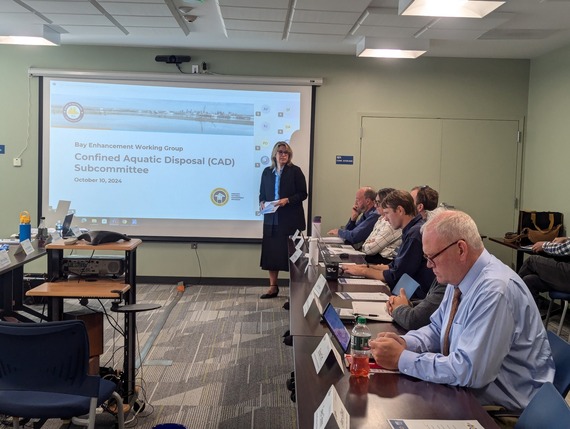 Photo (above): Committee members attend the first CAD Subcommittee meeting.
Photo by MPA
|
|
Four MPA Sites Participate in Audubon’s 125th Bird Count Event
The Christmas "side hunt" was once a popular holiday tradition, with participants competing to see who could shoot the most birds. But in 1900, U.S. ornithologist Frank Chapman proposed a radical change—what if, instead of hunting birds, people counted them? Today, his vision lives on through the Christmas Bird Count (CBC)—the nation’s longest-running community science project, providing invaluable data on the long-term health and trends of bird populations across North America.
For the National Audubon Society’s 125th CBC, which ran from December 14, 2024, to January 5, 2025, four DMMP sites were selected:
While HMI has been a part of the Middle River CBC for many years, the Baltimore Bird Club selected the other three Maryland Port Administration (MPA) sites for Baltimore City’s inaugural CBC.
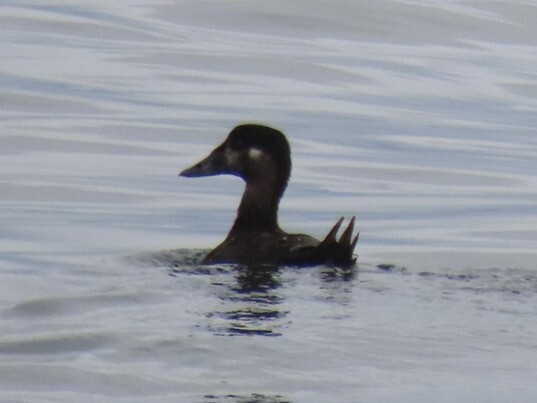
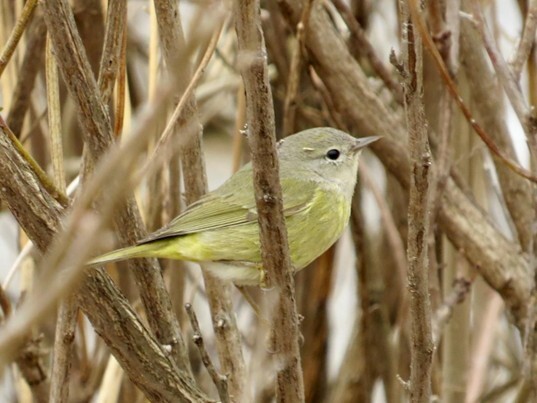
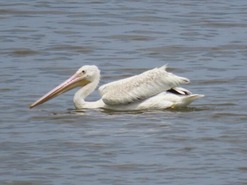
“On December 21, 2024, a particularly cold and windy day, we had some exciting surprises. I haven’t seen some of these species on this count in 10 years,” said Maryland Environmental Service Senior Environmental Specialist Tim Carney. “At Masonville, Cal Liddell and their team spotted a great blue heron and ‘Peg,’ the American white pelican who had been on site since June 10, 2024. At Hawkins Point, my team observed a surf scoter, orange-crowned warblers, and an eastern meadowlark. Cox Creek didn’t yield surprises, but Chelsie Bateman and her team documented a great variety of birds. Since this was the inaugural year for the Baltimore City CBC, the counts at the three new MPA sites served as a trial. After next year’s CBC, data from all four of the MPA sites will be entered into Audubon’s national database, allowing anyone to track trends over time.”
 |
|
“What made this occasion extra special was that it was the first time birders were granted access to the Hawkins Point North Cell, where a reforestation effort is thriving,” Carney continued. “As one participant put it, ‘This place is amazing.’”
Photo (left): American White Pelican
|
Interested in participating next year or learning more about the many bird species observed at MPA sites? Contact Tim Carney at tcarney@menv.com.
|
|
Photo (above): Surf Scoter |
Photo (above): Orange Crowned Warbler |
|
A Night of Crafts, Cocoa, and Community at Masonville Cove
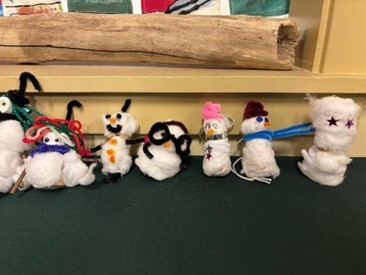
There may not have been snowflakes outside of Masonville Cove during December’s First Friday event, but that didn’t stop adults and children of all ages from making snowmen, snow owls, and snow creations inside. Participants crafted creative, holiday-inspired ornaments using natural materials—all while enjoying an evening of laughter, cocoa, and community.
Masonville Cove Partners, in collaboration with the Friends of Masonville Cove welcomed 23 community members to join the festivities, awarding prizes for the most imaginative creations. This annual event has become a tradition made possible by the Masonville Cove Partners: Maryland Port Administration (MPA), National Aquarium, U.S. Fish and Wildlife Service, and Living Classrooms Foundation.
 |
|
Want to get involved? Become a Friends of Masonville Cove member by contacting Danielle Fisher at DFisher2@marylandports.com or Matias Orrego at forrego@menv.com.
Photo: Friends of Masonville Cove members served as impromptu judges to award prizes for the most creative ornaments.
|
Photo by Swathi Ayyagari/National Aquarium
|
|
Get Involved! Help Shape the Future of Dredged Material Management in Maryland
The DMMP relies on committees to help guide projects and foster collaboration between stakeholders, industry professionals, and community members. These committees play a crucial role in implementing dredging and sediment management decisions that reflect industry, environmental, and community needs.
“Our committee members are an important part of the DMMP. Their involvement and guidance on our projects help ensure the best outcomes for all Marylanders. These committees provide a very collaborative and welcoming environment for participants to learn about the DMMP. We encourage different levels of commitment and involvement based on the participant’s interest and availability,” said Maryland Port Administration (MPA) Outreach Coordinator Danielle Fisher.
As 2025 begins, the Office of Navigation Innovation and Stewardship (NIS) invites new and returning stakeholders to engage in public DMMP committee meetings. Through a year of education and engagement, NIS will collaborate with its stakeholders to explore innovative solutions to ensure placement capacity for dredge material. Join us in shaping the future of sustainable navigation!
Additional engagement opportunities include:
- Annual Meeting
- Annual Field Trip
- Open House Events
- Community Presentations
To learn more, visit the DMMP website, then check the calendar and sign up for a meeting, to either come in person or participate virtually.
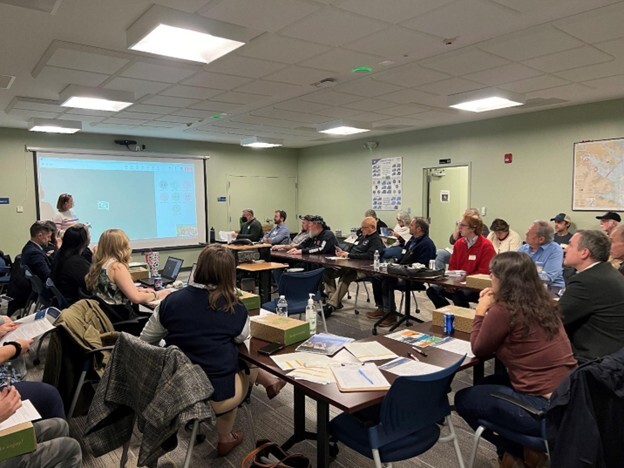 Photo: A meeting of the Cox Creek Citizens Oversight Committee which provides advice to MPA regarding the expansion and operation of the facility and the potential impacts it may have on the nearby communities
Photo by MPA
|
|
|
These committee meetings are open to the public, some meetings may be virtual or in-person. Please visit maryland-dmmp.com for details and to access information for each meeting. For questions, please contact ecoport@marylandports.com.
|
|
March
Hart-Miller Island Citizens Oversight Committee - March 11th at 6:30 PM
In-Person Event – For more information, visit https://maryland-dmmp.com/committees/.
Point Breeze Business Center
2200 Broening Highway, Baltimore, MD 21224
Bay Enhancement Working Group - CAD Subcommittee - March 13th at 1:00 PM
Hybrid Event – For more information, visit https://maryland-dmmp.com/committees/.
Cox Creek Operations and Maintenance Complex
1000 Kembo Road, Baltimore, MD 21226
Management Committee Meeting - March 19th at 10:00 PM
In-Person Event – For more information, visit https://maryland-dmmp.com/committees/.
World Trade Center - Stanton Room
E Pratt St, Baltimore, MD 21202
|
|
April
Cox Creek Citizens Oversight Committee - April 23rd at 5:30 PM
Hybrid Event – For more information, visit https://maryland-dmmp.com/committees/.
Cox Creek Operations and Maintenance Complex
1000 Kembo Road, Baltimore, MD 21226
|
|
The ECOPort Newsletter is the Maryland Port Administration’s bi-monthly update of projects and programs that help the agency contribute to a thriving economy, environmental stewardship, and community partnerships. As always, we thank the many private sector businesses, government leaders, communities, and individual citizens who have helped make these achievements a reality. |
|
|
Jonathan Daniels, Executive Director
Maryland Port Administration
The World Trade Center
401 East Pratt Street, Baltimore MD 21202
1-800-638-7519 / www.marylandports.com
|
|
|
|
|