 አማርኛ | 中文 | Français | 한국어 | Español | Tiếng Việt
MAY 2026
IN THIS ISSUE:
A note from the County's Climate Change Officer, Sarah Kogel-Smucker
County Budget
As the County Council deliberates the Fiscal Year 2027 Operating Budget, funding for climate action is at risk. While the County Executive has recommended a budget that prioritizes strong public schools, support for families, affordable housing, public safety, and climate action, there are proposals to cut climate funding.
Among the items proposed for cuts are the Climate Change Planning Non‑Departmental Account, the funding source for implementing the Climate Action Plan, County support for the Montgomery County Green Bank, which catalyzes private investments in local clean energy projects, and a local green jobs apprenticeship program.
With federal attacks on climate solutions, local leadership is even more essential. In the past, Montgomery County leaders have unanimously supported targeted, high‑impact investments that reduce pollution, build resilience, and prepare our communities for the challenges ahead. This year, the Council is weighing difficult budget decisions across many priorities. If you would like to share your support for maintaining the full climate funding in the County Executive’s recommended budget, you can contact your Councilmembers before May 15 here.
Pollinator Power
Spring may bring budget season, but it also brings new growth. The County is blooming and filled with opportunities to get outdoors. Native plants in yards, parks, and community gardens, not only brighten our neighborhoods, they provide vital food and habitat for pollinators. Birds, bats, bees, butterflies, beetles, and other small mammals pollinate plants and sustain our ecosystems. In doing so, they bring us one out of every three bites of food. Climate change, however, is a major threat to pollinators, with rising temperatures and increasing frequency and intensity of extreme weather events affecting their food sources and habitats. Each of us can help and Climate Smart Plants is a great way to get more county resources.
Warmly,

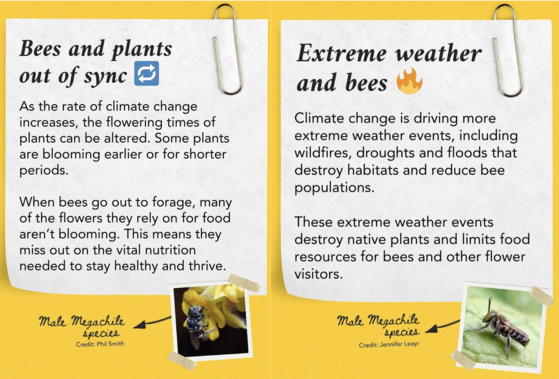 This graphic describes how climate change impacts plants and bees, from shifts in flowering times to extreme weather that destroys bee habitats.
Image Source: @wheenbeefoundation on Instagram (see the full organization website here).
Full calendar details of upcoming events can be found on the My Green Montgomery Community Calendar.
5/9: 11:00am - 3:00pm Pedestrian Safety Day
5/9: 12:00pm - 2:00pm Compost Crew Food Scrap Fest
5/10: 9:00am - 1:00pm Food Scraps Recycling Drop-Off: Olney Farmers and Artists Market
5/11: 10:00am - 12:00pm Soluciones para Aguas Pluviales y Diseño Sostenible en Jardines Domésticos
5/17: 10:00am - 12:00pm Conservation Landscapes: Dig into the Most Versatile Stormwater Garden
5/17: 11:00am - 1:00pm Mending Lab and Clothing Swap
5/20: 10:00am - 12:00pm Manna Market - Please visit the Food Assistance Resource Calendar for many more local food distribution locations.
5/26: 10:30am - 2:30pm Illumination Station at Potomac Library
5/28: 7:00pm - 8:30pm Perfect Fit: Trees & Shrubs for Compact Gardens
5/30: 10:00am - 1:30pm Gaithersburg Fix-It Fair
Local climate news and updates from Montgomery County, the State of Maryland, and around the DMV.

The United States District Court for the District of Maryland rejected Washington Gas’s challenge to Montgomery County’s Comprehensive Building Decarbonization Ordinance, which would require all-electric building standards for new construction by the end of this year, marking a major victory for efforts to, improve energy efficiency, protect public health, and reduce greenhouse gas emissions. The ruling closely tracks recent decisions in New York, underscoring an emerging consensus among courts that these policies are legally sound and casting further doubt on the Ninth Circuit decision of California Restaurant Association v. City of Berkeley, which struck down a similar ordinance. Read more in Earthjustice.
|
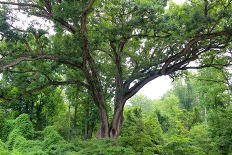
The Montgomery County Department of Environmental Protection (DEP) will receive more than $2.1 million in federal and state awards to advance programs that lower energy costs for low and moderate-income residents, and support planting and caring for new trees to expand the County’s forests and tree canopy. These investments will support DEP’s Tree Montgomery and reforestation programs in expanding tree canopy and forests throughout the County. DEP’s Healthy, Efficient, Electrified, Climate-Adapted Pilot (HEECAP) Homes Grants Program received funding to provide grants to competitively selected community partners that identify low- to moderate-income households and deliver electrification, pre-weatherization, and climate-resilience improvements. Read more at Montgomery County Government.
|
National and international climate change news that affects life in the U.S. and beyond.

In a setback to the Trump administration’s legal campaign against state climate action, a federal judge threw out the Justice Department’s lawsuit seeking to prevent the state of Hawaii from suing oil companies for damages. Trump administration lawyers had claimed that Hawaii, by trying to sue fossil fuel companies, was standing in the way of the national effort to secure reliable sources of domestic energy. But Judge Helen Gillmor of the U.S. District Court for the District of Hawaii on Wednesday ruled that such a contention was too speculative to be the basis of a lawsuit. Read more in Inside Climate News.
|
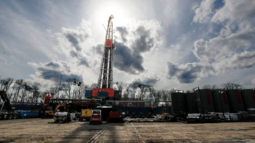
The federal government took Minnesota to court Monday in an attempt to stop the state’s legal action against major fossil fuel companies. Minnesota claims key industry players, including Exxon Mobil, Koch Industries and the American Petroleum Institute are violating state consumer protection laws in misleading the public about the effects of climate change. The 2020 lawsuit remains pending in state court. In the government’s 39-page complaint filed in Minnesota federal court, the Justice Department claims Minnesota’s attempt to regulate global greenhouse gas emissions undermines the federal authority. Read more in Courthouse News Service.
|
Learn about Climate Champions in our community. This month, meet a health educator at the Latino Health Initiative, a leader strengthening local pathways from awareness to action.

Climate change impacts many aspects of our lives, especially our health. As Montgomery County works towards achieving our ambitious climate goals, we continue to build institutional and community understanding of the connections between climate and health. One of the leaders in Montgomery County helping move climate and health work forward is Daisy De Leon, a Health Educator for the Latino Health Initiative (LHI).
Daisy started at Montgomery County as an intern over 10 years ago and has remained connected ever since, working at LHI for more than a decade. In her current role as a health educator, Daisy supports a program called “Charlemos con Zumba” (Let’s Chat with Zumba). The program began post-pandemic to facilitate physical activity and social connection virtually. Since its creation, the program has expanded considerably and now consists of four separate cohorts hosted throughout the year. Each cohort has five sessions hosted across the County. The sessions serve as an interactive exercise experience that facilitates physical activity while raising awareness of current climate-related topics through presentations. The presentations feature community partners from environmental organizations, who educate participants on the connection between the natural environment and our health and well-being. A recent addition to the program has been forest bathing exercises. Forest bathing is the Japanese practice of relaxation that focuses on sensory engagement as a means of connecting with nature. Offering a broad range of activities allows LHI to impact people physically, socially, and emotionally.
LHI also connects participants with local organizations to continue climate work beyond the duration of the program. Daisy shares that oftentimes participants have said they want to be involved in climate and health, but don’t know how to start. This program helps bridge that gap. Daisy and LHI have also helped amplify community voices through storytelling. As part of the Climate Stories Project, they created a short film titled "Se El Cambio - Nuestro Granito de Arena", featuring residents sharing what nature means to them and how they care for it. The film highlights personal connections to the environment and encourages others to reflect on their own role in protecting it.
Small actions can make a meaningful difference. For many, Charlemos con Zumba is the starting point for deeper engagement in climate action. To learn more about LHI's climate and health work, visit their website.
|
We are excited to share the below news and opportunities below. These important grants are offered by both local and federal funding opportunities, and are made available to local governments, universities, community organizations, businesses and individuals.
Resilient Maryland Toolkit: The Maryland Department of Emergency Management launched a searchable database of resilience grants, planning support, and technical assistance resources to help businesses, nonprofits, or individuals find government and private opportunities. Search by applicant or funder type. Upcoming nonprofit opportunities include: Rural Maryland Council Fund grants (due 5/15/2026); MDOT Kim Lamphier Bikeways Network Program (5/31/2026); Urban Tree Program (7/15/2026).
Glass Recycling Foundation FY2026 (Demonstration and Education Projects): Application window opens May 11, 2026. 501(c)3 nonprofits, municipal governments and public authorities, and private-public partnerships may apply to fill gaps in community glass recycling efforts. The maximum grant is $30,000.
Maryland Solar Access Program: Offered through June 5, 2026 on a first-come, first-served basis. The Maryland Solar Access Program is offered to Maryland residents who meet the program's income requirements to install solar photovoltaic (PV) systems to power their homes. The maximum grant is $7,500.
Green Mountain Energy Sun Club Sustainability Grant: Applications accepted on a rolling basis. Nonprofits may apply for support with rooftop solar installation projects or other sustainability initiatives. Past grants have ranged from $9,000 to $100,000.
Renewable Natural Resources Foundation Grant Programs (Planning and Small Grants, Rapid Response Grants, Implementation and Collaboration Grants): Letters of Inquiry due May 15, 2026. 501(c)3 nonprofits and Institutions of Higher Education may apply to support projects that engage community partners and stakeholders and contribute to the interconnected environmental, social, and economic systems. The maximum Planning grant is $50,000 and the maximum Implementation grant is $200,000.
Urban Agriculture Water & Power Grants (Maryland Department of Agriculture Small Farm and Urban Agriculture Program): Open enrollment until funds are depleted. Applicants who produce a farm product with at least $1,000 in annual sales or donations are eligible to apply for support with installing water meters, water pipes, irrigation hoses, electric meters, electrical lines, or other authorized equipment. The maximum funding limit is $75,000 with a 12.5% cost-share.
Waste Management (WM) Charitable Contributions Program: Applications accepted year-round. WM funds environmental stewardship, environmental justice, sustainability education, workforce and skills development, community vitality, and supplier diversity.
Exciting opportunities available for job seekers. Check out DEP’s Green Job Portal for additional climate and sustainability jobs, including these highlighted positions:
Climate Fellow, Office of the County Executive, Montgomery County Government (Rockville, MD / Hybrid): Come work with us! Recent college and graduate school graduates (though open to everyone) can spend one year in the County Executive’s Office supporting high‑priority initiatives to advance Montgomery County’s ambitious climate goals. The person in this role will contribute to policy research, program assistance, digital communications, and community outreach, and will help advance key actions in the Climate Action Plan and produce engagement materials, including the annual update.
Environmental Programs Manager, One Montgomery Green (Silver Spring, MD): The person in this role will support and coordinate community‑based environmental programs, including youth climate initiatives, small‑business sustainability outreach, climate resilience efforts, and community events. They will assist with research, planning, communications, and program operations while engaging regularly with local schools, businesses, nonprofits, and residents.
Wildlife Resource Policy Program Manager, Association of Fish & Wildlife Agencies (Washington, DC): The person in this role will manage AFWA’s wildlife policy and advocacy work, supporting state agencies on issues such as wildlife management, conservation, hunting, trapping, and recreational shooting. They will monitor federal legislation and rulemaking, develop policy positions, staff key committees, and coordinate closely with state agencies, federal partners, and conservation groups. The person in this role will engage with Congress, prepare policy materials, lead committee communications, and support AFWA’s broader government affairs efforts.
Environmental Scientist, WSP (Baltimore, MD / Washington, DC): The person in this role will support environmental permitting and impact assessment for infrastructure, energy, and land‑development projects across the Mid‑Atlantic. They will conduct environmental analyses, prepare technical reports, manage permitting tasks under federal and state regulations, and guide natural‑resource assessments. The person in this role will mentor junior staff, collaborate with multidisciplinary teams, engage with clients, and help advance WSP’s environmental practice through strong technical, analytical, and communication skills.
Program Officer, Gulf Research Program - Environmental Protection and Stewardship, National Academies (Washington, DC / Hybrid): The person in this role will manage applied research programs focused on environmental protection, coastal change, and resilience in the Gulf region. They will design program strategies, oversee budgets and staff, manage committees and expert panels, and guide the development of research products and workshops. The person in this role will collaborate with scientists, policymakers, and community partners, support major initiatives such as riverine and Gulf Coast workstreams, and represent the Gulf Research Program in external engagements.
Potomac Volunteer and Outreach Coordinator, Potomac Riverkeeper Network (Washington, DC / Hybrid): The person in this role will manage and grow PRKN’s volunteer and community science programs, coordinating cleanups, water‑quality monitoring, and field investigations across the Lower Potomac. They will recruit and train volunteers, support data collection and reporting, prepare outreach materials, and collaborate with staff and partners to expand community engagement—especially in underserved areas. The person in this role will strengthen PRKN’s grassroots presence through consistent event leadership, relationship‑building, and hands‑on stewardship coordination.
Green Corps Organizer, Green Corps (Hybrid / Travel): A yearlong training and field program that includes learning core organizing skills, running multiple environmental campaigns across the country, managing a grassroots canvass office, engaging volunteers and communities, and gaining hands‑on experience to launch a career in environmental organizing.
|