 JANUARY 2026
IN THIS ISSUE:
A letter from the County's Climate Change Officer, Sarah Kogel-Smucker
Happy New Year! On Tuesday, the County Executive Marc Elrich, Council President Natali Fani-González, Director of the Office of Emergency Management & Homeland Security Luke Hodgson, and the Chair of the University of Maryland Department of Atmospheric & Oceanic Science and Director of Maryland Mesonet Dr. Sumant Nigam, released the Climate Action Plan Annual Report for Fiscal Year 25. Please check out this summary of our bold climate progress.
Highlights include:
-
Electric Vehicle Expansion: The County and Montgomery County Public Schools (MCPS) added to their fleets: 1 hybrid pick-up truck; 7 electric cargo vans; 4 plug-in hybrid vehicles; 75 new electric cars; 44 used electric cars; and 1 battery electric loader. Plus, the County added 36 electric buses to the RideOn fleet. The County is on track to achieve a 100% transition to a zero-emission bus system by 2035.
-
Tree Planting: Tree Montgomery celebrated its 10th anniversary and the planting of more than 18,400 trees across the County. In FY25, County government planted over 5,000 trees.
-
Building Sustainability: The County completed construction of the County’s first police station microgrid at the 6th District, which can keep the power on during extended grid outages. And, MCPS began construction of its first Net Zero School, Burtonsville Elementary School. The County Council also enacted Building Energy Performance Standards (BEPS) regulations, which will improve energy efficiency in 1,860 buildings totaling over 238 million gross square feet.
-
Clean Energy: The Montgomery County Green Bank added 19.5 MW of clean energy, avoiding 11,193 metric tons of CO2e emissions.
-
Securing Funds: The County government was awarded over $58 million in climate-related grants.
Check out the Banner, Bethesda Today and Montgomery Community Media for more coverage. We have big plans in store for 2026 and look forward to collaborating across the County advance equitable, sustainable, local climate action.
Warmly,

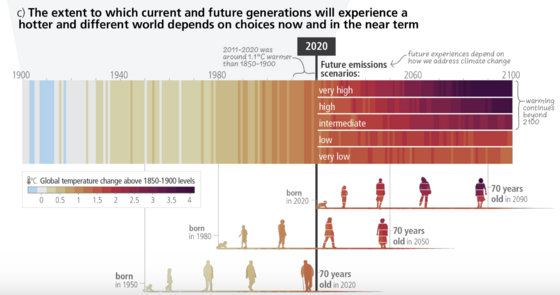
This graphic shows how global temperatures have increased since 1900 and how future warming will vary depending on emissions choices, illustrating how different generations may experience climate change over their lifetimes.
Image Source: UN Intergovernmental Panel on Climate Change (IPCC), AR6 Synthesis Report
Full calendar details of upcoming events can be found on the My Green Montgomery Community Calendar.
1/11: 1:00pm - 3:00pm Weed Warrior Workday
1/14: 10:00am - 12:00pm Rally for Solar Energy
1/15: 10:30am - 2:30pm Illumination Station at Germantown Library
1/17: 9:00am - 11:00am Dr. MLK Jr. Day Potomac Conservancy Cleanup
1/17: 10:00am - 11:30am Eco-Teen Challenge: Geocache Adventure
1/18: 11:00am - 1:00pm Loaves & Fishes Food Distribution
Please visit the Food Assistance Resource Map for many more local food distribution locations.
1/20: 10:30am - 2:30pm Illumination Station at Kensington Park Library
1/20: 6:00pm - 7:00pm Boys to STEM Academy Informational Session
1/20: 7:00pm - 8:00pm Exelon Foundation STEM Academy Informational Session
1/23: 9:00am - 10:30am AfriThrive Food Distribution
1/26: 11:00am - 1:00pm USG Mobile Market Food Distribution
1/28: 2:00pm - 3:00pm Solar Coffee Chat with Solar United Neighbors
1/31: 1:30pm - 4:30pm Creek Critters
Local climate news and updates from Montgomery County, the State of Maryland, and around the DMV.
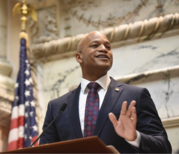
Gov. Wes Moore reversed his earlier veto of the RENEW Act by allocating $500,000 to fund a climate change impact study. The amount matches what the original legislation proposed, but the key difference is in how the study is being authorized. Instead of a legislative mandate, Moore is funding the study through executive action, with the state comptroller’s office overseeing the work. The study will evaluate the financial costs of climate change in Maryland and consider how fossil fuel companies could be held accountable. A final report is expected by December 2026. Advocates see this as a step toward “Make Polluters Pay” policies already adopted in states like New York and Vermont. Read more from Maryland Matters.
|

Montgomery County and WSSC Water are encouraging residents to join the Salt-Wise campaign by adopting smarter winter salt practices. Excess salt can harm streams, drinking water, and local ecosystems, but small changes make a big difference. Clear snow before applying salt, use only what’s needed, and sweep up any leftover salt after ice melts. These simple steps help protect our waterways, infrastructure, and community health throughout the winter season. Read more from the Montgomery County Government.
|
National and international climate change news that affects life in the U.S. and beyond.

MSCI’s December 2025 report shows that sustainability is becoming a core economic driver. Markets are pushing the energy transition forward despite political uncertainty, and artificial intelligence is helping businesses better understand climate risks. Green technology investments are expected to grow based on commercial strength rather than policy support, signaling a shift toward market-driven climate solutions. Global investment priorities shape local opportunities, from clean energy adoption to green jobs, which makes community-level action more important than ever. Read more from MSCI.
|
Learn about Climate Champions in our community. This month, meet the Climate Engagement Manager leading impactful community engagement in Montgomery County.
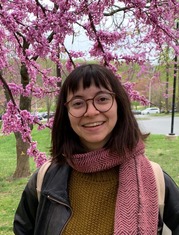
As we advance our ambitious climate goals in 2026, engaging with the community is all the more essential. Luz Cervantes, the Climate Engagement Manager within the Energy, Climate, and Compliance (ECCD) division of the Department of Environmental Protection (DEP) is leading this work for DEP. Luz brings extensive experience working on climate adaptation and mitigation projects and international community-based climate work, including youth-led projects with a focus on flood management. Her role centers on building meaningful relationships with community members and supporting their engagement in climate‑related efforts. She has a particular focus on the County’s Climate Justice Co‑Creation Initiative (CJCI). Developed over several years, this program is a highly collaborative effort where DEP has partnered closely with other County departments, community members and community‑based organizations to ensure that residents, especially from underrepresented groups, have a direct voice in shaping and implementing climate solutions.
Since beginning with the County, Luz has helped lead the first CJCI cohort of Climate Justice Fellows. Since September, the fellows have spent time learning about climate justice, participatory action research, and how to better participate in government processes. The experience has highlighted the importance of building trust over time through listening deeply to residents’ lived experiences and removing barriers that often prevent their engagement in climate conversations. Through this process and opportunities for the fellows to connect with various Departments working on climate issues, the CJCI aims to build a sustained model where community voices play a central role in determining priorities and developing solutions to improve climate justice outcomes. Residents are encouraged to take advantage of opportunities to share feedback and speak up about their experiences.
CJCI is one of several ways the County seeks to engage residents. Every person has a role to play, and individual actions can add up to create a larger impact. The Climate Smart campaign offers practical steps that residents can take. Take the pledge here! The DEP social media accounts also provide regular updates on environmental initiatives, climate resources, and community events open to the public.
|
We are excited to share the below news and opportunities below. These important grants are offered by both local and federal funding opportunities, and are made available to local governments, universities, community organizations, businesses and individuals.
New Earth Foundation (NEF) - FY 2026: Applications due February 1 (March decision) and July 1 (August decision). Funding promotes greater wisdom in handling human affairs, an increased understanding of other cultures by education, and the willingness to cooperate. Projects may include environmental initiatives that are working to help eliminate pollution and save the planet’s ecosystems, community efforts that create models of social sustainability, educational innovations that prepare youth to become socially responsible leaders, and strategies that offer economic improvement and opportunities.
Commercial and Canopy Solar Program: Applications due February 9, 2026. The Maryland Energy Administration grants provide direct benefits to low-to-moderate income and overburdened communities. The program offers grant funding to support implementation of solar energy installations on commercial properties, including rooftop-mounted solar systems, ground-mounted solar systems, and solar canopies over parking or bodies of water. Solar PV systems purchased by applicants and third-party owned solar energy systems are eligible for grant funding. The maximum grant is $500,000 per property owner.
Maryland Urban and Community Forest Council (MUCFC) Grant Program: Applications are due on February 15 and July 15 each year. Funding supports community-based tree planting and forestry education projects that strengthen Maryland’s urban forests. Grants are open to organizations statewide for work on public lands that improves the urban tree canopy, engages citizens, and promotes long-term environmental stewardship. Maximum award is $1,000.
Jane E. Lawton Conservation Loan Program: First-come, first-served, applications accepted through February 27, 2026. The Maryland Energy Administration (MEA) offers low-interest loans for Maryland nonprofits, schools, governments, and businesses to finance cost-effective energy efficiency and conservation projects to benefit their facilities and operations. Interest rates vary from 2% to 3%. The maximum microloan is $50,000 and the maximum traditional loan is $500,000. An application fee is required.
Frankenthaler Climate Initiative (FCI) (Implementation Grants): Applications due February 27, 2026. The Helen Frankenthaler Foundation invites nonprofit visual arts institutions to apply for assistance with undertaking sustainability and energy efficiency. Implementation Grants support ambitious, innovative, and transformative projects that directly address institutional climate impact. Applicants should have achieved organization-wide buy-in. The maximum grant is $100,000.
OPEN Energy Innovation Grant Program: Applications due February 27, 2026. Maryland Energy Administration invites businesses, nonprofits, local governments, educational institutions, and others to submit innovative and creative energy project proposals. Projects must be located in Maryland, and all subcontractors must be licensed to do business in the state. The maximum grant is typically $200,000.
Exciting opportunities available for job seekers. Check out DEP’s Green Job Portal for additional climate and sustainability jobs, including these highlighted positions:
Executive Operations Associate and Special Projects Coordinator, Chesapeake Climate Action Network (Hybrid, Takoma Park, MD): Chesapeake Climate Action Network seeks a talented, flexible, early-career administrative professional to support their team. The Operations Associate provides essential operational, program, and executive team support for CCAN’s mission to fight for climate solutions in the Chesapeake Region. This position is ideal for entry-level or early-career candidates interested in learning the fundamentals of a nonprofit advocacy organization. The Operations Associate will develop administrative, operational, research, and project management skills and have opportunities to explore other areas of our work, including communications, organizing, policy advocacy, and fundraising.
Volunteer Program Manager, Rock Creek Conservancy (Bethesda, MD): Rock Creek Conservancy (Conservancy), a non-profit environmental organization, seeks a Volunteer Program Manager to manage, enhance, and build their volunteer programs. The Conservancy engages over 5,000 volunteers each year—from individuals who have just moved to the area and those who have lived here all their lives to schools and corporate groups. The Manager will help maintain and grow their volunteer base through robust volunteer programming and service opportunities using the Conservancy’s people-powered restoration model. Broadly, people-powered restoration uses a connection to Rock Creek to drive a stewardship ethic by providing a sense of community, an understanding of the needs of Rock Creek, a sense of agency, and a straightforward way to take action as a steward.
Climate, Energy, and Air Quality Advisory Committee (CEAQAC), Montgomery County Boards, Committees, and Commissions (Volunteer): County Executive Marc Elrich is seeking applicants to fill eight vacancies on the Climate, Energy, and Air Quality Advisory Committee. All members must be technically knowledgeable and interested in climate change, energy, and air quality, and individuals with professional experience, education, and knowledge in these fields are particularly encouraged to apply. All members must be Montgomery County residents. Three incumbents are eligible to apply for reappointment.
Air and Climate Public Advisory Committee (ACPAC), Metropolitan Washington Council of Governments (Volunteer): The Metropolitan Washington Council of Governments is seeking applicants to fill vacancies on the Air and Climate Public Advisory Committee (ACPAC). ACPAC members provide input on regional air quality and climate change issues, advising local elected officials on environmental planning and policy. Individuals with experience or interest in climate, energy, air quality, public health, education, or related fields are encouraged to apply. Members must reside in the metropolitan Washington region.
|