 NOVEMBER 2025
IN THIS ISSUE:
A letter from Montgomery County Climate Change Officer Sarah Kogel-Smucker
Many folks are feeling an economic squeeze right now, with rising prices, higher electric bills, and the federal government shut down affecting paychecks and benefits across our community.
While we need strong federal action, Montgomery County has programs and resources that can help ease the pinch. As a plus, many of these resources are also climate-friendly. If you’re in a position to donate or volunteer, there are ways to support others. Here are a few to check out:
-
Food Resources - If you’re in need of food, or can share information, here are food assistance resources. If you’re able to donate or volunteer, you can support community members facing hunger and advance climate solutions. County grantees like Afrithrive, Community FarmShare, Manna’s Farm to Food Bank Program, and FRESHFARM reduce food insecurity while building a more local, sustainable food system.
-
Federal Workforce – Montgomery County’s resource page for workers impacted by federal actions links to everything from career support to crisis assistance. We have a tremendous community of federal workers, including climate professionals, and stand with you during this challenging time.
-
Energy Assistance – Montgomery Energy Connection is your one-stop shop for easy, energy-efficient ways to lower your energy bills and cut emissions. Assistance is available if you’re unable to pay your utility bills. And, if you have unexpected free time, taking home energy efficiency steps now can reap financial and environmental benefits for years to come.
- Transportation - RideOn buses are now zero fare. Taking the bus instead of driving is cost effective and climate smart.
If you’re looking for more ways to get involved, the Montgomery County Volunteer Center connects residents with local opportunities to donate, volunteer, and support neighbors in need. Together, we can strengthen community ties, weather the current storm, and advance climate action.
Warmly,

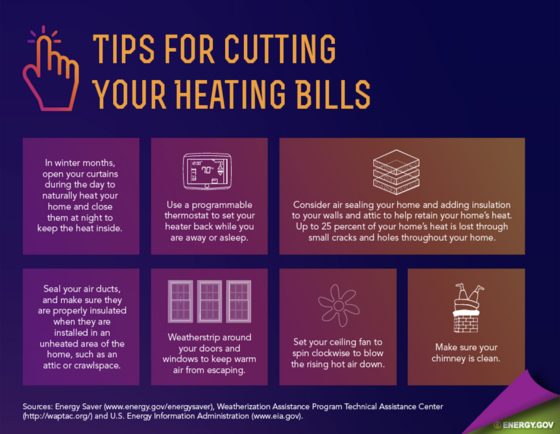
Cutting heating costs and saving energy go hand in hand, helping lower emissions and support a healthier community. Learn more at Montgomery Energy Connection.
Image Source: U.S. Department of Energy
Full calendar details of upcoming events can be found on the My Green Montgomery Community Calendar.
11/01: 12:00pm - 4:00pm Long Branch GreenFest - Community Cleanup & Resource Fair and Presentations
11/04: 10:30am - 2:30pm Illumination Station at Brigadier General Charles E. McGee Library
11/05: 10:30am - 2:30pm Illumination Station at Twinbrook Library
11/13: 10:30am - 2:30pm Illumination Station at Twinbrook Library
11/18: 10:30am - 2:30pm Illumination Station at the Wheaton Library
11/19: 12:30pm - 1:30pm Join virtually for an informal and informative Solar Coffee Chat!
11/19: 2:00pm - 3:00pm Webinar: Hidden Dollars in Your Building: How Energy Audits Unlock Savings
11/22: 9:00am - 12:00pm Arleeta's Food Pantry
11/23: 12:30pm - 2:30pm City of Lights Helping Hands - Food Pantry
Please visit the Food Assistance Resource Map for many more local food distribution locations.
Local climate news and updates from Montgomery County, the State of Maryland, and around the DMV.
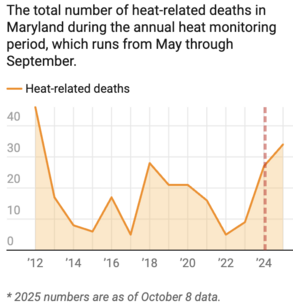
Thirty-four Marylanders died from heat-related causes this summer, the highest number in over a decade. Most were over 65, while younger adults had the most ER visits. A late June heat wave drove a spike in hospitalizations. In response, the state is boosting public awareness and urging residents to check on vulnerable neighbors. Read more in Maryland Matters.
|
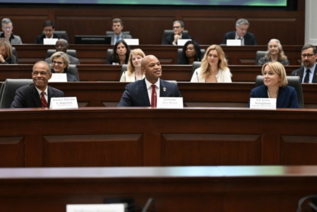
Governor Wes Moore and EU Ambassador Jovita Neliupšienė co-hosted Maryland’s first Circular Economy Forum in Annapolis. The event spotlighted Maryland’s extended producer responsibility initiative, which aims to boost recycling, cut over 1 million metric tons of emissions, and create more than 2,000 jobs. Leaders from both sides of the Atlantic emphasized the economic and environmental benefits of circular business models. Read more from the Maryland Department of the Environment.
|
National and international climate change news that affects life in the U.S. and beyond.
 |
|
President Trump’s energy policies are raising household utility bills, according to the New York Times editorial board. Cuts to clean energy incentives and expanded fossil fuel subsidies are making electricity more expensive while slowing climate progress. The editorial argues that these policies, paired with deep cuts to social programs, could have lasting economic and environmental consequences. Read more in The New York Times. |
Learn about Climate Champions in our community. This month meet one of our two 2025-2026 Climate Fellows.
Water Conservation in a Changing Climate
Hello! My name is Caitlin Brooks. I am one of two Climate Fellows with the Montgomery County Office of the County Executive. I recently earned Master of Public Health in Global Environmental Health from The George Washington University. My experiences, personal, professional, and academic, have taught me how practicing sustainable, climate-smart actions at home, like conserving water, can make a meaningful difference.
Growing up in rural North Texas, I have experienced first-hand the impacts of extreme weather. Of note, the severe drought from 2010 to 2014, was one of the most intense in Texas history, bringing forth record-breaking heat and dryness and spurring emergency statewide efforts to protect water supplies. Texas responded with a range of conservation strategies, with one of the most notable being a daily news campaign to educate the public on how to conserve water at home. It was during this time that I understood how individual actions, like turning off the tap while brushing your teeth, can collectively make a meaningful impact. That lesson has stayed with me, and when it comes to protecting our water resources, every drop truly counts.
In Maryland, where water is generally abundant and accessible, we can take this resource for granted. However, as climate change shifts precipitation patterns and our population grows, pressure on our water systems will likely increase. Water conservation protects natural ecosystems like rivers, wetlands, and aquifers by helping maintain supplies at safe levels. Water treatment, pumping, and heating also require a significant amount of energy, much of which still comes from fossil fuels. By using less water, we reduce the energy needed to deliver it to our homes and treat it after use, reducing our carbon footprint. From a resilience perspective, conserving water helps communities better withstand climate-related disruptions such as droughts, floods, and water shortages by ensuring there is enough water in times of crisis. By taking simple steps to conserve water at home, we can help protect this critical resource, support the health of our environment, and even reduce our utility bills.
Here are a few simple tips to practice water conservation at home:
• Monitor watering lawns, plants and shrubs.
• Avoid washing your car, or instead use a commercial car wash that recycles water.
• Fix any plumbing leaks – especially toilets and faucets.
• Reduce shower length to under five minutes.
• Turn off water while brushing your teeth.
• Wash full loads of dishes and clothes.
|
We are excited to share the below news and opportunities below. These important grants are offered by both local and federal funding opportunities, and are made available to local governments, universities, community organizations, businesses and individuals.
MacFarlane Foundation FY26 Grants: Letters of Inquiry accepted starting January 2026. The Foundation is interested in supporting nonprofit organizations addressing a range of issues, including but not limited to: education, economic empowerment, climate change and the environment, health, human services, and the well-being of women and girls, and is particularly interested in catalyzing organizations into their next phase of growth or impact. Category One grants range from $10,000-$75,000 and Category Two grants range from $200,000-$250,000.
Waste Management (WM) Charitable Contributions Program: Applications accepted year-round. 501(c)3 or public organizations may apply for a charitable contribution to make communities safer, stronger, and more sustainable. WM funds environmental stewardship, environmental justice, sustainability education, workforce and skills development, community vitality, and supplier diversity. No maximum is specified.
Can'd Aid: Crush It Crusade - FY 2025: Applications accepted on a rolling basis. Government and nongovernment organizations may apply to support the launch or improvement of local recycling programs and education on the importance of infinitely recyclable aluminum. Grants range in size from $5,000 to $10,000.
Exciting opportunities available for job seekers. Check out DEP’s Green Job Portal for additional climate and sustainability jobs, including these highlighted positions:
Energy and Sustainability Engineer – Montgomery College (MC) (Rockville, MD): Montgomery College has an immediate need for a full-time Energy and Sustainability Engineer. The typical work schedule is Monday – Friday, 8:30 a.m. – 5:00 p.m. This is a grade 31, non-bargaining, exempt position. The position is located at Central Services, Rockville. Montgomery College promotes and creates a working and learning environment rooted in the basic tenets of fairness, belonging, and inclusiveness. More information here.
Director of Transportation & Environmental Services – City of Alexandria (Alexandria, VA): The Director will work with city boards and commissions, city departments and staff, regional and state agencies, federal partners and transit authorities. They will play a key role in shaping and delivering the City’s comprehensive transportation and infrastructure initiatives by aligning with major plans such as the Alexandria Mobility Plan, Vision Zero Action Plan, Environmental Action Plan 2040, and others. The position reports to a Deputy City Manager. More information here.
Research Fellow – Resources for the Future (RFF) (Washington, DC): Resources for the Future is seeking early career, PhD-Level researchers in economics or a related field who have a strong desire to engage with policy audiences and make a lasting impact on environmental decisions. We seek candidates with expertise on the analysis of environmental, natural resource, and/or energy policies – particularly related to U.S. economic policy issues (for example, candidates with expertise in climate risks and resilience and/or the industrial, fuels, electricity, forestry, and agricultural sectors). More information here.
|