 AUGUST 2025
IN THIS ISSUE:
A letter from Montgomery County Climate Change Officer Sarah Kogel-Smucker
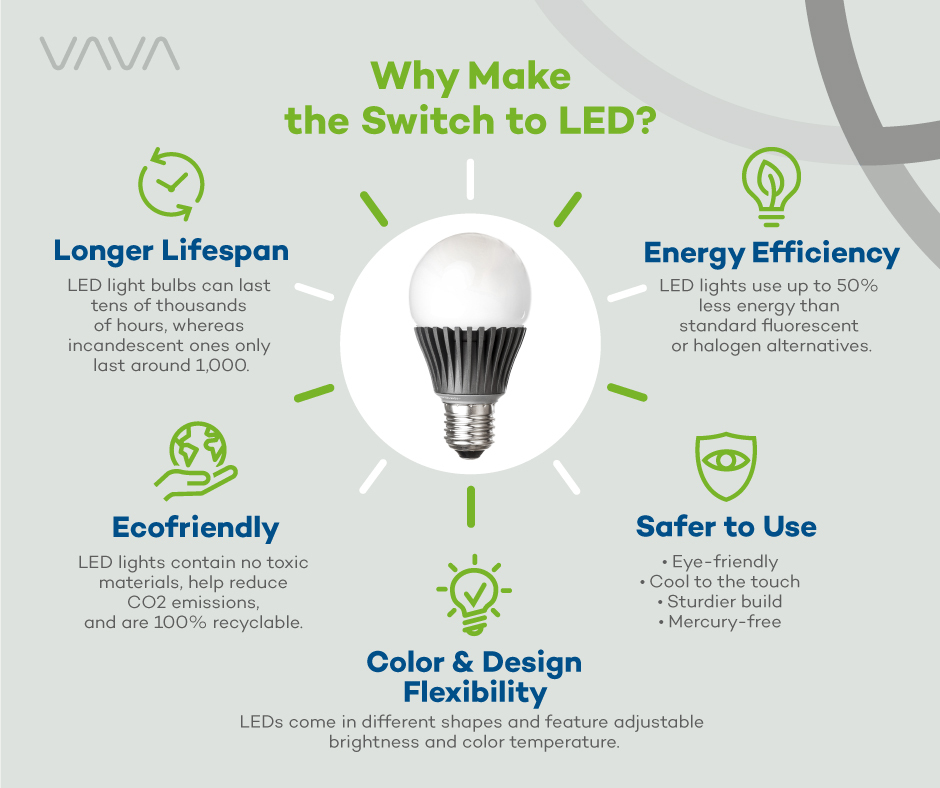
Be Climate Smart: Make the Switch to LEDs
You may have seen recent headlines that electricity prices are about to go up even more. That makes it a great time to LEDs. LED light bulbs use up to 90% less energy and last much longer than traditional bulbs, saving you money while cutting climate pollution. Making the switch is one of the easiest ways to reduce your carbon footprint. Need help getting started? Montgomery Energy Connection has free resources and events to help you make the change! This month, they’re hosting Illumination Stations in libraries across the county where you can exchange outdated incandescent bulbs for free LED ones (see the event calendar below).
Dangerous Deregulation: EPA Threatens Climate Protections
The U.S. Environmental Protection Agency is proposing to repeal the scientific determination that greenhouse gases harm human health and the environment. This “endangerment finding” underpins EPA’s authority to regulate climate pollution from power plants, vehicles, and other major sources under the Clean Air Act. So repealing it would not just be a reckless step backward, but would undermine decades of climate progress. We need stronger protections to cut pollution, not cynical rollbacks that put our communities at risk. Read more below.

There are several benefits to making the switch to LED light bulbs in your home. Learn more about the resources Montgomery Energy Connection has to help you make the change today!
Image source: vava.com
Full calendar details of upcoming events can be found here.
Illumination Stations are information tables that provide an opportunity to shine a light on ways for you to lower your utility bills. Bring your old incandescent bulbs to swap them for new energy efficient LED bulbs.
|
Date
|
Start Time |
End Time |
Event
|
Location
|
| 8/5 |
10:30am |
2:30pm |
Illumination Station |
White Oak Library |
| 8/7 |
10:30am |
2:30pm |
Illumination Station |
Wheaton Library |
| 8/12 |
6:00pm |
8:00pm |
Switch Together - Solar 101 |
SwitchTogether Webinar |
| 8/12 |
10:30am |
2:30pm |
Illumination Station |
Poolesville Library |
| 8/14 |
10:30am |
2:30pm |
Illumination Station |
Quince Orchard Library |
| 8/19 |
10:30am |
2:30pm |
Illumination Station |
Rockville Memorial Library |
| 8/21 |
10:30am |
2:30pm |
Illumination Station |
Brig.Gen.Charles E McGee Library |
| 8/26 |
10:30am |
2:30pm |
Illumination Station |
Gaithersburg Library |
| 8/28 |
10:30am |
2:30pm |
Illumination Station |
Germantown Library |
Local climate news and updates from Montgomery County, the State of Maryland, and around the DMV.
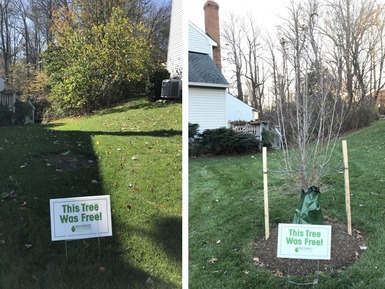
Montgomery Planning’s free shade tree program aims to increase tree canopy in urban and urbanizing areas of Montgomery County. The application period to get free trees on your property from Reforest Montgomery for the spring 2026 planting season is this Friday, August 1 to Friday, August 8. Visit Reforest Montgomery to learn more. |
|
 |
National and international climate change news that affects life in the U.S. and beyond.
The Environmental Protection Agency (EPA) is embracing a philosophy of climate change denial as it works to upend climate regulations and their legal underpinnings.
EPA Administrator Lee Zeldin said last week that his agency will propose to repeal a 2009 determination known as the “endangerment finding” that declared that planet-warming gases including carbon dioxide are a threat to public health.
“You have many on the left who will say ‘carbon dioxide is a pollutant’ and they won’t talk about all of the many reasons why carbon dioxide is actually necessary for life here on our planet,” he said. Read more here.
We've had some fantastic student interns help us out this summer. Read what they've learned and have to share with us this month and next.
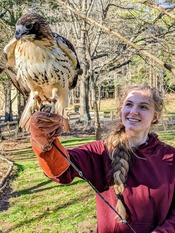
Stormwater Management and Flood Mitigation
By Elizabeth Rowe, a Civil Engineering and Watershed Science student at Colorado State University, Rockville native, and Montgomery County Climate Intern
As severe weather becomes more common, being able to recognize your stormwater risks and being prepared to address them is increasingly important. The size of a storm event is critical to understanding how best to address its impacts. Let’s begin with understanding the language of stormwater risk.
What is a 100-year storm? Storm events are often described in terms of #-year events, like 5-year, 10-year, and 100-year storms. This does not mean that these events happen on a 5- or 10-year schedule but rather refers to the statistical likelihood of their occurrence in any given year, based on historical data. A 100-year storm has a likelihood of 1 in 100 for occurring in any given year and therefore that event, which is associated with a certain amount of rainfall, has a 1% chance of occurring that year. As our climate changes so must our definitions of these rainfall events.
What does that mean for dealing with flooding? Storms that are the most likely to occur are generally those that have lower volumes of rainfall like 1-year and 2-year storms, meaning flooding is not as large a risk for these events. However, water quality is also an important factor to consider. This is where the treatment of the ‘first flush’ comes in. The ‘first flush’ is the water that runs off of surfaces in the first few minutes of a storm. This water carries with it any trash and pollution on those surfaces. If you think about our roadways for example, any trash, oil, and tire residue will be carried with that first flush through swales, storm drains, and creeks until it reaches a river and flows into the Chesapeake. The main remedy for first flush pollution is infrastructure like permeable pavement, raingardens, and detention and retention ponds that slow water down and allows pollutants to settle or filter out. Additional benefits of this infrastructure are reduced runoff and water velocity, which can prevent erosion damage and infrastructure being overwhelmed.
What is different about larger storms? In storms that produce much larger volumes of water, the focus shifts to addressing flooding. When dealing with events like 100-year storms or even consecutive smaller storms, the soil quickly becomes saturated meaning there is no more capacity for it to absorb water. A capital project may be needed to safely get water out of the area.
What does this mean for me? Being Climate Smart is all about understanding your role in responding to our changing climate. When it comes to stormwater, understand your flood risks and consider investing in infrastructure on your property that can be both beautiful and address water pollution such as raingardens. Take an interest in your local conveyance infrastructure, if storm drains or culverts are clogged, call 311 or address the issue yourself if it’s manageable.
|

Making Green Hydrogen in Gaithersburg
By Eamon Gray, our Summer RISE student intern and rising Senior at Bethesda-Chevy Chase High School
Reducing transportation emissions is a vital step to meet Montgomery County’s climate goal of reducing its greenhouse gas emissions 100% by 2035. Transportation emissions account for 42% of Montgomery County’s emissions. What might be surprising is a method used to remedy this issue: green hydrogen.
Hydrogen is the most abundant molecule in the universe, and when turned into dihydrogen (two hydrogen atoms), it can be used as a green fuel source. The only caveat is that it is rarely found in this state, with the vast majority of hydrogen entrapped in other molecules, like water and methane. The colors (such as green) are used to designate how the hydrogen is sourced. The most common commercial hydrogen is grey hydrogen. Grey hydrogen is usually derived from methane reacting with superheated steam generated from a natural gas heating source. Green hydrogen uses a different reaction, electrolysis, and relies on renewable energy sources such as wind, photovoltaic (PV), or hydroelectric. In the electrolysis process, electrical current is used to split water molecules into hydrogen and oxygen, which is then stored for use as fuel. The main advantage of hydrogen fuel used in hydrogen fuel cell vehicles over battery electric vehicles, is that hydrogen can be carried in larger quantities, giving any vehicle that uses hydrogen a range comparable to petroleum-powered vehicles.
The Montgomery County's Zero Emission Bus (ZEB) Transition Plan calls for the use of long range green hydrogen powered buses as a complimentary addition to the shorter range of the fleet's battery electric buses. The hydrogen fuel cell buses allow residents to be served with emission free public transit in the more rural areas of the county where routes are too long for current battery electric bus to provide service.
EMTOC Microgrid is being built capable of “islanding” and remaining fully operational when there is a main grid outage. Newly installed solar panels will provide the green power needed for the onsite hydrogen electrolyser to produce the green hydrogen, which will fuel the hydrogen fuel cell electric buses. The project’s groundbreaking was on June 12, 2024, and the solar microgrid that will power the depot is slated to be completed this fall. Even though it will be some time before the fleet transition is complete, once it is, the buses you commute on could be the hydrogen buses of the future.
|
We are excited to share the below news and opportunities below. These important grants are offered by both local and federal funding opportunities, and are made available to local governments, universities, community organizations, businesses and individuals.
Emerging Climate Champions Award: Must register by August 15 and apply by September 22, 2025. A coalition of foundations and donors seek to shine a light on nonprofit climate organizations with youth leadership (ages 15-35) that have demonstrated experience, strong potential, and measurable results in advancing durable climate solutions in the communities they serve. The Award encourages more of us to rethink the role of young people in addressing the various climate challenges faced by communities around the world. The award will be a gift of $1 million, disbursed over five years.
Rumphius Foundation Grants: Applications due September 1st, or until 75 applications are received. 501(c)3 nonprofits may request support to strengthen communities and protect the environment in small but meaningful ways, for projects that reach a diverse range of people in need while simultaneously educating young people about sustainability and healthy living. The maximum grant is $6,000.
MacFarlane Foundation FY26 Grants: Letters of Inquiry accepted starting January 2026. The Foundation is interested in supporting nonprofit organizations addressing a range of issues, including but not limited to: education, economic empowerment, climate change and the environment, health, human services, and the well-being of women and girls, and is particularly interested in catalyzing organizations into their next phase of growth or impact. Category One grants range from $10,000-$75,000 and Category Two grants range from $200,000-$250,000.
Waste Management (WM) Charitable Contributions Program: Applications accepted year-round. 501(c)3 or public organizations may apply for a charitable contribution to make communities safer, stronger, and more sustainable. WM funds environmental stewardship, environmental justice, sustainability education, workforce and skills development, community vitality, and supplier diversity. No maximum is specified.
Can'd Aid: Crush It Crusade - FY 2025: Applications accepted on a rolling basis. Government and nongovernment organizations may apply to support the launch or improvement of local recycling programs and education on the importance of infinitely recyclable aluminum. Grants range in size from $5,000 to $10,000.
Exciting opportunities available for job seekers. Check out DEP’s Green Job Portal for additional climate and sustainability jobs, including these highlighted positions:
Finance Intern – Montgomery County Planning (Wheaton, MD): The Montgomery County Planning Department is seeking a highly motivated undergraduate or graduate Finance Intern with an interest and anticipated careers in the following areas: Accounting, business, or finance. More information here.
Associate I, Communications, U.S. Conservation (Washington, DC): Are you passionate about using media relations, creative storytelling, and digital communications to advance science-based policy solutions that support clean energy and disaster resilience? If so, this is the right opportunity for you.
We are seeking an eager and proven early career communications professional to join a dynamic multi-partner team as a communications associate. This successful candidate will help execute strategic communications plans to advance policies that support energy modernization and disaster resilience. More information here.
Naturalist – City of Rockville (Rockville, MD): Croydon Creek Nature Center is seeking a dynamic and enthusiastic Naturalist with knowledge of Maryland’s native flora and fauna and experience developing and leading environmental education programs. This position also involves caring for and handling live native animals, including amphibians, turtles and snakes.
This is a year-round, part-time (non-benefitted) position starting in September. Hours will vary between 12–20 per week, depending on the needs of the center, and include working 3–5 weekend days per month. More information here.
|