|
July 3, 2023 | Climate Action News
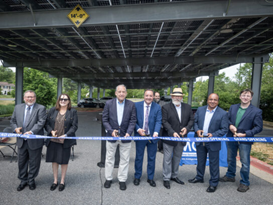
(Photo courtesy MC Media)
County Executive Marc Elrich led a press conference to celebrate the County’s second “resilience hub” powered by renewable energy microgrids in mid-June. The resilience hub, located at a Derwood Animal Shelter, advances the climate change mitigation and adaption goals outlined in the County’s Climate Action Plan. The hub will supply carbon-free energy to the surrounding community through the microgrid, which can operate independently from the traditional grid. In the event of extreme weather and disaster, it will serve as a backup power source providing heating and cooling or the ability to charge devices.
The hub’s capabilities were tested in November 2022, when a plane crashed into a Gaithersburg power line, leaving 120,000 residents without power. The Derwood hub, however, supplied its own power and remained online. “You can see how this would impact the day where we get to put microgrids out more at the neighborhood level,” Elrich said, “and that eventually is coming.”
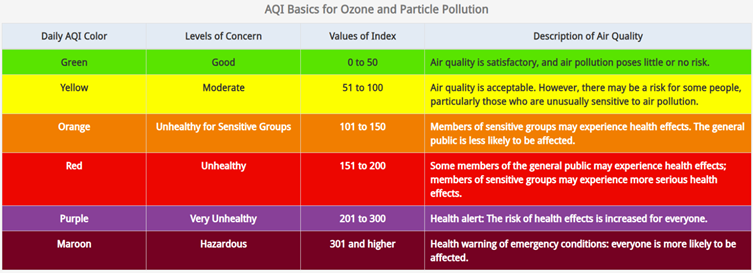
The DMV region is typically in Code Green or Code Yellow for air quality. The Air Quality Index is divided into six categories that correspond to different health concerns. The AQI reports daily air quality and uses color codes and a numerical scale to report how clean or polluted the air is and what associated health effects be of concern. Maryland air quality reached Code Red in early June as a result of the wildfire smoke traveling from Canada. A day later, the Metropolitan Washington Council of Governments issued a Code Purple for the first time.
The health impact of air pollution exposure depends on the duration, concentration of air pollutants and health status of the affected populations. Exposure to pollutants can occur over days, weeks or months because of seasonal air pollution such as increased ozone during the summer. Short-term effects include:
- Asthma attacks
- Shortness of breath/difficulty breathing
- Coughing or throat irritation
For East-coasters unaccustomed to wildfires, the shock of seeing orange skies and feeling air burn your lungs has the potential to make the link between climate change and extreme weather feel “more concrete and relevant.” But whether that realization translates into greater support for sustainable policies, remains to be seen. Long-term exposure can lead to:
- Lung cancer
- Heart attacks (if someone is already affected by heart disease)
To read more about air quality, click here or here.
|

States, city governments, and businesses around the Chesapeake Bay celebrated the health and history of the nation’s largest estuary from June 3-11 since 2016. Maryland, Virginia, and Delaware pass official proclamations in honor of the Chesapeake Bay. This year, Montgomery County encouraged residents to submit videos showing their appreciation of the Bay. You can protect the Chesapeake Bay’s health year-round by limiting pesticide and fertilizer use, reducing impervious services and properly disposing of trash and recycling.
|
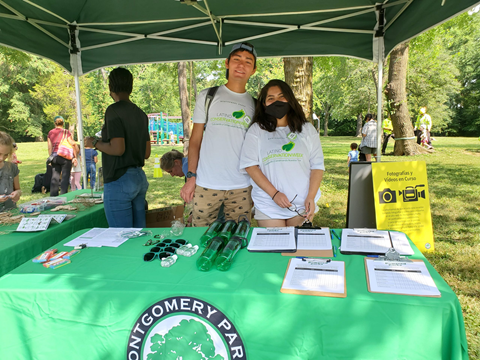
Beginning July 15, Montgomery County will celebrate the 9th annual Latino Conservation week. The week encourages the Latino community to get outdoors and participate in activities protecting our natural resources. The celebration will debut with a screening of climate stories from Latino environmental leaders in Montgomery County and will transition into a cleanup of the neighborhood and green areas around Glenmont Local Park. Click here to register, everyone is welcome!
|
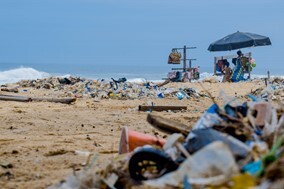 (Photo courtesy Pexels)
Plastic pollution is a global issue. Plastic is made from chemicals, coal, oil and gas. Because plastic does not decompose, large pieces of plastic break down into microplastics that can end up in soil, water, wind, wildlife and people. Microplastics come from different sources including resin pellets and microbeads from beauty and health products. The particles can pass water filtration systems and end up in the ocean, affecting aquatic life. To learn more about microplastics, click here.
Workers who are exposed to plastic fibers can have lung problems and reduce lung capacity, according to the American Lung Association. Chemicals that make up plastics are toxic to people at high concentrations.
Plastic pollution can change habitats, reduce an ecosystem’s ability to adapt to climate change and affects food production and people’s livelihoods. Ways to be plastic-free include:
- Bringing reusable bags to the grocery store
- Drinking from reusable water bottles when possible
- Purchasing package free soaps or bamboo items like a soap tray or hairbrush
- Switching to glass or steel food containers

Community Spotlight:
Sandy Springs Gardens
|
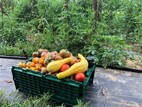
Sandy Spring Gardens works with owners of land in eastern Montgomery County to convert lawns and crop fields into vegetable gardens, promote sustainable growing practices that restore the health of soil, water and air and provide a source of fresh vegetables. They grow 50 vegetables from May through November without chemical fertilizers or pesticides. Summer vegetables include eggplant, melon, cucumber and watermelon. To learn more about Sandy Spring Gardens, click here.
Can you think of a sustainable and climate-friendly business that needs a shoutout? Let us know!
|
Climate Smart is a Montgomery County Program encouraging residents to live more sustainably, save money, and help Montgomery County achieve net-zero emissions by 2035. Each newsletter, we will explore one of the focus areas as well as other ways to minimize your carbon footprint.
This month's spotlight is FOOD!
Nearly 40% of all food in the United States is wasted. As a result of this waste, more food is produced and causes more greenhouses gas emissions. Reduce your personal food waste by:
- Planning ahead: planning meals before going shopping ensures that you only buy what you need.
- Buying local and seasonal produce: Take advantage of Montgomery County’s farms, farmer’s markets, and community supported agriculture. This reduces emissions associate with food transportation. Find your nearest farm-fresh vendor.
- Composting: If you have food that goes bad, odds are you can compost it instead of throwing it out. Waste that can be composted include apple cores, eggshells and lawn clippings. Find out if you’re eligible for Montgomery County’s pilot curbside composting service, or learn how to create your own home compost.
|

A quick way to get rid of an unwanted vampire (appliance)
You may be wasting a lot of the electricity in your home without even realizing it. Who’s at fault? Vampire appliances.
These devices suck energy from your walls even when they are turned “off.” It is estimated that they consume between 20-40% of a building’s yearly electricity usage, or about $165 annually per household. Luckily there’s a simple way to vanquish these (energy) vampires.
- Unplug devices that you use irregularly
- Use power strips and turn them off when unneeded
- Put idle electronics into “sleep” mode
- Save money and electricity by choosing energy efficient replacements for broken or old products.
Click here to learn more.
|
Firefly Search and Night Hike
July 5 @ 8:30-10:00 p.m. | Black Hill Regional Park
French Embassy Ocean Conference
July 6 @ 2:30-6:30 p.m. | Washington DC
Underground Railroad Guided Hike
July 8 @ 10:00-11:30 a.m. | Woodlawn Manor Cultural Park
Sol-Power Café Climate Action Event
July 9 @ 3:00-5:00 p.m. | Washington DC
Warner Memorial Presbyterian Church Community Garden Tour
July 10 @ 9:30 a.m.- 12:30 p.m. | Kensington
Green Bank Fuel Energy Tax Public Hearing
July 11 @ 1:30-2:30 p.m. | Rockville
River Talk: Health of the Potomac and Anacostia
July 12 @ 6:00-9:00 p.m. | Washington DC
Nature Forward Bilingual mediation walk
July 15 @ 10 a.m.-12 p.m. | Tanglewood Park
Latino Conservation Week: Climate Stories Screening & Cleanup!
July 15 @ 10 a.m. -12 p.m. | Glenmont Local Park
Plastic Free July Waterways Cleanup
July 15 @ 9 a.m. -12 p.m. | Kenilworth Park
Capitol Area Solar Switch Info Session & Happy Hour
July 20 @ 5:00-7:00 p.m. | Linganore Winecellars
Summer Concert Series at Koiner Farm July 20 @ 5-7 p.m.| Koiner Farm
EcoFriends Dinner
July 22 @ 5:30-7:30 p.m. | Downtown Silver Spring
Weed Warrior Workday
July 29-30 @ 9-11 a.m. | Rock Creek Stream Valley Park
|